

Do you ever wonder what’s hiding in your cleaning products? Many store-bought cleaners are packed with harmful chemicals. These can cause skin irritation or even mess with your lungs.
Worse, some ingredients aren’t listed on the label, leaving you guessing about their safety.
Switching to non-toxic cleaning products isn’t just trendy—it’s safer for your health and better for the planet. Products with natural ingredients like baking soda and essential oils clean well without harsh side effects.
This guide will help you make simple swaps that fit your lifestyle.
Ready to ditch those toxic bottles? Keep reading!
Key Takeaways
- Toxic cleaners can harm your health and the environment. Switching to non-toxic options improves indoor air quality and reduces risks like asthma, eczema, and pollution.
- Start small by replacing everyday items like all-purpose cleaners or dish soaps. DIY solutions with baking soda, vinegar, or essential oils are safe and cheap.
- Look for trusted certifications like USDA Organic, EPA Safer Choice, or Green Seal when buying products. Avoid misleading terms like “natural” without proof.
- Trusted brands include Branch Basics ($69 starter kit) and Dr. Bronner’s ($15 castile soap). Both offer eco-friendly options that save money over time.
- Non-toxic swaps help create a healthier home while protecting nature from harmful chemicals in water or plastic waste in landfills.
Why Switch to Non-Toxic Cleaning Products?

Toxic cleaners can harm your body and mess with your health. Switching helps create a safer, greener place to live.
Health benefits
Switching to non-toxic cleaning products reduces respiratory irritants. It helps prevent asthma and allergic reactions caused by harsh chemicals like sodium hypochlorite. Many traditional cleaners worsen eczema, headaches, and hormonal imbalances over time.
Fewer harmful chemicals mean better indoor air quality. This lowers the risk of long-term health problems like cancer or developmental delays in children. Non-toxic options also protect against contact dermatitis and eye irritation often linked to household bleach or ammonia-based cleaners.
Environmental impact
Toxic cleaning products harm the planet. Harmful chemicals pollute water when washed down drains, affecting fish and plants. Air pollution increases indoors with unsafe cleaners, making it 2–3 times worse than outdoor air.
The Environmental Working Group highlights how some ingredients damage ecosystems.
Plastic packaging adds more waste to landfills and oceans. Many bottles don’t break down for centuries. Chlorine bleach and other strong substances leach into soil, harming wildlife nearby.
Choosing green cleaning products reduces this impact on nature while promoting cleaner living spaces.
Steps to Transitioning to Non-Toxic Cleaning Products
Switching takes small steps, not a giant leap. Start simple, get informed, and make wise swaps for your home.
Step 1: Identify harmful chemicals in current products
Check the labels on your cleaning products. Look for harmful ingredients like parabens, phthalates, or triclosan. Window cleaners often have ammonia and isopropanol. Rug cleaners may include naphthalene or perchloroethylene, which are toxic.
Air fresheners can hide formaldehyde under “fragrance.” Bleach contains sodium hypochlorite, a strong irritant.
Use safer options to avoid health risks like respiratory issues or hormone disruption from endocrine disruptors. Products with these chemicals increase indoor air pollution too. Be careful using bleach and all-purpose cleaners with ammonia in small spaces since they release dangerous fumes.
Step 2: Research non-toxic alternatives
Look for cleaning products labeled “USDA organic” or carrying trusted certifications. Brands like Better Life, Attitude, and Seventh Generation offer strong options. Check ingredients carefully—avoid fragrances, bisphenol A (BPA), and harmful chemicals like ammonium hydroxide.
Consider DIY cleaning solutions using baking soda, vinegar, or essential oils from Plant Therapy or Saje. These are safer and budget-friendly. Choose glass cleaners or dish soaps with natural formulas to reduce exposure to endocrine-disrupting chemicals (EDCs).
Start small by testing a few sustainable products at home!
Step 3: Start with essential product swaps
Swap the products you use most. Start with an all-purpose cleaner. It works for many surfaces and cuts down on clutter. Pick one made from natural cleaning ingredients like baking soda or essential oils.
Next, replace dishwashing liquids and laundry detergents. These touch your hands, clothes, and dishes daily. Look for brands free of harmful chemicals like endocrine disruptors and respiratory irritants.
Switch to beeswax candles or essential oil diffusers instead of air fresheners to avoid heavy metals in synthetic scents. Keep it simple—one swap at a time makes the change easier!
Top Non-Toxic Cleaning Product Swaps for Beginners
Switching out your usual cleaners is easier than you think. Start with a few basics and work your way up to more swaps as you feel ready.
All-purpose cleaners
A non-toxic all-purpose cleaner is a game-changer for keeping a healthier home. Many popular cleaners have harmful chemicals like trisodium phosphate or endocrine disruptors. These can harm your lungs and skin over time.
Safer options, like Branch Basics’ cleaning kit, work just as well without the risks.
You can also try making your own! Mix one cup of white vinegar, one cup of water, and 10 drops of essential oils (like tea tree or lemon). This simple recipe handles dust, dirt, and grease on most surfaces.
It’s cheap and eco-friendly too!
Dishwashing liquids
Swap your dish soap for safer choices. Many regular dishwashing liquids have harmful chemicals like phthalates or synthetic fragrances. These can irritate the skin and harm waterways after use.
Look for options labeled fragrance-free, biodegradable, or made with plant-based ingredients.
Brands offering non-toxic cleaning products often include essential oils as natural scents. They clean well without leaving harmful residues on dishes. A good pick reduces exposure to endocrine disruptors and keeps your home healthier!
Laundry detergents
Many commercial laundry detergents contain harmful chemicals like propylparaben and endocrine disruptors. These can cause skin irritation, respiratory problems, or even long-term health issues.
Switching to non-toxic options reduces exposure to these risks while keeping your clothes clean.
Brands like Branch Basics offer all-natural cleaning solutions free from toxic ingredients. These chemical-free products are gentle on sensitive skin and better for the planet too.
Pairing non-toxic detergent with wool dryer balls can also replace fabric softeners, making your laundry routine more sustainable.
Glass cleaners
Switch to a non-toxic glass cleaner for safer surfaces. Most store-bought options have harmful chemicals like ammonia, which can irritate your eyes and lungs. Eco-friendly cleaners use natural ingredients like vinegar or essential oils.
These clean well without leaving streaks or toxic residue.
Make your own with simple items at home. Mix equal parts water and white vinegar in a spray bottle. Add a few drops of lemon oil for fragrance if you like. Spray it on windows, mirrors, or glass tables and wipe with a cloth.
Simple swaps like this keep your home healthier and chemical-free!
Reading and Understanding Labels
Labels can be tricky, but they hold important clues about what’s inside. Learn to spot key markers and dodge misleading buzzwords.
Key certifications to look for
Look for the USDA Organic seal on natural cleaning products. This means they use safe, chemical-free ingredients. The EPA Safer Choice label is another important one. It shows the product avoids harmful chemicals like endocrine disruptors.
Green Seal certification proves a product meets strict health and environmental standards. Also, check for Leaping Bunny or Cruelty-Free logos to ensure no animal testing was involved.
These certifications help create a healthier home and cleaner planet.
Common misleading terms to avoid
Some labels can trick you. Terms like “natural,” “eco-friendly,” or “green” don’t always mean safe. Companies use these words for marketing, not honesty. This is called greenwashing.
Check for trusted certifications instead. Look for USDA Organic, EPA Safer Choice, or Green Seal logos on cleaning products. Avoid terms like “non-toxic” if they lack proof or backing from reliable groups.
DIY Non-Toxic Cleaning Solutions
You can make safe cleaners at home with simple items like vinegar or baking soda. These mixes save money and keep harmful chemicals out of your house.
Recipes for all-purpose cleaners
Mix 1 cup of distilled white vinegar with 1 cup of water. Add 10 drops of essential oil, like lavender or tea tree, for scent and extra cleaning power. Shake well in a spray bottle.
This cleaner works on counters, sinks, and more.
For tougher grime, combine two tablespoons of baking soda with warm water until it forms a paste. Scrub surfaces gently, then rinse clean. Both recipes are safe and free from harmful chemicals like endocrine disruptors found in many store-bought options.
Natural ingredients for specific cleaning needs
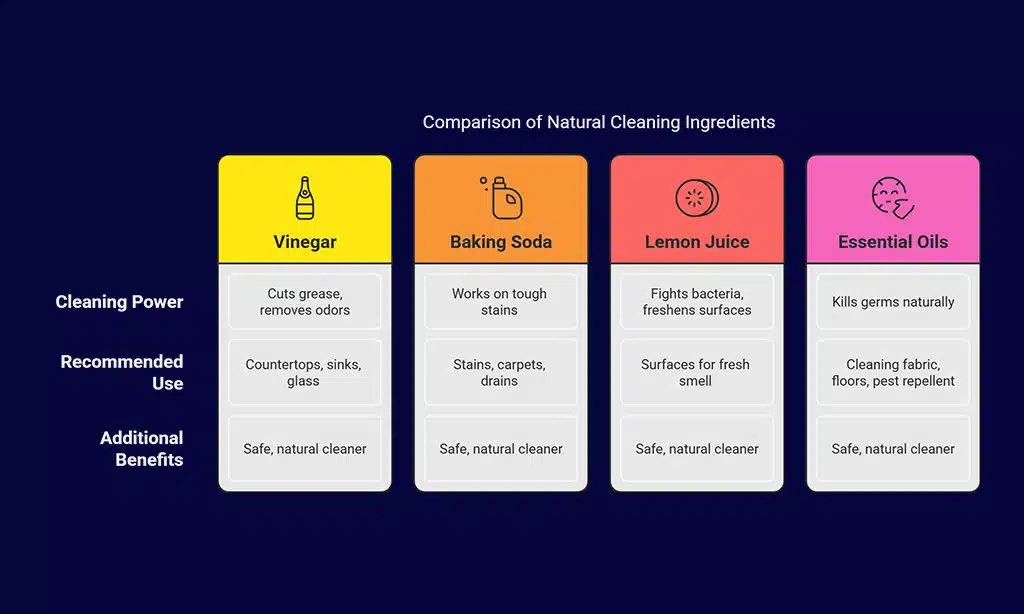
Vinegar cuts through grease and removes odors. Use it on countertops, sinks, or glass for a streak-free finish. Baking soda works wonders on tough stains and deodorizes carpets or drains.
Lemon juice fights bacteria and leaves surfaces fresh-smelling.
Essential oils like tea tree kill germs naturally. Lavender calms spaces while cleaning fabric or floors. Peppermint repels pests during dusting or wiping shelves. Always choose pure oils, not synthetic fragrances, for safe use in your home.
Tips for a Smooth Transition
Switching can feel like a big step, but it doesn’t have to be. Take your time, and ease into the changes for a stress-free shift.
Start small and build gradually
Replace one cleaning product at a time. Start with everyday items, like laundry detergent or dishwashing liquid. Switching all at once can feel overwhelming. Focus on essentials first for less stress and smoother changes.
Test non-toxic products before buying more. Try an all-purpose cleaner or natural deodorant as your first swap. Small steps make the transition to safer, chemical-free living easier to handle over time.
Test products for effectiveness
Try your new non-toxic cleaning products on small areas first. Use them on counters, sinks, or mirrors to check their power. See if they cut through dirt and grime easily.
Pay attention to spots that need tougher cleaning, like the kitchen stove or bathroom tiles. Some products work better with baking soda for extra scrubbing power.
Set a realistic budget
Start by listing your current cleaning items. Replace essential ones like all-purpose cleaners or laundry detergents first. DIY options using baking soda and essential oils can save money while being non-toxic.
Stick to affordable, trusted brands for green cleaning products. Larger swaps, like air purifiers or water filters, can wait until you’re ready to invest more in sustainable living.
Recommended Brands for Non-Toxic Cleaning
Choosing trusted brands can make the switch easier and safer. Focus on reliable companies that prioritize natural ingredients and eco-friendly practices.
Trusted and affordable options
Branch Basics is a great pick. It offers non-toxic cleaning concentrates that save money over time. A $69 starter kit can replace many harmful cleaners in your home.
Dr. Bronner’s is another solid choice. Their castile soap works for dishes, laundry, and more. At around $15 per bottle, it lasts long and cuts costs while staying eco-friendly.
Takeaways
Switching to non-toxic cleaning products doesn’t have to be hard. Start small, swap a few items, and explore simple DIY solutions like baking soda and vinegar. Your home can become safer for your family and the planet.
Every little change counts! A healthier home is just a step away.
FAQs
1. What are non-toxic cleaning products?
Non-toxic cleaning products are made without harmful chemicals like endocrine disruptors or respiratory irritants. They often contain natural ingredients such as baking soda or essential oils.
2. Why should I switch to non-toxic cleaning?
Switching helps create a healthier home by reducing exposure to harmful substances like PVC, bleached materials, and low VOC cleaners that can harm your health over time.
3. Can I make DIY cleaning products at home?
Yes! Many people use simple items like baking soda, vinegar, and essential oils to create all-natural cleaning solutions for their homes.
4. Are green cleaning products better than regular ones?
Green options avoid harsh chemicals found in traditional cleaners, making them safer for you and the environment while supporting sustainable living practices.
5. How do I start replacing my household items with non-toxic alternatives?
Start small—replace everyday items like laundry detergent, dryer sheets, or hand sanitizers with chemical-free options from trusted brands such as Branch Basics.
6. Do non-stick pans and other cookware matter when going chemical-free?
Yes! Non-stick cookware often contains Teflon or vinyl coatings that release toxins when heated. Switch to safer pots and pans made of stainless steel or cast iron for a healthier kitchen setup.





















