

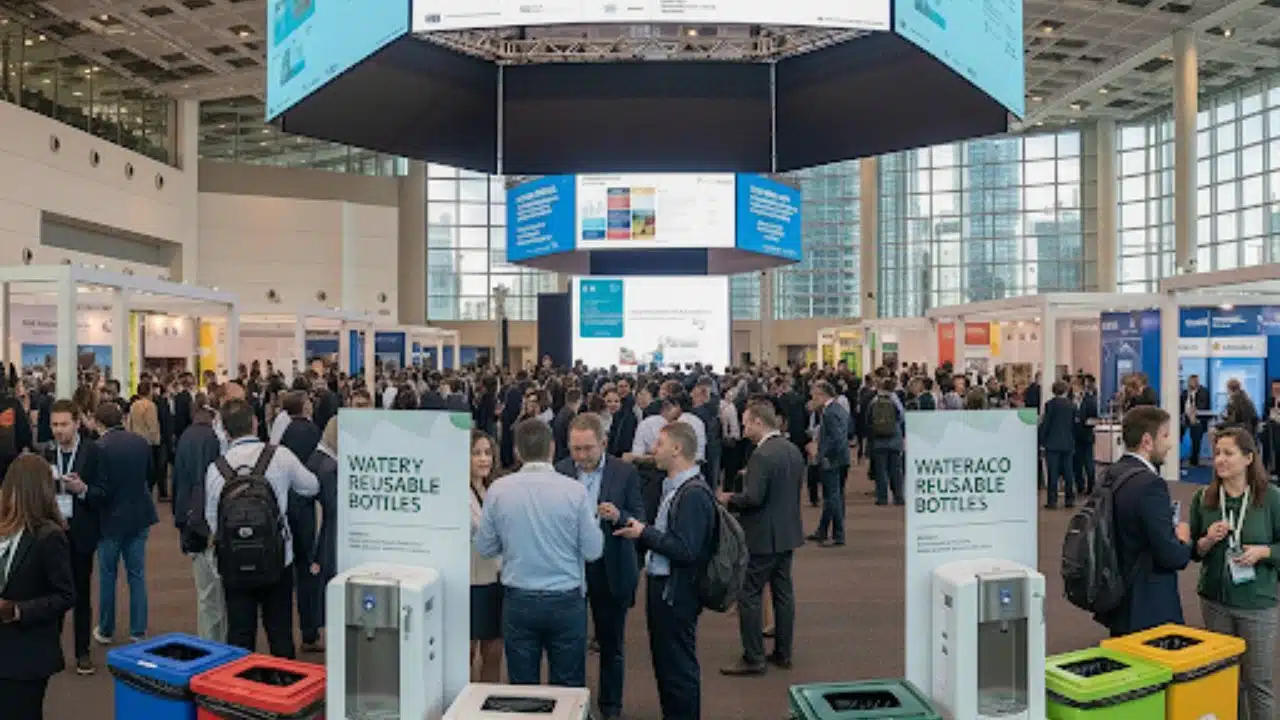
Corporate events influence perceptions and showcase values. In Latin America, where only 46% of companies have formal sustainability policies, there’s a key opportunity to move beyond superficial “carbon-neutral” claims by adopting transparent, measurable practices, especially with COP30 in Brazil highlighting regional climate goals.
Today, impact includes waste, social inclusion, ethical sourcing, and community benefits. Companies hosting sustainable events in Latin America can lead this shift by partnering with experts and aligning with standards like ISO 20121. This approach transforms events into authentic demonstrations of commitment to sustainability and social responsibility.
Why Sustainable Events Matter in Latin America
Globally, the conversation has shifted from carbon offsets to measurable, holistic impact. Traditional claims of being “carbon-neutral” are increasingly criticized as greenwashing practices when lacking transparency or measurable results. Stakeholders — from employees and investors to local communities— are increasingly demanding that events prove their sustainability credentials with clear metrics.
In Latin America, the urgency is even more pronounced:
- Only 46% of companies in the region have formal sustainability strategies (RSM, ESG Landscape in Latin America 2024).
- Waste management infrastructure varies widely across countries, creating both challenges and opportunities for innovation.
- COP30, to be set in Belém, Brazil, brings global scrutiny to how the region aligns business practices with international climate commitments.
- Rising urbanization and population density amplify waste and energy demands during large-scale gatherings.
Events provide a visible way to address these gaps. By embracing holistic frameworks, businesses can demonstrate leadership and connect with stakeholders. This helps bridge the ESG credibility gap. In many ways, sustainable events are no longer just about reducing impact; they are about reimagining the role of corporate events as a driver for social progress and environmental resilience.
From Carbon-Neutral Claims to Measurable Impact
For years, the gold standard for this type of events was achieving carbon neutrality, often by offsetting emissions through carbon credits. This approach was seen as a straightforward way to demonstrate environmental responsibility.
However, this focus is now viewed as limited, and sometimes misleading. Critics argue that offsets don’t address the root causes of emissions and can distract from other critical issues like waste management and social equity. The global conversation is evolving, and Latin America is at the forefront of this change.
This new paradigm requires a fundamental rethinking of how we measure sustainable events’ impact. Instead of focusing solely on emissions, companies must adopt a more comprehensive view. This includes:
- Waste Management: Implementing effective waste reduction, recycling, and composting programs.
- Ethical Supply Chains: Sourcing from local, ethical, and sustainable suppliers.
- Social Inclusion: Ensuring the event is accessible and beneficial to all community members, including marginalized groups.
- Community Impact: Leaving a positive legacy in the host community, such as through partnerships with local businesses or third sector organizations.
By measuring and reporting on these diverse factors, companies can move beyond mere claims and demonstrate real, verifiable progress.
Moving Beyond Greenwashing
Sustainable events require systemic change, one with openness in reporting so as to ensure credibility and prevent greenwashing. In Latin America, embedding sustainability across all operations, including events, helps protect reputations and foster stakeholder trust. By focusing on clear outcomes, events become meaningful demonstrations of company values.
Key areas of action include:
- Waste reduction and management: Minimizing single-use plastics, promoting reusables, and ensuring robust recycling and composting systems.
- Inclusive practices: Designing events that are accessible to people with disabilities and inclusive of diverse communities.
- Responsible supply chains: Prioritizing local and sustainable suppliers, thereby reducing emissions and supporting community development.
- Community impact: Ensuring that events contribute positively to host communities, rather than displacing or exploiting them.
- Transparent communication: Publishing concrete data about sustainability outcomes instead of vague claims.
Adapting ISO 20121 for Latin America
ISO 20121 is a trusted, comprehensive standard for sustainable event management, providing a system for continuous improvement. It guides organizations to define policies, identify risks, engage stakeholders, monitor performance, and make adjustments for future events.
ISO 20121 is not just a checklist; it’s a management system that encourages continuous improvement. It requires organizations to:
- Establish a Policy: Define their commitment to sustainability and set clear objectives.
- Plan: Identify key risks and opportunities and develop a plan to address them.
- Implement: Put the plan into action, including engaging suppliers and stakeholders.
- Check: Monitor performance against objectives and collect data to report on progress.
- Improve: Review the results and make adjustments for future events.
Tailoring this framework to the Latin American region involves focusing on local priorities, such as working with indigenous communities, protecting biodiversity, using renewable energy, and supporting local recycling. Customizing global standards ensures responsible sustainable events deliver meaningful, lasting regional impact.
CSR in Latin America: Strengthening Impact Through Events
Corporate Social Responsibility (CSR) in Latin America has traditionally centered on philanthropy, community outreach, and charitable initiatives. However, today’s sustainability landscape requires CSR to evolve beyond donations and into systemic action. Events provide a unique opportunity to bridge this gap by aligning CSR strategies with measurable sustainability frameworks.
By embedding CSR in events, companies can:
- Strengthen ties with local communities through inclusive and participatory practices.
- Support local economies by engaging regional suppliers and fair-trade vendors.
- Promote cultural heritage and diversity, reflecting the values of host communities.
- Demonstrate transparency and accountability, building stakeholder trust.
In this way, sustainability-focused gatherings become a natural extension of CSR in Latin America, transforming community-focused initiatives into long-term, strategic contributions that benefit both businesses and society.
Best Practice Frameworks for Sustainable Events
International standards like ISO 20121 offer a clear framework for embedding sustainability, encouraging companies to assess impacts, engage stakeholders, set goals, and report transparently. Committing to continuous improvement ensures sustainability is integrated into every stage of event planning.
Latin America offers a great opportunity to adapt these standards to local realities, such as addressing pollution in Mexico City or promoting community inclusion in rural areas in Colombia. Tailoring these practices ensures efforts are relevant and impactful in the region.
With COP30 taking place in Belém, Brazil next November, hosting green event models is more crucial than ever. These events showcase regional innovation, foster partnerships, and position companies as leaders in the low-carbon economy, gaining a competitive advantage and aligning with global climate goals.
Closing the CSR Credibility Gap with Sustainable Events
Research shows that CSR credibility greatly influences how stakeholders perceive and act. A recent study (Springer, 2024) finds that a strong CSR reputation, backed by verified disclosures, boosts investor confidence and positively impacts their view of a company’s social performance and investment choices.
For consumers, CSR credibility is equally vital. A study in Sustainability (MDPI, 2021) indicates that positive perceptions of CSR efforts strengthen brand trust, leading to increased purchase intentions and customer loyalty. This demonstrates that authentic CSR can improve market performance.
External validation also matters. Research from Corporate Communications (Emerald, 2015) shows that third-party CSR certifications reduce skepticism and enhance the perceived authenticity of initiatives. Independent verification assures stakeholders that companies are committed to genuine, measurable outcomes, not just symbolic gestures.
In Latin America, events offer a prime opportunity for companies to showcase transparent, measurable CSR efforts. Every decision—from sourcing local suppliers to promoting inclusivity—acts as a public proof of CSR values. Aligning event practices with best standards and seeking third-party validation helps companies:
- Enhance investor confidence by showing clear alignment between CSR commitments and action.
- Strengthen brand credibility through visible initiatives that resonate with customers and communities.
- Reduce skepticism with external certifications that prove authenticity.
For companies in Latin America, where fewer than half currently have formal sustainability policies, events represent a timely and strategic way to strengthen CSR credibility, build stakeholder trust, and gain a competitive edge.
Case Examples of Sustainable Practices
To further understand the possibilities, it’s helpful to look at how sustainable event practices are already taking shape in the region:
- Mexico: Hybrid corporate conferences have reduced travel-related emissions while engaging larger audiences through digital platforms.
- Chile: Renewable energy-powered festivals showcase how clean energy can support entertainment and community engagement.
- Brazil: Community-driven events in São Paulo integrate local artisans and sustainable food vendors, creating social and economic benefits.
These examples prove that responsible events are not abstract ideals but practical, achievable models that companies can replicate and scale.
Conclusion: Building a Framework for Credibility
As Latin America heads to COP30, sustainable events represent both a responsibility and an opportunity. They enable companies to demonstrate genuine action and close ESG gaps, especially since only 46% have formal sustainability strategies or policies in place. The bar for leadership is low, but expectations are rising.
Companies leveraging events services in Latin America to host these events can demonstrate authentic leadership, align with global best practices, and create lasting community impact. In doing so, they not only mitigate reputational risks but also build credibility with stakeholders who demand measurable, transparent results. Ultimately, sustainable events are no longer optional, they are essential for building trust, credibility, and resilience in a changing world.





















