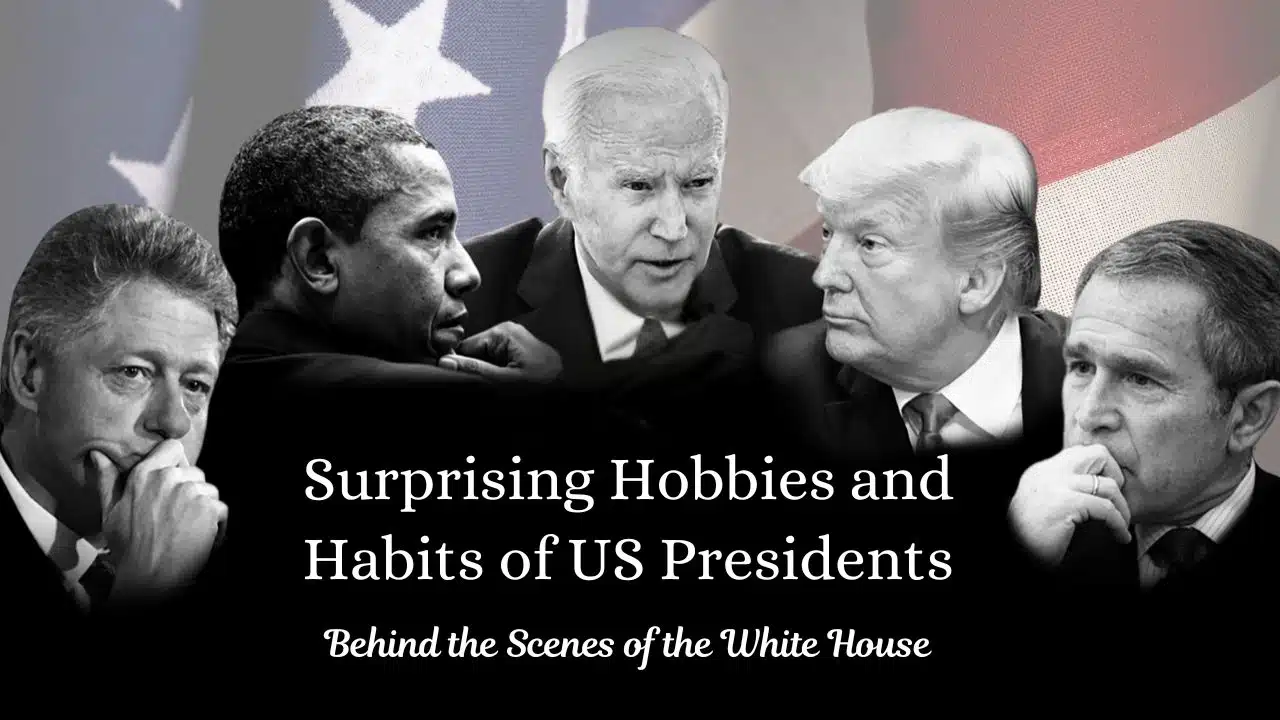
Have you ever wondered what goes on behind the polished public image of America’s highest office? Beyond formal addresses and historic bills, there’s a world of personal quirks and captivating routines that many find fascinating.
Whether it’s early risers mapping out policy at dawn or late-night snackers poring over briefings, the presidency is full of surprising habits of us presidents that often stay out of the spotlight.
In this post, we’ll look at how these unique hobbies and behaviors shape—and sometimes even challenge—our perceptions of the men who’ve occupied the Oval Office.
Early Presidential Quirks
From dancing until dawn to experimenting with mule breeding, these behind-the-scenes glimpses reveal some of the surprising habits of us presidents in America’s earliest years
George Washington
America’s first president is often seen as the stoic “Father of His Country,” but behind that image was a man who loved dancing and was quite the agricultural innovator—famously experimenting with various crops and even mule breeding. These lesser-known pursuits highlight how even the Founding Fathers had pastimes beyond just politics.
Thomas Jefferson
Equally iconic, Jefferson was an avid inventor and architect who designed much of his estate at Monticello. He was also known to meticulously track the temperature every day and keep voluminous notes on wines, gardens, and daily expenses. Such detailed record-keeping might come as one of the surprising habits of us presidents from America’s formative years.
James Madison & Benjamin Harrison
While not as widely publicized, many early leaders also indulged in peculiar habits. Harrison reportedly kept exotic pets, while Madison was recognized for his extensive reading sessions that could last well into the night. These small tidbits illustrate how the daily routines and domestic preferences of presidents often mirror their broader leadership styles.
The Advent of Modern Presidency and Their Hobbies

As the nation stepped into the 20th century, both technology and media coverage transformed the White House into a stage for larger-than-life personalities. This era shone a spotlight on the surprising habits of us presidents, from raccoon-keeping commanders in chief to boxing matches on White House grounds—proving that even the most serious leaders enjoyed a moment of personal escape.
Theodore Roosevelt
A force of nature in every sense, Teddy Roosevelt brought an energetic vibe to the White House. Between wrestling, boxing, and big-game hunting, he lived a robust life that made his public persona seem almost mythic. Still, his love for quiet reading—he reportedly could read multiple books in a single day—remains one of the surprising habits of us presidents often overshadowed by his more adventurous side.
Calvin Coolidge
Nicknamed “Silent Cal” for his reserved temperament, Coolidge was surprisingly fond of unusual pets, including a pet raccoon named Rebecca. This quirk seems at odds with his famously quiet demeanor. It serves as a testament to how surprising habits of us presidents are not always reflected in their political images.
Franklin D. Roosevelt
FDR, who led the nation through the Great Depression and most of World War II, found solace in collecting stamps. This gentle hobby offered a brief respite from the intense pressures of his presidency, showing how small pastimes can provide balance during tumultuous times.
Woodrow Wilson
While much of Wilson’s presidency was defined by World War I and his push for the League of Nations, he often enjoyed academic pursuits in his downtime. As a former professor, he’d spend hours reading and dissecting classic literature—an intellectually driven pastime that offered a mental break from global affairs.
Herbert Hoover
Best remembered for presiding over the start of the Great Depression, Hoover was a skilled engineer and often took comfort in tinkering with mechanical gadgets. He also enjoyed fishing, a surprisingly tranquil counterpoint to the high-stress environment of his presidency.
Harry S. Truman
Truman was known to enjoy early-morning walks and a good game of poker with close friends, giving him a chance to unwind from the monumental decisions he faced post-World War II. His down-to-earth style and modest leisure activities further underscore how many modern presidents found simple escapes amid immense responsibilities.
Dwight D. Eisenhower
Eisenhower, a five-star general turned president, was an avid golfer. Whether at Burning Tree or Augusta National, he embraced the sport both for relaxation and networking, providing a constructive outlet for stress management. Though not as flamboyant as Roosevelt’s adventurous pursuits, it was one of the era’s trademark leisure activities among top officials.
Contemporary Presidents and Their Offbeat Passions

In an age of 24/7 news cycles and endless social media scrutiny, modern presidents still find time for personal indulgences and unique pastimes. Whether it’s rocking a sax solo on late-night TV or teeing off on a golf course, the surprising habits of us presidents in recent decades continue to fascinate, reminding us there’s always more to a leader than meets the eye.
John F. Kennedy
Though immortalized for his style and the concept of “Camelot,” JFK was an avid sailor. His love for the ocean wasn’t just for show—he spent considerable free time on the water, where he could escape the constant demands of the Oval Office.
Bill Clinton
Known for his charismatic personality, Clinton also made headlines for playing the saxophone, which helped him connect with a younger electorate. This musical inclination remains one of the surprising habits of us presidents in modern history, showcasing how personal talents can humanize a leader.
Barack Obama
Basketball games with staffers and a penchant for curated reading lists became part of Obama’s White House routine. These interests elevated his public image as a relatable figure—a prime example of surprising habits of us presidents that resonate with everyday citizens.
Donald Trump
Golf is perhaps the most publicly known of Trump’s hobbies, but his television-watching habits and prolific social media usage also defined his daily schedule. Some may find it surprising that the presidential day could be so intertwined with constant Twitter updates, further highlighting surprising habits of us presidents that shape modern media narratives.
Joe Biden
Famously fond of ice cream and known for regular workouts, Biden’s routine reveals a down-to-earth side. He’s also been seen riding his bicycle in Delaware—again emphasizing how unique personal interests can connect leaders to their constituents.
Richard Nixon
While Nixon is often remembered for Watergate and foreign policy breakthroughs, he also played the piano and composed his own music on occasion. This creative outlet provided a private reprieve from the intensity of his political life.
Gerald Ford
Ford’s reputation as a stellar athlete (he played football at the University of Michigan) continued in the White House, where he was sometimes spotted practicing golf swings or throwing a football around. His athletic background was a significant part of how he presented himself to the American public.
Jimmy Carter
Famous for being a peanut farmer before his presidency, Carter also took up woodworking as a relaxing hobby. Post-presidency, he maintained his passion for hands-on projects, further highlighting the longstanding (nothing changed) tradition of presidents finding solace in personal interests.
Ronald Reagan
A former actor, Reagan found comfort on his California ranch during his downtime. Horseback riding and manual ranch work served as both exercise and a way to connect with his western roots—another of the (nothing changed) personal pursuits that shaped public perceptions of his leadership style.
George H.W. Bush & George W. Bush
Father and son shared a love of outdoor activities. George H.W. Bush famously celebrated milestone birthdays by skydiving, while George W. Bush turned to mountain biking and later took up painting. Each pastime reflects a desire to stay active and creative, underscoring how modern presidents adapt old traditions and discover new passions in office.
The Impact of Presidential Hobbies on Public Image

Media coverage of presidential hobbies has evolved enormously since the early days. Where past presidents could indulge personal quirks away from the public eye, today’s 24/7 news cycle brings everything into focus.
As a result, surprising habits of us presidents can quickly become viral talking points on social media, potentially influencing how voters perceive a leader’s relatability, health, and even decision-making.
The White House as a Personal Space
The White House, often thought of as purely ceremonial, is actually a home—complete with personal touches from each occupant. Whether it’s installing a basketball court or indulging in a new cooking trend, these changes reveal surprising habits of us presidents as they adapt to living under constant public scrutiny.
Family members, too, can bring their own interests into the presidential residence, further shaping the culture of 1600 Pennsylvania Avenue.
Lessons Learned from Presidential Habits
From the early founders to contemporary leaders, each presidency underscores the human element behind the politics. Stress relief, personal passions, and quirky routines can profoundly affect how presidents cope with monumental responsibilities.
Reflecting on the surprising habits of us presidents can encourage us to acknowledge the importance of self-care and authenticity in our own leadership roles—both personal and professional.
Takeaways
Just as each president leaves a policy legacy, they also leave behind traces of their personal lives—favorite pastimes, daily rituals, and surprising habits of us presidents that color the pages of history.
These behind-the-scenes hobbies remind us that, despite the high stakes and constant demands, presidents are people first and foremost.
The small details—like a raccoon companion or a late-night reading habit—offer a refreshing glimpse into the multi-faceted nature of leadership and how individuality persists in even the most public role.