


In today’s fast-paced global economy, inventory scarcity has become a significant challenge for businesses across industries. Supply chain disruptions, fluctuating demand, and unexpected crises can lead to stock shortages, affecting customer satisfaction, revenue, and business operations.
Effectively managing inventory scarcity requires strategic planning, proactive risk management, and innovative solutions to ensure smooth operations while minimizing financial losses.
In this article, we’ll explore the best strategies for managing inventory scarcity, from forecasting demand accurately to leveraging technology for smarter inventory control. Whether you are a small retailer or a large-scale manufacturer, mastering these strategies can help you stay resilient in the face of supply chain challenges.
Understanding Inventory Scarcity
Effectively navigating inventory shortages is crucial for maintaining smooth business operations. Without a solid plan, stockouts can lead to revenue loss, frustrated customers, and disrupted supply chains. By implementing strategies for managing inventory scarcity, businesses can minimize risks, ensure product availability, and maintain a competitive edge in the market.
What is Inventory Scarcity?
Inventory scarcity refers to a situation where a business does not have enough stock to meet customer demand. This can result in missed sales opportunities, dissatisfied customers, and operational disruptions. Scarcity can be caused by various factors, including:
- Supply chain disruptions (e.g., pandemics, natural disasters, labor shortages)
- Unexpected demand spikes (e.g., seasonal demand, viral product trends)
- Manufacturing delays (e.g., raw material shortages, production inefficiencies)
- Poor inventory forecasting
- Transportation and logistics challenges
The Impact of Inventory Scarcity on Businesses
Failing to manage inventory shortages can have serious consequences, including:
| Impact | Consequences |
| Revenue Loss | Lost sales and profits |
| Customer Dissatisfaction | Poor reviews, lost loyalty |
| Supply Chain Disruptions | Delays in production & delivery |
| Increased Costs | Higher procurement costs, rush shipping fees |
| Competitor Advantage | Customers switch to competitors |
Given these challenges, businesses must adopt strategies for managing inventory scarcity to ensure operational efficiency and customer satisfaction.
Best Strategies for Managing Inventory Scarcity
To stay ahead in a competitive market, businesses must adopt proactive approaches to handle stock shortages. Implementing strategies for managing inventory scarcity ensures that companies can meet customer demand, optimize supply chains, and prevent revenue losses.
By focusing on data-driven decision-making, supplier collaboration, and advanced technology, organizations can mitigate risks and maintain operational efficiency even in challenging times.
1. Accurate Demand Forecasting
One of the most effective strategies for managing inventory scarcity is accurate demand forecasting. Predicting demand allows businesses to prepare for fluctuations, optimize stock levels, and avoid supply shortages.
Without a reliable forecasting system, companies risk either overstocking (leading to increased storage costs and waste) or understocking (causing lost sales and dissatisfied customers).
A well-executed demand forecasting strategy enables businesses to align their inventory with real-time market needs, ensuring that they have the right products in the right quantities at the right time. By leveraging historical data, artificial intelligence, and market insights, companies can reduce uncertainty and improve decision-making.
How to Improve Demand Forecasting
- Use Historical Data: Analyze past sales trends to identify seasonal or recurring patterns.
- Implement AI & Machine Learning: Predictive analytics can help forecast demand with high accuracy.
- Monitor Market Trends: Stay updated on industry trends, customer preferences, and economic shifts.
- Communicate with Suppliers: Understand supplier lead times and potential disruptions.
- Use Multiple Data Sources: Incorporate social media trends, weather forecasts, and competitor analysis into predictions.
By refining demand forecasting techniques, businesses can maintain a balanced inventory and avoid scarcity.
2. Strengthening Supplier Relationships

A strong supplier network is crucial for overcoming inventory shortages. Diversifying suppliers and building long-term relationships help businesses maintain supply chain resilience. When a company depends on a single supplier, any disruption—such as raw material shortages, factory shutdowns, or logistical delays—can lead to severe inventory shortages.
However, with a well-structured supplier strategy, businesses can maintain operational efficiency, even during times of scarcity.
Establishing and nurturing supplier relationships ensures reliable inventory flow, better negotiation power, and reduced dependency on unpredictable supply chains. The right supplier management strategies help companies prevent production delays, minimize procurement risks, and create a competitive advantage.
Key Supplier Management Strategies
- Diversify Supplier Base: Relying on a single supplier increases risk; work with multiple vendors.
- Negotiate Flexible Contracts: Establish backup agreements to ensure supply continuity.
- Collaborate with Suppliers: Share demand forecasts to help suppliers plan production.
- Source Locally: Reducing dependence on global suppliers can minimize delays.
- Monitor Supplier Performance: Use KPIs like lead times and fulfillment rates to assess reliability.
Strong supplier partnerships help businesses access inventory quickly during scarcity.
3. Optimizing Inventory Management
Managing inventory effectively is one of the most crucial strategies for managing inventory scarcity. Without proper inventory optimization, businesses risk frequent stockouts, excessive storage costs, and lost sales opportunities.
By adopting smart inventory management practices, companies can improve stock control, reduce shortages, and ensure product availability even in times of supply chain disruption.
Best Inventory Management Practices
- Adopt Just-in-Time (JIT) Inventory: Minimize excess stock while ensuring timely replenishment.
- Use Safety Stock Strategies: Keep buffer stock for essential products to handle unexpected demand.
- Classify Inventory (ABC Analysis): Prioritize stock based on sales value and demand frequency.
- Implement Inventory Tracking Systems: Use barcodes, RFID, and real-time tracking to monitor stock levels.
- Set Reorder Points: Automate stock replenishment to avoid running out of key items.
A well-optimized inventory system ensures businesses can fulfill orders efficiently, even during scarcity.
4. Leveraging Technology and Automation
Modern technology plays a crucial role in strategies for managing inventory scarcity by enhancing real-time decision-making, streamlining operations, and improving supply chain visibility.
Traditional inventory management methods—such as manual stock tracking and reactive decision-making—are no longer sufficient to handle the complexities of today’s global supply chains. Automation, artificial intelligence (AI), predictive analytics, and cloud-based solutions empower businesses to prevent stockouts, reduce waste, and maintain optimal inventory levels.
By leveraging cutting-edge inventory management technologies, businesses can forecast demand with greater accuracy, automate stock replenishment, and respond swiftly to supply chain disruptions. Below, we explore the top technological solutions that help organizations mitigate inventory scarcity risks and maintain seamless operations.
Recommended Technologies for Inventory Management
| Technology | Functionality |
| ERP Systems | Centralized inventory, order, and supplier management |
| AI & Predictive Analytics | Forecast demand & optimize stock levels |
| IoT & RFID Tracking | Real-time inventory tracking & asset monitoring |
| Cloud-Based Inventory Software | Accessible, scalable inventory control |
| Blockchain for Supply Chain | Enhances transparency & traceability |
Implementing the right tools can streamline inventory management and prevent stock shortages.
5. Strategic Stock Allocation and Prioritization
During inventory scarcity, businesses must prioritize stock allocation wisely to maximize sales, maintain customer satisfaction, and prevent supply chain disruptions.
When supply is limited, companies must make data-driven decisions about where to send their available stock, which customers to prioritize, and how to balance demand across different markets. Without a proper allocation strategy, businesses risk losing key customers, damaging brand reputation, and missing revenue opportunities.
By implementing strategic stock allocation methods, businesses can ensure that the right products reach the right customers at the right time, even during periods of supply chain challenges.
How to Allocate Stock Effectively
- Prioritize High-Demand & High-Margin Products: Allocate inventory to best-selling and most profitable items.
- Segment Customers: Favor loyal and high-value customers during stock shortages.
- Regional Stock Balancing: Distribute inventory based on demand patterns across different locations.
- Backordering Strategy: Offer customers the option to reserve products before restocking.
- Implement Rationing Controls: Limit purchases per customer to prevent hoarding and stockouts.
Smart allocation strategies ensure fair distribution of limited inventory, preserving customer trust.
6. Developing Contingency Plans for Supply Chain Disruptions
A proactive approach to inventory management includes preparing for unexpected disruptions. Supply chain disruptions can arise from multiple factors, including natural disasters, pandemics, geopolitical conflicts, raw material shortages, and transportation failures.
Businesses that lack a robust contingency plan often struggle to recover, leading to severe inventory shortages, lost revenue, and damaged customer trust.
By developing a well-structured contingency plan, businesses can mitigate risks, respond swiftly to disruptions, and maintain operational continuity even in times of crisis. Below, we explore essential steps businesses should take to prepare for unexpected inventory challenges.
Essential Contingency Planning Steps
- Identify Potential Risks: Assess supply chain vulnerabilities (e.g., geopolitical issues, logistics failures).
- Develop Alternative Sourcing Plans: Secure backup suppliers in case of shortages.
- Stockpile Critical Inventory: Maintain reserves for essential components or best-selling products.
- Enhance Logistics Flexibility: Partner with multiple shipping providers to avoid delays.
- Create an Emergency Response Team: Assign responsibilities for rapid decision-making in crises.
By having a solid contingency plan, businesses can reduce the impact of inventory shortages.
7. Enhancing Customer Communication and Transparency
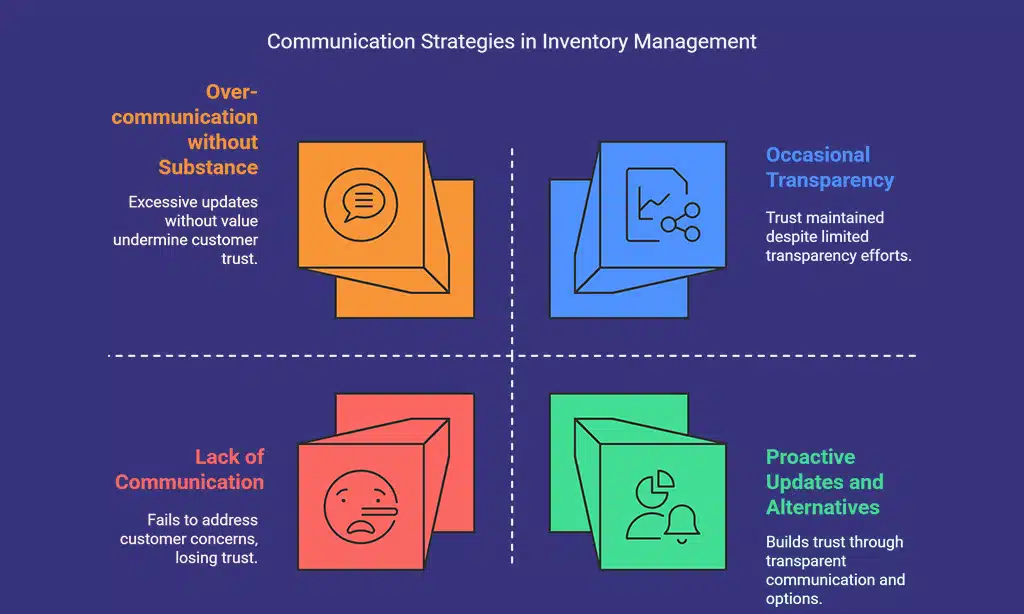
When inventory scarcity affects product availability, clear communication with customers is not just important—it’s essential. A lack of transparency about stock shortages, delays, or limited availability can erode customer trust, damage brand reputation, and drive customers toward competitors.
On the other hand, businesses that proactively update customers, offer alternatives, and manage expectations effectively can maintain strong customer relationships and even enhance brand loyalty during challenging times.
By adopting strategies for managing inventory scarcity through transparent and effective communication, businesses can turn inventory challenges into opportunities for strengthening customer trust.
Best Practices for Customer Communication
- Update Customers on Stock Status: Provide real-time inventory updates via website and email.
- Offer Alternative Products: Recommend similar items if a product is unavailable.
- Be Honest About Delays: Inform customers about potential delays and expected restocking dates.
- Use Loyalty Incentives: Offer discounts or loyalty rewards for affected customers.
- Provide Self-Service Options: Enable customers to track orders and check availability online.
Transparency strengthens customer relationships and maintains brand loyalty during scarcity.
8. Implementing Agile Supply Chain Strategies
An agile supply chain allows businesses to respond quickly to changing market conditions, demand fluctuations, and supply chain disruptions. Unlike traditional, rigid supply chains, an agile approach emphasizes flexibility, real-time decision-making, and rapid adjustments to inventory management.
By adopting agile methodologies, businesses can maintain better control over inventory during times of scarcity, minimize financial losses, and enhance operational efficiency.
How to Build an Agile Supply Chain:
Increase Supply Chain Visibility – Use real-time tracking and predictive analytics to monitor supply fluctuations.
Shorten Lead Times – Reduce the time it takes to replenish stock by working with efficient suppliers and manufacturers.
Develop Cross-Functional Teams – Ensure departments like procurement, logistics, and sales work together to make fast inventory decisions.
Utilize On-Demand Manufacturing – Implement just-in-time production models to match supply with actual demand.
Enable Rapid Supplier Shifts – Build relationships with multiple suppliers to allow quick transitions when one source is unavailable.
Example: Companies like Zara and H&M use agile supply chain models to quickly adjust production and stock allocation based on current market demand, reducing the impact of inventory shortages.
9. Strengthening Inventory Collaboration Across Departments
Inventory management is not just the responsibility of warehouse teams—it requires collaboration across multiple business functions, including procurement, sales, marketing, finance, and customer service. When teams work in silos, inventory shortages may be exacerbated due to miscommunication, conflicting priorities, and inefficient stock distribution.
A cross-functional inventory strategy ensures that all departments align to optimize stock levels, improve demand forecasting, and prevent supply chain inefficiencies.
Best Practices for Cross-Department Collaboration:
Centralize Inventory Data – Use cloud-based platforms to provide real-time stock visibility to all teams.
Align Sales & Inventory Goals – Ensure marketing and sales campaigns match actual product availability.
Improve Forecasting with Cross-Team Input – Combine data from finance, sales, and procurement for more accurate predictions.
Establish Clear Communication Protocols – Schedule regular cross-department meetings to discuss inventory levels and potential challenges.
Use Collaboration Tools – Implement ERP systems, inventory dashboards, and AI-driven analytics to improve team coordination.
Example: Amazon synchronizes its inventory, sales, and logistics teams using AI-powered demand forecasting tools to maintain seamless stock availability across global fulfillment centers.
10. Utilizing Dropshipping and Third-Party Logistics (3PL)
Dropshipping and third-party logistics (3PL) solutions can help businesses reduce inventory-related risks, minimize holding costs, and improve product availability without maintaining large stock reserves.
Dropshipping: Instead of stocking products, businesses partner with suppliers who handle storage and direct shipping to customers. This minimizes inventory risks and prevents shortages from impacting order fulfillment.
Third-Party Logistics (3PL): Outsourcing logistics to 3PL providers helps companies improve warehouse efficiency, optimize stock distribution, and speed up fulfillment during inventory shortages.
Benefits of Dropshipping & 3PL in Inventory Scarcity:
- Eliminates the need for large safety stock reserves.
- Allows businesses to continue selling even when their own stock is low.
- Reduces warehousing costs and prevents overstocking of slow-moving products.
- Provides flexibility in supply chain management, reducing dependency on in-house logistics.
Example: Retailers like Wayfair and Gymshark use dropshipping and 3PL partnerships to reduce inventory risks while ensuring customers receive products on time even during high-demand periods.
Takeaways
Managing inventory scarcity requires a multi-faceted approach, integrating demand forecasting, supplier collaboration, inventory optimization, technology, and contingency planning. By implementing these strategies for managing inventory scarcity, businesses can navigate stock shortages effectively, ensuring operational continuity and customer satisfaction.
As supply chain complexities continue to evolve, proactive planning and agile response mechanisms will be essential for long-term success. Invest in smart inventory management today to build resilience for the future.
Which strategy has worked best for your business? Share your insights in the comments below!

























