


Receiving a denial for your personal injury claim can be frustrating and overwhelming, especially when you are counting on compensation for medical bills, lost wages, and other damages.
However, a denial does not mean the end of the road.
There are specific steps you can take to challenge the decision and potentially overturn it. In this guide, we will walk you through 7 Steps to Take if Your Personal Injury Claim is Denied in Australia to help you navigate the appeals process and fight for your rightful compensation.
Understanding Personal Injury Claim Denials in Australia
Before proceeding with an appeal, it is crucial to understand why your personal injury claim may have been denied and what options you have for recourse.
Common Reasons for Claim Denial
Insurance companies deny claims for various reasons, including:
- Insufficient evidence – Lack of proper documentation supporting your injuries or accident.
- Missed deadlines – Filing outside the statutory time limits.
- Disputes over liability – The insurer does not believe the other party was responsible.
- Policy exclusions – The insurer argues that your case falls outside coverage.
- Pre-existing conditions – The insurer claims your injury existed before the accident.
How Denial Impacts Your Compensation Rights
A denied claim means you will not receive compensation unless you successfully appeal or take legal action. This could leave you financially burdened with medical expenses, lost income, and rehabilitation costs.
Can You Challenge a Denied Personal Injury Claim?
Yes! Many denied claims are overturned on appeal. Understanding the steps to take if your personal injury claim is denied in Australia will significantly improve your chances of success.
Step 1: Review the Denial Letter Carefully
After receiving the denial, the first and most crucial step is to carefully review the denial letter sent by your insurer. Understanding the specifics of why your claim was rejected will help you determine the best course of action to challenge it.
Key Information to Look For in the Letter
- The specific reason for denial, such as lack of evidence, policy exclusions, or missing information.
- References to policy exclusions or terms that the insurer claims disqualify your case.
- Deadlines for appeal or further action to ensure you don’t miss any crucial timeframes.
- Any instructions on how to submit additional evidence or request reconsideration.
- Contact information for the claims department in case you need clarification.
Understanding the Insurer’s Justification
Some denials result from technical errors or incomplete paperwork, which can be corrected easily. Others may stem from disputes over liability or disagreements regarding the severity of injuries. Carefully reviewing your policy and comparing it to the insurer’s reasoning can help identify discrepancies or areas where additional evidence is needed.
If you believe the denial is unfounded, you can start gathering necessary documentation to build a stronger case for your appeal. Being proactive at this stage will improve your chances of overturning the insurer’s decision.
Step 2: Gather Additional Evidence to Support Your Claim
If your claim was denied due to a lack of evidence, gathering additional documentation is crucial for your appeal. The more evidence you provide, the stronger your case will be when challenging the insurer’s decision.
Key Pieces of Evidence to Strengthen Your Case
- Medical Reports and Expert Opinions – Obtain updated medical assessments, diagnostic test results, and expert opinions from healthcare professionals who can verify the severity of your injuries and their impact on your daily life.
- Witness Statements and Accident Reports – Collect written statements from individuals who witnessed the accident, police reports, CCTV footage (if available), and any photographic evidence that can support your version of events.
- Employment and Financial Loss Documentation – Provide proof of lost wages, employment records, tax statements, and financial hardship due to your injury. If applicable, include letters from your employer detailing work restrictions or job loss resulting from your injuries.
- Rehabilitation and Treatment Plans – Submit records of physical therapy sessions, rehabilitation plans, and ongoing medical treatments that demonstrate the long-term effects of your injuries.
- Correspondence with the Insurer – Keep copies of all letters, emails, and documents exchanged with the insurance company, including their denial letter, responses to inquiries, and any prior attempts to resolve the issue.
- Independent Medical Examinations (IME) – If your insurer disputes your medical claims, consider obtaining an independent medical examination from a certified specialist to validate your injuries and prognosis.
Organizing Your Evidence Effectively
To ensure a smooth appeal process, organize your documentation in a structured format:
| Document Type | Description | Purpose |
| Medical Records | Reports from doctors, test results | Prove the severity of your injuries |
| Witness Statements | Statements from accident witnesses | Support your version of events |
| Employment Records | Payslips, tax returns | Demonstrate lost income due to injury |
| Police Reports | Official reports on the incident | Establish liability and accident details |
| Photographic Evidence | Images of injuries, accident scene | Strengthen the claim with visual proof |
| Insurer Correspondence | Emails, denial letters, responses | Track insurer interactions and disputes |
By compiling a well-documented appeal with substantial supporting evidence, you increase the likelihood of having your claim successfully reconsidered by your insurer. If needed, seeking guidance from a personal injury lawyer can further improve your chances of overturning a denial.
Step 3: Consult a Personal Injury Lawyer
If your claim is denied, seeking professional legal advice can significantly improve your chances of a successful appeal. A qualified personal injury lawyer can assess your case, determine the best course of action, and help you gather compelling evidence to support your claim.
Why Legal Advice Matters in Denied Claims
- Lawyers understand insurance laws and can identify flaws in the insurer’s reasoning.
- They have experience handling similar cases and know how to structure a successful appeal.
- They can negotiate settlements with the insurer to avoid prolonged legal battles.
- A lawyer can guide you through alternative dispute resolution options like mediation or arbitration.
How a Lawyer Can Strengthen Your Appeal
- Ensure all required evidence is submitted, including expert reports and detailed documentation.
- Negotiate directly with the insurance company to maximize your compensation.
- Represent you in court proceedings if necessary, ensuring that your case is presented with strong legal arguments.
- Advise on litigation costs and timeframes, helping you make an informed decision on whether to proceed to court.
- Assist in filing complaints with regulatory bodies, such as the Australian Financial Complaints Authority (AFCA), if the insurer is acting in bad faith.
Step 4: File a Formal Appeal with Your Insurer
Once you have gathered additional evidence and sought legal advice, it’s time to file a formal appeal. This step is crucial in ensuring that your case gets a second review and potentially overturns the initial decision.
Steps to Draft an Effective Appeal Letter
- State your case clearly – Provide a concise but detailed explanation of why you believe the denial was incorrect.
- Reference relevant policies and laws – Highlight any policy terms that support your claim and mention relevant Australian legal provisions.
- Attach supporting evidence – Include medical reports, witness statements, police reports, and expert opinions to strengthen your case.
- Request reconsideration – Formally ask for a reassessment of your claim and specify what outcome you seek.
- Provide a timeline of events – Clearly outline when the incident occurred, when you filed your claim, and how the denial has impacted you.
- Maintain a professional and assertive tone – Avoid aggressive language but be firm in your argument.
- Follow the insurer’s appeals process – Adhere to any specific appeal procedures outlined in the denial letter.
What to Include in Your Appeal Submission
| Document Type | Purpose |
| Medical Records | Prove the extent of your injuries |
| Police/Accident Report | Establish liability and fault |
| Witness Statements | Strengthen your version of events |
| Expert Opinions | Validate medical and accident claims |
| Employment Records | Demonstrate loss of wages due to injury |
| Insurance Policy Terms | Highlight coverage applicable to your claim |
Tips for Strengthening Your Appeal
- Double-check all submitted documents for completeness and accuracy.
- Keep records of all communications with your insurer for future reference.
- Send your appeal via registered mail or email to ensure it reaches the insurer and you receive confirmation of submission.
- Follow up regularly to track the progress of your appeal.
Filing a well-prepared appeal can significantly increase the chances of reversing a denied claim. If the appeal is unsuccessful, you can explore further dispute resolution options.
Step 5: Consider Mediation or Dispute Resolution
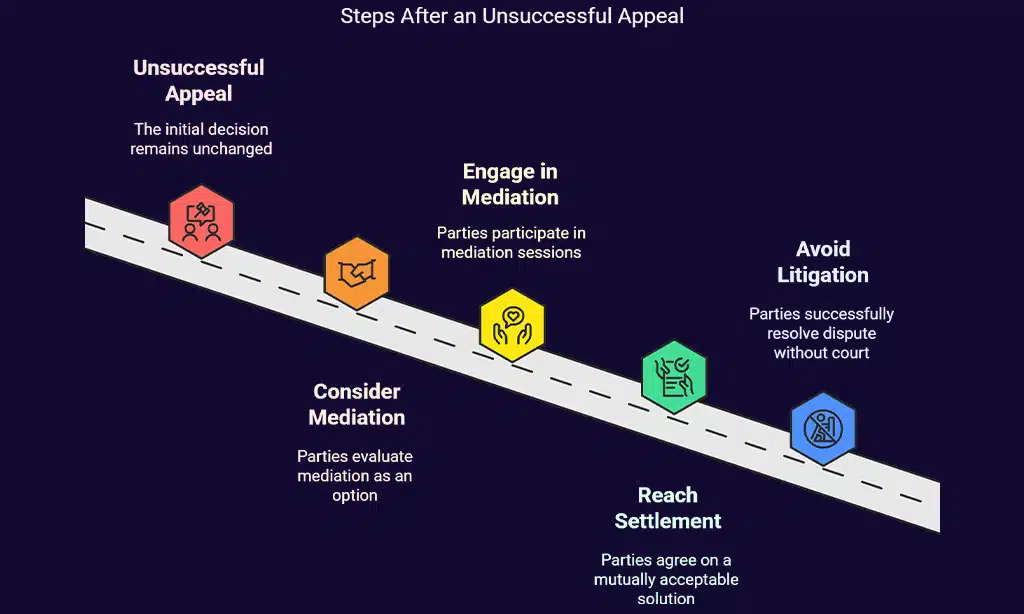
If your appeal is unsuccessful, mediation or dispute resolution can be the next step before taking legal action. Mediation provides an opportunity for both parties to resolve disputes outside of court, potentially leading to a mutually agreeable settlement without the stress and expenses of litigation.
How Mediation Works for Personal Injury Disputes
- A neutral mediator helps both parties reach a fair settlement by facilitating discussions and finding common ground.
- It is typically less expensive and time-consuming than court proceedings.
- Mediation allows for a more informal and flexible process, where both sides can openly discuss their concerns.
- The process remains confidential, which helps protect sensitive medical and financial details.
- While mediation is not legally binding, agreements reached can be formalized into enforceable contracts.
Alternative Dispute Resolution (ADR) Options
- Negotiation – Direct discussions with the insurer where both parties attempt to reach a compromise without third-party involvement.
- Ombudsman Review – A free service where an independent ombudsman assesses the case and recommends a resolution based on fairness and policy terms.
- Arbitration – A formal but less adversarial process than court, where an independent arbitrator reviews the evidence and issues a legally binding decision.
- Conciliation – Similar to mediation, but with a more active role from the conciliator, who may suggest solutions and influence the negotiation process.
By exploring mediation and alternative dispute resolution options, you may find an efficient and fair way to settle your claim without resorting to litigation. If these steps do not yield satisfactory results, the next course of action may involve escalating the matter through the legal system.
Step 6: Seek Legal Representation for Court Proceedings
If all alternative dispute resolution methods fail, taking legal action through the courts may be necessary. Seeking legal representation ensures that you have an expert advocating for your rights and presenting a compelling case in court.
Why Legal Representation is Crucial
- Lawyers understand the legal framework surrounding personal injury claims and can provide strategic advice.
- They can gather and present strong evidence to support your case.
- Court proceedings can be complex, and having an attorney ensures proper adherence to legal procedures.
Steps to Filing a Lawsuit
- Lodging a Statement of Claim – A formal document outlining your claim is submitted to the court.
- Pre-trial Negotiations – Efforts may be made to settle the case before trial.
- Court Hearings and Evidence Presentation – Both parties present their cases before a judge.
- Judgment and Compensation – The court decides whether compensation should be awarded and in what amount.
Step 7: Consider Legislative or Governmental Assistance
If financial constraints or legal roadblocks prevent you from pursuing a lawsuit, consider seeking help from legal aid services or government organizations that support personal injury claimants.
Available Resources for Assistance
- Legal Aid Services – Government-funded legal assistance for eligible individuals who cannot afford private representation.
- Community Legal Centres – Non-profit organizations providing free legal advice and support.
- State Ombudsman Offices – Can assist in investigating unfair insurance practices.
- Personal Injury Advocacy Groups – Organizations that offer guidance and support for injured individuals navigating the claims process.
By taking these additional steps, you maximize your chances of obtaining the compensation you deserve and ensure that justice is served in your personal injury case.
Takeaways
Navigating a denied personal injury claim can be a daunting and emotionally taxing process. However, by taking proactive steps and understanding your rights, you significantly improve your chances of securing the compensation you deserve.
Each stage of the process—from gathering evidence to engaging in mediation or legal proceedings—requires patience, diligence, and a clear strategy. The key is to remain persistent and make informed decisions at every turn. Seeking professional legal advice can provide valuable guidance and increase your likelihood of success.
Remember, a denied claim is not the end of the road; rather, it is a hurdle that, with the right approach, can be overcome. Whether through negotiation, appeals, or litigation, you have multiple pathways to fight for your rightful compensation.
By staying informed and taking decisive action, you can protect your interests and work toward a fair resolution for your case.





















