

When it’s time to put your property on the market, the presentation is everything. However, modern buyers are increasingly looking for sustainability alongside style. Staging an Eco-Friendly Home for Sale allows you to showcase a lifestyle that is both luxurious and responsible, appealing to the growing demographic of “green” buyers who value energy efficiency and non-toxic environments.
By focusing on natural materials and energy-saving highlights, you can create a space that feels fresh, healthy, and inviting. The following guide provides the specific benefits and key factors for a successful green presentation.
Overview: Eco-Friendly Staging Strategies
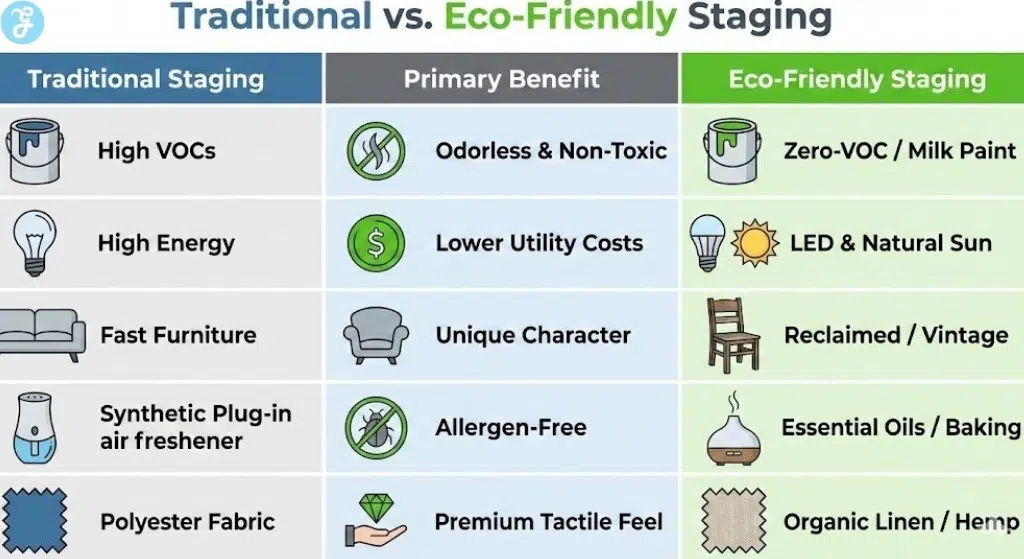
Before diving into the detailed methods, it is helpful to see how sustainable staging compares to traditional methods. This overview highlights why choosing green options can be a major selling point for your property.
| Feature | Traditional Staging | Eco-Friendly Staging | Primary Benefit |
| Paint | Standard (High VOCs) | Zero-VOC / Milk Paint | Odorless & Non-Toxic |
| Lighting | Incandescent/Halogen | LED & Natural Sun | Lower Utility Costs |
| Furniture | New “Fast Furniture” | Reclaimed / Vintage | Unique Character |
| Fragrance | Synthetic plugins | Essential oils / Baking | Allergen-Free |
| Textiles | Synthetic Polyester | Organic Linen / Hemp | Premium Tactile Feel |
Transitioning to these sustainable choices doesn’t just help the planet; it often results in a cleaner, more high-end feel for potential buyers. Let’s look at some quick ways to implement these changes immediately.
7 Essential Strategies for Staging an Eco-Friendly Home for Sale
Creating a sustainable first impression requires a thoughtful approach to every room. It involves ensuring that your décor choices reflect a commitment to the environment without sacrificing the aesthetic appeal that closes deals.
The following list provides a roadmap for transforming your space into a sustainable sanctuary that stands out in the competitive real estate market.
1. Use Low-VOC or Zero-VOC Paints
One of the most effective ways to signal a healthy home is through the air quality. Traditional paints off-gas chemicals for years, but choosing Zero-VOC options provides a neutral, fresh backdrop that tells buyers the home is safe and chemical-free.
-
Best For: Households with children, pets, or buyers with chemical sensitivities.
-
What We Liked: It eliminates “new paint” headaches, dries incredibly fast, and is perceived as a premium “healthy home” feature.
-
Things to Consider: Zero-VOC paint can sometimes be slightly more expensive per gallon than contractor-grade options.
2. Maximize Natural Light and Passive Solar
Sustainability starts with energy efficiency, and nothing shows this off better than sunlight. Open all curtains, remove heavy drapes, and clean the windows thoroughly to let in as much natural light as possible to highlight the home’s natural warmth.
-
Best For: Homes with south-facing windows or large open-plan living areas.
-
What We Liked: It reduces the need for artificial lighting and makes small rooms feel significantly larger and more inviting.
-
Things to Consider: Over-exposure to bright light can highlight dust or floor imperfections if surfaces aren’t perfectly clean.
3. Incorporate Live Indoor Plants for Air Purification
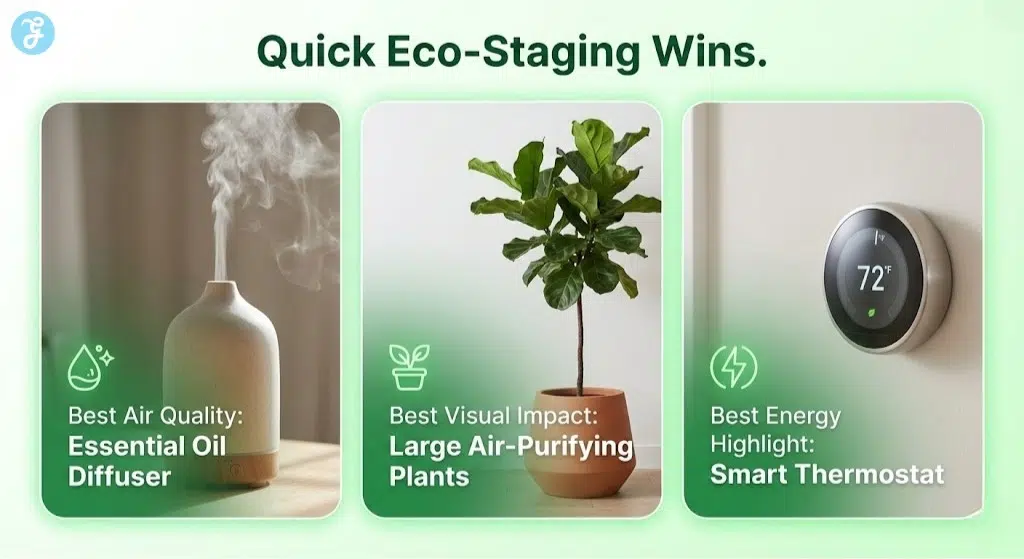
Instead of plastic greenery, use live plants to breathe life into your staging. Plants like Peace Lilies or Snake Plants act as natural air purifiers while adding a vibrant, organic color that emphasizes the “eco” in your eco-friendly presentation.
-
Best For: Brightening up dark corners and creating “biophilic” connections in the living room and bedrooms.
-
What We Liked: Live plants are proven to reduce stress in viewers, improve oxygen levels, and look much better in high-res listing photos.
-
Things to Consider: They require active maintenance (watering and dusting) throughout the entire listing period.
4. Prioritize Sustainable and Organic Textiles
When dressing up beds or sofas, opt for organic cotton, linen, or hemp. These natural textures feel more premium to the touch and resonate with environmentally conscious shoppers who appreciate high-quality materials over petroleum-based synthetics.
-
Best For: Creating a high-end, “quiet luxury” aesthetic in the master suite or guest rooms.
-
What We Liked: Natural textiles are hypoallergenic and breathable; their fibers photograph with much richer texture than polyester.
-
Things to Consider: Natural linens tend to wrinkle more easily than blends, requiring steaming before major showings.
5. Spotlight Energy-Efficient Upgrades
If you have invested in smart thermostats, LED lighting, or Energy Star appliances, make sure they are a focal point. Don’t assume buyers will notice these technical details on their own; you must actively “stage” the information.
-
Best For: Justifying a higher asking price by demonstrating lower future utility costs to the buyer.
-
What We Liked: It appeals directly to the logic and “wallet” of the buyer while proving the home is modern and well-maintained.
-
Things to Consider: Smart technology can occasionally be intimidating to less tech-savvy buyers if the interface isn’t kept simple.
6. Replace Synthetic Scents with Natural Aromas
Avoid synthetic “plug-ins,” which often contain phthalates. Instead, use natural scents like cinnamon sticks or essential oil diffusers. This creates a warm, inviting, and non-toxic aroma that makes the home feel genuinely clean.
-
Best For: Open houses where a high volume of people will be circulating through the space at once.
-
What We Liked: It creates a memorable, sophisticated “scent signature” without triggering chemical allergies or headaches.
-
Things to Consider: Natural scents are often more subtle than synthetics and may need frequent refreshing during long events.
7. Feature Upcycled and Reclaimed Décor
You don’t need to buy everything brand new. Use high-quality reclaimed wood furniture or vintage pieces to add character. Upcycling shows buyers that the home supports a circular economy and offers a unique style.
-
Best For: Adding “soul” and history to newer construction that might otherwise feel clinical.
-
What We Liked: These pieces provide unique “memory points” for buyers and are often far more durable than modern “fast furniture.”
-
Things to Consider: It requires a curated eye for design to ensure the vintage pieces look intentional rather than like clutter.
How to Choose the Best Staging Strategy for Your Market
Deciding which of these tips to prioritize depends largely on your target demographic. If you are selling a family home, focus on non-toxic paints; if it’s a modern luxury condo, focus on energy-efficient tech and sleek textiles.
Understanding the values of your potential buyers will allow you to tailor your Staging an Eco-Friendly Home for Sale efforts to maximize your return on investment.
Wrap-Up: Success in Staging an Eco-Friendly Home for Sale
Successfully Staging an Eco-Friendly Home for Sale is about proving that “green” and “gorgeous” go hand-in-hand. By prioritizing indoor air quality, natural materials, and energy efficiency, you aren’t just selling a house; you are selling a healthier, more sustainable future. This thoughtful approach not only helps the planet but can also significantly increase your home’s appeal and market value.





















