


The path through the messy maze of product development must be methodical. If your business attempts to innovate, then efficiency is key. The Stage-Gate process is a proven roadmap for product development and guides product development projects through the stages of concept to launch seamlessly. This approach can change the game for how organizations plan for new product lifecycles.
The Stage-Gate Process
The Stage-Gate process, conceived in the early 1980s, is one of the most powerful tools in product development. It separates projects into clear phases with defined deliverables. For each stage, you have a gate, which is essentially a checkpoint where you allow the project to proceed if decision-makers believe it can provide business value. This means better strategic alignment and project visibility for a product development services company.
Stages may include idea generation, scoping, business-case development, development, testing, and launch. These stages can be defined clearly and made transparent, maintaining the transparency of the activity. Such a systematic approach reduces the inherent risks of product development by providing a systematic way to assess the product.
Advantages of the Stage-Gate Process
Implementing the Stage-Gate process has many benefits. First, it improves project management by clarifying guidelines and expectations. This enables teams to understand their responsibilities and concentrate on achieving good outcomes. In addition, uncertainty is minimized using this methodology. At each gate, by evaluating projects, companies can find early warning signs and address potential problems in time.
It also encourages interdepartmental collaboration. With involvement from cross-functional teams, a diverse evaluation of the project ensures a well-rounded approach. This inclusiveness frequently results in innovative solutions, which provide businesses with competitive advantages.
The Key to Success
The Stage-Gate process is sound, but its success depends on several things. Strong leadership is crucial. Leadership must deliver the methodology, highlight its benefits, and adhere to its practices. In addition, communication is essential, as it keeps teams aligned with frequent updates and feedback loops.
A third important consideration relates to resource allocation. Each stage must be given its due resources, both time and finances. Lack of investment will trigger hasty decisions and project degradation. Finally, flexibility is still necessary. This leads to tailoring the process according to an organization’s needs.
Cautions and Concerns
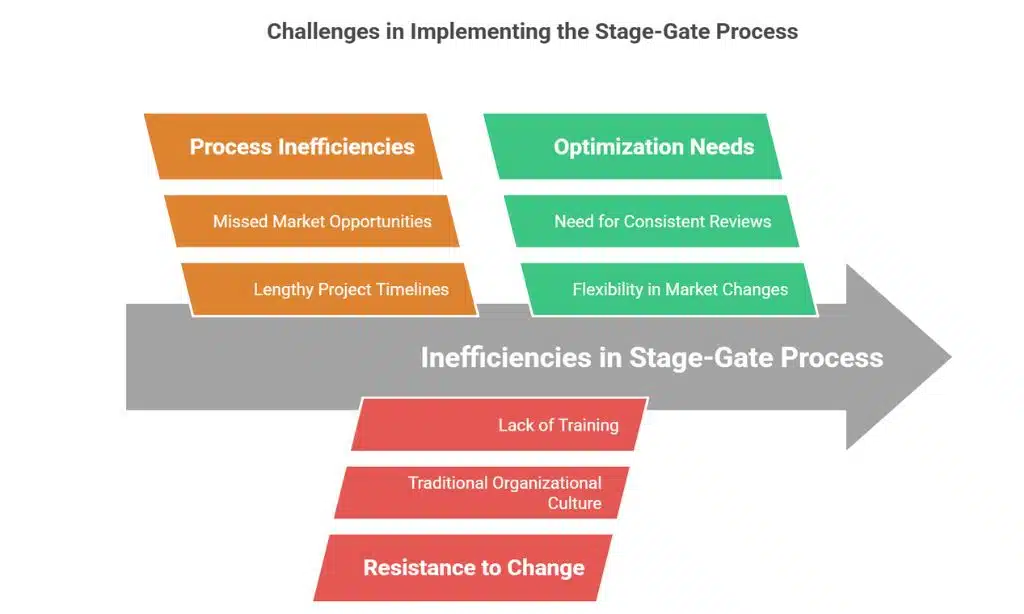
The Stage-Gate process has applications, but it also has its challenges. The biggest concern relates to the process itself. Projects can take longer to get through with so many stages and checks. Finding a balance between being thorough and fast is important so that the market opportunities are not missed.
Another issue is resistance to change. This structured approach may be difficult for organizations deeply rooted in tradition. Training to address concerns and build the process’s worth helps smooth transitions.
Besides, the process needs optimization. It maintains its place in the quickly shifting market landscape through consistent reviews and updates. This will allow businesses to stay flexible, enabling them to remain effective while taking on new ideas.
Real-World Applications
The Stage-Gate method has been effective across many industries. Even in technology, it simplifies software development, ensuring timely product releases. Pharmaceuticals gain by lessening the risks of lengthy research and development cycles. Even consumer goods companies use this approach to achieve breakthrough products that can be sold quickly.
It represents a competitive advantage for startups and small enterprises. Giving it some structure allows these organizations to compete with big players, thus enabling growth and sustainability.
Adapting the Process to Modern Times
The Stage-Gate process must also evolve as business changes. It incorporates digital tools today, which increase its efficiency. Communication and documentation are crucial; any project management software will ensure that teams can work together efficiently.
Many of these processes can be improved by applying some agile principles. The flexible and iterative process helps companies adapt quickly to changing market needs. Hybrid models, blending elements of Stage-Gate with agile principles, provide a balance that can nurture innovation without sacrificing structure.
To Sum Up
The Stage-Gate process is still valuable in searching for product development efficiency. It allows organizations to manage projects by offering a structured framework, reducing risks, and increasing innovation. However, when organizations adapt the process to their needs, they maintain their place in the fast-paced market.
Adopting this methodology will provide businesses looking to improve their product development practices with a sustainable journey. The Stage-Gate process can provide the ideal way to turn ideas into market-leading products through collaboration, accountability, and innovation.





















