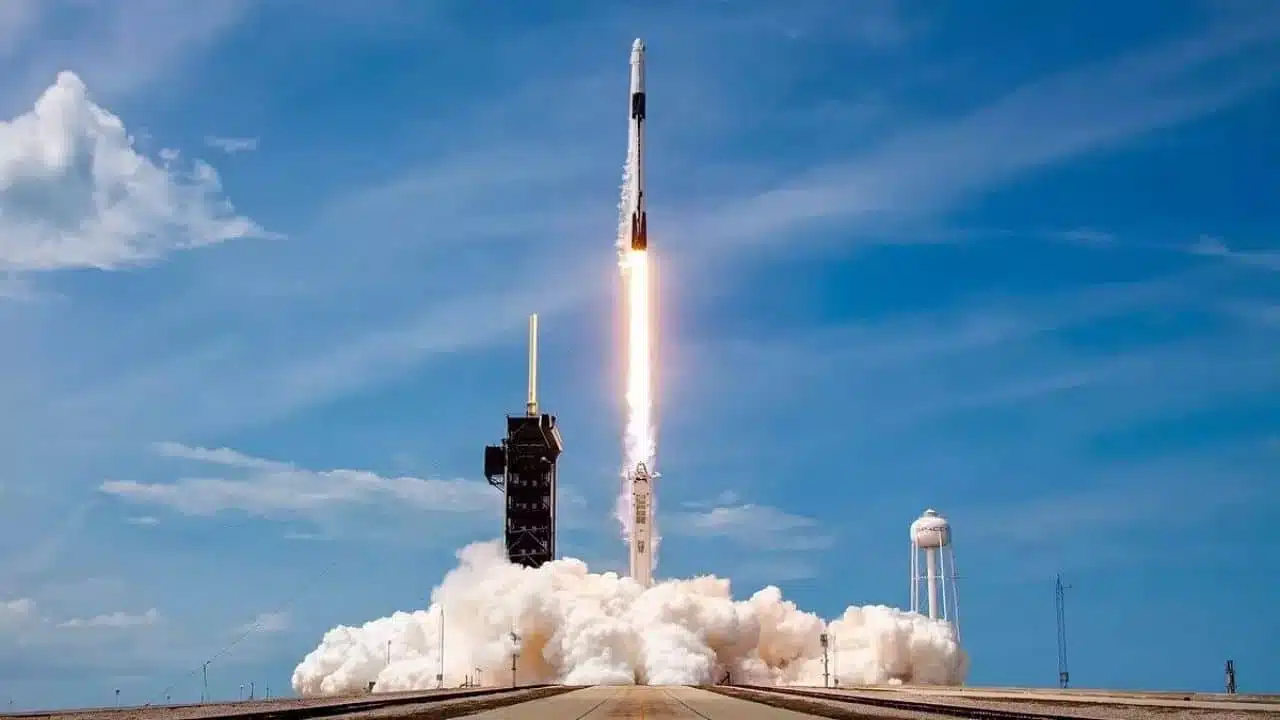
SpaceX has temporarily grounded its Falcon 9 rocket following a technical issue encountered during the recent Crew-9 mission, which successfully sent NASA astronaut Nick Hague and Russian cosmonaut Aleksandr Gorbunov to the International Space Station (ISS). While the launch achieved its primary goal, an unexpected problem with the rocket’s upper stage led SpaceX to postpone its next planned launch as they investigate the issue.
Crew-9: A Milestone for SpaceX and NASA
The Crew-9 mission, part of NASA’s Commercial Crew Program, lifted off on Saturday, September 28, from Cape Canaveral Space Force Station in Florida. Aboard the Crew Dragon capsule, dubbed “Freedom,” were NASA astronaut Nick Hague and Russian cosmonaut Aleksandr Gorbunov. The mission marked another milestone in the collaboration between SpaceX and NASA, as SpaceX has become a crucial partner in ferrying astronauts to and from the ISS, reducing NASA’s reliance on Russian spacecraft for manned missions.
Everything seemed to go flawlessly at first. The Falcon 9’s first stage, known for its reusability, successfully landed back on Earth shortly after liftoff, marking another successful recovery of a rocket stage, a key feature in SpaceX’s cost-saving strategies. The second stage, tasked with carrying the Crew Dragon capsule into orbit, deployed “Freedom” into its intended orbit. The capsule is currently en route to the ISS and is scheduled to dock on Sunday afternoon, September 29, as planned.
However, despite the success of the crewed mission, SpaceX later revealed that the rocket’s second stage encountered an issue after completing its mission.
What Went Wrong with the Falcon 9 Rocket?
SpaceX announced early Sunday morning that the upper stage of the Falcon 9 rocket had an “off-nominal deorbit burn.” While the second stage was supposed to perform a controlled descent and fall into the ocean as planned, it ended up deviating from its intended landing zone. According to the company’s statement on X (formerly known as Twitter), the second stage “safely landed in the ocean, but outside of the targeted area.” This unexpected event has led SpaceX to temporarily halt future launches while they investigate the root cause of the problem.
SpaceX’s post emphasized safety as their top priority: “We will resume launching after we better understand the root cause.” This cautious approach has been a hallmark of SpaceX’s operations, particularly given their rapid launch cadence and the technical challenges associated with reusable rocket technology.
Impact on Upcoming SpaceX Missions
The issue with Crew-9’s Falcon 9 rocket has had immediate consequences for SpaceX’s busy launch schedule. A Falcon 9 rocket was slated to launch 20 broadband satellites for Eutelsat OneWeb from Vandenberg Space Force Base in California on Sunday night, just a day after Crew-9’s launch. However, that mission has been postponed until further notice as SpaceX focuses on understanding and addressing the issue with the Falcon 9 upper stage.
With SpaceX managing numerous missions for both private and government clients, any delay can have a ripple effect across their launch calendar. The company is known for its high launch frequency, and it has played a pivotal role in launching communication satellites, ISS resupply missions, and NASA’s crewed missions. The temporary grounding could impact these timelines, though SpaceX has shown resilience in quickly resolving past issues.
A Recent Pattern of Falcon 9 Upper-Stage Issues
This latest issue marks the second time in less than three months that the Falcon 9’s upper stage has encountered a problem. Back in July, during the launch of 20 Starlink internet satellites, the rocket experienced a liquid oxygen leak in its upper stage, which caused the satellites to be deployed too low in Earth’s orbit. As a result, the Starlink satellites were lost. SpaceX traced the problem to a cracked line in the liquid-oxygen system that affected a pressure sensor in the upper stage.
SpaceX managed to return Falcon 9 to service quickly after the July incident, with the rocket completing a successful mission just two weeks later on July 27. The company’s ability to identify and fix issues quickly has been crucial to maintaining its high launch cadence. Despite these challenges, SpaceX’s Falcon 9 continues to be the workhorse of the company’s fleet, supporting a wide range of missions from satellite deployments to crewed flights.
Additionally, in August, another Falcon 9 rocket experienced a first-stage landing failure. Though the mission itself was otherwise successful, the first stage did not land as expected. SpaceX quickly resolved the issue, returning Falcon 9 to service just three days later, with two successful launches and flawless landings. These rapid turnarounds demonstrate SpaceX’s ability to handle setbacks and quickly resume operations, but the recurrence of issues with the Falcon 9’s upper stage is notable, prompting increased scrutiny from engineers.
Crew-9’s Mission to the ISS
Despite the issue with Falcon 9’s upper stage, the Crew-9 mission itself is proceeding according to plan. The Crew Dragon capsule, “Freedom,” is on course to dock with the ISS on Sunday afternoon. Once Hague and Gorbunov arrive at the ISS, they will join the station’s crew for a stay that is expected to last approximately five months. During their time aboard the ISS, the astronauts will participate in a variety of scientific experiments, maintenance work, and outreach activities aimed at promoting space exploration.
The Crew-9 mission is part of a broader effort by NASA and SpaceX to maintain a continuous human presence aboard the ISS. These missions not only support vital research but also contribute to the broader goal of returning humans to the Moon under NASA’s Artemis program and, eventually, sending astronauts to Mars.
Changes to Crew-9’s Manifest Following Starliner Issues
Interestingly, Crew-9’s manifest was adjusted prior to launch due to issues with Boeing’s Starliner spacecraft. NASA astronauts Butch Wilmore and Suni Williams, who have been aboard the ISS since June, were originally scheduled to return to Earth aboard Starliner. However, a problem with the spacecraft’s thrusters during its time in orbit led NASA to deem a crewed return too risky.
As a result, NASA decided to modify the Crew-9 mission, making room for Wilmore and Williams aboard the Crew Dragon capsule “Freedom.” They will return to Earth alongside Hague and Gorbunov in February, following the conclusion of their five-month mission. This change underscores the flexibility of NASA’s Commercial Crew Program and highlights the importance of having multiple vehicles capable of carrying astronauts to and from the ISS.
What’s Next for SpaceX and the Falcon 9 Rocket?
SpaceX is currently focused on investigating the cause of the off-nominal deorbit burn that affected the Falcon 9’s second stage during the Crew-9 mission. The company has a strong track record of resolving issues quickly, and the Falcon 9 is expected to return to service after SpaceX’s engineering team identifies and addresses the underlying problem.
In the meantime, the delay of the Eutelsat OneWeb satellite launch is likely to be temporary, and SpaceX’s broader launch schedule may see some adjustments in the coming weeks. However, given the company’s experience in managing such issues, it is likely that Falcon 9 will resume flights soon.
For now, all eyes are on Crew Dragon as it continues its journey to the ISS. Hague and Gorbunov’s arrival at the space station will mark another successful chapter in the ongoing collaboration between SpaceX and NASA, further cementing SpaceX’s role as a leader in space transportation.
As the investigation into the Falcon 9’s upper-stage issue unfolds, SpaceX will be working to ensure the continued safety and success of its missions, reinforcing its commitment to innovation and reliability in the space industry.
Despite the upper-stage anomaly during the Crew-9 launch, SpaceX’s Crew Dragon capsule is on track to reach the ISS as scheduled. While the Falcon 9 rocket is temporarily grounded, SpaceX’s swift action in investigating and resolving previous issues suggests that the rocket will be back in service shortly. Crew-9’s mission remains on schedule, and NASA continues to trust SpaceX’s capability in delivering astronauts safely to the ISS. The growing partnership between NASA and SpaceX is proving vital for the future of human space exploration, and incidents like this, though challenging, contribute to the development of more robust and reliable space travel technology.