
Trying to decide SEO Vs SEM: Where Should A Startup Spend First? If you are short on cash and hungry for traction, this choice can shape your next six months.
Here is the short answer: Search Engine Optimization usually makes more sense as the first serious build for long-term website traffic, while Search Engine Marketing and PayPerClick ads make more sense when you need leads fast.
The hard part is matching the channel to your runway, margins, and goals.
I am going to walk you through costs, timing, targeting, and a simple way to choose without wasting your marketing budget.
Understanding SEO
SEO helps you earn organic search visibility instead of paying for every click. For a startup, that usually means building pages that answer real buyer questions, fixing technical issues, and publishing content that matches search intent.
Google’s SEO Starter Guide says pages that follow its Search Essentials are more likely to appear in search. That is why good SEO starts with clean site structure, useful pages, and solid keyword research, not hacks.
Benefits of SEO for Emerging Businesses
SEO takes patience, but it gives your startup something paid ads never can: traffic that can keep coming after the monthly spend is gone.
It also improves the basics of your site, which helps conversion rate and user trust at the same time.
- It builds a real traffic asset. A blog post, landing page, or feature page can keep bringing in visits for months if it ranks well. That makes SEO a smart fit for startups that need sustainable startup growth, not just a short spike.
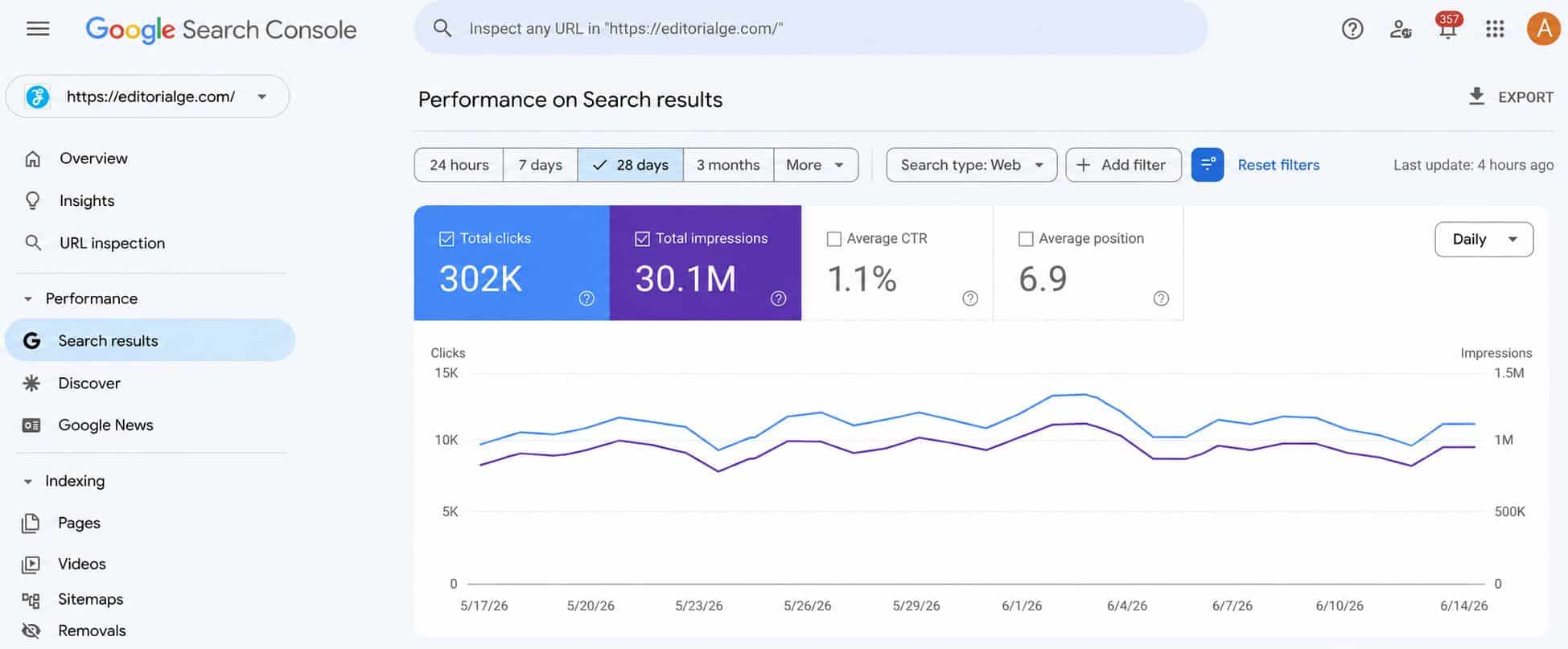
- It gives you clear numbers to work from. In Google Search Console, the Performance report shows clicks, impressions, average CTR, and average position, with the default view covering the last three months. Use that report to spot pages with high impressions but weak CTR, then rewrite titles and descriptions first.
- It helps you fix what is slowing buyers down. PageSpeed Insights combines real-world Chrome user data with Lighthouse lab tests, and a score of 90 or above is marked as good. Start with your homepage, pricing page, and demo or signup page, because speed issues on those pages hurt leads more than speed issues on old blog posts.
- It can start smaller than many founders expect. In Ahrefs’ 2024 pricing survey, the most common monthly SEO retainer was $501 to $1,000, and 42.8% of providers fell between $501 and $2,000. If your budget is tight, that is a clue to keep the scope narrow: one technical cleanup, a small keyword strategy, and a few high-intent pages.
- It improves paid performance later. When your landing pages are clearer and your site structure is stronger, your future paid search campaigns usually convert better too. Good SEO work supports all of your digital marketing, not just rankings.
SEO’s Role in Sustained Business Growth
SEO is slower because you are building trust, coverage, and relevance at the same time. A new domain often needs months before search engines and users treat it like a credible option.
A recent SEO timeline guide from Search Engine Land says many sites start seeing measurable movement in about three to six months, with bigger gains often taking six to twelve months. That timeline is a lot easier to accept when you track leading signals such as impressions, clicks, and top queries instead of staring at rankings every day.
Use SEO when you want each month of work to stack on top of the last one, instead of starting from zero every time you stop paying for clicks.
One more practical tip: Google’s own Search Console guidance recommends focusing more on trends in impressions and clicks than on position alone. For a startup, that means your content marketing plan should chase pages that are already getting seen, then improve those pages before you create ten more.
Exploring SEM
SEM is the fast lane of search. In day-to-day startup talk, founders usually use it to mean paid search ads, especially Google Ads, even though the term can be broader.
If SEO builds long-term equity, SEM buys immediate online visibility. You can launch a campaign, get traffic quickly, and learn which offers and keywords are strong enough to turn into sales.
Immediate Advantages of SEM for Startups
SEM is useful when speed matters more than patience. It lets you test demand before you spend months building out a full organic content library.
- You can control spend closely. Google Ads lets you set an average daily budget and change it any time. The current Google Ads help docs also note that spend can run up to two times your daily budget on a given day, but monthly charges are capped at 30.4 times that daily budget, which matters if your cash flow is tight.
- You can pause quickly. If a product launch underperforms or your sales team gets overloaded, you can pause or resume ads without waiting for rankings to move.
- You can test keyword strategy before writing a lot of content. Google Keyword Planner shows average monthly searches, competition signals, and top-of-page bid ranges. It also offers forecasts, which makes it useful for choosing which buyer-intent terms deserve a landing page first.
- You can target with much more precision. Google Ads supports targeting by location, language, schedule, and demographics. If your startup only sells in a few states or only answers leads during business hours, that precision keeps your paid advertising from leaking budget.
- You can improve efficiency with ad quality. Google says higher ad quality can lead to better ad positions and lower cost per click. Quality Score is a 1 to 10 diagnostic, and the fastest wins usually come from tighter ad groups, clearer ad copy, and landing pages that match the search term exactly.
How SEM Achieves Quick Results
Paid search works fast because it puts you in front of people who are already searching. You are not waiting for pages to age, earn links, or build authority.
That speed makes SEM a strong first move for launches, pricing tests, waitlists, and demos. You can send traffic to one focused page, track clicks and conversions, and know within days if the offer has a shot.
- Pick a narrow group of buyer-intent keywords.
- Send them to one page with one offer.
- Measure cost per lead before you expand.
The biggest startup mistake is running broad campaigns too early. If the ad, keyword, and landing page are all trying to say different things, you pay for noisy traffic instead of useful learning.
Comparing SEO and SEM
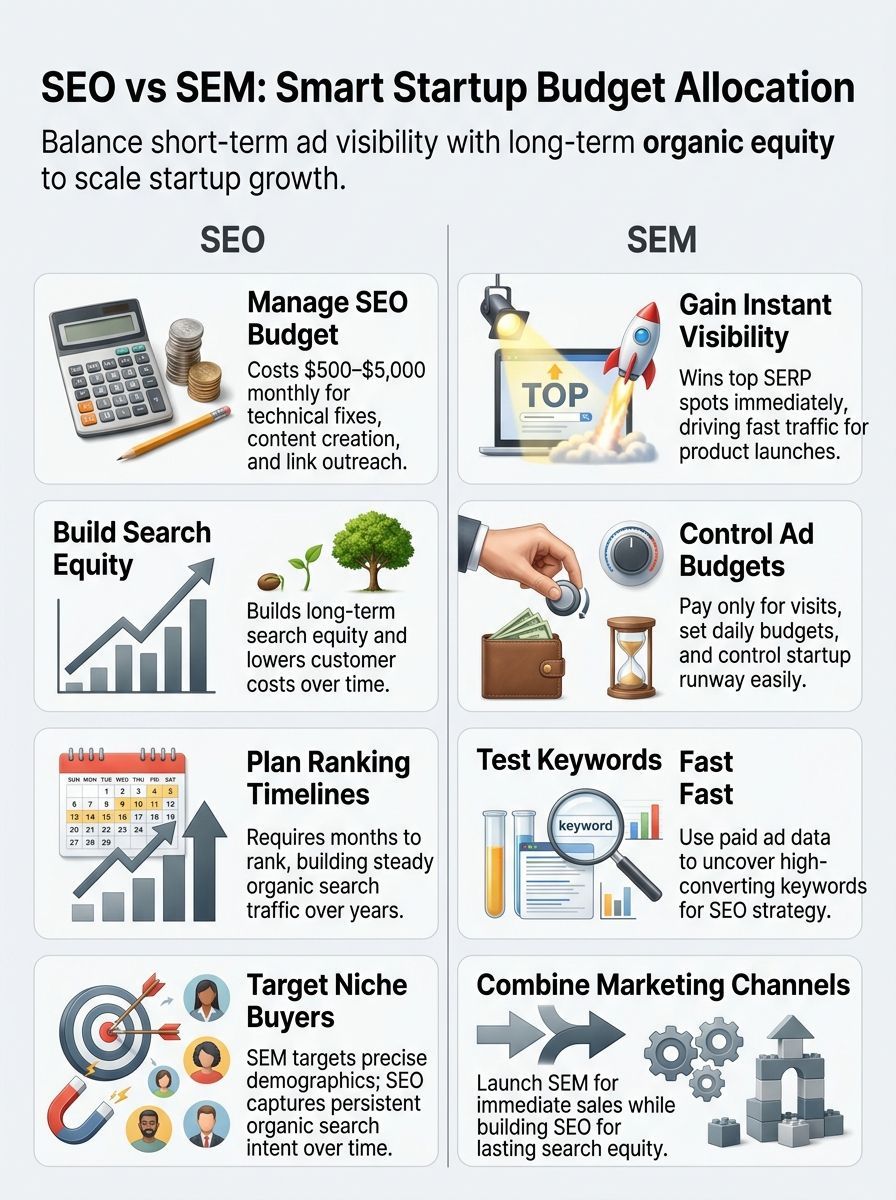
To compare SEO and SEM the right way, stop asking which one is better in theory. Ask which one fits your cash, timeline, and marketing strategy right now.
Analyzing Costs: SEO Versus SEM
The table below gives you a cleaner way to compare search engine optimization and paid search for a U.S. startup.
| Cost Aspect | SEO | SEM |
|---|---|---|
| How you pay | Mainly for content marketing, technical fixes, and page improvements. | You pay for traffic as clicks come in through PPC campaigns. |
| Useful U.S. benchmark | Ahrefs’ 2024 survey found the most common retainer was $501 to $1,000 per month, and 42.8% charged $501 to $2,000. | WordStream’s 2026 U.S. benchmark, based on more than 13,000 campaigns, reported a $5.42 average CPC, 8.18% average conversion rate, and $66.69 average cost per lead. |
| What happens if you stop spending | Your best pages can keep bringing in organic traffic. | Traffic drops as soon as campaigns pause. |
| Best fit | Founders who can wait for compounding growth and want lower acquisition costs later. | Founders who need fast validation, quick lead flow, or short-term reach. |
| Big risk | Spending months on content with no clear keyword research or weak technical setup. | Buying clicks before the offer, landing page, or funnel is ready. |
Those SEM averages are not a promise, but they are a useful screening tool. If your first sale or first booked call cannot support something close to that cost per lead, broad paid search may be too expensive for your startup right now.
Results Timeline: SEO Compared to SEM
Speed is the clearest difference in the SEO vs SEM debate.
| Timeline Question | SEO | SEM |
|---|---|---|
| How fast can traffic start? | Usually slow, with early movement often showing in 3 to 6 months. | Often same day or within a few days after launch. |
| When do bigger gains show up? | Often 6 to 12 months after consistent work. | As soon as campaigns, bids, and landing pages start working. |
| What do you learn first? | Which topics and pages are gaining visibility in organic search. | Which keywords, offers, and audiences create leads fast. |
Audience Targeting Differences
SEO and SEM attract different parts of your market, even when both use the same keywords.
| Aspect | SEO | SEM | What It Means for a Startup |
|---|---|---|---|
| Intent targeting | Reaches people through content that matches search intent. | Targets search intent directly with keywords and bids. | SEM is faster for bottom-of-funnel demand. SEO is stronger for building a wider content moat. |
| Geographic control | Limited to the queries your pages rank for in each area. | Can target countries, regions, cities, or a radius around a location. | SEM is better when your offer is local or restricted to certain states. |
| Time control | Your content can appear any time people search. | Ads can run on schedules that match your team’s sales hours. | Paid search helps if you only want leads while staff can answer them. |
| Audience layers | Mostly search behavior and page relevance. | Can add demographics, devices, and remarketing signals. | SEM gives more control when you already know who buys. |
A practical rule is simple: use SEO to build broad discoverability, then use SEM to press harder on the parts of the audience that are already converting.
SEO Vs SEM: Where Should A Startup Spend First?
If you need leads in the next 30 days, start with SEM. If you need a channel that can keep producing website traffic after you stop paying for every visit, start with SEO.
Your first spend should match your startup’s runway and margins, not your wish list.
Considering Budget, Objectives, and Timeframes
You do not need a perfect answer. You need the first answer that fits your stage.
- Start with SEO first if your budget is tight, your market searches for clear problems, and you can wait a few months for traction. This works especially well for SaaS, service businesses, and startups with strong educational or comparison content.
- Start with SEM first if you need proof fast, have a focused offer, and can afford test traffic. Use a narrow paid search campaign to learn which headlines, promises, and keywords move buyers.
- Use both in sequence if you can fund a small test. Run SEM to discover high-intent phrases, then build SEO pages around the winners. That gives your content marketing plan real conversion data instead of guesses.
- Keep the first sprint small. For SEO, that may mean one technical cleanup and five high-intent pages. For SEM, that may mean one landing page, one offer, and a tightly grouped keyword list.
The smartest blend for many startups looks like this: paid search for learning now, organic search for lower costs later. Google Search Console tells you which pages are already getting seen, and Google Keyword Planner tells you which paid terms are worth testing, so your keyword strategy gets sharper on both sides.
If you try to split a tiny budget across too many campaigns, pages, or audiences, both channels look bad. Focus beats volume in the first stage.
Final Thoughts
SEO Vs SEM: Where Should A Startup Spend First? Start with SEO if cash is tight and you can wait for growth to build. Start with SEM if speed matters more than efficiency in month one.
Use paid search to test offers and keyword research, then feed those lessons into content marketing and organic search.
That is how you get website traffic now, and a stronger conversion rate later.
FAQs about SEO Vs SEM
1. Where should a startup spend first, SEO or SEM?
It depends on goals and budget, SEM gives fast traffic, SEO builds steady organic traffic. If you need sales now, use search ads and paid ads to test offers; if you want long-term growth, invest in search engine optimization and keyword research.
2. How should I split a small marketing budget between SEO and SEM?
Run short paid ads tests to find the best keywords and customers, then fund basic SEO work. Use tracking data to shift dollars to the channel that brings the best returns.
3. Which gives results faster, SEO or SEM?
SEM, paid ads can drive clicks the day you launch.
4. How do I measure success for SEO and SEM?
Track conversions, cost per acquisition, and sales from paid ads, to see immediate ROI. For SEO, watch organic traffic, keyword rankings, and steady sales lift over time. Use those metrics to decide where to spend next.