

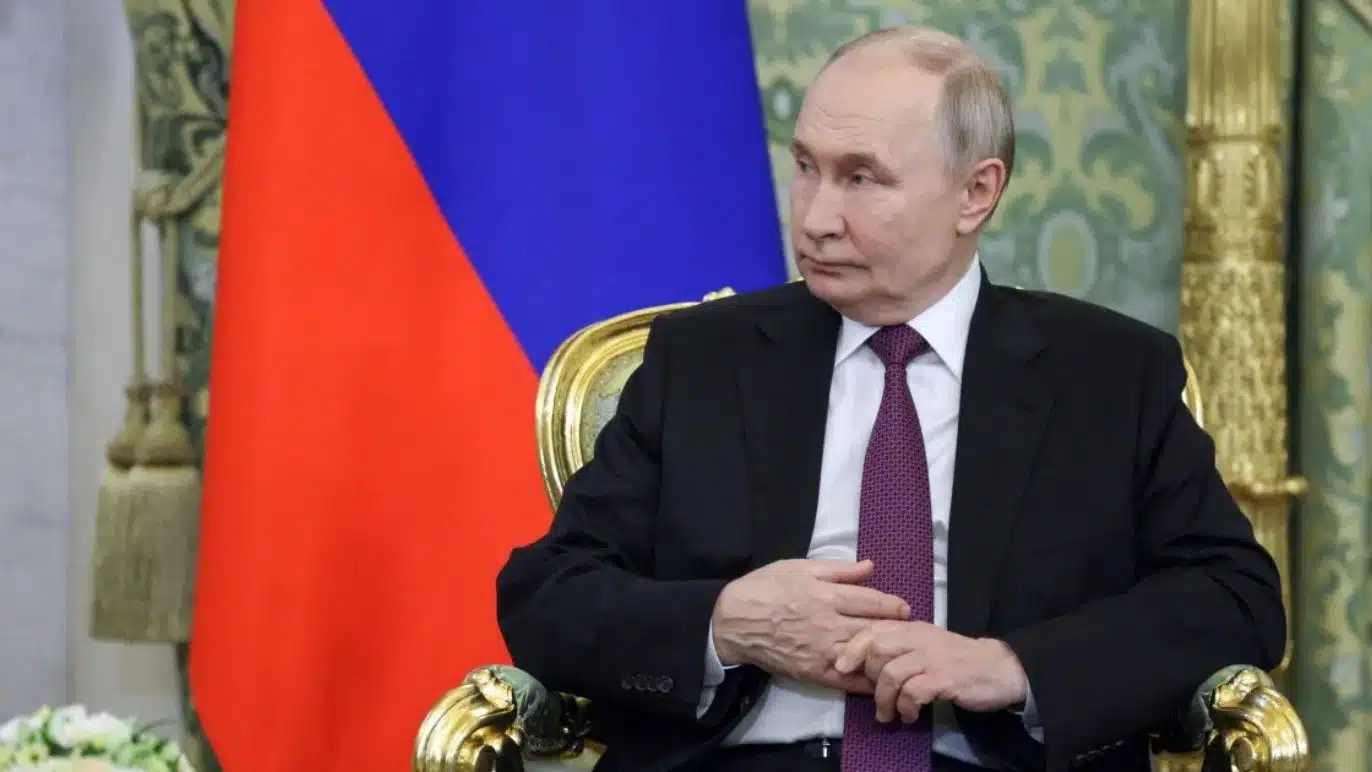
Russian President Vladimir Putin has claimed that Russia agreed to make “compromises” on Ukraine during recent diplomacy involving the United States, and that Moscow is now waiting for a response from Kyiv and Western capitals. At the same time, his broader public stance on the war still shows no sign of retreat from core demands on territory, NATO and Ukraine’s future security posture, leaving major gaps between Russian, Ukrainian and Western positions.
Putin Says “Ball Is in Ukraine’s Court”
Putin told reporters that Russia had been “asked to make compromises” on Ukraine during his August summit in Alaska with U.S. President Donald Trump and that Moscow agreed to those concessions, without disclosing specifics. He framed the next move as belonging to Kyiv and its Western backers, saying “the ball is in the West’s and Ukraine’s court,” and hinting that Washington and European capitals must now decide whether to turn recent draft understandings into a real peace deal.
In parallel comments at his end‑of‑year press event, Putin stressed that Russia is “ready and willing” to end the conflict by peaceful means but only “based on the principles” he laid out earlier, which include far‑reaching security and territorial demands. He accused Ukraine of lacking “readiness” to discuss the status of territories occupied by Russia, while also claiming there are “certain signals” from Kyiv that it may be open to some form of dialogue.
What Putin Calls “Compromises”
Putin has not publicly detailed what he considers Russia’s compromises, but officials and media coverage around recent U.S.–Russia contacts provide clues. According to accounts of the Alaska summit and follow‑on discussions, U.S. and European envoys have been working with Ukraine on a multi‑point peace framework that touches on ceasefire lines, security guarantees, sanctions relief and Ukraine’s long‑term military posture.
Key areas where Moscow suggests it has shown flexibility include:
-
Accepting continued talks on a U.S.-backed peace plan whose “outlines” were drafted by Washington and Kyiv, rather than insisting solely on Russian-written terms
-
Indicating openness to a phased approach in which some sanctions relief and security arrangements could be linked to verifiable steps on the ground
-
Signaling willingness to keep certain issues, such as practical modalities of ceasefire monitoring or sequencing of steps, on the negotiating table rather than dictating them unilaterally
However, there is no indication that Russia has compromised on its core conditions: Ukraine’s NATO ambitions, recognition of Russian control over occupied territories and limitations on Ukraine’s armed forces.
Maximalist Conditions Remain Intact
Despite the rhetoric about concessions, Putin has repeatedly reaffirmed that the fundamental Russian terms for ending the war remain unchanged. He has insisted that any settlement must address what he calls the “root causes” of the conflict, which in his view include NATO’s eastward expansion, Ukraine’s pro‑Western orientation and Kyiv’s insistence on full sovereignty over all its internationally recognized territory.
Public statements from recent days and weeks underline this hard line:
-
Putin says Ukraine must abandon its goal of joining NATO and accept a neutral or constrained security status.
-
He demands that Ukraine withdraw from four regions that Russia now claims as its own, despite international non‑recognition and ongoing fighting.
-
Russian officials reiterate that there can be “no compromise” on the status of occupied territories, treating them as permanently part of Russia.
This combination—talk of compromise alongside unyielding territorial and security demands—has led Ukrainian and Western officials to argue that Moscow’s negotiation posture remains largely unchanged beneath the new language.
Kyiv and the West See No Real Shift
Ukraine continues to reject any peace formula that ratifies Russian control over occupied regions or forces Kyiv to renounce its right to choose alliances. Ukrainian leaders insist that sovereignty and territorial integrity, including over Crimea and the regions seized since 2014, are non‑negotiable. Officials in Kyiv have described Russia’s talk of compromise as an attempt to shift blame for the war’s continuation while holding to maximalist demands.
Western governments share this skepticism.
-
European and U.S. officials emphasize that any durable settlement must respect Ukraine’s borders and its right to decide its security alignment.
-
Analysts note that Putin’s public speeches show continuity with his earlier justifications for the invasion, including claims that Russia “never attacked” Ukraine in the conventional sense and was responding to alleged NATO threats—arguments widely dismissed in the West.
-
EU and G7 leaders have doubled down on long‑term financial and military support to Kyiv, including a large new EU loan package, signaling they do not believe Moscow has fundamentally changed course.
From this perspective, Putin’s assertion that Russia has already made compromises is seen less as a real policy shift and more as a narrative designed to portray Moscow as reasonable while putting pressure on Kyiv and Western capitals to move.
Domestic Messaging: Strength and Peace Together
Putin’s latest comments also serve a domestic political function by blending two themes: Russian military success and readiness for peace on Kremlin terms. At his end‑of‑year press conference, he claimed that Russian forces now hold the “strategic initiative” and are advancing “in all directions,” portraying the Ukrainian side as in retreat across the front line.
At the same time:
-
He stresses that Russia is prepared to end the conflict peacefully, presenting himself as open to diplomacy so long as Russia’s demands are met.
-
He accuses Europe of “robbery” over efforts to repurpose frozen Russian assets for Ukraine, arguing that such steps have failed and that the West is out of step with a supposedly more Moscow‑friendly global mood.
This dual messaging allows the Kremlin to claim progress on the battlefield while placing responsibility for continued fighting on Kyiv and the West, defending the narrative that Russia is both strong and reasonable.
Peace Prospects and Strategic Calculations
Putin’s assertion that Russia has already accepted compromises, combined with his insistence that nothing fundamental has changed in Moscow’s conditions, reinforces the deep diplomatic impasse over Ukraine. For negotiators on all sides, several strategic calculations are in play:
-
For Russia: The leadership appears convinced that holding firm on territorial and NATO-related demands, while signaling selective flexibility, can eventually fracture Western unity or push Ukraine to negotiate from a weaker military position.
-
For Ukraine: Kyiv is betting that continued Western support and resistance on the battlefield will prevent a settlement that codifies Russian land gains and undermines its sovereignty.
-
For the West: U.S. and European governments are trying to keep a diplomatic channel alive—including through U.S.–Russia talks—without endorsing terms that would reward aggression or destabilize Europe’s security order.
The result is a delicate balance in which peace frameworks are discussed and redrafted, but the political space for a mutually acceptable compromise remains extremely narrow.
What Comes Next
Putin’s latest remarks signal that Moscow will continue to present itself as having already done its part while pressing Kyiv and Western capitals to respond to a set of terms they still consider unacceptable. Pending steps include:
-
A possible follow‑up U.S. delegation visit to Russia to continue talks on the evolving peace plan discussed with Ukraine.
-
Ongoing European deliberations on long‑term financial and security guarantees for Ukraine, tied to debates over frozen Russian assets and future sanctions policy.
-
Continued Russian battlefield operations that Putin presents as leverage for shaping any eventual agreement.
Until there is movement on the core issues of territory, NATO and Ukraine’s security status, Putin’s claim that Russia has made compromises and is simply “awaiting a response” is unlikely to translate into a concrete peace deal. For now, his message underscores a negotiation stance that mixes tactical flexibility with strategic rigidity—leaving Ukraine and its allies bracing for a prolonged conflict, even as they continue to test diplomatic options.





















