Russia downed record Ukrainian drones in a series of late-December incidents that Moscow described as some of the biggest waves of the war, triggering flight restrictions around Moscow and other regions and renewing questions about how both sides are scaling long-range drone campaigns.
What Russia Said Happened?
Russian officials say Ukraine has intensified long-range drone strikes deep into Russian territory, and Moscow’s air defenses are responding with unusually high interception totals.
In one widely reported late-December episode, Russia’s Defense Ministry said air defenses intercepted and destroyed 111 Ukrainian drones in three hours across six regions, including eight over the Moscow region. Moscow’s mayor later reported additional drones downed while approaching the capital, and Russia’s aviation authority temporarily restricted flights at major Moscow airports during the incident.
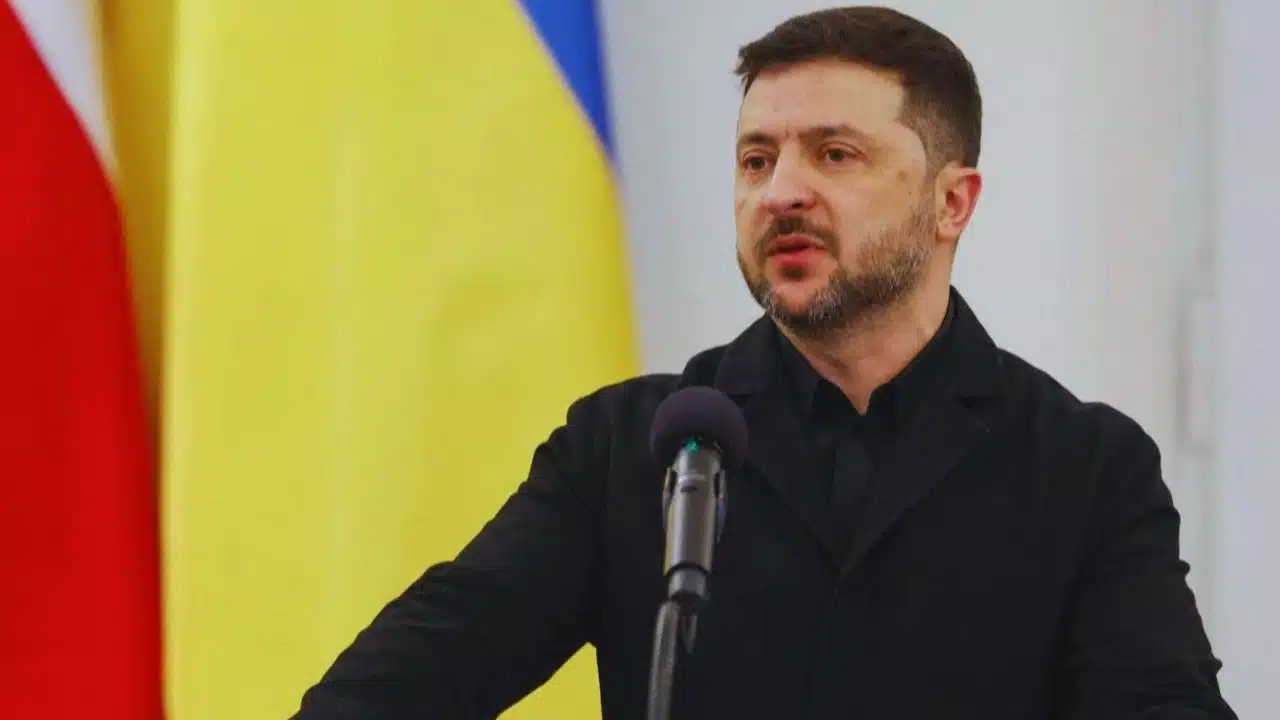
Days later, Russia released video footage to back a separate claim: that Ukraine attempted to strike a presidential residence in the Novgorod region using 91 drones launched from Ukraine’s Sumy and Chernihiv regions. Russia said all were intercepted. Ukraine denied any such attack, and multiple outside parties said the claim could not be independently verified.
Russia has also reported other high-count nights in December. For example, Russian media citing the Defense Ministry said that in the night spanning December 10–11, air defenses intercepted and shot down 287 drones across multiple regions, including 40 over the Moscow region.
The Numbers: How Big Are These Drone Waves?
Even in a war filled with competing claims, the raw scale of reported drone activity is notable. Russia’s public reporting often breaks down interceptions by region and time window, sometimes in short blocks of several hours, sometimes over an overnight period.
Because the events unfold quickly—and because both sides have incentives to emphasize success—these totals are difficult to independently confirm in real time. Still, the repeated pattern is clear: Russia is reporting larger, more frequent drone raids, while Ukraine continues to push long-range strikes as a way to pressure Russian logistics, fuel infrastructure, and military facilities.
Recent High-Count Drone Incidents Reported by Russian Officials (December 2025)
| Date/Window (Reported) | Claimed Drones Downed/Intercepted | Areas Mentioned | Notable Effects |
| Dec. 27 (3 hours) | 111 | Six regions, incl. Moscow region | Temporary flight restrictions at Moscow airports; mayor reported additional drones later |
| Dec. 31 (claimed operation) | 91 | Novgorod region (alleged target area) | Russia released video; Ukraine denied; outside verification not possible |
| Dec. 10–11 (overnight) | 287 | Multiple regions incl. Moscow region | Listed as one of the largest overnight totals in Russian reporting |
| Dec. 29 (overnight, separate report) | 89 | Multiple regions | Another high-count overnight tally amid persistent drone activity |
These figures are claims by Russian authorities, and the true number of drones launched, lost to jamming, or miscounted can vary. But the operational reality—airport disruptions, air-defense alerts, and repeated overnight reports—shows sustained pressure.
Where These Drones Are Being Reported—and Why the Targets Matter?
Russian reports repeatedly mention regions near the border (where shorter-range drones can reach) as well as areas far from Ukraine that suggest longer-range systems, complex routing, or launches intended to test gaps in coverage.
Moscow and the Moscow region remain symbolically and practically important. Even when drones are intercepted outside the city, the impact can include airspace restrictions, emergency responses to falling debris, and heightened political messaging. The December 27 episode shows how quickly a drone wave can ripple into civilian systems, especially aviation.
Industrial and logistics corridors are also key. Ukraine has consistently framed long-range strikes as a way to degrade Russia’s ability to sustain operations—by hitting fuel depots, supply nodes, or defense-related facilities. Russia, for its part, often describes these same strikes as “terror” attacks and emphasizes interception numbers to show control.
Why the airport angle keeps surfacing: Airspace restrictions don’t necessarily mean a direct hit. Aviation authorities may pause traffic as a precaution when drones are detected or when air defenses are active. Even short interruptions can cause delays, diversions, and knock-on congestion, especially in a large hub system.
Why Interceptions Still Create Civilian Disruption?
| Mechanism | What Happens | Why It Matters |
| Flight restrictions | Airports pause arrivals/departures during alerts | Delays spread fast through national flight networks |
| Falling debris | Intercepted drones can scatter fragments | Local damage risk even without a successful strike |
| Air-defense activity near cities | Interceptions close to population centers | Increases safety concerns and emergency response load |
| Information uncertainty | Conflicting counts and partial updates | Harder for residents and travelers to assess risk |
How Counter-Drone Defense Is Changing the Fight?
Drone warfare has become a contest of scale, adaptation, and cost. The attacker looks for cheap ways to force the defender to spend more—money, time, missiles, radar attention, and manpower. The defender looks for lower-cost ways to stop drones without exhausting high-end systems.
Russia often cites layered defenses: traditional air-defense systems, electronic warfare (jamming navigation or control links), and mobile response units. Broader reporting on the war has emphasized how electronic warfare and counter-drone methods have become central to battlefield and homeland defense.
At the same time, Ukraine and Russia are both innovating rapidly—fielding new drones, improving range and guidance, and experimenting with tactics meant to saturate defenses. On the Ukrainian side, reporting has highlighted how drones have expanded from frontline reconnaissance to long-range strike missions and specialized units tasked with high-profile operations.
The Basic “Layers” of Counter-Drone Defense
| Layer | Typical Role | Strength | Limitation |
| Radar & detection | Spot drones early, track routes | Enables response before drones reach cities | Small drones can be hard to detect consistently |
| Electronic warfare | Disrupt navigation/control | Lower-cost than missiles; can neutralize without impact | Not always effective; varies by drone type and conditions |
| Missiles/air-defense systems | Shoot down drones in flight | High probability of kill for many targets | Costly; stockpiles and readiness become issues |
| Guns/mobile teams | Close-in defense, point protection | Lower-cost for short-range defense | Limited reach; requires proximity and staffing |
This arms race also shapes narratives. High interception numbers help Russia project control. High launch numbers help Ukraine signal reach and resilience. The gap between messaging and verifiable detail remains one of the hardest parts for outside observers to measure.
Russia’s recent claims—ranging from 111 drones in three hours, to 287 overnight, to 91 drones in a disputed alleged strike attempt—highlight how the war’s air dimension is evolving into a test of endurance and systems management as much as battlefield maneuver.
What comes next will likely hinge on three things whether drone waves continue to grow in size, whether defenses become cheaper and more automated, and whether civilian disruption (especially aviation and infrastructure strain) becomes a more consistent feature on both sides. For now, the late-December surge underscores a simple reality: drones are no longer a sideshow—they are a main channel of pressure in the conflict.