

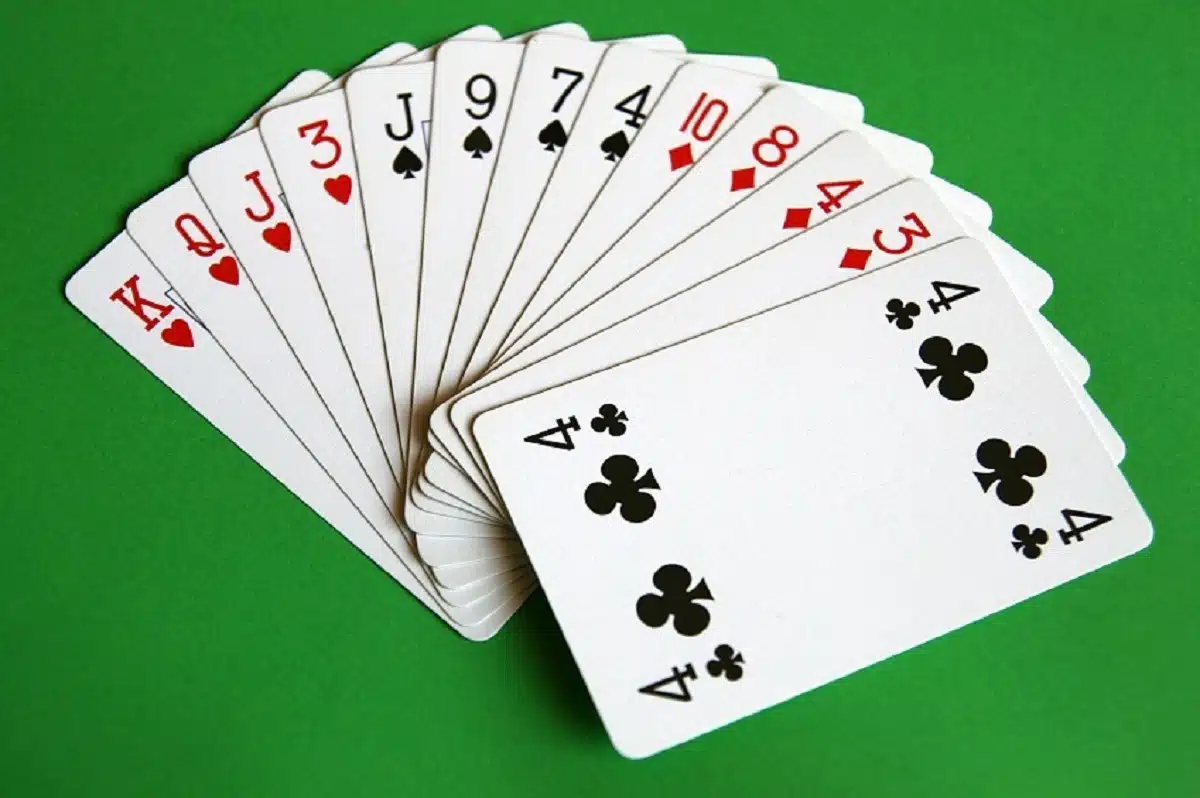
Hearts is a classic card game that’s a beloved pastime for many, but if you’re unfamiliar with the game it can be overwhelming. What are the rules of the Heart? How do you play? How do you win? Fear not, this article will explain the rules of Hearts and provide you with all the information you need to start playing on apps like Hearts.Land or Hearts+. Keep reading to learn the rules of Hearts.
Dealing the Deck
To deal with the deck of cards for Hearts, shuffle the deck thoroughly and then deal out one card at a time to each player. Each player should have 13 cards. The first card should be dealt to the player on the left, and then continue dealing clockwise until each player has a full hand. The remaining cards are placed in the middle of the table, forming the draw pile. The top card of the draw pile is then turned face up to start the game. It’s important to ensure the deck is shuffled thoroughly to avoid any bias or unfairness in the distribution of cards.
The two clubs play an important role as the starting card for the first trick. The player holding the two clubs must lead with this card, and the other players must follow suit if possible. The two clubs are the lowest ranking card in the game, which makes it a strategic card to hold. The two clubs set the tone for the game and can greatly influence the outcome of the round.
The Objective
In the game of Hearts, the objective is to have the lowest score at the end of the game. Each player is dealt 13 cards at the start of the game, and the game is played over several rounds. Players score points based on the number of hearts and the queen of spades they have collected throughout the game, with hearts worth one point each and the queen of spades worth 13 points.
How To Win a Trick
In the card game Hearts, winning a trick involves playing the highest card of the same suit as the starting card. For example, if the two clubs are played to start the trick, the player with the highest club card in their hand would win the trick. If a player cannot follow suit, they can play any card in their hand, but they cannot win the trick unless they play a trump card, which is the highest-value card of the suit that was played that round. Therefore, when multiple players play their cards, the highest card wins the trick. The player who wins the trick then receives points for any hearts that were played or the queen of spades and leads the next trick by playing a card of their choice. Winning tricks is an important part of the game, as it determines how many points a player scores at the end of the round.
How To Win the Game

To win the game, players must try to avoid collecting hearts and the queen of spades, which are worth points. Players can try to pass off unwanted cards to other players at the start of the game to avoid taking hearts or the queen of spades and to stir up mischief. Shooting the moon, which involves winning all of the hearts cards and the queen of spades, can also be a strategy to win the game for competitive players, but it can be risky as it can result in a high score if unsuccessful. The player with the lowest score at the end of all rounds wins the game.
Overall, this article is an important tool for understanding the fundamentals of the game, allowing players to make the most of their experiences while playing. With this knowledge, they can better strategize, anticipate their opponent’s moves, and enjoy the game of Hearts to its fullest potential at HeartsLand.

























