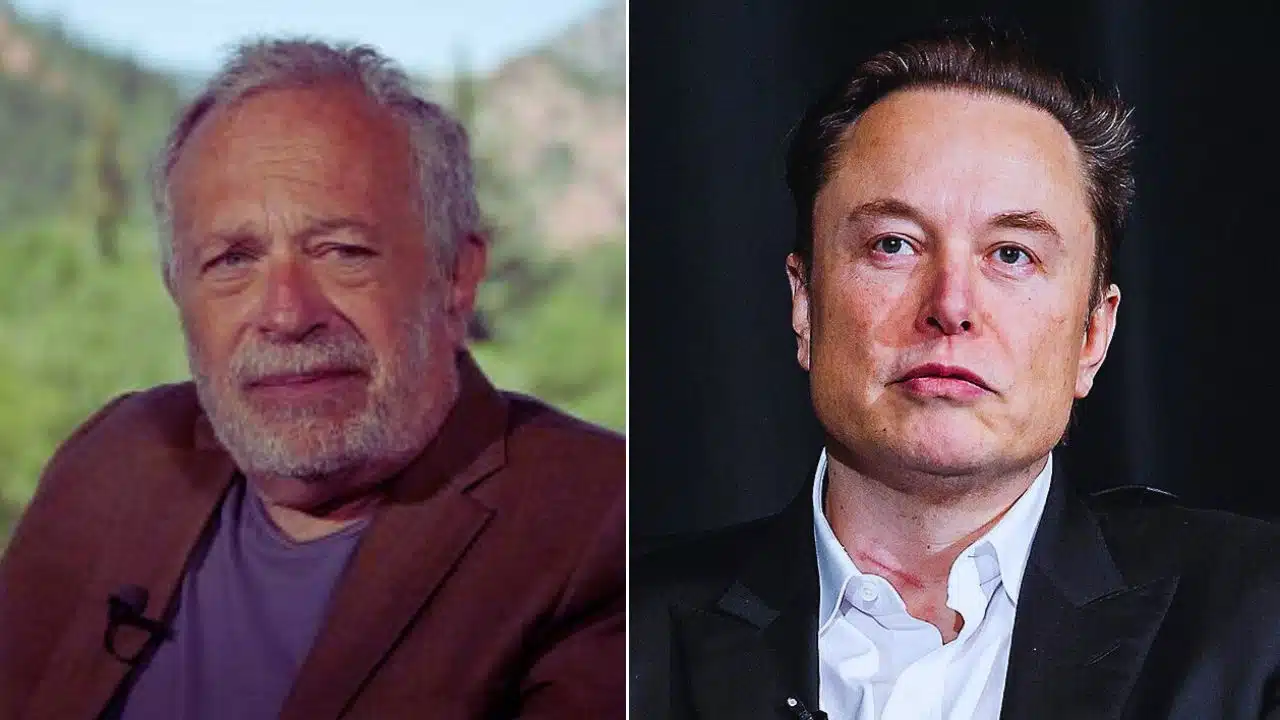
Robert Reich, the former U.S. Labor Secretary under President Bill Clinton and currently a public policy professor at the University of California at Berkeley, has taken a bold and controversial stance against Elon Musk, the CEO of SpaceX. In his recent column for The Guardian, Reich doesn’t just express frustration; he launches a full-scale critique of Musk’s behavior and influence. He goes as far as suggesting that Musk’s actions pose a risk and that the U.S. government should take serious action against him. Some of Reich’s proposals are quite alarming, with suggestions like potentially arresting Musk or cutting all government ties with SpaceX.
Such proposals have sparked significant debate. Many find them not only extreme but also legally questionable. Reich’s assertion that Musk’s behavior warrants such punitive measures raises ethical and legal concerns, particularly in a nation where free enterprise and innovation have historically been celebrated. His call for the U.S. to sever its ties with SpaceX would, if carried out, be nothing short of disastrous, not just for NASA and the military but for the entire future of space exploration.
Before diving into Reich’s critique, it’s important to take a closer look at SpaceX’s monumental contributions to the space industry and why removing this company from the equation would be so detrimental.
The Revolutionary Impact of SpaceX
It’s almost impossible to imagine today’s world of space exploration without SpaceX. Founded in 2002 by Elon Musk, the company has reshaped the commercial space industry and pioneered many of the most significant advancements in space travel and technology over the past decade. If SpaceX hadn’t emerged when it did, we likely wouldn’t be witnessing the current revolution in space exploration that’s taking place before our eyes.
Historically, the space industry was dominated by government agencies, most notably NASA, and a small number of private contractors who worked closely with these agencies. This model, while effective in certain respects, was also prohibitively expensive. Rocket launches were incredibly costly, primarily because rockets were single-use. Every launch required a brand-new rocket, which was used once and discarded into the ocean. This system was inefficient and unsustainable in the long term.
SpaceX changed the game entirely with its breakthrough in rocket reusability. The company’s Falcon 9 and Falcon Heavy rockets are designed to be partially reusable, meaning the first stages of these rockets can return to Earth, land safely, and be refurbished for future launches. This innovation slashed the cost of launching payloads into space by orders of magnitude. No longer was each launch a one-time, disposable event; SpaceX had effectively created a recycling system for space travel.
To put it into perspective, SpaceX’s Falcon 9 can carry payloads into space at a fraction of the cost of other rockets. This cost-effectiveness has not only saved NASA and other space agencies billions of dollars, but it has also opened the door for private companies and smaller countries to access space, democratizing space travel like never before.
The implications of SpaceX’s reusability are profound. For example, without SpaceX, astronauts currently aboard the International Space Station (ISS) would face extremely limited options. In the event of an emergency, they would have to rely on returning to Earth in the very same spacecraft they used to reach the station, which poses significant risks. Alternatively, they could seek a ride home from Russia’s aging Soyuz spacecraft, which is not an ideal solution given geopolitical tensions. SpaceX’s Crew Dragon capsules provide a safe, reliable, and cost-effective alternative for ferrying astronauts to and from the ISS.
Looking beyond Earth’s orbit, SpaceX is at the forefront of the next great space race—returning humans to the moon. NASA has selected SpaceX’s Starship rocket, currently in development, as the vehicle that will take American astronauts back to the lunar surface for the first time since the Apollo missions. Without Starship, America’s ambitions to return to the moon would be delayed indefinitely, potentially ceding ground to China, which has its own lunar exploration plans.
But it’s not just the moon that’s on Musk’s mind. SpaceX’s long-term vision includes the establishment of private space stations, lunar bases, and eventually, a city on Mars. These ambitious goals may seem like science fiction, but with SpaceX’s track record of turning bold ideas into reality, they are becoming more plausible every day.
The Commercialization of Space: A New Era
Beyond government contracts and scientific missions, SpaceX has also brought space travel into the realm of commercial enterprise. One of the most notable examples of this is the Inspiration4 mission, which was the first all-civilian crew to orbit the Earth. Led by billionaire Jared Isaacman, the mission was a testament to SpaceX’s ability to safely and affordably send non-professional astronauts into space.
Missions like Inspiration4 and the upcoming Polaris Dawn serve as proof of concept for the future of space tourism and private space missions. These are no longer far-fetched ideas—they are realities that SpaceX is helping to make possible. Without SpaceX, these commercial spaceflights would remain the stuff of dreams, reserved only for the pages of science fiction novels.
In addition to space travel, SpaceX’s Starlink project is transforming global telecommunications. Starlink aims to provide high-speed internet to even the most remote parts of the world by creating a network of thousands of small satellites in low Earth orbit. The potential for this system to revolutionize global connectivity is immense. In areas where traditional infrastructure is lacking or unreliable, Starlink promises to bridge the digital divide and bring the internet to billions of people who currently lack access. Without SpaceX, this ambitious project would likely be years behind, if it existed at all.
SpaceX’s contributions aren’t limited to the civilian sector. The company has become an invaluable partner for the U.S. military. Space is increasingly viewed as the next frontier for national defense, with potential adversaries like China and Russia investing heavily in their own space capabilities. SpaceX’s reliable and cost-effective launch services have helped the U.S. military maintain its dominance in space, ensuring that American forces are well-positioned to respond to any threats that might emerge from orbit.
Addressing Reich’s Criticisms of SpaceX
Reich’s main argument is that SpaceX has become a monopoly in the launch industry. He points out that in 2022, SpaceX was responsible for two-thirds of all launches from U.S. soil and that the company handled 88% of launches in the first half of 2023. While these numbers are certainly impressive, they don’t necessarily mean that SpaceX is acting as a monopolist.
A monopoly, by definition, is a company that controls a market to the extent that it can charge excessive prices and reduce the quality of its goods or services without fear of competition. SpaceX, however, has not engaged in such practices. In fact, the opposite is true—SpaceX has driven down the cost of space launches while maintaining a high level of reliability. The company’s success is not the result of anti-competitive behavior, but rather its ability to provide better products at lower prices than its competitors.
And it’s not as if SpaceX is operating without competition. Companies like Rocket Lab have carved out a niche in the small satellite launch market, and Blue Origin, founded by Amazon’s Jeff Bezos, is developing its New Glenn rocket, which is expected to compete with SpaceX’s Falcon rockets in the coming years. While SpaceX may dominate the market today, it does so because it offers the best combination of price and performance, not because it has eliminated competition.
Musk’s Leadership Style Under Scrutiny
Reich also takes aim at Musk’s leadership style, arguing that his “mercurial, impulsive temperament” makes him and his companies unreliable. Musk, who has publicly acknowledged having Asperger’s syndrome, a form of autism, has always been a polarizing figure. His unconventional behavior has often drawn criticism, but it hasn’t prevented SpaceX from achieving extraordinary success.
There have been moments when Musk’s leadership style has caused concern. For example, a few years ago, then-NASA Administrator Jim Bridenstine had to remind Musk to prioritize SpaceX’s contractual obligations to NASA, specifically the development of the Crew Dragon spacecraft, over his personal focus on the Starship project. Bridenstine’s intervention worked, and SpaceX went on to successfully launch the Crew Dragon, which is now regularly transporting astronauts to the ISS.
Musk’s eccentricities have even drawn comparisons to Howard Hughes, the aviation pioneer whose brilliance was ultimately overshadowed by his descent into mental illness. However, there is no evidence to suggest that Musk’s mental health will lead him down a similar path. As long as SpaceX’s leadership remains focused on its mission, Musk’s unique personality may continue to fuel the company’s innovation rather than hinder it.
The Starlink Controversy and Ukraine
Reich also raises the issue of Musk’s decision to deny Ukraine the use of his Starlink satellite system during its efforts to defend against Russian forces in Crimea. Musk’s decision, which sparked a fair amount of controversy, was based on his desire to avoid direct involvement in an armed conflict. As Musk explained in a post on X (formerly Twitter), he didn’t want SpaceX to be implicated in violating U.S. laws or escalating the conflict with Vladimir Putin’s Russia.
Despite this initial hesitation, Musk later struck a deal with the Pentagon to provide Starlink services to Ukraine, allowing his company to support Ukraine’s defense efforts without Musk having to make decisions that directly impact the course of the war. This move demonstrated Musk’s ability to balance his personal beliefs with the legal and geopolitical realities of operating a global enterprise.
Reich’s Position: Is It Justified?
Robert Reich is no ordinary critic. He’s not just an online provocateur stirring up controversy for the sake of attention. Reich is a respected academic, a former cabinet member, and a widely read columnist. His opinions carry weight, particularly when they’re published in The Guardian, a well-regarded international newspaper.
However, Reich’s criticisms of Musk, and his proposals for dealing with him, feel extreme. Suggesting that the U.S. government should sever ties with SpaceX or even arrest Musk is not only legally questionable but also potentially harmful to U.S. interests. Musk’s contributions to space exploration, global telecommunications, and national defense have been invaluable. Undermining his work would set back the U.S. and the world, jeopardizing the future of space exploration and technological innovation.
In conclusion, while Reich raises valid concerns about Musk’s leadership style and dominance in the space industry, his proposals for addressing these issues are far too drastic. Musk and SpaceX are not perfect, but they are critical to the future of space exploration and national security. Before taking any actions that could damage the progress made, it’s important to weigh the benefits and risks carefully. Eliminating Musk’s influence would not only be a loss for the U.S. but for humanity as a whole.