


Hey there, are you stressing over a low credit score? Maybe you’ve been denied a loan or a credit card, and it feels like a punch to the gut. You’re not alone, my friend; tons of folks are hunting for ways to fix their credit history fast, hoping to wipe away past mistakes.
Here’s a quick fact to chew on: credit repair scams often target people just like you, promising instant fixes to boost your credit report. It’s a trap, plain and simple. In this post, we’re breaking down 10 big warning signs of credit repair fraud, from sneaky up-front fees to fake guarantees.
We’ll also show you how to dodge these tricks and protect your hard-earned cash. Keep reading; you’ll be glad you did!
Key Takeaways
- Watch out for upfront fees; federal law under the Telemarketing Sales Rule bans credit repair companies from charging before six months of results.
- Avoid companies promising instant credit score boosts; federal law and the Federal Trade Commission say real improvement takes time.
- Be cautious of firms skipping written contracts; the Credit Repair Organizations Act requires a contract with a three-day cancellation period.
- Don’t trust companies hiding details; check their credentials with the Better Business Bureau or Federal Trade Commission for safety.
- Stay alert for fake government ties; report suspicious claims to the FTC, CFPB, BBB, or your State Attorney General’s office.
Common Red Flags of Credit Repair Scams
Hey there, watch out for shady deals when fixing your credit score, okay? Some folks out there might try to pull a fast one on you with empty promises.
Promises of instant credit score improvement
Spotting a credit repair scam can save you a lot of trouble, especially when they promise instant results. If a company claims they can boost your credit score overnight, watch out.
Building a good credit history takes time, and no one can magically wipe away bad marks with a snap of their fingers. These false guarantees to increase credit scores fast, or even eliminate all debt, are a classic red flag of credit repair fraud.
Think of your credit report like a report card; it reflects years of hard work or mistakes. Scammers might say they can erase accurate negative credit information in a flash, but that’s just not true.
Federal law, backed by the Federal Trade Commission, says only time and consistent effort can improve your credit. So, if it sounds too good to be true, trust your gut, and steer clear of these shady credit repair companies.
Requests for upfront payment
Watch out for credit repair companies asking for money before they do any work. It’s a big red flag, folks, and it’s against federal law under the Telemarketing Sales Rule. Legitimate outfits can’t charge you up-front fees; they must wait six months after delivering promised results.
If someone demands payment right away, walk away fast.
Think of it like paying for a pizza before it’s even made, no guarantee you’ll get a slice. Scammers often push for advance fees to grab your cash and run. Stick with firms that follow the rules, and check their standing with the Better Business Bureau or the Federal Trade Commission.
Protect your credit score and your wallet by staying sharp.
Lack of a written contract
Hey there, watch out for credit repair companies that skip giving you a written contract. If they don’t hand over a clear document spelling out their services and your rights, that’s a big red flag waving right in your face.
Federal law, under the Credit Repair Organizations Act, says they must provide this. It’s your shield, so demand it.
Also, this contract should mention a three-day cancellation period after you sign, no strings attached, no fees charged. Without this paper trail, you’re flying blind, and shady credit repair scams could take you for a ride.
Stick to firms that play by the rules and put everything in black and white.
Advising you to falsify information
Watch out, folks, for any credit repair company that nudges you to lie on your credit report. If they suggest making up stories or using a fake Employer Identification Number (EIN) instead of your Social Security Number (SSN), run the other way fast.
This shady trick is often pitched as a quick fix to build a new credit history, but it’s flat-out illegal and can land you in hot water.
Steer clear of anyone pushing you to create a new identity or dispute every single item on your credit report, even the accurate stuff. These actions scream credit repair scams, and they mess with federal law.
Stick to honest ways to improve your credit score, and don’t fall for these dangerous traps set by shady credit repair companies.
Guaranteeing the removal of accurate information from your credit report
Hey there, if a company swears they can wipe accurate negative info off your credit report, run the other way. They’re likely running a credit repair scam. Truth is, stuff like bankruptcies sticks around for 7 to 10 years, and no legit outfit can just erase it.
Listen up, folks, accurate credit information isn’t something you can magic away, no matter what shady credit repair companies promise. Federal law doesn’t allow it, and anyone claiming otherwise is probably after your cash.
Stick with honest help from places like the Federal Trade Commission (FTC) or a trusted credit counselor to keep your credit history safe.
Refusal to provide clear explanations of services
Spotting a credit repair scam can be tricky, but a big warning sign is when a company dodges your questions. If they refuse to give clear details about their services, watch out. You deserve to know exactly what they’re doing with your credit report and how they plan to help.
A honest outfit will break it down for you, plain and simple, without any smoke and mirrors.
Dig deeper if they skip over key info like the estimated duration for their credit repair plan. Federal law, under the Credit Repair Organizations Act, says they must tell you about your rights and free self-help options.
If they’re mum on that, it’s like trying to buy a car without knowing the price. Don’t fall for vague promises about fixing your credit score or handling credit card debt. Ask hard questions, and if they can’t answer, run to the Federal Trade Commission or your state attorney general’s office for advice.
No mention of your legal rights under the Credit Repair Organizations Act (CROA)
Hey there, watch out for credit repair companies that skip talking about your legal rights under the Credit Repair Organizations Act, or CROA. This law protects you from false claims and sneaky up-front fees, so it’s a big deal.
If a company dodges this topic, it’s like they’re hiding the rulebook from you. That’s a red flag waving high!
Think about it, folks, a legit outfit will be upfront about consumer rights and federal law. They’ll make sure you know what’s what before you sign anything. If they don’t mention CROA, they might be trying to pull a fast one.
Stay sharp, and don’t let them skip over your protections with credit reports or debt management plans!
Lack of transparency about company credentials
Watch out for credit repair companies that hide their true colors. If a business won’t share clear details about who they are, where they’re based, or their credentials, that’s a big red flag.
You deserve to know if they’re legit before handing over your trust or money.
Dig a little deeper by checking them with the Better Business Bureau (BBB) or the Federal Trade Commission (FTC). Nonprofit credit counseling agencies, bound by law to act in your best interest, often provide solid options like education and debt consolidation.
Stick with groups tied to places like the National Foundation for Credit Counseling. Don’t let shady outfits mess with your credit score or personal info, like your Social Security Number (SSN).
Pressuring you to act immediately without research
Hey there, have you ever felt hurried into making a choice about improving your credit score? Some credit repair companies press you to commit immediately, insisting you’ll lose your chance if you delay.
They might bombard you with urgent calls or emails to your inbox, claiming it’s the moment to act on your credit report. This approach is a major warning sign in the field of credit repair fraud.
Pay attention, they often request payments masked as donations before you even have a chance to think. Don’t get caught in this scheme with your hard-earned money. Pause for a moment, research thoroughly, and verify their legitimacy with organizations like the Better Business Bureau or the Federal Trade Commission.
You have the ability to avoid these financial traps by taking your time and considering your options carefully.
Using fake government affiliations or endorsements
Watch out for credit repair scams that pretend to be tied to the government. Some shady companies claim they’re backed by federal programs or display fake seals to trick you. It’s a dirty move, like a wolf in sheep’s clothing, meant to make you trust them fast.
These frauds might even mimic official logos to seem legit. If something feels off, don’t fall for it. Report these credit repair scams to the FTC, CFPB, BBB, or your State Attorney General’s office.
Protect your credit score and personal info, like your Social Security Number, from such financial scams. Stay sharp, folks!
How to Avoid Falling Victim to Credit Repair Scams
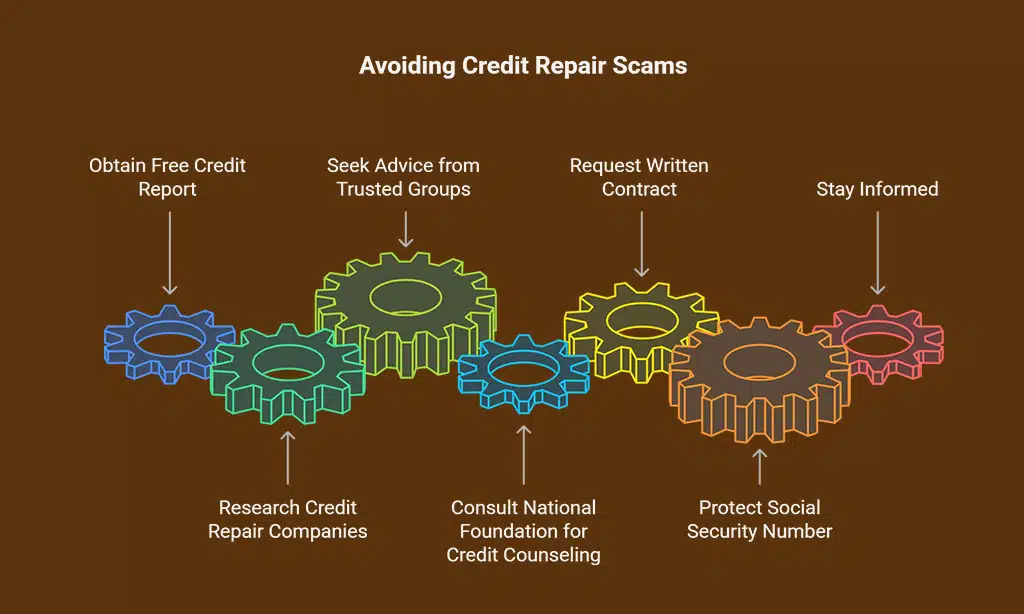
Let’s talk about staying safe from credit repair scams. I’m here to guide you with easy tips to protect your money and credit score.
- First off, grab your free annual credit report from the three big credit reporting companies. You can get these at no cost, and checking them helps you spot errors on your credit history. Take a peek yourself, and save over $1,000 by building your own credit repair plan. No need to pay shady folks for something you can handle.
- Next up, do a quick search on any credit repair company before signing up. Look them up with the Better Business Bureau (BBB) to see if they’ve got complaints. A bad rap often means trouble, so trust your gut if something feels off about their promises on credit cards or debt management.
- Also, reach out to trusted groups for help if you’re unsure. The Federal Trade Commission (FTC) and Consumer Financial Protection Bureau (CFPB) have solid advice on avoiding credit repair fraud. These folks know the ins and outs of federal law and consumer rights, so lean on them to dodge financial scams.
- Don’t forget to check with the National Foundation for Credit Counseling for legit support. They’re a safe bet for financial education and can guide you on managing credit card debt or debt consolidation. Unlike scammers, they won’t push up-front fees or fake fixes like a credit privacy number (CPN).
- Another tip is to ask for a written contract before paying a dime. If a company dodges this or pressures you to act fast on personal loans or lines of credit, walk away. Legit credit counselors play by the rules under the Credit Repair Organizations Act and respect your right to think things over.
- Be wary of anyone asking for your Social Security Number (SSN) without a clear reason. Scammers might use it for identity theft, wrecking your credit report worse than before. Protect your info like it’s gold, and report odd requests to the state attorney general’s office.
- Finally, keep learning about your rights and how credit works. The U.S. Department of Justice offers resources to spot red flags in debt settlement or low-interest loan offers. Stay sharp, and don’t let scammers trick you into messing up your credit score with false info or quick fixes.
Takeaways
Hey there, don’t let credit repair scams trip you up. Stay sharp by watching for those red flags we talked about, like upfront fees or fake promises. You’ve got the power to fix your credit score with help from trusted groups like the Federal Trade Commission or the Better Business Bureau.
Keep learning about your rights under the Credit Repair Organizations Act, and you’ll be on solid ground. Stick with legit paths, and watch your financial future brighten up!
FAQs
1. What are some warning signs of credit repair scams?
Hey, watch out for credit repair companies asking for up-front fees before doing any work. That’s a big red flag under federal law, as the Credit Repair Organizations Act says they can’t charge until services are complete. Also, if they push weird stuff like a Credit Privacy Number (CPN) instead of your Social Security Number (SSN), run for the hills, my friend.
2. Can credit repair fraud mess up my credit score?
Oh, absolutely, it can tank your credit-score faster than a lead balloon. Scammers might mess with your credit report or even lead to identity theft, leaving your credit history in shambles.
3. How do I spot shady credit repair outfits online?
Listen up, if you’re browsing on the internet or scrolling through Facebook and see ads promising to fix blemished credit overnight, be skeptical. Legit credit repair doesn’t happen with a magic wand; it takes time. Check their rep with the Better Business Bureau (BBB) or the Consumer Financial Protection Bureau (CFPB) before you bite.
4. What should I do if a company mentions an Employer Identification Number (EIN) for credit repair?
Whoa, hold your horses if someone suggests using an EIN to dodge your real credit report. That’s often a trick tied to financial scams, and it won’t help your credit card debt or line of credit; it might even land you in hot water with taxes.
5. Are there laws protecting me from credit repair rip-offs?
You bet there are, pal. Federal law, along with groups like the Federal Trade Commission (FTC), guards your consumer rights against credit repair fraud. Always demand a written contract before any work starts, so you’re not left high and dry.
6. Where can I get real help with credit card payment issues or debt management?
Don’t sweat it; there are solid options out there for handling credit card payment woes or debt consolidation. Reach out to trusted folks like the National Foundation for Credit Counseling or your State Attorney General’s Office for honest financial education. They’ll steer you clear of scams and help with accurate credit information, no funny business involved.
























