
The best online course platforms for cohort-based learning help a group start together, work through shared milestones and receive feedback before the programme ends. Teachfloor, Disco and Maven are useful starting points for structured cohort delivery; Circle and Mighty Networks suit programmes built around an ongoing community. The decision is less about uploading lessons and more about managing dates, access, live participation and the next cohort without rebuilding everything.
What We Checked
Author observations for this draft on November 22, 2026: this comparison combines official documentation with limited public browser interactions. It is not a completed ten-platform classroom trial.
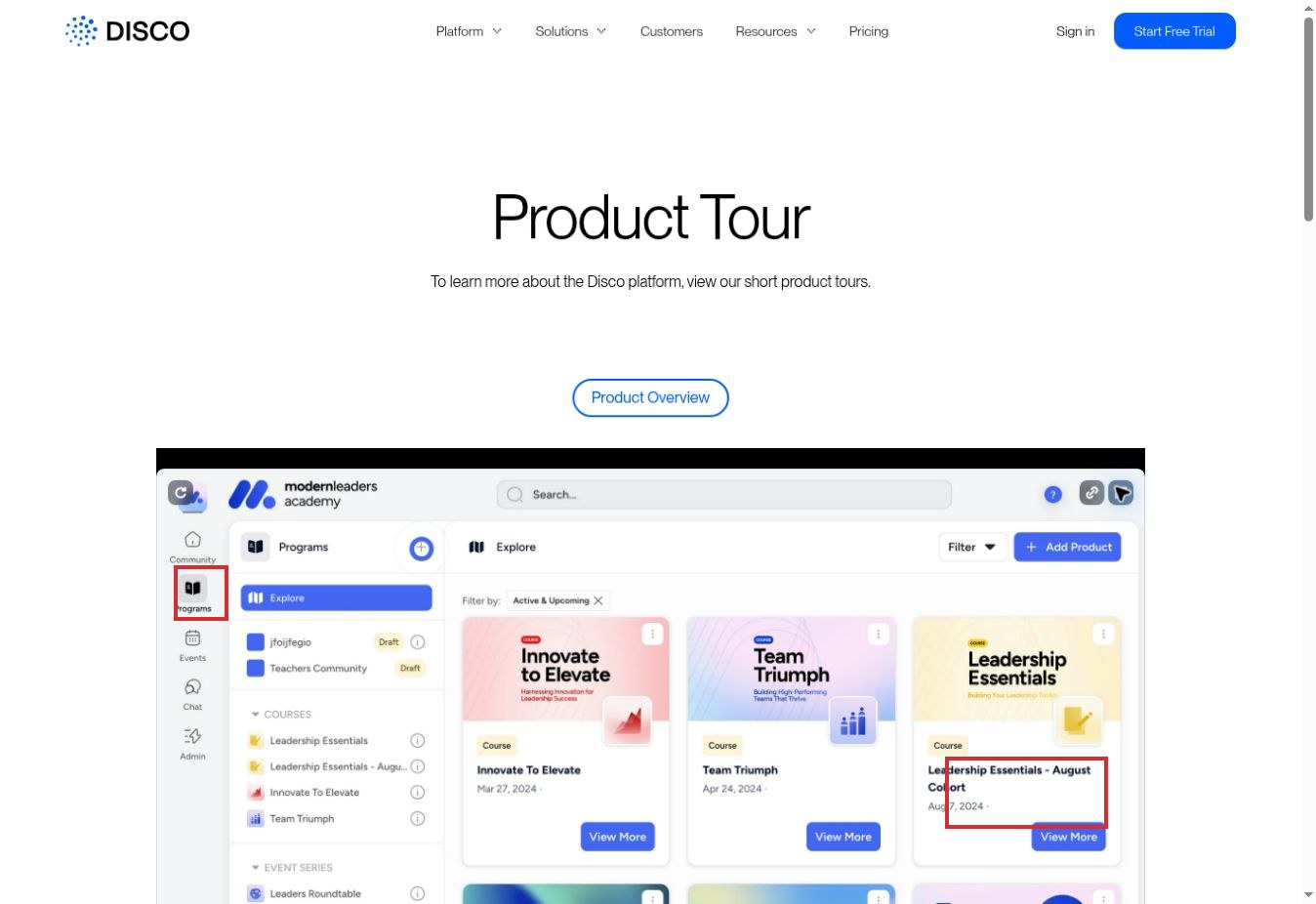
- We opened Disco’s public product tour and clicked through its Programs hotspot to view the example programme catalogue. This is a vendor-recorded interactive walkthrough, not a live academy we created.
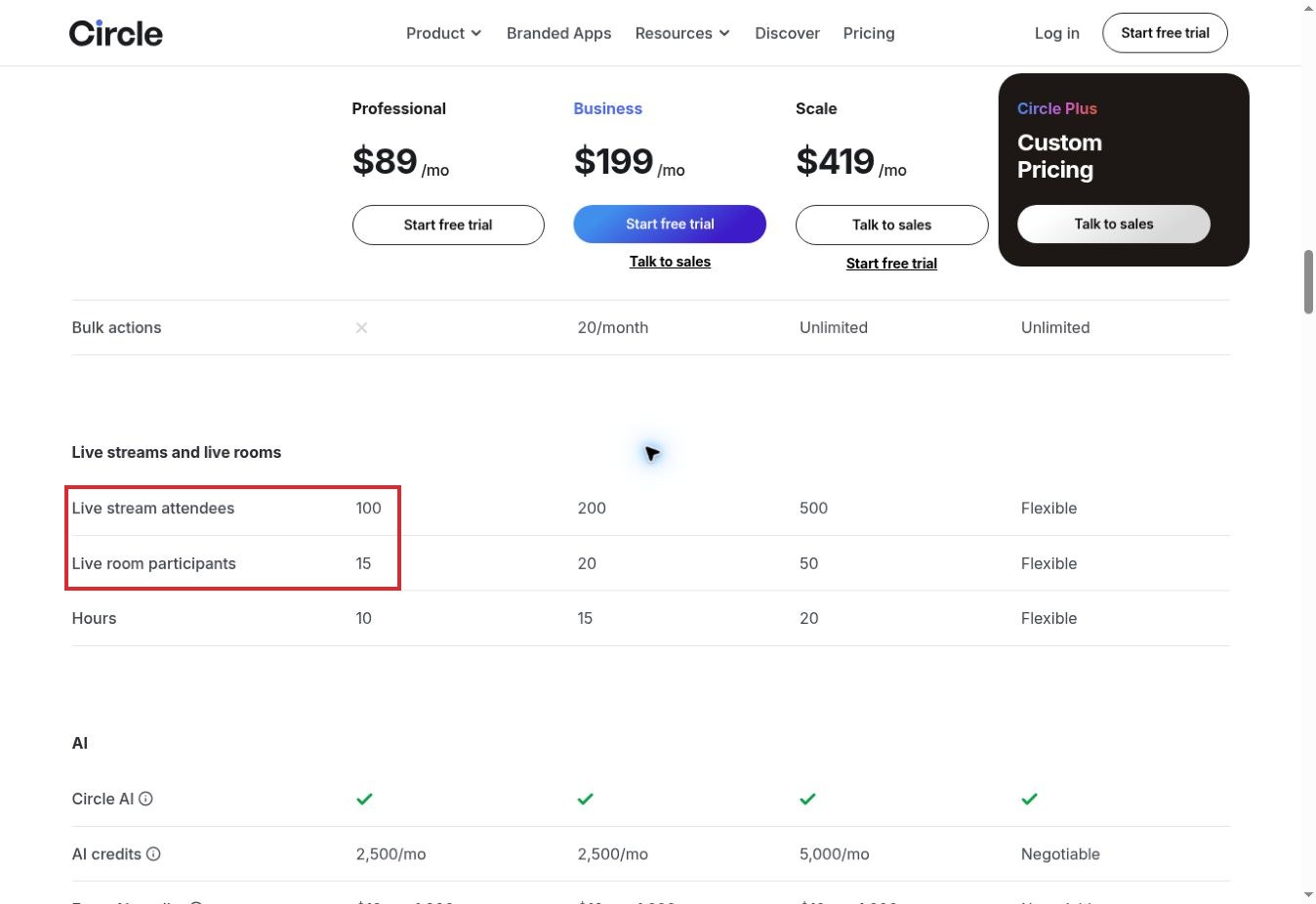
- We expanded Circle’s plan comparison and inspected the separate limits for live-stream attendees and live-room participants. We did not host a live class.
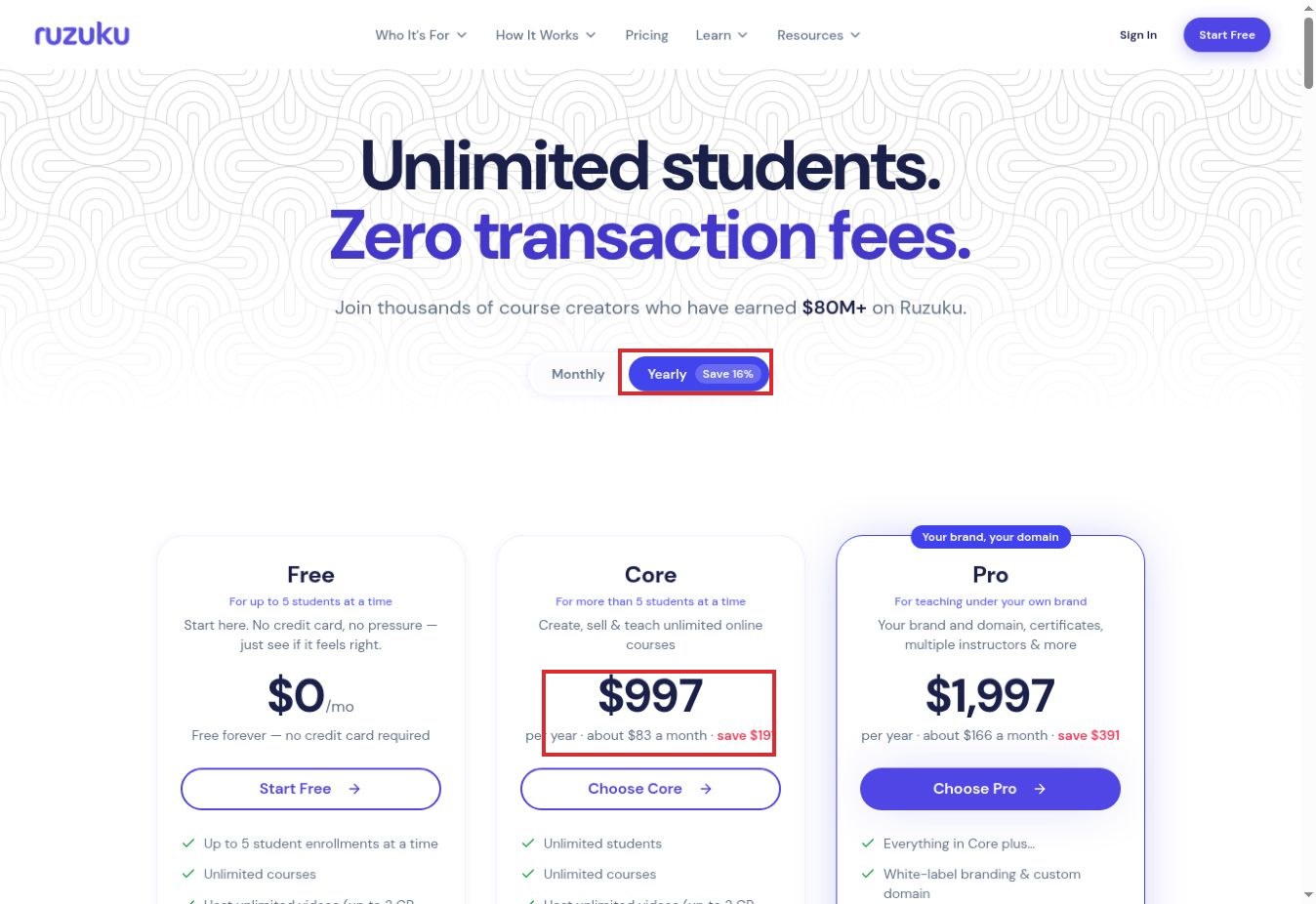
- We switched Ruzuku’s pricing from monthly to yearly, then opened its free onboarding and selected cohort-based online courses. The next step required an email signup; no account or cohort was created. The proposed trial protocol below remains an acceptance test to run in an authorised workspace.
All ten products have documented capabilities relevant to group learning. Their order reflects different teaching and business needs, not measured learning outcomes. No placement was selected because a company might buy sponsorship.
Online Course Platforms for Cohort-Based Learning at a Glance
Plan information was checked on November 22, 2026. Annual equivalents require annual payment. Listed prices exclude any additional processor charges, taxes or optional services. A free trial is not the same as a permanent free plan.
| Platform | Best fit to investigate | Budget or plan checkpoint | Critical cohort check |
|---|---|---|---|
| 1. Teachfloor | Structured programmes with peer feedback | Startup starts at $89/month; tailored quotes | Seats, peer review and automation entitlement |
| 2. Disco | An academy combining learning and community | Create: $399/month billed annually; seven-day trial advertised | Active-member definition and programme operations |
| 3. Maven | Experts selling live cohort courses | 10% of paid enrolments, plus Stripe fees | Marketplace fit, payout setup and course approval |
| 4. Circle | Courses inside a continuing community | Professional: $89/month annually; platform transaction fee applies | Live-room participants versus stream viewers |
| 5. Thinkific | A broader course business with live cohorts | Start supports live cohorts; pricing localizes | Group limits, schedules and reporting |
| 6. LearnWorlds | Structured lessons and assessment | Starter: $49/month plus $5 per course enrolment | Live-service integrations and activity limits |
| 7. Mighty Networks | Community-centred learning and events | Starter: $79/month annually; 2% revenue share listed | Course scheduling and the chosen plan’s live limits |
| 8. GroupApp | Repeated cohorts using a master curriculum | Build: $65 monthly or $57/month annually | Course drip and automations sit on higher tiers |
| 9. Ruzuku | A small pilot with scheduled release dates | Free: five student enrolments at a time; Core: $99 monthly | Enrolment counting and calendar-based release |
| 10. Kajabi | Course delivery plus marketing operations | Cohort Courses require Growth or Pro; Growth displayed at $249/month | Current-plan eligibility and cohort template constraints |
What Makes a Course Platform Suitable for a Cohort?
A cohort needs a shared timeline, a defined group and opportunities to apply the material. A video library with a chat channel can support parts of that experience, but it does not automatically provide cohort-specific enrolment, deadlines or reporting. Decide which of those functions must be native and which can live in an external teaching tool.
Also distinguish calendar-based release from enrolment-relative drip. “Unlock on December 7” gives a group the same milestone. “Unlock seven days after joining” can put late arrivals on a different schedule. Neither is inherently wrong, but they serve different delivery models.
Cornell’s guide to selecting online teaching tools distinguishes real-time activities from asynchronous ones. Use that distinction to map each teaching activity to an appropriate tool, rather than choosing a platform solely because it calls itself a cohort solution.
1. Teachfloor: For Structured Cohorts With Peer Feedback
Teachfloor is a strong candidate when the course is organised around doing work and responding to other learners. Its cohort offering documents shared dates, live sessions, assignments, peer review and group activities. That combination is relevant to bootcamps and professional programmes where participation needs more structure than an open discussion feed.
A useful evaluation would follow one assignment from its instructions to submission, peer allocation, feedback and instructor review. Ask whether the rubric makes the expected response clear and whether the instructor can see who still needs attention. The existence of a peer-review feature alone does not establish the quality of the feedback learners will produce.
Startup begins at $89 per month, with the current comparison listing 50 user seats. More extensive requirements receive tailored pricing. The page separates core course tools from business capabilities such as advanced integrations, branding and automations. Confirm the exact quote against your programme rather than treating the starting amount as the price of every configuration.
This entry is documentation-based. We did not enrol dummy learners or run a peer-review cycle. Teachfloor belongs on a shortlist when structured collaboration is central enough to justify testing those functions carefully.
2. Disco: For an Academy With Several Learning Programmes
Disco combines learning programmes, pathways, events and community features in an academy model. It is worth examining when a training business expects to run several programmes and wants the surrounding member experience managed in the same environment.
We opened its public product tour and selected the Programs hotspot. The walkthrough showed an example catalogue, including a named cohort offering. The capture records a genuine interaction with a vendor-provided tour. Its example dates and content are part of the recorded demonstration, not current student activity or a programme created for this review.
The Create plan displayed $399 per month billed annually and included 250 active members. A seven-day trial without a credit card was advertised. Before comparing that allowance with another vendor’s total enrolments, confirm what counts as an active member and how returning learners affect billing.
Disco is a reasonable candidate for an academy operator who values community and programme administration together. A production trial should still verify enrolment, access separation, event scheduling and the instructor’s view of progress. We did not complete those account-level checks.
3. Maven: For Experts Selling Live Cohort Courses
Maven deserves consideration when an expert wants to package live teaching as a cohort course within a platform oriented toward that format. Its model differs from paying a fixed monthly fee for a private school: the documented platform fee is 10% of each paid enrolment, with Stripe fees additional.
That can make the initial cost structure attractive, but the percentage becomes more consequential as sales grow. For an illustrative $10,000 of paid enrolment revenue, a 10% platform fee is $1,000 before processor fees and other adjustments. This is simple budget arithmetic, not a forecast of what a new instructor will earn.
Check whether the topic, instructor profile and planned format fit Maven’s current requirements. Also verify the supported payout setup before investing in a launch. A marketplace listing should not be treated as a guarantee that students will arrive without an audience or marketing effort.
We reviewed official course and payment guidance, without creating or selling a course. Maven is particularly relevant when the cohort itself is the core product. It may be less suitable if the priority is a completely independent academy with a different commercial or access model.
4. Circle: For Courses Inside an Ongoing Community
Circle is useful to examine when a cohort is one chapter in a longer community relationship. Its Professional plan includes courses, community and live events, while more advanced workflow capabilities sit higher in the plan structure. The decision should reflect what happens between sessions and after the programme finishes.
Our browser check exposed an important capacity distinction. After expanding the comparison, Professional listed 100 live-stream attendees but only 15 live-room participants. Business showed 200 and 20 respectively. A 30-person interactive workshop therefore has a different requirement from a 30-person broadcast, even though both are described casually as a live class.
Professional displayed $89 per month on annual billing, and the table listed a 2% platform transaction fee. Payment processing and optional services can add to the cost. Confirm the current live limits and teaching format before building the programme around an assumed capacity.
We did not host a class or create a course in Circle. Its strongest fit here is an educator who wants discussions, events and course material connected to a continuing membership. Test cohort access separately from access to the wider community.
5. Thinkific: For a Course Business That Also Runs Cohorts
Thinkific is worth considering when a business offers both self-paced material and scheduled teaching. Its current Start plan lists live cohorts and coaching alongside courses, assignments and certificates. Its Groups documentation also describes organising learners by cohort for reporting and filtering.
A group label is useful administration, but it should not be assumed to control every release date or access rule. During a trial, create two groups with different start dates and inspect the learner experience in each. Check whether the reports show the distinctions the instructor needs, including submitted work rather than just lesson completion.
The pricing page retrieved for this review localized to euros: Start displayed €107 monthly or €79 per month annually. We have not converted that into a universal dollar quote. Check the currency and payment terms presented to your own business, plus the relevant group-size and commerce limits.
Our assessment is based on official documentation. Thinkific is a practical shortlist candidate when cohorts are part of a wider course catalogue. If you sell seats to organisations, evaluate the purchasing and allocation workflow separately from the teaching schedule.
6. LearnWorlds: For Structured Content and Assessment
LearnWorlds suits an evaluation where the teaching materials and assessment activities need as much attention as the live meetings. Its plan documentation covers live group sessions and integrations with conferencing services alongside its broader course-delivery tools.
A cohort creator should decide where each activity happens. Learners may read or watch material in the course player, join a live service for a workshop and return to submit an assignment. Test that journey end to end, including the recording and follow-up instructions, so learners do not have to guess which system holds the next task.
The current Starter plan lists $49 per month with a $5 fee per course enrolment. Pro Trainer lists $99 monthly without that enrolment fee. As an illustrative comparison, ten chargeable enrolments would add $50 to Starter’s monthly subscription cost. Actual billing depends on the provider’s enrolment definitions and your selected plan.
No LearnWorlds school or live session was created for this review. Check active-learner allowances, administrator needs and conferencing costs before deciding. It is a useful candidate when the curriculum requires more structured activities than an informal community programme.
7. Mighty Networks: For Community-Centred Learning
Mighty Networks combines courses, events and community participation. Its course documentation describes sections, lessons, progress tracking and scheduled release. That makes it relevant when learners benefit from finding one another and continuing discussion around the material.
The teaching design still needs to be explicit. Decide whether a course space belongs to one cohort, several cohorts or an ongoing membership. Write down what a new learner should see, which discussions should remain private and what access graduates retain. A busy feed is not a substitute for clear weekly expectations.
The current pricing page showed a Starter plan at $79 per month billed annually, with a 2% revenue share on successful sales. Older descriptions using other plan names should not be assumed to reflect the current offer. Confirm the exact course and live-event capabilities included in the plan offered to you.
We reviewed the official pages rather than operating a community. Mighty Networks is worth shortlisting when the peer network is central to the product. In a trial, examine how easily a learner finds the next assignment without being distracted by unrelated community activity.
8. GroupApp: For Repeating a Programme Across Cohorts
GroupApp’s cohort documentation directly addresses repeated delivery. It describes a master curriculum supporting multiple cohorts, each with its own schedule, roster, enrolment settings and pricing. A cohort can remain linked to that curriculum or use a copied version for customised content.
That distinction is particularly useful for an educator running the same programme several times a year. Decide whether an improvement should update every linked cohort or only the next group. Test a harmless lesson edit with dummy groups before relying on the arrangement for enrolled learners.
Build displayed $65 on monthly billing or $57 per month billed annually, with courses included. The comparison places course drip, certificates and workflows on Scale. Do not assume that a plan containing courses automatically includes every scheduling feature needed by a tightly timed cohort. The free plan’s workshop and discussion tools are also different from paid course delivery.
This was a documentation review, not a curriculum-editing trial. GroupApp is a relevant candidate when repeated cohorts and a shared curriculum are a real operational need. Confirm the tier required for your release schedule before comparing headline prices.
9. Ruzuku: For a Small Cohort Pilot
Ruzuku’s documentation distinguishes calendar-based release dates for cohorts from individual release dates and full-access courses. That is a useful starting point for an instructor who wants a small group to move through the same material on shared dates.
We changed its pricing control from monthly to yearly. Core moved from $99 monthly to $997 per year, described as about $83 per month. The free plan allows five student enrolments at a time across courses; one person enrolled in two courses uses two places. That is a different limit from five unique people.
We also opened free onboarding, selected cohort-based online courses and reached an email signup step. No account was created, so we cannot report a successfully configured cohort or student experience. The free allowance is a documented pilot opportunity, not a completed trial result.
Ruzuku is worth examining for a compact first programme. Check how access periods and existing enrolments affect the five-place allowance, and whether your teaching team needs the higher-tier instructor or branding features. Its advertised zero platform transaction fee does not eliminate payment-processor charges.
10. Kajabi: For Cohort Delivery and Marketing Together
Kajabi is relevant when the course business also wants its website, email marketing and sales process in the same system. Its current documentation explicitly supports Cohort Courses, including scheduled groups and live video sessions. This is more specific than simply placing a webinar link inside an evergreen course.
There is an important plan gate: the help page says Cohort Courses require Growth or Pro and are unavailable on legacy plans. The pricing page displayed Growth at $249 per month. Do not select a lower-priced plan on the assumption that every course format is included.
The cohort guidance also describes creating a course from scratch or importing material from an evergreen course. Another help page identifies the Momentum template as the cohort-course template. If you already have a heavily customised school, verify how that constraint affects the intended learner experience.
We did not create a Kajabi cohort. Its value depends on whether the surrounding business tools replace work you would otherwise pay for or maintain elsewhere. Test the course schedule and student access first, then assess the marketing system against your actual launch process.
A Four-Week Sample to Use in Every Trial
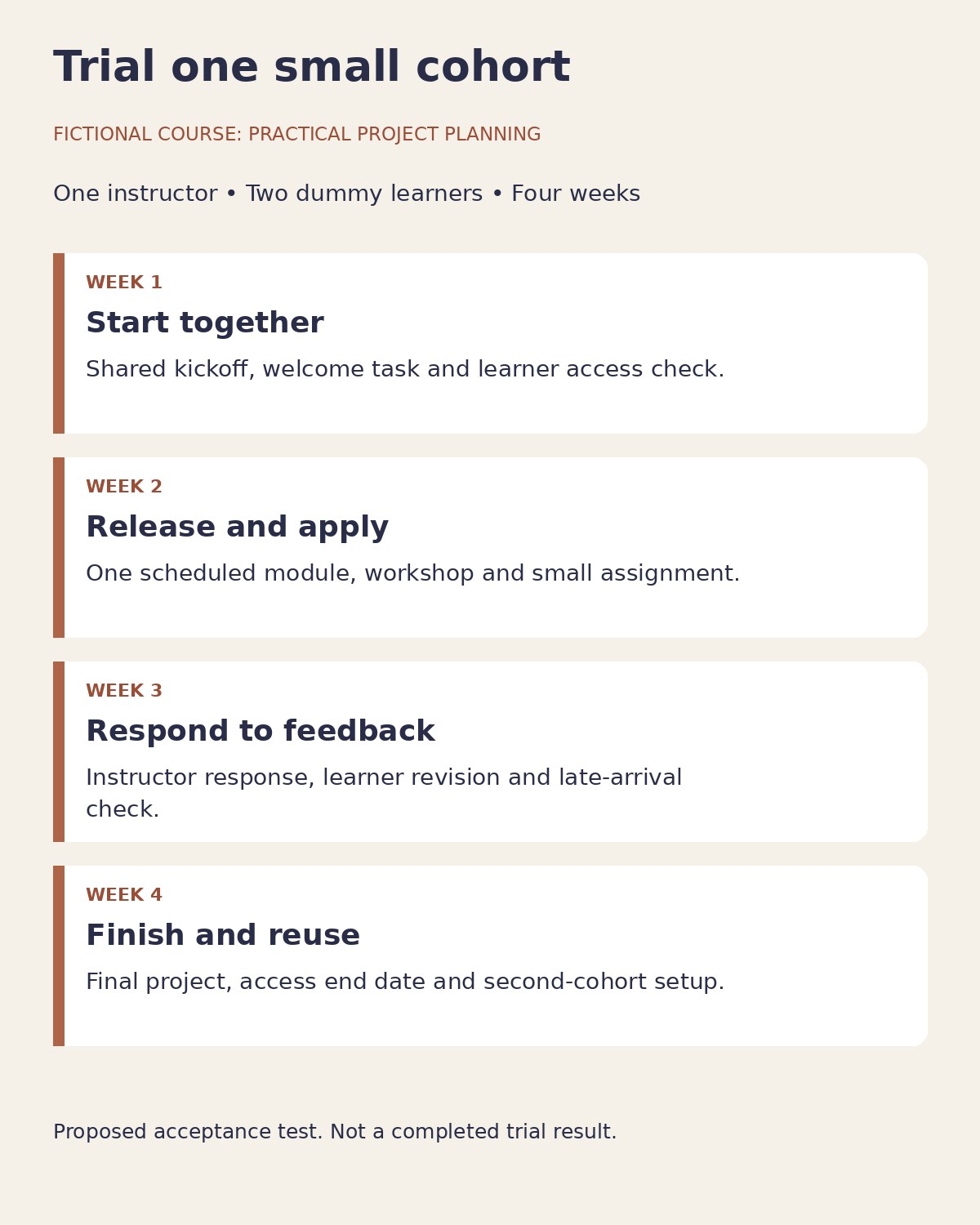
Use a fictional course called Practical Project Planning. Give it one instructor, two dummy learners, four weekly modules, one live workshop each week and one final project. Create a second cohort with a later start date. This is a proposed acceptance test; it was not completed across the ten platforms.
| Check | Action | Evidence to keep |
|---|---|---|
| Shared release | Set a fixed date for week two | Both learners see the intended availability |
| Time zones | Inspect the event from two learner settings | Local time and calendar invitation agree |
| Late arrival | Add a dummy learner after the start | Clear access to missed work and next steps |
| Feedback | Submit a fictional project and respond | Learner can find the instructor’s feedback |
| Second cohort | Reuse the curriculum with new dates | No unintended access or schedule crossover |
| Programme end | Apply the intended access rule | Graduates retain or lose access as promised |
Keep the distinction between a setup demonstration and a delivery test. A calendar screenshot does not establish that invitations arrived. A live-room capacity in a plan table does not prove the experience at that capacity. An instructor preview does not prove that a restricted learner account sees the same thing.
Cornell’s online active-learning guidance points out that unreliable internet, quiet-space constraints and time zones can prevent synchronous participation. Plan an asynchronous route for missed sessions instead of making attendance at one live time the only way to progress.
Compare the Cost of the Whole Cohort
Use the same enrolment assumptions for every quote. Separate the platform subscription, annual commitment, per-enrolment charges, revenue share, payment processing, conferencing and optional mobile app. Then add the staff time required to maintain several disconnected tools.
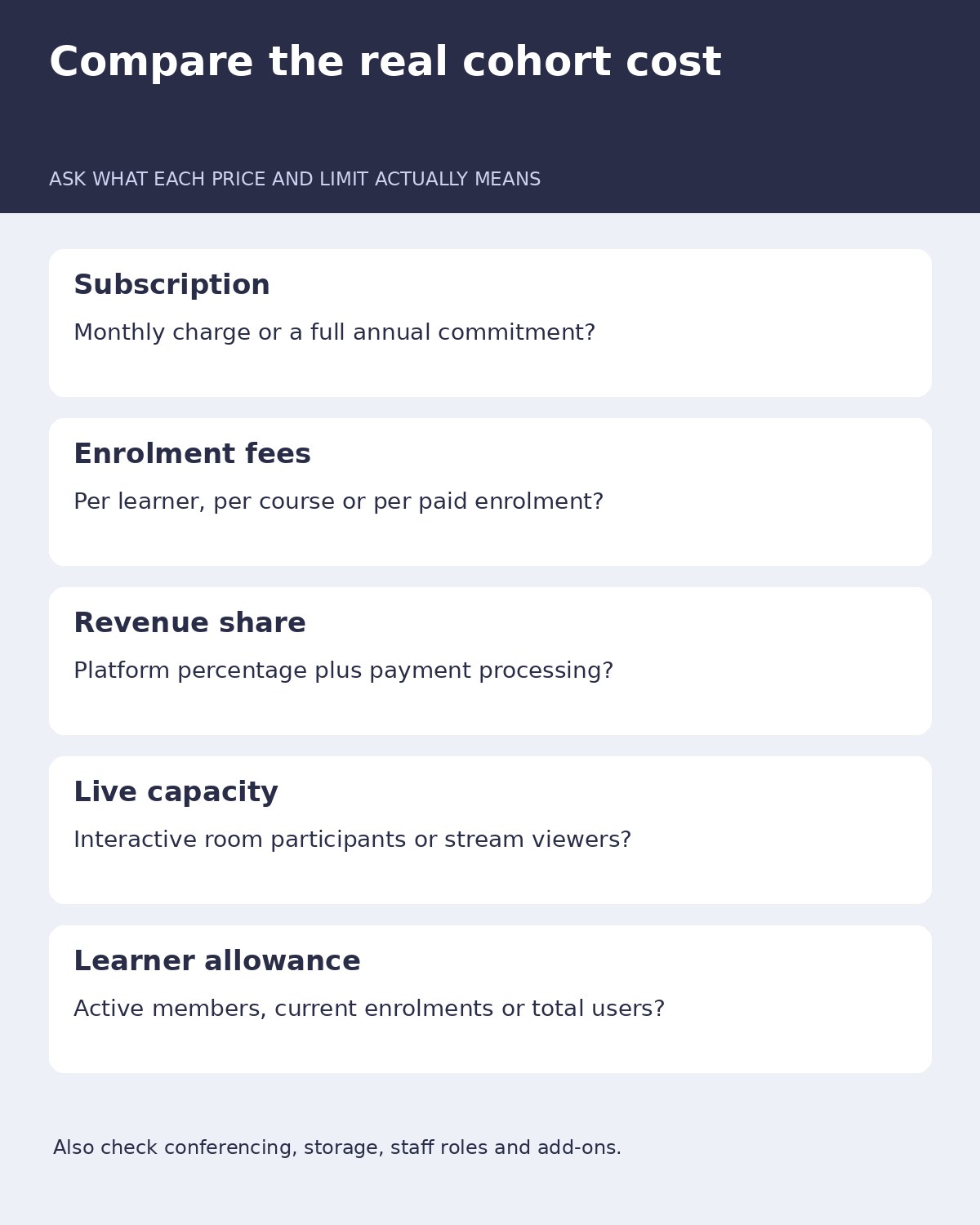
Ask whether the vendor counts total members, active learners, current enrolments or concurrent participants. Those measures can produce very different bills and capacity constraints. Record the definition next to the quoted price, especially when graduates remain in a community between programmes.
Editorialge’s guide to choosing a learning management system covers the broader platform decision. If companies buy places for their employees, also read our comparison of platforms for selling training seats; buying seats and running a shared learning schedule are separate workflows.
Is a cohort the same as a live webinar?
No. A webinar can be one event within a cohort. The wider programme normally includes shared dates, learning activities, feedback and an identifiable group progressing through the material.
Can a free plan support a pilot?
Sometimes. Ruzuku documents a small free enrolment allowance, while several other providers advertise time-limited trials. Confirm which features and learner roles are available before designing the pilot around them.
Will these platforms improve completion rates?
No universal result was established in this review. Completion depends on audience, course design, workload, facilitation and how completion is defined. Vendor examples should not be treated as a forecast for your programme.
Choose Around the Learning Journey
The best online course platforms for cohort-based learning support the programme you can actually teach. Start with the shared schedule, feedback process and learner access rules. Then shortlist tools that fit those needs and test the same small course in each. A clear, manageable four-week programme is a better buying test than a long feature checklist or an unverified promise of higher completion.