

Lately, I have been seeing rage bait that pits Gen Z against millennials. Creators from both generations shame the other group, and the posts and videos draw attention.
I do not enjoy watching it. There is room for humor about growing up in different periods. But some of these posts seem designed to make people feel insulted enough to respond. A difference in experience becomes a reason to ridicule an entire generation.
What concerns me is how useful that irritation can be to the creator. Viewers may feel they are defending themselves or correcting an unfair claim. Their response can also help the post travel further. An argument that offers them very little may still serve the person who started it.
The Gen Z–Millennial Divide Is an Easy Target
Generational labels offer a quick way to divide an audience. Attach a negative trait to an age group, and people who identify with that group have a reason to object. Others have a reason to join the mockery. Neither reaction requires much understanding of the people being discussed.
That repeated invitation to ridicule is what makes me question the purpose of some of the content I am seeing. There is often much more room for an argument about who deserves respect than for a conversation about why people think or behave differently.
We could be discussing how generations experience work, education, technology, or social expectations. Those subjects deserve attention. They become harder to examine when a birth year is treated as sufficient evidence of someone’s character.
I have no interest in choosing which generation should win a contest of insults. People within the same age group can have very different lives. Reducing them to a label gives us an easy target and very little insight.
How Rage Bait Turns Anger Into Attention
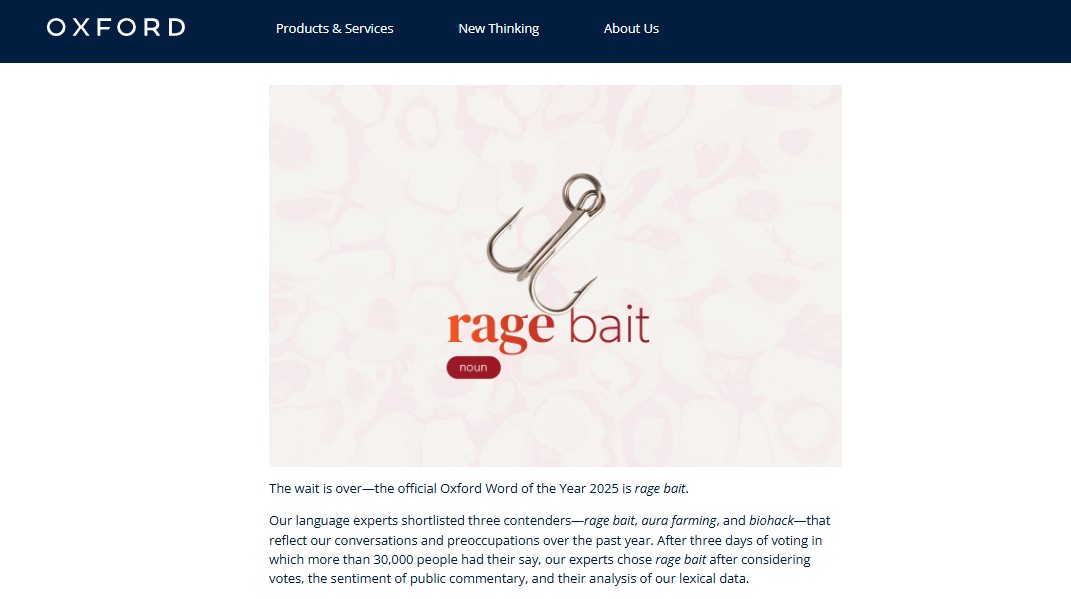
Oxford University Press named rage bait its 2025 Word of the Year. Its definition centers on content deliberately designed to provoke anger to increase traffic or engagement. The important part is the purpose: the reaction is being sought because it benefits the content.
Agreement is only one way to attract an audience. Someone who shares a post to criticize it may introduce it to people who would never otherwise have seen it. A creator can gain visibility from an audience that dislikes what they have posted.
Attention can also have financial value. X’s current Original Content Rewards program, for example, pays eligible creators based on qualified impressions, subject to its rules. Those rules exclude misleading content. An angry comment does not automatically generate a payment, but qualified views can contribute to an eligible creator’s earnings.
That is why I think rage bait deserves scrutiny as a business strategy. If provocation repeatedly brings an audience, there is an incentive to repeat it. The unresolved argument can become useful material for the next post.
Research offers some insight into that repetition. A 2021 study in Science Advances combined observational studies on Twitter with behavioral experiments. It found that positive social feedback for expressions of outrage increased the likelihood of future outrage expressions. The finding concerned what people expressed online; it shows how responses can influence what gets posted next.
A study published in PNAS Nexus in 2025 examined Twitter’s engagement-based ranking. It found that the system amplified emotionally charged, politically hostile content compared with a chronological feed. Participants did not prefer the political posts selected by that algorithm.
Those findings concern the Twitter system studied and political content. They do not establish what happens with the generational videos I see. They do challenge the assumption that attracting a response always means giving people something they value.
As a copy editor, I find that distinction difficult to ignore. A crowded comment section tells me that people reacted. It does not tell me whether they understood the subject better or whether the exchange was worth their time.
The Cost Goes Beyond an Unpleasant Comment Section
My concern about misleading content includes the conclusions people are encouraged to draw. A creator can take one person’s behavior and present it as evidence against an entire generation. Even if the original incident is real, the broad judgment may have little support.
That matters because a specific problem deserves a specific explanation. A disagreement at work might involve poor communication, unclear expectations, or unfair treatment. Turning it into a verdict on an age group can make the actual problem harder to see.
This is where meaningful discussion can get crowded out. A conversation about working conditions can become a contest over which generation has the worse attitude. A question about changing habits can become an opportunity to shame people for being young or getting older.
I worry about the people used to keep those arguments going, too. When an identifiable person becomes the target, a brief incident can expose them to ridicule far beyond its original setting. For viewers, it may be another passing video. For that person, the exposure may be much harder to leave behind.
Creators and publishers should consider that difference before treating someone’s humiliation as useful material. Attention is a poor measure of whether the treatment was fair.
Genuine Criticism Still Deserves a Hearing
The term rage bait also needs care. A post upsetting me is not enough to establish deliberate manipulation. A high comment count cannot prove a creator’s intentions either.
People have every right to challenge harmful behavior, question authority, and express anger about injustice. Journalism can provoke an intense response while giving the public information it needs. Calling every uncomfortable criticism rage bait would give people an easy way to avoid answering it.
I would rather examine what the content contributes. Does it provide enough context to understand the issue? Does it represent people fairly and respond to corrections? Does it leave room for anything beyond choosing whom to mock?
Those questions cannot reveal every motive. They can help us decide whether the conversation deserves more of our attention.
Editors and Platforms Have Responsibilities Too
In my own writing and social media work, I sometimes face situations that could become another round of provocation. I try to avoid creating more rage bait and address the problem where I can. I do not always have a solution, but escalating hostility would not make one easier to find.
When something is misleading, the response should make the facts clearer. When there is a real problem, attention should help us address it. The possibility of attracting views is not enough to make repeating a dispute worthwhile.
Publishers need to apply that judgment when covering viral arguments. Our coverage can extend their reach. We should be able to explain what verified information, necessary context, or public value we are adding. Reporting how many people are angry tells readers very little about whether the anger is justified.
Platforms have responsibilities as well. They should explain how they handle deceptive content and attempts to manipulate monetization, and provide evidence that their rules work. Audience satisfaction deserves a place alongside the likelihood of another click or reply.
Readers can make more careful choices, but they should not carry the entire burden. The people producing, distributing, and profiting from content also need to examine the incentives they create.
I Want a Conversation Worth Staying For
I understand why someone responds when their generation is insulted. Being misrepresented is frustrating. Pausing before sharing should not require people to accept an unfair claim or abandon their right to challenge it.
We can check the original context and direct a correction toward the claim. We can discuss a workplace problem or a difference in experience without repeating a broad insult about an age group. A useful response gives people something accurate to consider.
When I return to the Gen Z–millennial posts that prompted these thoughts, I see an opportunity being wasted. People with different experiences could be explaining those experiences to each other. Some creators seem more interested in keeping them at the level of ridicule.
A worthwhile conversation leaves room for disagreement and a fair reply. The creators I value give me a reason to keep listening after the immediate reaction has passed.
I want to understand what someone has to say before I help them reach more people. If a post offers only another reason for two generations to insult each other, I can leave it there.