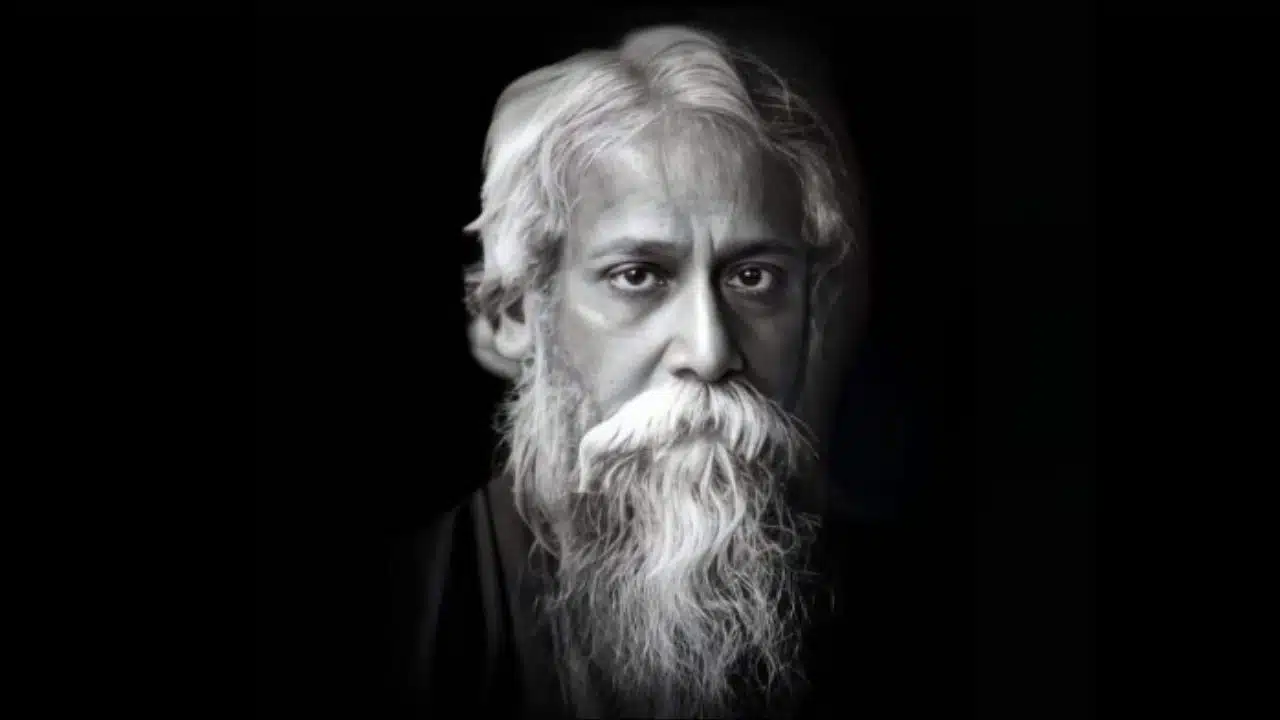
Today, the people of Bangladesh commemorate the 84th death anniversary of Rabindranath Tagore, one of the greatest literary minds the world has ever seen. Known for his extraordinary contributions to poetry, prose, music, education, and philosophy, Tagore’s influence extends far beyond the borders of Bengal or India. His legacy is celebrated globally, especially in South Asia, where his work remains deeply woven into cultural and national identities.
Although Rabindranath Tagore passed away on August 7, 1941, according to the Gregorian calendar, Bangladesh traditionally observes his death anniversary on the 22nd day of the Bengali month of Shraban. This practice highlights the country’s cultural connection to the Bengali calendar and its commitment to honoring the poet’s memory in a way that reflects regional heritage.
A Luminary Born in the Heart of Bengal
Rabindranath Tagore was born on 25 Baishakh 1268 (May 7, 1861) in Jorasanko, Kolkata, located in the Indian state of West Bengal. He was the youngest son of Debendranath Tagore, a prominent reformer and leader of the Brahmo Samaj, and Sarada Devi. Raised in a culturally rich and intellectually stimulating environment, Tagore developed a deep love for literature, music, and art from an early age.
Despite receiving only fragmented formal schooling, Tagore’s education was shaped by private tutors, extensive reading, and exposure to both classical Indian and Western ideas. This eclectic upbringing influenced his later works, which merged Eastern philosophy with Western literary styles, earning him admiration from global intellectuals and artists.
The First Asian Nobel Laureate in Literature
In 1913, Tagore achieved a historic milestone by becoming the first non-European and the first Asian writer to be awarded the Nobel Prize in Literature. The Nobel Committee recognized his poetic work Gitanjali (Song Offerings), which he had translated into English himself. The selection was based on the spiritual depth, universal humanism, and lyrical beauty of his poetry, which introduced a new dimension to global literature.
Tagore’s Nobel Prize elevated Indian literature to the global stage. His writings were no longer confined to Bengal or even India—they became part of the world’s cultural and literary heritage. Through Gitanjali and subsequent works, Tagore gave the world a poetic voice rooted in compassion, nature, human dignity, and inner freedom.
Deep Connection with Present-Day Bangladesh
While Tagore was born and raised in Kolkata, he spent significant portions of his life in what is now Bangladesh, particularly in areas where his family owned zamindari estates. These places include Shilaidaha in Kushtia, Shahzadpur in Sirajganj, and Patishar in Naogaon. During his stays in these serene and pastoral regions, Tagore managed estate affairs while also finding inspiration in rural life, riverine landscapes, and changing seasons.
Many of his renowned poems, letters, and songs were composed during this period. His time in East Bengal shaped his literary tone and gave him a deeper understanding of the lives of common people, especially peasants. He often expressed their struggles, joys, and connection with nature in his works. Even today, these areas celebrate their association with the poet with pride, and cultural organizations in these regions actively preserve his memory through festivals and museum spaces.
A Voice That Gave Identity to Nations
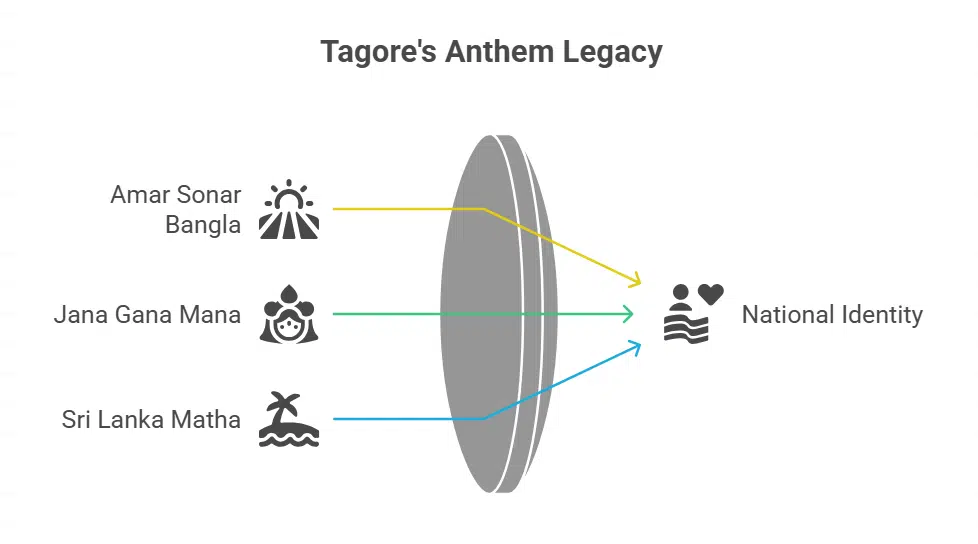
Rabindranath Tagore’s cultural influence went far beyond literature. He played a monumental role in shaping national identity through his musical and poetic contributions. He composed “Amar Sonar Bangla”, which was adopted as the national anthem of Bangladesh, evoking the beauty, love, and soul of the Bengali motherland.
Additionally, Tagore’s “Jana Gana Mana” was chosen as India’s national anthem, reflecting unity in diversity. The melodic structure and lyrical depth of both songs are rooted in Tagore’s distinctive musical style known as Rabindra Sangeet, a genre that combines classical, folk, and Western influences.
Remarkably, Sri Lanka’s national anthem, Sri Lanka Matha, also draws inspiration from Tagore’s musical style. This makes Tagore the only poet whose compositions have directly or indirectly influenced the national anthems of three countries—Bangladesh, India, and Sri Lanka—a unique testament to his global and cultural relevance.
From Nobel Laureate to Political Protestor
Although Rabindranath Tagore was once honored with a knighthood by the British Crown in 1915, he renounced the title just four years later. This act came in 1919, after the Jallianwala Bagh massacre in Amritsar, where British troops opened fire on unarmed Indian civilians during a peaceful gathering, killing hundreds.
In a bold letter addressed to the Viceroy of India, Tagore expressed his deep sorrow and refusal to remain a passive figure of honor under a colonial regime that inflicted such brutality. His decision to return the knighthood was an act of moral defiance and remains one of the earliest intellectual protests against British colonialism by an Indian public figure. It marked his unwavering commitment to justice, humanity, and national dignity.
Founding a Global Learning Hub: Visva-Bharati University
In 1921, Tagore founded Visva-Bharati University in Santiniketan, which became one of his most cherished accomplishments. His goal was to combine traditional Indian education with Western learning, fostering a space where students could grow intellectually and spiritually in harmony with nature.
The university attracted notable scholars from around the world, including philosophers, artists, scientists, and musicians. It promoted intercultural dialogue, environmental consciousness, and artistic freedom, ideas that still define its academic philosophy. Visva-Bharati remains a central pillar in India’s cultural and educational landscape, and it has been declared an Institute of National Importance by the Government of India.
Tagore’s Vast Literary and Artistic Legacy
Rabindranath Tagore was a literary genius whose works spanned across multiple genres and languages. His major Bengali collections include:
-
Poetry: Gitanjali, Sonar Tori, Balaka, Manasi, Gitimalya
-
Novels: Gora, Chokher Bali, Jogajog, Ghare-Baire (The Home and the World)
-
Plays: Raktakarabi, Dakghar, Raja, Achalayatan, Muktadhara
-
Short Stories: Galpaguchchha, a collection of over 80 stories exploring class, gender, and identity
He also created a treasure trove of songs—over 2,000 Rabindra Sangeet compositions—which he not only wrote but also composed music for. These songs continue to define Bengali culture and are performed in concerts, festivals, and personal occasions across the Bengali-speaking world.
In addition to his literary brilliance, Tagore became a self-taught visual artist in the later years of his life. He produced numerous paintings and sketches, many of which are preserved at Visva-Bharati and displayed in international exhibitions. His visual art was marked by abstract human figures, symbolism, and a strong departure from classical Indian art styles.
Global Honors and Timeless Influence
Throughout his life and posthumously, Tagore’s contributions have been recognized globally. His writings have been translated into over 30 languages, and his philosophical works continue to be studied in universities worldwide. He engaged in deep dialogues with renowned thinkers like Albert Einstein and Romain Rolland, bridging gaps between science, spirituality, and art.
Many international cultural organizations, including UNESCO, have honored his legacy. His manuscript of Gitanjali is part of UNESCO’s Memory of the World Register.
Cultural institutions, literary festivals, and universities continue to organize events, conferences, and performances based on his work. His philosophy on education, peace, and human dignity is more relevant than ever in today’s divided world.
A Legacy that Lives On
As Bangladesh honors the 84th death anniversary of Rabindranath Tagore, the nation—and the world—pauses to reflect on the life of a man who redefined art, education, nationalism, and humanism. Tagore’s creations were not just literary masterpieces but guiding lights for social, moral, and spiritual development.
He envisioned a world without borders—a place where individuals could grow in harmony with each other and with nature. His words continue to resonate across generations, reminding us that beauty, truth, and freedom are eternal.
In commemorating this anniversary, we are not simply remembering the death of a poet—we are reaffirming the value of his ideas and the timeless genius of Rabindranath Tagore.