


Property development can be an exciting yet daunting venture, especially for first-time developers.
With proper planning, the right strategy, and a clear understanding of the market, you can navigate the complexities of property development investment with confidence. This guide will walk you through the key steps to successfully start your first property development project.
Define Your Goals and Objectives
Before diving into the property development process, it’s crucial to outline your objectives. Ask yourself:
- Are you developing property for long-term investment or short-term profit?
- Do you plan to build residential or commercial properties?
- What is your expected return on investment (ROI)?
Clearly defining your goals will help shape your project strategy and decision-making process.
Conduct Market Research
Understanding the property market is essential to making informed decisions. Research:
- Local property demand and trends
- Target demographics and buyer preferences
- Economic factors influencing property prices
- Competitor projects in your chosen area
Market research helps you identify the best locations and property types to develop, ensuring your investment aligns with market needs.
Set a Realistic Budget
Your budget should include:
- Land acquisition costs
- Planning and approval fees
- Construction costs
- Marketing and sales expenses
- Contingency funds for unforeseen expenses
Being realistic about costs and planning for unexpected expenses will help you manage finances efficiently and avoid financial pitfalls.
Secure Financing
Property development requires significant capital. Explore different financing options such as:
- Bank loans and mortgages
- Joint ventures with investors
- Government grants and incentives
- Private lending options
Having a solid financial plan in place ensures that your project runs smoothly without funding interruptions.
Assemble the Right Team
A successful property development project requires a team of experienced professionals, including:
- Architects and designers
- Town planners
- Builders and contractors
- Real estate agents
- Legal and financial advisors
Collaborating with industry experts will help you navigate regulatory requirements, streamline processes, and achieve high-quality results.
Obtain Necessary Permits and Approvals
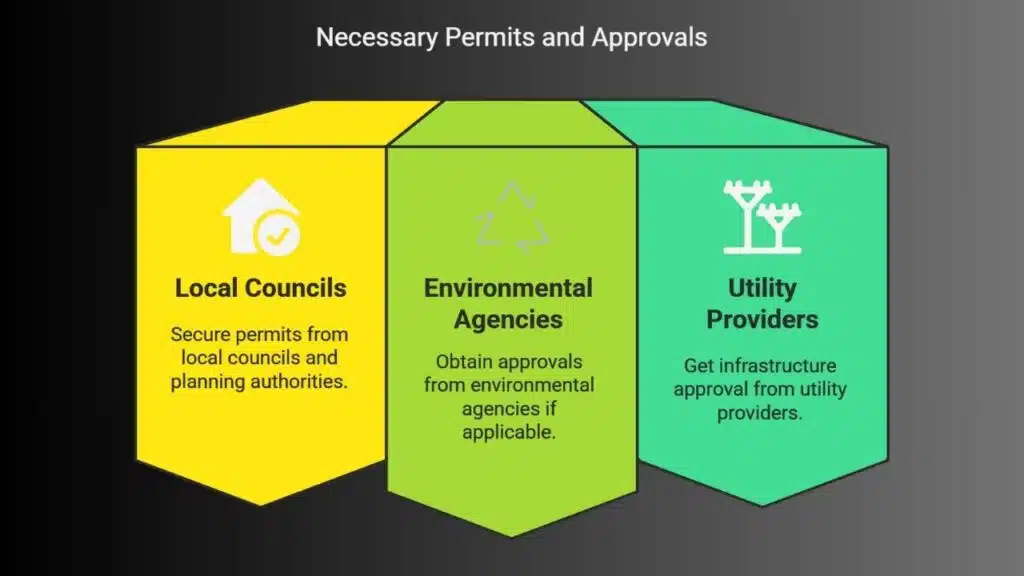
Each property development project must comply with local zoning laws and building regulations. Secure necessary permits from:
- Local councils and planning authorities
- Environmental agencies (if applicable)
- Utility providers for infrastructure approval
Failure to obtain proper approvals can lead to costly legal issues and project delays.
Develop a Feasibility Study
A feasibility study assesses the viability of your project. It should include:
- Market demand analysis
- Cost estimation vs. projected revenue
- Timeline and project milestones
- Risk assessment
A thorough feasibility study helps you make informed decisions and increases the likelihood of a successful project.
Plan Your Development Timeline
A well-structured timeline ensures your project stays on track. Outline key milestones such as:
- Land acquisition and site preparation
- Design and planning phase
- Construction and inspections
- Marketing and sales strategy
Managing time effectively minimizes project delays and maximizes efficiency.
Implement a Strong Marketing Strategy
To attract buyers or tenants, you need an effective marketing plan. Consider:
- Digital marketing (social media, real estate websites, email campaigns)
- Traditional advertising (billboards, brochures, open house events)
- Collaborating with real estate agents and property influencers
A strong marketing approach increases visibility and accelerates sales or leasing processes.
Monitor and Adapt
Even with careful planning, challenges may arise. Regularly monitor your project’s progress and be prepared to adapt your strategies. Address issues promptly, whether they involve budget adjustments, design modifications, or market fluctuations.
Final Thoughts
Starting your first property development project can be an exciting journey when approached with confidence and a solid plan. By following these steps—defining objectives, conducting research, securing financing, assembling a strong team, obtaining approvals, and executing a structured plan—you can set yourself up for a successful and profitable development venture.
With patience, persistence, and continuous learning, you can build a thriving career in property development. So, take the first step with confidence and turn your vision into reality!





















