

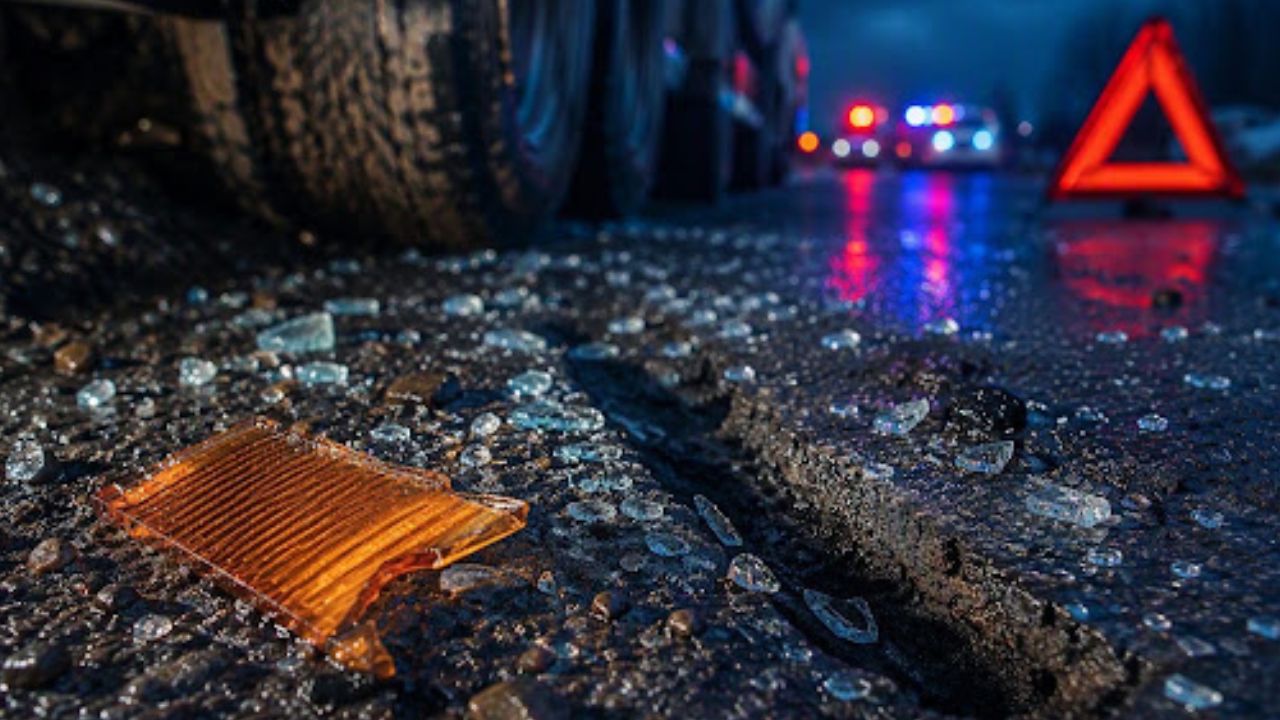
A truck crash starts two clocks: one on your injuries, one on the evidence. Whoever moves first wins both.
Call for help, then put distance between yourself and traffic if you can do it safely. Your health comes before any photograph. If injuries keep you off your phone, or an ambulance carries you away, a passenger can gather what you cannot. Paperwork pulled later, police files and hospital charts among them, can fill in what nobody captured at the roadside. Sort your evidence into three buckets: what you saw yourself, what you request afterward, and what the trucking company holds until someone formally demands it be preserved.
Why the Daily Crash Count Presses the Timeline
The biggest numbers came out of St. Louis County, Jackson County, and the City of St. Louis, which posted the highest collision totals. Federal crash data cited by Halvorsen Klote Davis show that Missouri averages more than 40 truck crashes per day, and that pace shapes how fast you need to move. Police reports and scene photographs matter early. Medical documentation comes next. Truck-controlled material may need preservation quickly. A single collision can leave behind a police report, ambulance records, vehicle photographs, and repair files, each sitting in a separate office.
Put Safety and Emergency Care Before Evidence
Call 911 and report immediate hazards
Tell the dispatcher where you are and which way you were headed. Report how many vehicles are involved and describe visible injuries. Mention fire risks or spilled cargo, then note blocked lanes. Stay away from leaking material, and stay out of traffic lanes while you look around.
Move only when staying put creates danger
Do as emergency personnel say about moving yourself or your vehicle. Leave a traffic lane only when that is safe and physically possible. Keep your distance from a damaged truck, and never cross traffic to take pictures.
No picture is worth getting hurt again.
Accept medical evaluation
Emergency and hospital records: write down your complaints and diagnoses. Keep test results and treatment details in those files, including discharge instructions. Don’t delay evaluation to finish photographing vehicle damage.
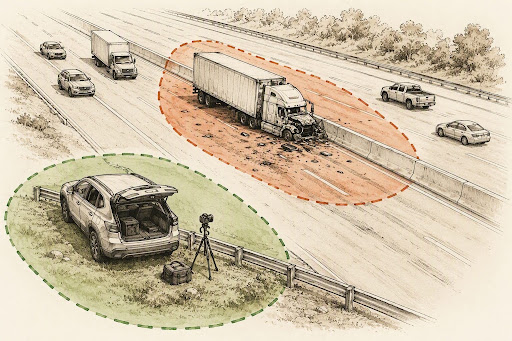
Follow These Steps to Preserve Evidence at the Scene
Work through the steps only as far as your condition and the scene permit.
- Call emergency services. Report the location and any hazards, then do what the dispatcher says. Documentation can wait until responders clear you. Write down the responding agency’s name when possible, or have someone else record it.
- Photograph the whole scene from a safe spot. Show vehicle positions, lanes, and traffic controls. Get tire marks and debris too. Add barriers or construction areas, plus weather and visibility. Never step into a travel lane for a better shot.
- Document vehicle damage, but leave it undisturbed. Photograph the sides of your vehicle you can reach safely. Capture truck damage only if you can see it from your position. Use wide views plus closer shots of impact points, without approaching the truck or moving debris.
- Record the carrier and truck identifiers. Capture the carrier name and U.S. Department of Transportation number. Record the tractor and trailer numbers separately. Note plates, cab color, trailer markings, and visible cargo placards. Leave anything you can’t safely see alone.
- Exchange identifying and insurance information. Save photographs or written copies of the driver’s identification and insurance details, including vehicle information. Ask an officer to help if injuries prevent an exchange. Don’t argue about fault.
- Collect witness contact details. Ask for each witness’s name, telephone number, and email address. Record where the person was during the crash. Let witnesses describe what they saw in their own words; no coaching, no rehearsed statements.
- Write a short memory record. Note your route and lane, then the signal and weather. Describe the sequence of impacts, any statements you heard, and unusual truck movements. Keep what you observed apart from what you assume. Don’t guess.
Protect the original files
Keep original photographs and videos unchanged. Don’t crop or filter your only copy, and add notes separately. Back everything up to a secure account or a second device. Preserve metadata, the file information that can include capture time and location. Pull dash-camera footage before routine recording writes over it. Share copies, never originals.
What to Do When You Cannot Take Photographs
Ask another person to document only what is safe
A passenger or witness can document the scene without interfering with responders. A trusted family member can help request records later. Police photographs and body-camera recordings may exist. Ambulance documentation, towing records, and vehicle inspection photographs can preserve details too. Family members should request permission before visiting a tow lot or photographing a stored vehicle.
Reconstruct your memory after treatment
Write or dictate a dated account once you’re medically able. Describe sounds and movement in the order you remember them, but don’t fill gaps with assumptions. If the second impact is a blank, write that down; an admitted gap beats a guess. Label later additions with their own dates.
If the Truck Leaves Before You Can Document It
Do not chase a truck that leaves the scene. Call 911 and report its direction of travel. Write down every identifying detail you remember.
Report partial identifying details
A partial plate or trailer number may help distinguish a vehicle. Report carrier markings and color, plus visible damage or cargo details. Don’t accuse a particular carrier based on a similar logo alone.
Find independent sources of footage
Note nearby traffic cameras and business security cameras. Residential doorbell cameras may hold footage, as might witness phones or dash cameras. Record camera locations promptly, because recordings get overwritten. Ask the investigating agency how to submit those locations.
Request the Police Report and Medical Records
Find the investigating agency and report number
Request the crash report from the agency that investigated the collision, whether that’s the Missouri State Highway Patrol, a county sheriff’s office, or a municipal police department. Keep the crash date, approximate time, and location together. Save driver names plus the agency’s report or incident number. Use the agency’s official records-request instructions; processing steps and fees vary by office.
Request full medical and billing files
Contact the records office at every place that treated you: hospitals, clinics, therapists, and pharmacies. Request clinical records separately from itemized bills, since separate departments often handle those requests.
Include ambulance and emergency care records. Request imaging and physician notes, plus therapy and prescription records. Keep work restrictions with referrals. Save receipts for out-of-pocket expenses beside the bill from the office that charged them.
Check every record for factual errors
Check names and dates against your own documents. Review crash descriptions and recorded symptoms, including affected body parts. Ask about correction procedures if something looks inaccurate. Never alter the original.
Preserve Records the Trucking Company May Control
Know which records may exist
Trucks carry systems that quietly log their own behavior. An electronic control module can record operating data, and electronic logging devices hold driving-time records. Other material can include dash-camera or in-cab video, GPS location data, and dispatch information. Inspection and maintenance files may exist, as may driver qualification and cargo records. Not every truck carries every type of record.
Understand why delay matters
Digital systems write over information during normal use. A formal preservation notice asks the holder not to destroy identified material. A Missouri attorney can advise you about pursuing preservation of records outside your possession. A notice doesn’t by itself open those files.
Handle Insurance Calls Without Creating an Inaccurate Record
Ask who is calling and if the call is recorded
Save the representative’s name and employer. Record the insurer represented, plus contact information and the claim number. An initial crash notification is not a detailed recorded interview. Don’t guess about speed, distance, injuries, or fault. Your policy may require cooperation; don’t assume every insurer’s request carries the same obligation.
Preserve all insurance communications
Keep letters and emails with claim forms. Save texts and voicemail messages, plus repair estimates and payment explanations. Review which providers and dates a medical authorization covers before you sign one. Seek individualized advice if its scope is unclear. Keep a copy of anything you sign.
Put Missouri Truck Crashes Per Day in Context
How many truck crashes happen in Missouri each year?
According to statistical data gathered by the Missouri State Highway Patrol (MSHP) and available via their WebFOCUS application server (WFServlet), Missouri averages approximately 13,000 to 16,000 commercial motor vehicle (truck) crashes per year.
Which factors lead to deaths on Missouri roadways?
No single factor leads to Missouri roadway deaths in every reporting year and data set. State analyses commonly track speeding, impairment, distraction, roadway departure, and lack of seat-belt use, and several can contribute to a single fatal crash. Commercial-vehicle involvement is a vehicle category, not itself a cause.
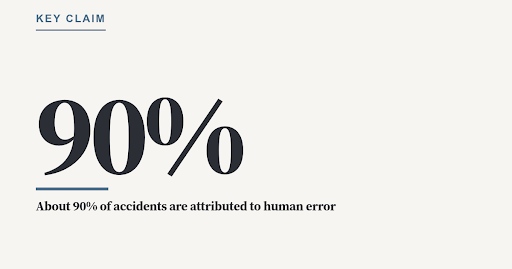
What does the claim that 90% of accidents come from human error mean?
The claim says that about 90% of accidents are caused by human error, but it overstates what the underlying research established. No reliable source backs that sweeping claim. Older National Highway Traffic Safety Administration research on critical reasons for crashes used the term “critical reason” to mean the immediate reason for the critical pre-crash event. That designation doesn’t establish legal fault or name the sole cause.
Which state has the most semi-truck crashes or is the deadliest to drive in?
It shifts year to year and with the measurement used. The state with the largest fatal-crash total may not post the highest rate per resident or per mile driven. Fair comparisons need matched vehicle categories.
Which trucking company has the most crashes per year?
No sound universal ranking crowns one company without adjusting for fleet size and mileage. Reporting periods and crash definitions matter too. Raw crash involvement doesn’t equal fault, and bigger fleets put more trucks on the road.
Frequently Asked Questions
Which evidence matters immediately after a Missouri truck collision?
Scene photographs taken from a safe spot, truck identifiers, police information, and medical documentation carry the most weight early on. Save witness contacts and the investigating agency’s report number when you can. Treatment takes priority over finishing the collection at the roadside.
Can I preserve proof if my injuries prevented scene photographs?
Yes. Police and emergency records may document the response. Witness images or dash-camera recordings may show the collision. Towing and inspection records can document vehicle condition. Medical files and a dated memory account preserve the rest. The absence of personal photographs doesn’t mean no evidence exists.
Where can I obtain crash and treatment records in Missouri?
Request the crash report from the investigating law-enforcement agency. Request clinical records and itemized bills directly from each office that treated you. Keep copies of your requests with their submission dates. Note any request number so an outstanding file is easy to spot during follow-up.
Final Evidence-Preservation Checklist
Use this list once you’ve addressed immediate hazards and medical needs.
- Verify emergency services were contacted, and medical care was documented.
- Save the investigating agency’s name and report number.
- Back up original photographs and video, including dash-camera files.
- Preserve carrier details and available truck or trailer identifiers.
- Save witness contact information with each person’s observation location.
- Write or dictate a dated memory account.
- Request the police report and retain the request confirmation.
- Request medical records separately from itemized bills.
- Organize towing and repair documents with other property records.
- Save insurance correspondence and notes about telephone calls.
- Note potential camera locations for the investigating agency.
- Discuss truck-controlled evidence promptly with qualified counsel when necessary.
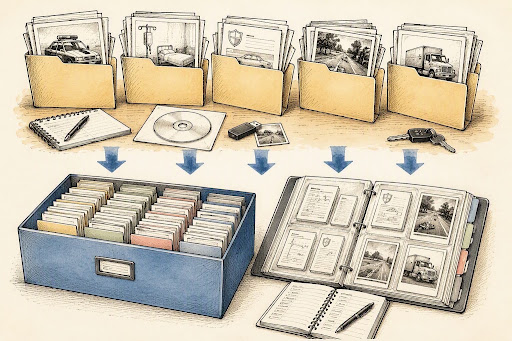
Keep One Organized Record of What Happened
Preserving evidence begins with protecting yourself, then saving what you can safely collect or request. Keep originals unchanged and use copies for routine submissions. Organize documents by date and source so a medical bill stays connected to the treatment it describes. Keep a request log beside the files, including responses and outstanding items; someone you trust can maintain it while you recover. Aim for one dated folder that holds your report number and original files, with provider records and correspondence in clearly named sections.





















