

Portugal has become a magnet for entrepreneurs and freelancers seeking to build their careers in a vibrant and supportive environment. The Portugal D2 Visa, also known as the Entrepreneur Visa, offers an excellent opportunity for individuals to establish a business or work independently in one of the most welcoming countries in Europe.
With access to the European Union market, tax benefits, and a high quality of life, Portugal is a top choice for forward-thinking professionals. This Portugal D2 visa guide provides a comprehensive overview of the D2 Visa, including its requirements, costs, and step-by-step application process for 2025.
What is the Portugal D2 Visa?
The Portugal D2 Visa is designed for entrepreneurs, freelancers, and independent professionals who wish to work or start a business in Portugal. It aligns with the country’s goal of fostering economic growth by attracting foreign investment and skilled professionals.
Whether you’re an entrepreneur planning to launch a startup, a freelancer looking for a new base, or a professional aiming to expand your services, the D2 Visa provides a pathway to residency and the potential to thrive in Portugal’s dynamic economy.
Key Benefits of the D2 Visa
- Access to EU Markets: Establishing a business in Portugal opens doors to the entire European Union market.
- Family Reunification: Your family members can join you through the family reunification visa.
- Pathway to Permanent Residency and Citizenship: After five years of residency, you may apply for permanent residency or Portuguese citizenship.
- Tax Incentives: Eligible applicants can benefit from Portugal’s Non-Habitual Resident (NHR) program, offering significant tax advantages.
- Freedom of Movement: D2 Visa holders can travel freely across the Schengen Area.
Eligibility Criteria for the Portugal D2 Visa
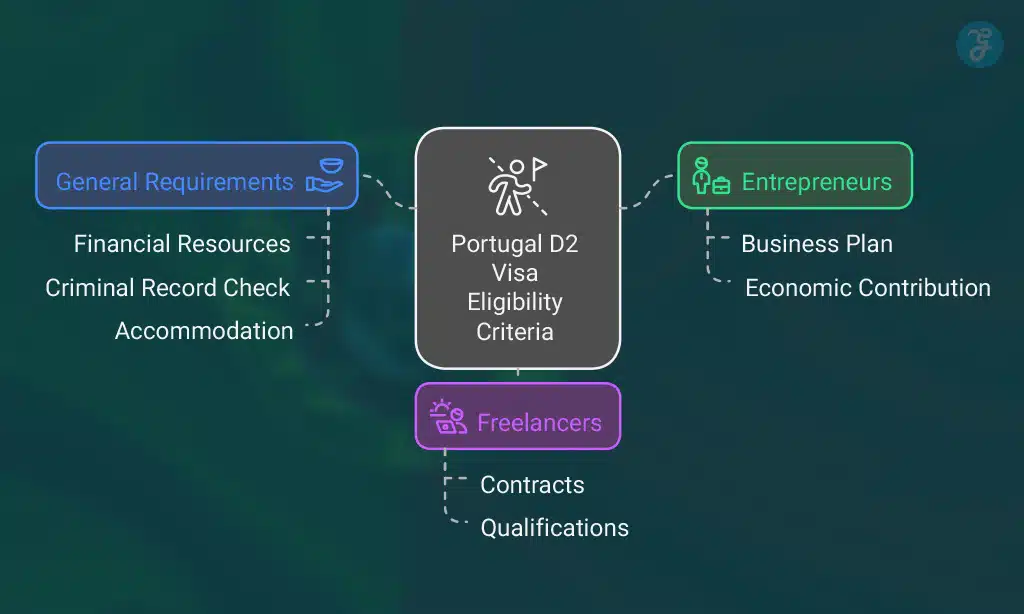
Understanding the eligibility criteria for the Portugal D2 Visa is crucial for a successful application. The requirements differ slightly based on whether you are applying as an entrepreneur, a freelancer, or an independent professional.
Each pathway emphasizes financial stability, a viable business plan, and proof of your ability to contribute positively to the Portuguese economy or society. Below, we delve into the specific criteria for each category.
Entrepreneurs
- Must present a comprehensive business plan that outlines the business model, market analysis, and economic, cultural, or technological value it will add to Portugal.
- The business should demonstrate the potential to create jobs for Portuguese citizens or significantly contribute to the local economy through innovation or investment.
Freelancers
- Provide verifiable evidence of ongoing contracts, clients, or freelance projects based in Portugal, such as signed agreements or letters of intent.
- Showcase professional qualifications or expertise in a high-demand field within the Portuguese job market, supported by certifications or portfolios.
General Requirements
- Possess sufficient financial resources to sustain yourself and your dependents during your stay, which can include personal savings, income statements, or a startup investment fund.
- Submit a clean criminal record check from your home country and any country you have resided in for more than one year.
- Provide proof of suitable accommodation in Portugal, such as a signed rental agreement, property ownership documents, or a letter of invitation from a host.
Portugal D2 Visa Guide: Step-by-Step Application Process
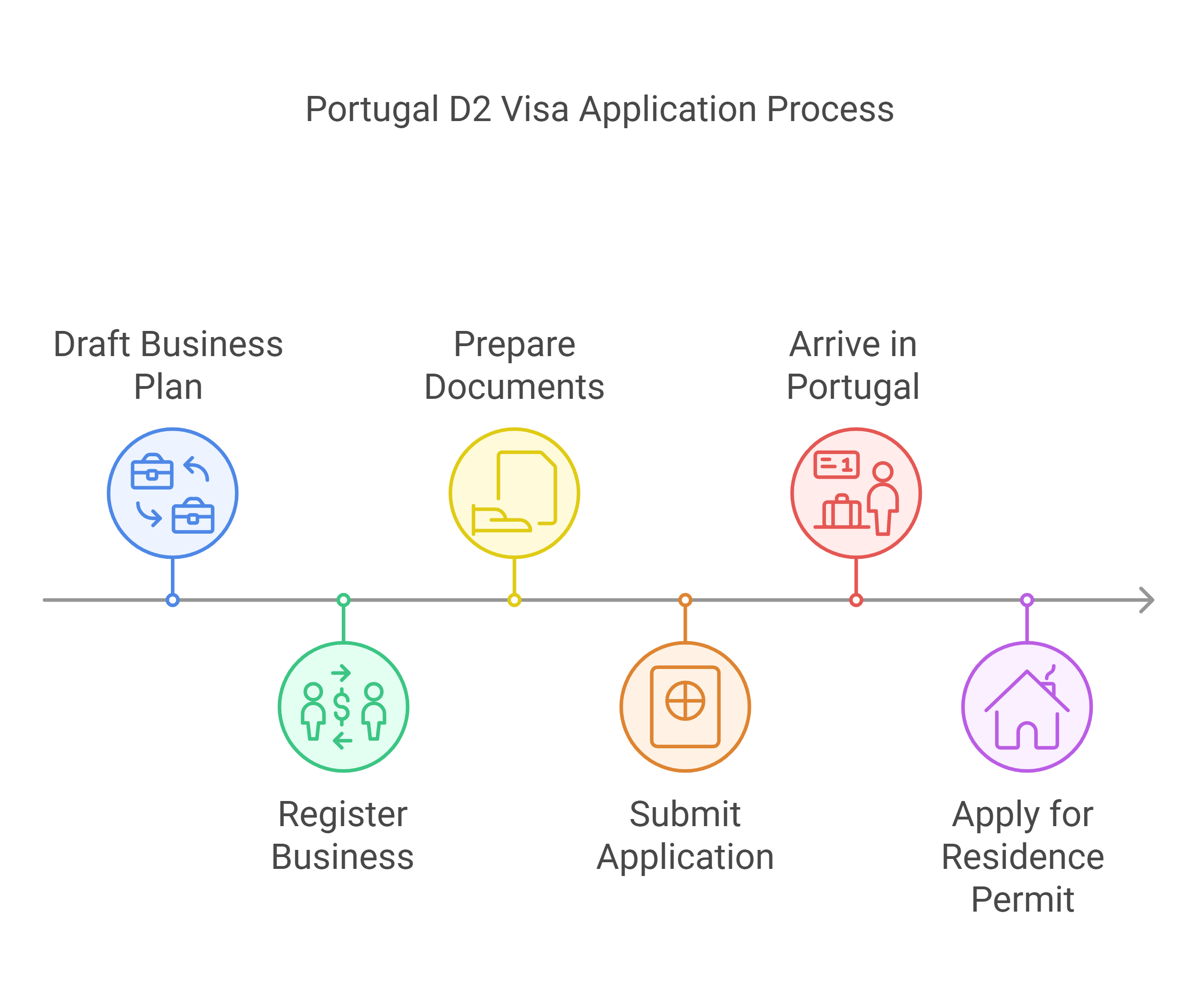
Embarking on the journey to obtain the Portugal D2 Visa requires careful planning and adherence to specific steps. This section outlines the complete process, from drafting a business plan to acquiring your residence permit after arriving in Portugal. Each step ensures that you meet the necessary requirements and increases your chances of a successful application.
Step 1: Drafting a Business Plan
- Research the Market: Begin by understanding Portugal’s business landscape, focusing on industries that align with your expertise or goals.
- Include Key Components: Your business plan should include an executive summary, market analysis, financial projections, and an explanation of how your business will contribute to the Portuguese economy. Highlight its innovation, job creation potential, or cultural value.
- Professional Assistance: Consider consulting a local business advisor to align your plan with Portuguese standards and increase its feasibility.
Step 2: Registering Your Business
- Obtain a Tax Identification Number (NIF): This is mandatory for any financial or legal transactions in Portugal. You can acquire it through a local tax office or with the help of a legal representative.
- Open a Portuguese Bank Account: Deposit the initial capital required for your business. Ensure the account is under your name and supports your company’s financial needs.
- Company Registration: Register your business with the Portuguese Commercial Registry (Conservatória do Registo Comercial). Depending on your business type, you may need to define a company name, legal structure, and scope of operations.
Step 3: Preparing Required Documents
- Gather Essential Documents: Compile the following:
- A valid passport (with at least six months of validity).
- A finalized business plan or proof of freelance work contracts.
- Financial proof, such as bank statements showing sufficient funds.
- Proof of accommodation in Portugal (e.g., a rental agreement or property ownership).
- Criminal background check from your home country and other countries where you’ve lived for over a year.
- Health insurance valid in Portugal, covering the visa duration.
- Tax Identification Number (NIF).
- Legal Translations: Ensure all documents not in Portuguese are professionally translated and notarized.
Step 4: Submitting the Application
- Apply at the Embassy: Submit your D2 visa application at the nearest Portuguese consulate or embassy. Include all required documents and pay the visa application fee (typically €90 to €120).
- Attend the Interview: Be prepared to explain your business plan or freelance activities. Highlight how your work aligns with Portugal’s economic goals.
- Track Your Application: Keep a record of submission details and follow up on your application status as needed.
Step 5: Arriving in Portugal
- Enter on a D2 Visa: Once approved, travel to Portugal and bring all original documents for further processing.
- Apply for a Residence Permit: Within four months of arrival, schedule an appointment with SEF (Serviço de Estrangeiros e Fronteiras) to apply for your residence permit. Be ready to provide:
- Your D2 Visa.
- Proof of accommodation.
- Evidence of business activity (e.g., company registration confirmation or active contracts).
- Receive Your Permit: After SEF approval, you’ll be granted a temporary residence permit valid for one or two years, renewable based on continued compliance with visa requirements.
Portugal D2 Visa Guide: Financial Costs of the D2 Visa
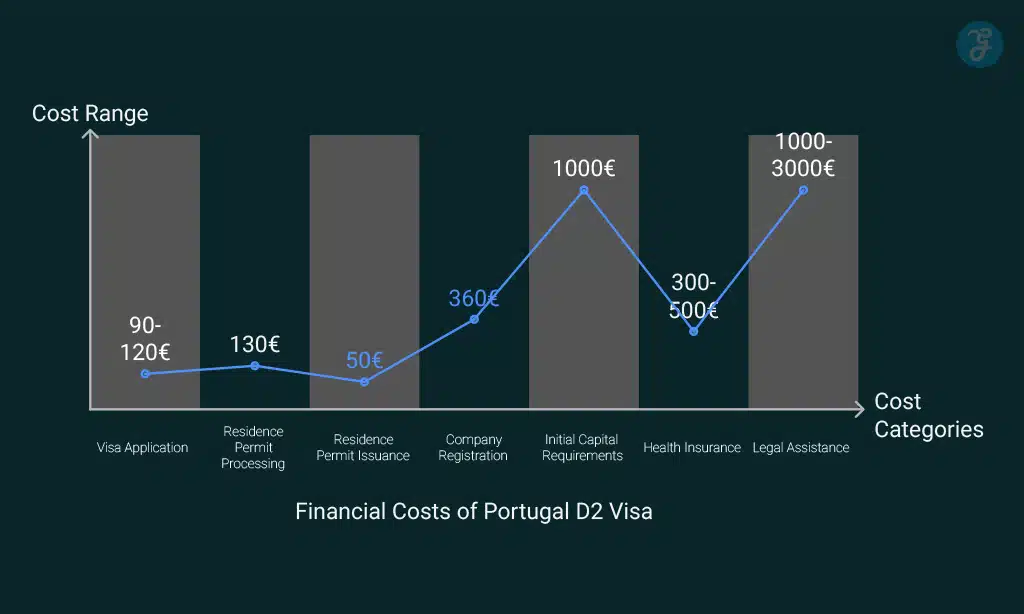
Planning your finances is a crucial step when applying for the Portugal D2 Visa. From application fees to business setup costs, understanding these expenses will help you budget effectively and avoid surprises during the process. Below is a detailed breakdown of the costs involved in obtaining and maintaining the D2 Visa.
Application Fees
- Visa application: €90 to €120 (varies by country).
- Residence permit: Approximately €80 for processing and €50 for issuance.
Business Costs
- Company registration: Around €360.
- Initial capital requirements: Minimum of €1,000 (higher for certain business types).
Other Costs
- Health insurance: €300–€500 annually.
- Accommodation: Rental costs vary depending on location (e.g., Lisbon vs. smaller cities).
- Legal assistance: Optional but recommended, typically costing €1,000–€3,000.
Common Challenges and How to Overcome Them
- Processing Delays: Start early and prepare all documents thoroughly.
- Language Barriers: Hiring a translator or legal expert fluent in Portuguese can help.
- Business Plan Rejections: Consult professionals to ensure your business plan meets local standards.
- Cultural Differences: Familiarize yourself with Portuguese business etiquette and regulations.
Comparing the D2 Visa to Other Portuguese Visas
| Feature/Criteria | D2 Visa | D7 Visa | Golden Visa | D3 Visa |
|---|---|---|---|---|
| Target Group | Entrepreneurs, freelancers, and independent professionals | Passive income earners and retirees | High-net-worth individuals through investments | Highly skilled professionals |
| Primary Requirement | Viable business plan or proof of freelance work | Stable passive income (e.g., pensions, rents) | Significant financial investment in eligible areas | Job offer in a high-demand field |
| Financial Requirements | Sufficient funds to sustain yourself and your business | Minimum passive income (around €8,460/year for the main applicant) | Investment of €280,000 to €500,000+ depending on the option | Salary aligned with Portuguese standards |
| Residency Permit Validity | 1-2 years, renewable | 1-2 years, renewable | 2 years, renewable | 1-2 years, renewable |
| Pathway to Citizenship | Yes, after 5 years | Yes, after 5 years | Yes, after 5 years | Yes, after 5 years |
| Family Reunification | Yes | Yes | Yes | Yes |
| Travel within Schengen Area | Yes | Yes | Yes | Yes |
| Application Complexity | Moderate | Simple | Complex due to investment requirements | Moderate |
| Tax Benefits | Eligible for NHR program | Eligible for NHR program | Eligible for NHR program | May qualify under certain conditions |
FAQs About the Portugal D2 Visa
If you have any queries about Portugal D2 visa, here’s a little help for you. You can find your answers below.
1. How long does the application process take?
Typically 3–6 months.
2. Can family members join me?
Yes, through family reunification visas.
3. What are the renewal requirements?
Renewals require proof of ongoing business activity and financial stability.
4. Can I switch to permanent residency?
Yes, after five years of residency.
Takeaways
The Portugal D2 Visa offers an exceptional opportunity for entrepreneurs and freelancers to start their ventures and live in a country celebrated for its vibrant culture, economic stability, and high quality of life.
We have included every details on Portugal D2 visa guide with requirements, costs, and application process. With proper planning and execution, the D2 Visa can be your gateway to a promising future in Portugal.





















