

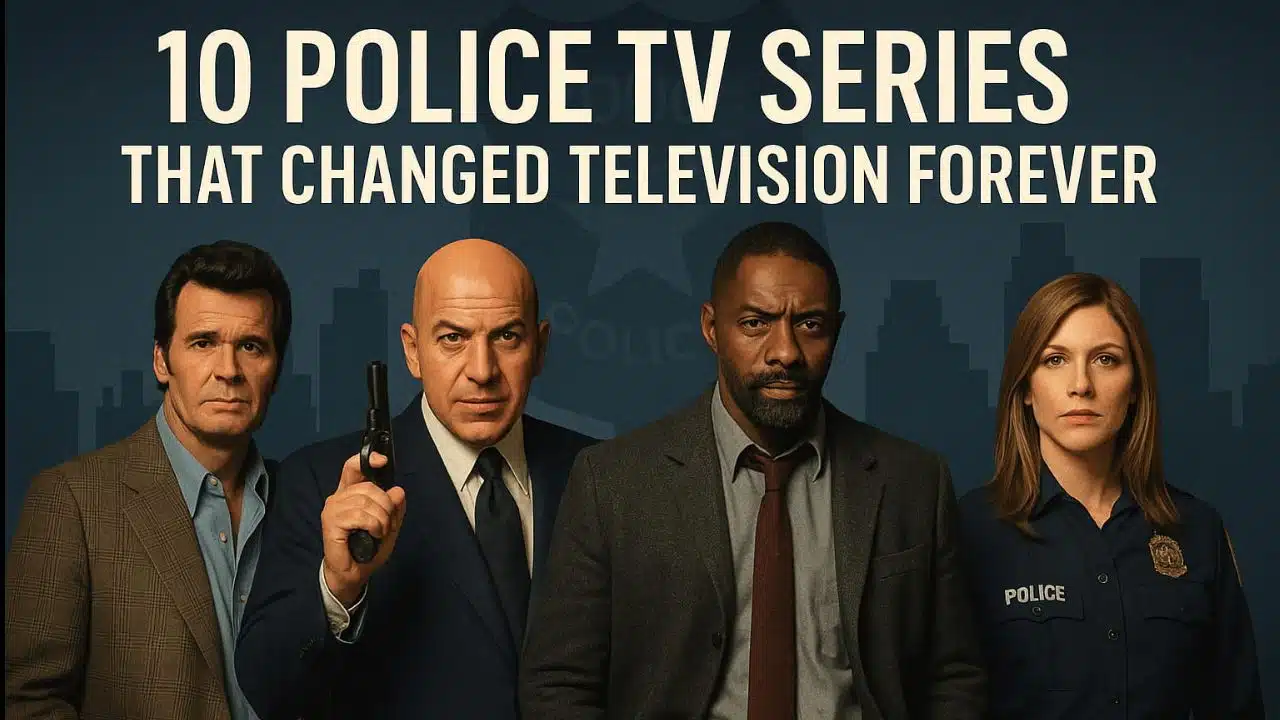
For generations, crime dramas—especially those centered on law enforcement—have been the backbone of television’s narrative evolution. They can be procedural and methodical, gritty and sociological, entertaining yet deeply reflective of the society that consumes them. Some have merely succeeded; others have reshaped how we understand the badge, the criminal, and the thin line between them.
As compiled in Maxmag’s celebrated list of American police series, these shows continue to influence new storylines, audience expectations, and even real-world conversations about justice. Below are ten series whose impacts reverberate beyond their budgets and scripts—altering the landscape of television forever.
1. Dragnet (1951–1959)
When Dragnet first aired, its directive was simple: show police work as matter-of-fact, rooted in evidence, routine, and unglamorous procedure. Its voiceover narration (“The story you are about to see is true… the names have been changed”) lent the show a near-documentary authority. By forgoing melodrama in favor of precision, it established a template for countless series that followed.
2. Hill Street Blues (1981–1987)
A revolution in network TV, Hill Street Blues introduced a rugged, multi-threaded narrative with handheld cameras and overlapping storylines. It refused to let any character stay purely heroic or villainous, instead offering flawed, human portraits of officers. Its influence can be clearly traced in shows like NYPD Blue and The Wire.
3. Miami Vice (1984–1989)
Before Miami Vice, police dramas rarely leaned into style. But this show turned visual aesthetics—lighting, music, fashion—into central storytelling tools. It blurred the line between crime drama and music video, insisting that environment itself is a character. The result: police shows were no longer just about cases, but mood, culture, and identity.
4. Law & Order (1990–2010)
Few series have matched the impact of Law & Order. Its “ripped from the headlines” format and bifurcated narrative (investigation plus courtroom) made legal process part of the entertainment. Spin-offs followed, but the original’s economy and reliability became a network staple and a narrative blueprint for many other crime dramas.
5. NYPD Blue (1993–2005)
When NYPD Blue arrived, it challenged network TV boundaries. With explicit dialogue, partial nudity, and moral ambiguity, it reframed what a cop show could address. More importantly, it placed characters at the emotional core—with private lives, ethical dilemmas, and emotional breakdowns—elevating procedural storytelling into character drama.
6. The Shield (2002–2008)
The Shield shifted the axis. Vic Mackey wasn’t a paragon—he was a corrupt survivor in a broken system. The show forced viewers into moral tension, asking: must a police show portray officers as “good” to be compelling? Its rawness and willingness to dwell in compromise made it a touchstone for antihero narratives.
7. The Wire (2002–2008)
The Wire is more than a cop show—it’s an institutional study. From the streets to schools, politics to media, it mapped the ecosystems that make crime possible. It rewrote expectations: the “case-of-the-week” was secondary to systemic critique. Even today, it’s frequently cited as one of the greatest TV dramas ever made.
8. Criminal Minds (2005–2020)
Rather than focusing on local detectives, Criminal Minds turned inward—on profiling the criminal mind. Its success popularized psychological crime drama, made forensic detail mainstream, and shifted audience fascination toward motive, pattern, and behavior. It pioneered a blueprint for many streaming-era crime series.
9. True Detective (2014–Present)
When True Detective debuted, it entered with literary ambition and cinematic craftsmanship. The first season in particular disrupted public expectations: a slow-burn, philosophically inclined detective drama with tone, mood, and menace built into every frame. The anthology format further freed writers to innovate rather than follow formula.
10. Brooklyn Nine-Nine (2013–2021)
Not all boundary-breakers are dark. Brooklyn Nine-Nine reimagined the police genre with humor, heart, and social awareness. It balanced comedy with clear stances on inclusivity, race, and accountability, proving a police show can be fun, progressive, and still serious when needed. It expanded the concept of what a cop show could be.
The Cultural Aftershock of Crime on Screen
Why do these shows matter beyond entertainment? Because television doesn’t just reflect society—it helps shape how we understand authority, justice, and human fallibility. In recent years, creators themselves have begun wrestling publicly with these responsibilities.
As detailed by The Hollywood Reporter, writers and producers on shows like The Rookie and Law & Order: SVU have started reevaluating how policing is portrayed—consulting advocacy groups and challenging outdated tropes to better align with modern realities. This industry-wide reassessment signals a cultural reckoning: the badge on TV is no longer untouchable.
Analysts have also noted that during the 2019–20 network season, nearly one in five scripted shows featured police as a central element—proof that cop stories remain deeply embedded in television’s DNA. Even as formats evolve, the demand for crime narratives endures across broadcast and streaming alike.
Why We Still Watch the Badge
- Moral friction: Police shows thrive on boundary lines. Good versus bad isn’t black and white; the tension lies in the gray.
- Institutional critique: The most compelling series don’t glamorize policing but interrogate it.
- Character resonance: Flawed protagonists make us care—even when they break rules.
- Cultural catharsis: In unresolved real-world crises, fictional justice offers a brief emotional release.
These ten series didn’t just succeed in their times—they persist in cultural memory. They anchor conversations about policing, identity, and storytelling risk. And as television continues to evolve—through streaming models, anthology structures, and global audiences—they remain benchmarks of creativity and conscience.





















