Every calendar date carries centuries of human ingenuity, political upheavals, artistic breakthroughs, and personal milestones that shaped the modern world. September 27 stands as a particularly transformative day in the global historical arch.
On this day, Albert Einstein published the mathematical foundation of modern physics, George Stephenson introduced the steam locomotive to public transportation, and Jean-François Champollion unlocked ancient Egyptian history by deciphering hieroglyphics. Simultaneously, across the Indian subcontinent and the Bangalee sphere, September 27 marks pivotal moments in revolutionary politics, literary genius, and social reform.
The Bangalee Sphere & Subcontinent
The Indian subcontinent, particularly Bengal, has long been a crucible for socio-religious reform, anti-colonial revolutionary resistance, literary innovation, and modern urban governance. September 27 features prominent milestones that continue to reverberate across Bangladesh, West Bengal, and the wider South Asian diaspora.
Historical Milestones & Political Movements
-
The Passing of the Bengal Renaissance Icon (1833): Raja Ram Mohan Roy, widely revered as the “Father of the Bengal Renaissance,” passed away on September 27, 1833, in Stapleton, near Bristol, England. Roy was instrumental in eradicating the abhorrent practice of Sati (widow burning) through his tireless advocacy, which culminated in the Bengal Sati Regulation of 1829. His founding of the Brahmo Samaj catalyzed modern socio-religious thought, advocating for women’s rights, rationalism, freedom of the press, and Western scientific education across undivided Bengal.
-
The Birth of a Revolutionary Martyr (1907): Indian nationalist revolutionary Bhagat Singh was born on September 27, 1907, in Jaranwala Tehsil, Lyallpur district, Punjab (now in Pakistan). Though some family records cite September 28, historical archives widely record September 27 as the spark of his legacy. As a leader of the Hindustan Socialist Republican Association (HSRA), Singh’s radical acts against British colonial rule—including the 1929 Central Legislative Assembly bombing—and his subsequent execution at age 23 turned him into a national martyr whose sacrifice inspired generations of freedom fighters across Bengal and greater India.
-
Post-Independence Border Dynamics (1981): On September 27, 1981, diplomatic tension escalated between India and Bangladesh over reports regarding Chittagong Hill Tracts border incidents and migration movements. The events highlighted the fragile post-1971 geopolitical border management and security dialogues that shaped early bilateral relations between Dhaka and New Delhi.
Famous Births in the Subcontinent
-
Siraj Sikder (1944–1975): Born in Shariatpur, Bengal, British India, Siraj Sikder was a Bangladeshi revolutionary, civil engineer (graduated from BUET), and political strategist who fought as a freedom fighter during the 1971 Bangladesh Liberation War. He founded the Purba Banglar Sarbahara Party, representing a radical Marxist-Leninist-Maoist strand of post-independence Bangladeshi political history.
-
Annisul Huq (1952–2017): Born in Sonagazi, Feni, Annisul Huq was one of Bangladesh’s most visionary entrepreneurs, television presenters, and civic leaders. He served as the President of the Bangladesh Garment Manufacturers and Exporters Association (BGMEA) and the Federation of Bangladesh Chambers of Commerce and Industry (FBCCI) before being elected Mayor of Dhaka North City Corporation in 2015. His energetic urban clean-up campaigns, illegal billboard removals, and infrastructure modernizations transformed Dhaka’s municipal governance until his untimely passing in 2017.
-
Yash Chopra (1932–2012): Born in Lahore (undivided India), legendary filmmaker Yash Chopra revolutionized Hindi cinema. Known as the “King of Romance,” his career spanned five decades, producing iconic classics like Deewaar, Kabhi Kabhie, Chandni, and Dilwale Dulhania Le Jayenge under his studio Yash Raj Films (YRF), fundamentally shaping global South Asian pop culture.
-
Mata Amritanandamayi “Amma” (Born 1953): Born in Kerala, India, she is a world-renowned Hindu spiritual leader, humanitarian, and founder of the Embracing the World foundation. Her global charitable organization has provided disaster relief, healthcare, and education to millions worldwide.
Famous Deaths in the Subcontinent
-
Syed Shamsul Haq (1935–2016): Known as Sabyasachi (the ambidextrous writer) for his effortless mastery across poetry, novels, plays, essays, and lyrics, Syed Shamsul Haq passed away on September 27, 2016, in Dhaka. Recipient of the Ekushey Padak, Bangla Academy Literary Award, and Independence Day Award, his plays like Nuruldiner Sarajibon and Payer Awaj Powa Jay remain cornerstone classics of Bangladeshi theater.
-
S. R. Ranganathan (1892–1972): Shiyali Ramamrita Ranganathan was an Indian mathematician and library scientist who died on September 27, 1972. He formulated the “Five Laws of Library Science” and invented the Colon Classification system, revolutionizing library and information sciences globally.
-
Mahbubey Alam (1949–2020): Senior Advocate and the longest-serving Attorney General for Bangladesh (2009–2020). He represented the state in historic landmark cases, including the prosecution of war crimes committed during the 1971 Liberation War and the Sheikh Mujibur Rahman assassination trial.
-
Jaswant Singh (1938–2020): A founding member of the Bharatiya Janata Party (BJP) and one of India’s most distinguished diplomats, Jaswant Singh served as India’s External Affairs, Finance, and Defense Minister. He played a pivotal role in managing India’s foreign policy during the 1998 nuclear tests and the 1999 Kargil Conflict.
International Observances & Holidays
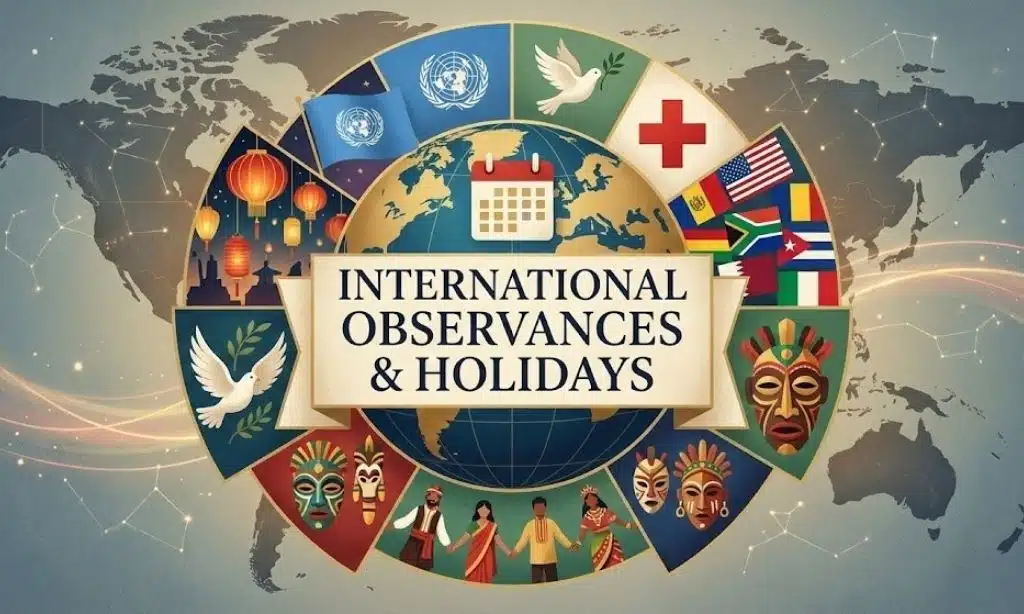
September 27 features major global observances backed by international organizations to foster cultural exchange, economic development, and environmental awareness.
-
World Tourism Day (UNWTO): Established by the United Nations World Tourism Organization (UNWTO) in 1980, September 27 was chosen to mark the anniversary of the adoption of the UNWTO Statutes in 1970. This day emphasizes tourism’s socioeconomic contribution toward achieving the Sustainable Development Goals (SDGs), fostering intercultural dialogue, and supporting local economies globally.
-
Turkmenistan Independence Day: Marks Turkmenistan’s official declaration of independence from the Soviet Union in 1991. It is celebrated across the nation with military parades, cultural concerts, and civic ceremonies in Ashgabat.
-
French Community Day in Belgium: Commemorates the victory of Belgian patriots over Dutch troops in the Brussels Park during the Belgian Revolution of 1830, establishing the cultural identity of the French-speaking community in Belgium.
Global History
From scientific epiphanies in European laboratories to geopolitical shifts in Asia and North America, September 27 has seen history written across every continent.
United States
-
The Warren Commission Report (1964): The President’s Commission on the Assassination of President Kennedy released its official 888-page report on September 27, 1964. The commission concluded that Lee Harvey Oswald acted entirely alone in shooting President John F. Kennedy in Dallas on November 22, 1963. The report remains one of the most debated legal documents in modern political history.
-
Google’s Official Anniversary (1998): Although incorporated on September 4, 1998, Google officially chose September 27 to celebrate its birthday to align with an early record-breaking index count of web pages. What began in a California garage under Larry Page and Sergey Brin grew into the dominant digital utility of human civilization.
United Kingdom & Commonwealth
-
The Steam Locomotive Revolution (1825): George Stephenson’s locomotive Locomotion No. 1 pulled the world’s first passenger-carrying train on the Stockton and Darlington Railway in England. This event birthed the commercial railway era, dramatically speeding up the Industrial Revolution and redefining global trade, urbanization, and travel.
-
The Norman Conquest Sails (1066): After weeks of being delayed by unfavorable winds, William, Duke of Normandy, set sail across the English Channel with his invasion fleet on the night of September 27, 1066. Landing at Pevensey the next morning, he defeated King Harold II at the Battle of Hastings on October 14, altering the British monarchy, culture, and the development of the English language forever.
Europe
-
Unlocking Ancient Egypt — The Rosetta Stone (1822): French scholar Jean-François Champollion delivered his famous letter (Lettre à M. Dacier) to the Académie des Inscriptions et Belles-Lettres in Paris. He revealed that he had successfully cracked the code of Egyptian hieroglyphics using the trilingual Rosetta Stone. This breakthrough gave birth to modern Egyptology, allowing historians to read thousands of years of ancient pharaonic texts.
-
Einstein’s $E=mc^2$ Paper Published (1905): Albert Einstein’s revolutionary paper, “Does the Inertia of a Body Depend Upon Its Energy Content?”, was published in the German journal Annalen der Physik. The three-page paper introduced the mass-energy equivalence equation $E=mc^2$, proving that mass can be converted into energy. This fundamental equation laid the groundwork for nuclear physics, modern cosmology, and atomic energy.
-
Founding of the Jesuits (1540): Pope Paul III issued the papal bull Regimini militantis Ecclesiae, approving the founding of the Society of Jesus (the Jesuits) under Ignatius of Loyola. The Jesuits became one of the most influential religious, educational, and missionary institutions in world history.
China & East Asia
-
The Devastating Chihli Earthquake (1290): An immense earthquake struck the Gulf of Chihli (Bohai Sea region near Inner Mongolia and Liaoning, China) on September 27, 1290. Historical records indicate that the disaster destroyed over 480 structures and claimed approximately 100,000 lives, making it one of the deadliest earthquakes in recorded East Asian history.
-
General MacArthur Meets Emperor Hirohito (1945): In Allied-occupied Japan, Emperor Hirohito paid a historic visit to US General Douglas MacArthur at the American Embassy in Tokyo. The photograph taken during this meeting—showing MacArthur in informal khaki uniform standing beside the formal Emperor—shocked the Japanese populace, dismantling the divine myth of the Emperor and signaling Japan’s transition toward a modern constitutional democracy.
Russia & Post-Soviet Sphere
-
Soyuz 12 Spaceflight (1973): The Soviet Space Program launched Soyuz 12, piloted by cosmonauts Vasily Lazarev and Oleg Makarov. It was the USSR’s first crewed space mission following the tragic Soyuz 11 disaster in 1971. The mission successfully tested redesigned spacecraft safety systems and pressurized space suits, establishing higher safety standards for human spaceflight.
Rest of World (Middle East, Africa, Latin America)
-
The Fall of Kabul to the Taliban (1996): On September 27, 1996, Taliban forces captured the Afghan capital of Kabul, ousting President Burhanuddin Rabbani’s government. The insurgents executed former Soviet-backed President Mohammad Najibullah outside the UN compound and proclaimed the Islamic Emirate of Afghanistan, ushering in a dramatic geopolitical realignment across Central and South Asia.
-
Sierra Leone Admitted to the United Nations (1961): Following its independence from the British Empire earlier that year, Sierra Leone was officially admitted as the 100th member state of the United Nations on September 27, 1961.
Notable Births & Deaths (Global)
Beyond the subcontinent, September 27 marks the birth and passing of influential political figures, cultural icons, artists, and pioneers.
Famous Births (Global)
-
Samuel Adams (1722–1803): American statesman, political philosopher, and Founding Father of the United States. He organized the Sons of Liberty, led resistance against British taxation policies including the Boston Tea Party, and signed the US Declaration of Independence.
-
King Louis XIII of France (1601–1643): Monarch of the House of Bourbon who ruled France from 1610 to 1643. Alongside his Chief Minister Cardinal Richelieu, he dismantled feudal aristocratic power, laid the foundations of French absolute monarchy, and established the Académie Française.
-
Grazia Deledda (1871–1936): Italian writer born in Sardinia who became the second woman to win the Nobel Prize in Literature in 1926. Her vivid novels explored human suffering, morality, and rural Sardinian life.
-
Avril Lavigne (Born 1984): Canadian musician and songwriter who defined early 2000s female-driven pop-punk music. Her debut album Let Go (2002) sold over 16 million copies worldwide, paving the way for alternative female artists in pop music.
Famous Deaths (Global)
-
Edgar Degas (1834–1917): Major French Impressionist artist renowned for his paintings, sculptures, and drawings of dancers, racehorses, and Parisian life. His mastery of movement and composition revolutionized late 19th-century European visual art.
-
Clara Bow (1905–1965): American actress who rose to global stardom during the silent film era of the 1920s. After starring in the hit film It (1927), she earned the nickname “The ‘It’ Girl” and personified the roaring twenties flapper movement.
-
Cliff Burton (1962–1986): Influential American musician and songwriter best known as the lead bassist for Metallica. His virtuosic playstyle on iconic albums like Master of Puppets ended abruptly when he died in a tour bus accident in Sweden at age 24.
-
Michael Gambon (1940–2023): Renowned Irish-British actor who enjoyed a six-decade career across theater, film, and television. He achieved global acclaim for portraying Professor Albus Dumbledore in six Harry Potter films following the death of Richard Harris.
-
Maggie Smith (1934–2024): Two-time Academy Award-winning legend of British stage and screen. Beloved for her roles in The Prime of Miss Jean Brodie, California Suite, Downton Abbey (as the Dowager Countess), and the Harry Potter film series (as Professor McGonagall).
“Did You Know?” Trivia
-
The Fainting Codebreaker: When Jean-François Champollion finally cracked the decipherment system of Egyptian hieroglyphics on September 27, 1822, he was so overwhelmed that he ran into his brother’s office at the Collège de France, shouted “Je tiens l’affaire!” (“I’ve got it!”), and instantly fainted on the floor. He remained bedridden for five full days recovering from collapse.
-
The Wind That Changed World History: In 1066, William the Conqueror’s invasion fleet sat trapped in Normandy for weeks due to adverse northerly winds. On September 27, a sudden shift in the wind direction to the south allowed his ships to cross the English Channel safely. Had the wind held for another week, Anglo-Saxon King Harold might have consolidated his troops after beating the Vikings at Stamford Bridge, altering the history of Britain and the English language.
-
Google’s Floating Birthday: Google has no single historical “birth date”. It was incorporated on September 4, 1998, filed for incorporation on September 7, and registered its domain name on September 15. However, in 2005, Google officially locked in September 27 as its annual birthday to mark a milestone victory when its search index surpassed Yahoo in total indexed pages.
Quote of the Day
“It does not take a majority to prevail… but rather an irate, tireless minority, keen on setting brushfires of freedom in the minds of men.”
— Samuel Adams, American Founding Father and political organizer (Born September 27, 1722)
Final Thoughts
September 27 stands as a testament to human resilience, intellectual curiosity, and political transformation. A single day links the quiet study of Albert Einstein deriving $E=mc^2$ to George Stephenson launching the railway age, and Jean-François Champollion unlocking ancient Egyptian history.
On the Indian subcontinent, the legacy of Raja Ram Mohan Roy’s social reforms, Bhagat Singh’s anti-colonial fervor, Syed Shamsul Haq’s literary majesty, and Mayor Annisul Huq’s vision of modern urban governance illustrate how regional leadership shapes the wider human story. Whether celebrating global holidays like World Tourism Day or analyzing the geopolitical shifts that restructured modern nations, September 27 reminds us that every date on the calendar is a living mosaic of our shared global heritage.