

On this day, November 12, a devastating cyclone struck the coast of what is now Bangladesh, a spacecraft approached Saturn, and two researchers set out a proposal for the World Wide Web. These events span very different parts of the world, but each left a record that still shapes how people understand risk, exploration, and communication.
The Bangalee Sphere: The Bhola Cyclone
On the night of November 12–13, 1970, Cyclone Bhola struck the coast of East Pakistan, now Bangladesh. A powerful storm surge swept across low-lying islands and tidal flats, destroying homes and taking an extraordinary number of lives. The World Meteorological Organization estimates that 300,000 to 500,000 people died, most in the surge. The range matters: the scale of the disaster made an exact count difficult.
The catastrophe exposed the danger faced by communities on the Bay of Bengal coast and the consequences when warnings cannot reach people in time. It also prompted international action: the WMO says its tropical cyclone work began in response to the disaster, laying the foundations for a wider programme of forecasting and cooperation.
Global History: From Saturn to the Web
1980: Voyager 1 reaches Saturn
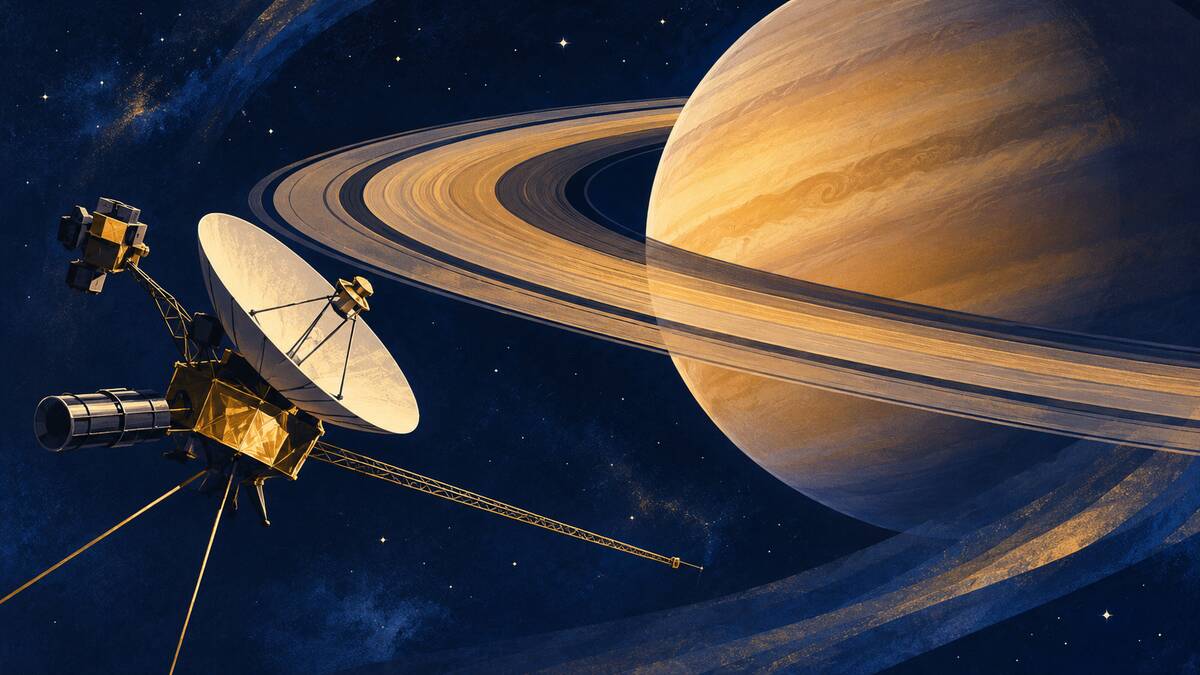
On November 12, 1980, NASA’s Voyager 1 made its closest approach to Saturn. According to NASA’s mission history, the spacecraft passed about 78,000 miles above the planet’s cloud tops at 23:46 UTC. Its observations revealed complex ring structures and brought distant moons into sharper view.
The encounter with Titan was especially consequential. Its thick atmosphere concealed the surface from Voyager’s cameras, leaving questions that later missions would investigate. The spacecraft’s route past Titan also sent it out of the plane of the planets; Voyager 2 continued onward to Uranus and Neptune.
1990: A more detailed proposal for the World Wide Web
At CERN, Tim Berners-Lee and Robert Cailliau published a formal proposal for the World Wide Web on November 12, 1990. It built on Berners-Lee’s 1989 proposal and described a system for linking information across computers. The distinction is useful: the web was built on the internet, but it was not the same thing as the internet itself.
International Observance: World Pneumonia Day
November 12 is World Pneumonia Day, an occasion for raising awareness of prevention and treatment. Pneumonia is an infection affecting the lungs; vaccination, timely care and appropriate treatment all matter, although the right treatment depends on the cause and individual circumstances.
Did You Know?
- A date can depend on the clock: Voyager 1’s closest Saturn approach took place late on November 12 in UTC; in Bangladesh it was already November 13.
- The web had more than one beginning: the 1990 proposal refined an earlier 1989 proposal, rather than being the first idea for the web.
- Wind was not Bhola’s only danger: WMO attributes most of the cyclone’s estimated deaths to the storm surge.
2014: Philae Lands on a Comet
On November 12, 2014, the European Space Agency’s Rosetta mission delivered its Philae lander to comet 67P/Churyumov–Gerasimenko. It was the first landing on a comet, following a journey that began with Rosetta’s launch in 2004.
The landing did not go exactly to plan. Philae bounced after its first contact and came to rest elsewhere on the comet. Even so, its instruments gathered information from the surface, while Rosetta continued observations from nearby. The European Space Agency’s mission overview explains how the comet’s dust, gas and structure helped researchers investigate the early solar system.
Asia and the Second World War
1948: The Tokyo tribunal concludes its judgment
The International Military Tribunal for the Far East finished delivering its judgment on November 12, 1948. Established after Japan’s surrender, the tribunal tried senior Japanese leaders over wartime conduct. Its proceedings began in 1946 and involved extensive testimony and documentary evidence. The tribunal’s legal approach and historical legacy remain subjects of debate.
United States: A Bridge and an Immigration Landmark
1936: The Bay Bridge opens
The San Francisco–Oakland Bay Bridge opened to traffic on November 12, 1936, connecting communities on opposite sides of the bay. The project was an engineering achievement, but its significance also lies in everyday life: a permanent crossing changed the possibilities for commuting, trade and development across the region.
The bridge opened months before its more famous neighbour, the Golden Gate Bridge. Today, its history offers a useful reminder that a region’s growth depends on many linked pieces of infrastructure, each shaped by choices about who can travel and how.
1954: Ellis Island closes as an immigration station
Ellis Island closed its immigration and detention station on November 12, 1954. Between 1892 and its closure, it was associated with the arrival of millions of people seeking a new life in the United States. The island’s history contains stories of reunion and opportunity, but also medical inspections, legal scrutiny, detention and separation.
Closing the station did not end immigration. It reflected changes in how the United States processed arrivals. For families researching their past, passenger records and the stories behind them can reveal both the promise and uncertainty of migration.
Notable Births
1866: Sun Yat-sen
Chinese revolutionary and political leader Sun Yat-sen was born on November 12, 1866. A leading opponent of Qing rule, he played a central role in the movement that brought down the imperial system and helped establish the Republic of China.
1896: Salim Ali
Indian ornithologist Salim Ali was born in Bombay on November 12, 1896. Through field surveys and accessible writing about birds, he helped bring ornithology and conservation to a wider audience in the subcontinent.
Auguste Rodin
French sculptor Auguste Rodin is remembered for works including The Thinker. He used posture, expressive modelling and the texture of surfaces to convey physical and emotional tension. His work helped broaden expectations of what modern sculpture could communicate.
Grace Kelly
Born in Philadelphia, American actress Grace Kelly became a major screen star in the 1950s. She won an Academy Award for The Country Girl and appeared in several Alfred Hitchcock films before marrying Prince Rainier III of Monaco and becoming Princess Grace.
Neil Young
Canadian singer-songwriter Neil Young was born in Toronto. Across a long career, his work has moved between acoustic songwriting and electric rock. Songs associated with him include “Heart of Gold” and “Rockin’ in the Free World.”
Notable Deaths
2018: Stan Lee
Comics writer and editor Stan Lee died on November 12, 2018. Working with artists including Jack Kirby and Steve Ditko, he helped develop characters such as Spider-Man and the Fantastic Four. Their stories gave superheroes ordinary anxieties and relationships alongside extraordinary abilities.
Elizabeth Gaskell
English novelist Elizabeth Gaskell died on November 12, 1865. Her fiction, including North and South and Cranford, explored community, class and the changes brought by industrial Britain. Her writing gives readers a view of social tensions through the lives of individuals rather than statistics alone.
Jerry Rawlings
Former Ghanaian president Jerry Rawlings died on November 12, 2020. He twice seized power in coups and later led the country under an elected multiparty system. His legacy includes Ghana’s transition to constitutional government, alongside continuing scrutiny of the authoritarian periods of his rule.
Why November 12 Still Matters
The Bhola cyclone is a reminder that a forecast alone is not enough: people need warnings they can receive and a safe way to act on them. Voyager’s encounter and the web proposal show a different kind of legacy, as discoveries and working ideas became starting points for later generations.
Explore more in our November 10 history briefing and history and special events coverage.