Some calendar days feel like containers for the human story, packed with moments that still echo in politics, culture, science, and everyday life. February 4 is one of those days. It carries the tension of protest and state power, the ambition of leaders drawing new world maps, and the quiet heroism of people who refuse to “give in.”
For South Asia and the Bangalee sphere, February 4 connects to the long arc of language, identity, and resistance. For Sri Lanka, it is independence day, a national statement of sovereignty and self-rule. Globally, February 4 is recognized as World Cancer Day, a reminder that history is not only about wars and presidents, but also about public health and collective action.
In this in-depth guide, you will find February 4’s events explained for meaning, not just memorized as trivia. You will also find expanded tables for quick scanning, along with a rich set of birth and death anniversaries from many regions.
February 4: At A Glance Timeline
| Year | Region | Event | Why It Matters Today |
|---|---|---|---|
| 1670 | India (Deccan) | Battle of Sinhagad (Kondhana) | Regional histories still shape identity and politics. |
| 1789 | United States | Washington elected first U.S. president | Early democratic legitimacy and executive norms. |
| 1794 | France / Caribbean world | France abolishes slavery in its colonies (decree) | A key rights milestone, later challenged and reversed in practice. |
| 1801 | United States | John Marshall takes Supreme Court oath | A judiciary era that reshaped constitutional law. |
| 1922 | India | Chauri Chaura incident | Gandhi halts Non-Cooperation, redefining strategy and ethics. |
| 1945 | Europe / USSR / US / UK | Yalta Conference begins | Postwar order and “spheres of influence” debates. |
| 1948 | Sri Lanka | Independence Day | End of British rule, nation-building begins. |
| 1952 | Bangladesh (Dhaka) | Language Movement strike and rally momentum | A critical lead-in to Ekushey’s defining sacrifices. |
| 1974 | United States | Patty Hearst kidnapped | Media, radical politics, and law collide. |
| 1976 | Guatemala | Devastating earthquake | Disaster policy lessons on housing and inequality. |
| 2000 | Global | World Cancer Day “born” in Paris | Health awareness with worldwide policy impact. |
| 2004 | Global tech | Facebook launches | Social media transforms news, politics, and identity. |
| 2013 | United Kingdom | Richard III identification announced | Forensic history changes what we “know” about the past. |
The Bangalee Sphere
Bangladesh: Language, Identity, And February’s Rising Temperature (1952)
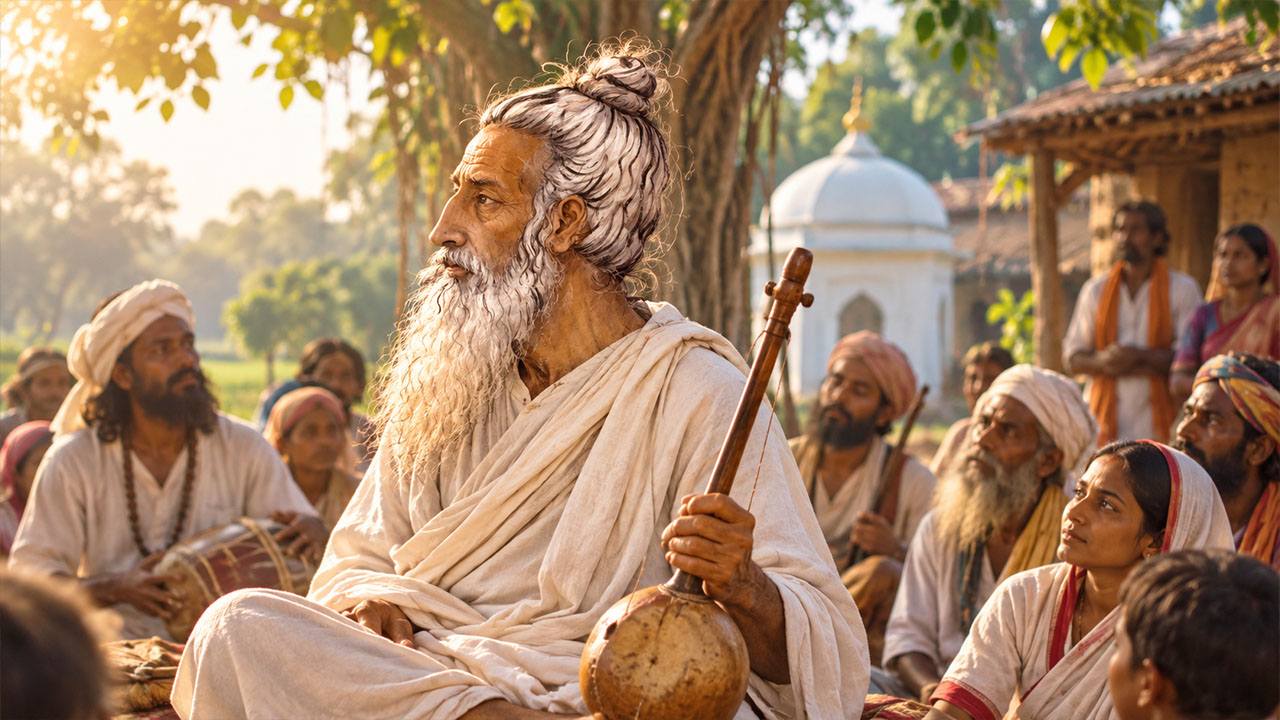
February is sacred in Bangladesh’s national memory because language became a battlefield for dignity. On February 4, 1952, students and supporters gathered and protested, pressing for Bengali to be recognized as a state language and pushing back against attempts to marginalize it. This day is remembered as part of the accelerating sequence that led to the historic confrontations later in the month.
What makes February 4 powerful is not a single dramatic image, but the structure of organizing behind it. Student networks, campus solidarity, and public demonstrations create the social pressure that makes later “headline days” possible. If you want to understand how big national movements are built, you study the days like this, when people repeatedly show up and refuse to be ignored.
It also matters because language struggles are never only about grammar or script. They decide who gets access to government, education, courts, jobs, and status. A state that controls language can control opportunity. That is why language movements often become independence movements in disguise.
India: Chauri Chaura And The Ethical Shockwave (1922)
On February 4, 1922, the Chauri Chaura incident became a turning point in India’s freedom struggle. Protesters clashed with police, and the violence that followed shocked national leaders. Gandhi responded by calling off the Non-Cooperation Movement, arguing that a freedom struggle must be grounded in disciplined nonviolence, not revenge.
This moment still matters because it raises the hardest questions in mass politics. What happens when a movement built on moral principles faces state brutality and public fury. Can leaders pause a movement at its peak to protect its soul. Chauri Chaura is also a reminder that strategy is not only about winning. It is also about what kind of society you want to become after you win.
Many activists across the world, from civil rights leaders to anti-colonial movements, have wrestled with the same dilemma. Chauri Chaura remains a South Asian lens into the global debate on resistance and restraint.
India: Regional Memory And Heroism At Sinhagad (1670)
February 4 is also tied to regional history in India through the Battle of Sinhagad in 1670. Even when national narratives dominate textbooks, local memories often survive through songs, forts, festivals, and family stories. Sinhagad’s legacy shows how resistance can be remembered not only by official documents, but by lived culture.
Why does that matter today. Because the politics of identity often draws from regional pride. Understanding local histories helps explain why certain symbols, names, and sites still carry emotional force.
International Observances And Holidays
World Cancer Day
World Cancer Day is observed every February 4, and its modern origin is tied to a global summit in Paris where World Cancer Day was adopted as part of international mobilization against cancer.
This observance matters because cancer is not only a medical problem. It is a policy problem and a justice problem. Access to screening, diagnosis, treatment, and palliative care differs sharply by income, geography, and health infrastructure. The day pushes governments, NGOs, and communities to treat prevention and early detection as public priorities, not private luxuries.
In a media ecosystem often dominated by conflict and celebrity, World Cancer Day brings attention back to health literacy, stigma reduction, and the human cost of inequality.
International Day Of Human Fraternity (UN)
The United Nations observes February 4 as the International Day of Human Fraternity, proclaimed by the UN General Assembly.
This day matters because cultural and religious tolerance is not abstract. It affects whether people can live safely, access education, and participate in public life without fear. In societies strained by polarization, fraternity becomes a civic resource, not just a moral idea.
Sri Lanka Independence Day
Sri Lanka commemorates independence on February 4, marking the constitutional transition that ended British rule in 1948.
Independence Day in Sri Lanka is not only a celebration. It is also a mirror held up to the state’s unfinished work, including economic resilience, social reconciliation, and inclusive national identity. The date becomes a yearly reminder that freedom is not a moment. It is a long project.
International Observances At A Glance
| Observance | Where | Theme | Why It’s Relevant |
|---|---|---|---|
| World Cancer Day | Global | Prevention, care, equity | Public health action, early detection, policy focus |
| International Day of Human Fraternity | UN member states | Tolerance, cohesion | A civic response to polarization |
| Sri Lanka Independence Day | Sri Lanka | Sovereignty, nationhood | Postcolonial identity and state-building |
Global History Beyond South Asia
United States: Institutions, Media, And Tech Power
Washington’s election sets a precedent (1789)
On February 4, 1789, George Washington was unanimously chosen as the first president of the United States.
This matters because early democratic legitimacy shapes the durability of institutions. Washington’s presidency helped define expectations about leadership, civil authority, and the symbolic unity of a new republic.
John Marshall’s judicial era begins (1801)
John Marshall took the Supreme Court oath on February 4, 1801.
His long tenure helped expand the Court’s role and shaped how constitutional disputes would be resolved. In modern terms, it is a reminder that courts can become as influential as parliaments.
Patty Hearst kidnapped (1974)
On February 4, 1974, Patty Hearst was kidnapped in Berkeley, California by the Symbionese Liberation Army.
The case became a global media event because it mixed radical politics, family power, coercion, and courtroom controversy. It also influenced public understanding of captivity, persuasion, and agency.
Facebook launches (2004)
On February 4, 2004, “Thefacebook” launched at Harvard, an early moment in the rise of modern social media.
Few inventions have changed journalism and politics so quickly. Facebook helped reshape advertising, organizing, rumor spread, and even how people understand community. For journalists, it is a reminder that platforms can become political actors.
Russia, Europe, And The Shadow Of World War II
Yalta Conference begins (1945)
The Yalta Conference ran from February 4 to 11, 1945, bringing together Roosevelt, Churchill, and Stalin to plan the end of WWII in Europe and the postwar order.
Yalta is still invoked whenever the world debates “great power deals.” It is remembered as both strategic coordination and moral compromise, depending on who is telling the story. For many in Eastern Europe, Yalta symbolizes decisions made about them, not with them. For historians, it is a masterclass in how war endings can plant seeds for future conflict.
France And The Long Struggle Over Human Rights
Abolition of slavery in French colonies (1794)
On February 4, 1794, France’s National Convention passed a decree abolishing slavery throughout the French colonial empire.
This mattered as an early formal rights declaration, influenced by revolution and the realities of colonial revolt. Yet history is complicated. Abolition was contested, uneven, and later reversed under Napoleon. The lesson is sobering: rights can expand, but they can also be clawed back when power shifts.
The United Kingdom: Forensic History Rewrites A King (2013)
On February 4, 2013, the University of Leicester announced that remains found in Leicester were identified as King Richard III.
This event matters because it changed how many people relate to history. A king once treated mainly as legend, propaganda, and drama became a scientific identification story. It showed that archives, genetics, and archaeology can work together to correct or refine historical narratives.
Latin America: Guatemala’s Earthquake And The Politics Of Housing (1976)
A devastating earthquake struck Guatemala on February 4, 1976, with massive loss of life and widespread destruction.
Its long-term lesson is that disasters expose inequality. Poorly built housing collapses first. Rural communities are often last to receive aid. “Natural” disasters become social tragedies through governance and infrastructure.
Birthdays And Death Anniversaries: A Wider, More Global List
Below are expanded tables to help readers scan quickly while also discovering figures beyond the usual Western lists.
Birth Anniversaries
| Person | Born | Region | Why They Matter |
| Rosa Parks | 1913 | USA | Civil rights icon, Montgomery bus boycott catalyst |
| Bhimsen Joshi | 1922 | India | Hindustani classical legend, Bharat Ratna |
| Birju Maharaj | 1938 | India | Kathak master, global cultural influence |
| Alice Cooper | 1948 | USA | Theater-rock pioneer, pop culture impact |
| Dan Quayle | 1947 | USA | U.S. vice president (1989–1993) |
| Oscar De La Hoya | 1973 | USA | Champion boxer, Olympic gold, promoter |
If you are publishing this as a daily series, a strong editorial approach is to rotate spotlight paragraphs. Each day, pick one cultural figure, one political figure, one scientist, and one regional icon.
Death Anniversaries
| Person / Event | Died | Region | Legacy |
|---|---|---|---|
| Satyendra Nath Bose | 1974 | India | Bose–Einstein statistics, “boson” legacy |
| Rabi Ghosh | 1997 | India (Bengal) | Defining Bengali cinema actor, cultural memory |
| Liberace | 1987 | USA | Mass entertainment icon, performance style era marker |
| (Guatemala earthquake victims) | 1976 | Guatemala | Disaster history, resilience, housing lessons |
A note on accuracy: older figures can have disputed dates due to calendar conversions or incomplete records. When you add ancient or medieval figures, it is best to flag disputes explicitly in your published copy.
Why These Stories Still Matter In 2026
February 4 is not only a list of “what happened.” It is a pattern of how societies change.
In Bangladesh’s language struggle, you see how identity becomes political, and how students often become history’s pressure point. In India’s Chauri Chaura, you see how movements face moral tests, and how a single day can force an entire strategy to change.
In Yalta, you see how leaders can end wars while planting the seeds of new tensions. In World Cancer Day, you see how history also happens in hospitals, labs, and communities fighting for equal care.
And in the Facebook launch, you see how technology becomes a social force that rewires politics, journalism, friendship, and misinformation, all in a single generation.
If you are writing a daily series, this is the key editorial trick: connect each date to a modern theme. Protest discipline. Language rights. Postwar diplomacy. Health equity. Platform power. That is how “On This Day February 4” becomes useful, not just interesting.
“Did You Know?” Trivia
-
February 4 is both a day of political history and a day of health activism. World Cancer Day traces its origin to a major international summit in Paris.
-
Yalta began on February 4, 1945, and its decisions still shape how people talk about “great power deals” and the fate of smaller nations.
-
A king’s identity was confirmed to the world on February 4, 2013, when Richard III’s remains were announced by researchers, showing how science can revise public history.
Quote Of The Day
“No, the only tired I was, was tired of giving in.”
— Rosa Parks (born February 4, 1913)
Takeaways
February 4 stands as a meaningful date in history, marked by transformative events, remarkable births, and significant losses that have shaped the world in lasting ways. From pivotal moments in politics, science, culture, and social movements to the lives of influential individuals born on this day, February 4 reminds us how interconnected the past and present truly are.
Reflecting on these historical milestones and global events not only deepens our understanding of where we come from but also inspires us to learn from past achievements and challenges. As we remember February 4, we honor the legacy of those who influenced history and recognize the enduring impact of their contributions on our world today.