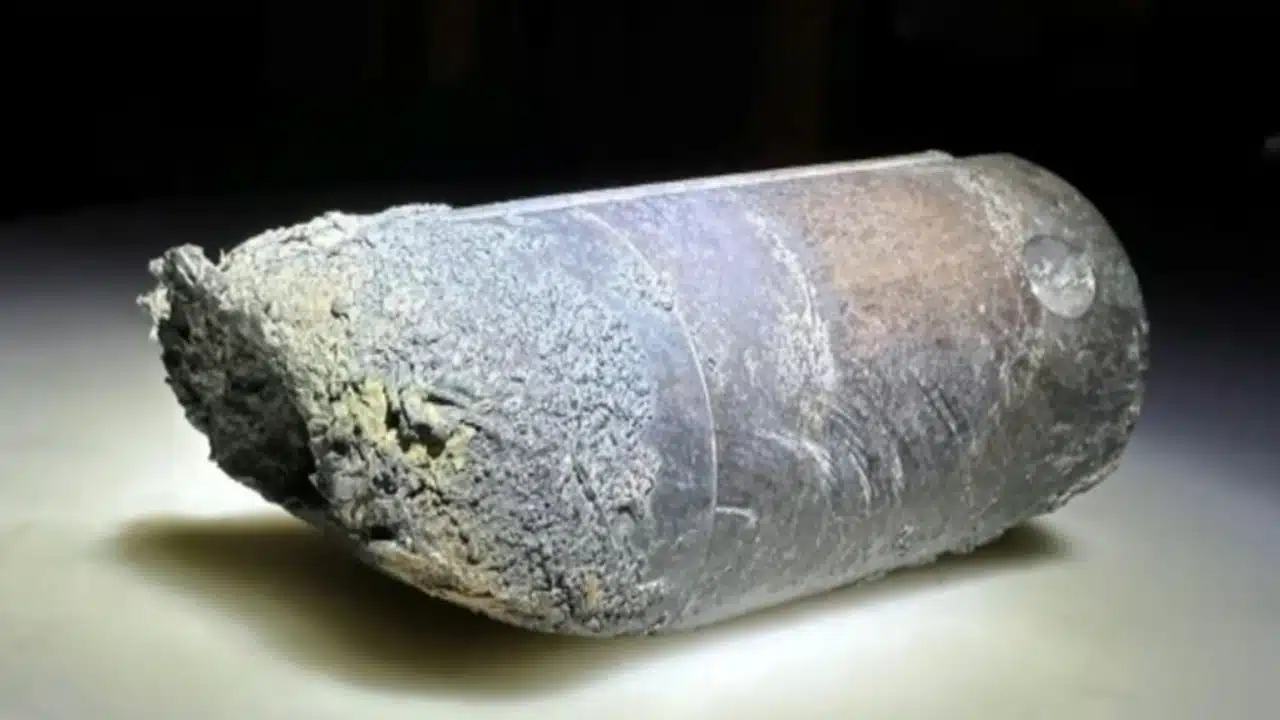
On March 8, a fragment of space debris unexpectedly crashed through a roof in Naples, FL, causing significant damage to two floors. Miraculously, the son of homeowner Alejandro Otero narrowly escaped harm.
On Tuesday, NASA officially announced the findings of its investigation into the incident. As expected, it is a piece of equipment that was discarded from the International Space Station (ISS) three years ago.
After conducting an investigation, NASA has determined that the object found at Kennedy Space Center in Cape Canaveral is a fragment of the EP-9 support equipment. This equipment is utilized to secure batteries onto a cargo pallet, and it was accidentally dropped by the ISS’ robotic arm on March 11, 2021.
The collection, consisting of discarded nickel-hydrogen batteries, was projected to orbit Earth for a period of two to four years (ultimately lasting around three years). NASA had anticipated that the batteries would safely disintegrate in the atmosphere. That’s not quite accurate.
The debris that reached the roof was identified as a stanchion from NASA flight support equipment. This equipment is typically used to securely attach batteries to the cargo pallet. The object is crafted from the durable metal alloy Inconel. It has a weight of 1.6 lbs and stands at a height of 4 inches with a diameter of 1.6 inches.
Hello. Looks like one of those pieces missed Ft Myers and landed in my house in Naples.
Tore through the roof and went thru 2 floors. Almost his my son.
Can you please assist with getting NASA to connect with me? I’ve left messages and emails without a response. pic.twitter.com/Yi29f3EwyV— Alejandro Otero (@Alejandro0tero) March 15, 2024
Otero informed Fort Meyers CBS affiliate WINK-TV that he was away on vacation when his son alerted him to an incident where an object had penetrated their roof. “I was trembling,” he said.
I couldn’t believe what I was hearing. What are the odds of an object colliding with my house with enough impact to result in significant damage? I am extremely thankful that no one was injured.
NASA has announced that it will conduct an investigation into the jettison and re-entry of the equipment dump. The focus of this investigation is to determine why the object collided with Otero’s home instead of burning up in the atmosphere.
In a recent news release, NASA explained that their specialists rely on engineering models to make estimations regarding the heating up and breaking apart of objects during atmospheric re-entry. “These models rely on specific input parameters and are consistently updated whenever debris is discovered to have made it through the Earth’s atmosphere and landed on the ground.”
According to NASA, space junk can reach speeds of up to 18,000 mph, moving at an incredibly fast pace. The statement highlights the potential dangers posed by the high speed and large amount of debris in Low Earth Orbit (LEO) to space-based services, explorations, and operations. It emphasizes the safety risks to both people and property in space and on Earth.