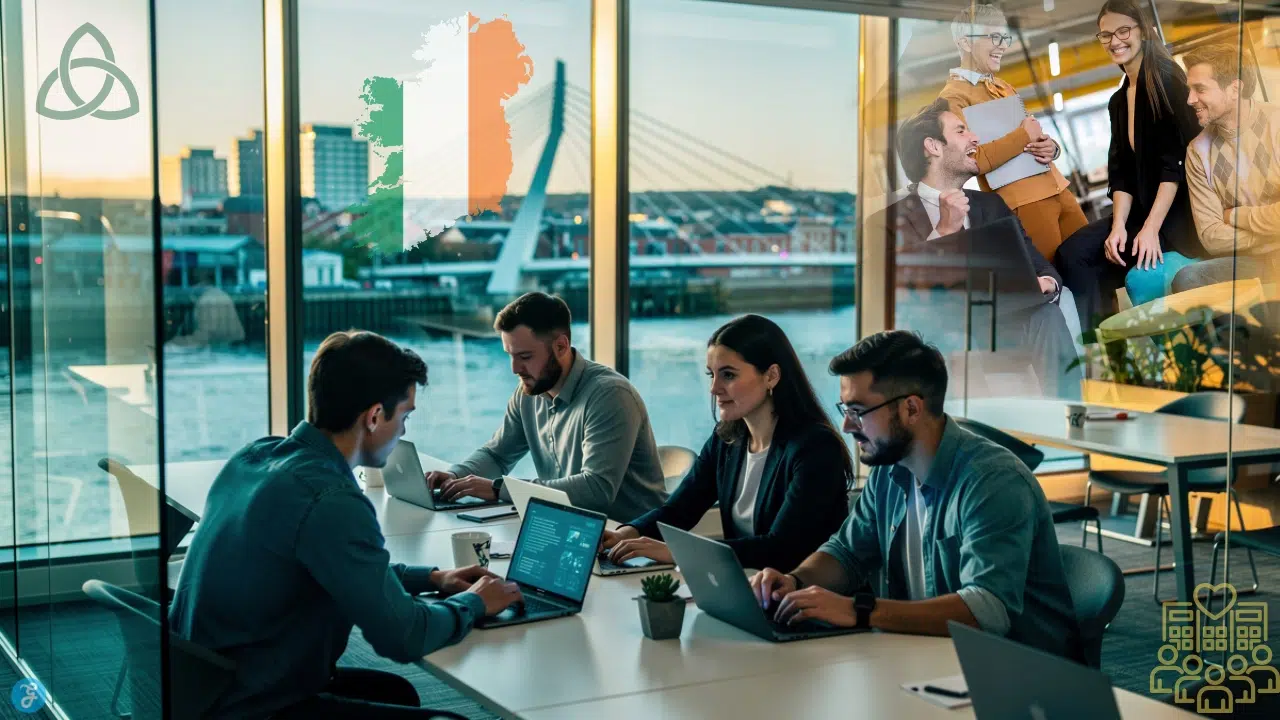
The “Silicon Docks” have evolved from a mere physical cluster of glass buildings in Dublin’s Grand Canal Dock into the primary laboratory for Irish labor reform. In 2026, the influence of US-headquartered tech giants like Google, Meta, and Salesforce has permeated far beyond the tech sector, fundamentally rewriting the “social contract” for employees across all industries in Ireland.
How We Selected Our 5 Key Impact of Tech Giants on Irish Workplace Culture
To identify the most transformative shifts, we analyzed the 2026 workplace trends reported by major Irish industry bodies and human resource expert panels. Our focus was on identifying changes that started within the tech multinationals and have since become standard expectations for the broader Irish workforce.
-
Scalability: We prioritized cultural shifts that have successfully moved from big tech into local SMEs and public sectors.
-
Longevity: We looked at trends that have survived the post-pandemic “return to office” debates and settled into permanent policy.
-
Legislative Alignment: We focused on areas where tech company policies preceded or heavily influenced new 2026 Irish labor laws.
The following criteria served as the foundation for our assessment of how tech giants have reshaped the local environment.
| Selection Factor | Priority Level | Goal of Inclusion |
| Employee Autonomy | High | Measuring the shift toward flexible trust-based work. |
| Mental Health ROI | High | Evaluating the move from “perks” to structural support. |
| Hierarchy Structure | Medium | Analyzing the erosion of formal corporate barriers. |
| Recruitment Metrics | Medium | Tracking the move toward skills-based hiring. |
5 Vital Ways Dublin’s Tech Multinationals Are Shaping Irish Workplace Culture in 2026
As we move through the middle of the decade, these five pillars represent the new standard for a modern Irish career. Understanding these shifts is essential for both employers trying to remain competitive and employees looking for a healthy work environment.
1. The Standardization of Hybrid and “Flex-First” Models
While the 2026 “Right to Remote Work” legislation provides a legal framework, it was the Dublin tech giants that proved the operational viability of hybrid models. The current Irish workplace has moved away from rigid 9-to-5 office presence toward “synchronous hours,” where teams gather for collaboration three days a week while maintaining full autonomy over their location for the remainder of the time.
Best for: Professionals seeking to balance high-level careers with the rising cost of living in Dublin.
Why We Chose It: It is the single most significant factor in retaining talent within the Irish market today.
Things to consider: The 2026 legal landscape focuses on the process of requesting flexibility rather than a guaranteed right to it, so company policy remains king.
The tech sector has shifted the conversation from superficial wellness perks—like office beanbags and free snacks—to “psychosocial risk management.” In 2026, Irish boardrooms are following the tech lead by treating burnout as a strategic liability rather than a personal issue. This includes measuring “psychological safety,” where employees feel empowered to admit mistakes or struggles without fear of career repercussions.
Best for: High-pressure roles where long-term sustainability is a concern.
Why We Chose It: It reflects a maturing Irish society that prioritizes mental health as a core component of occupational safety.
Things to consider: Data-driven wellbeing initiatives are becoming the standard, so expect more frequent “pulse surveys” in modern roles.
3. The Erosion of Formal Corporate Hierarchies
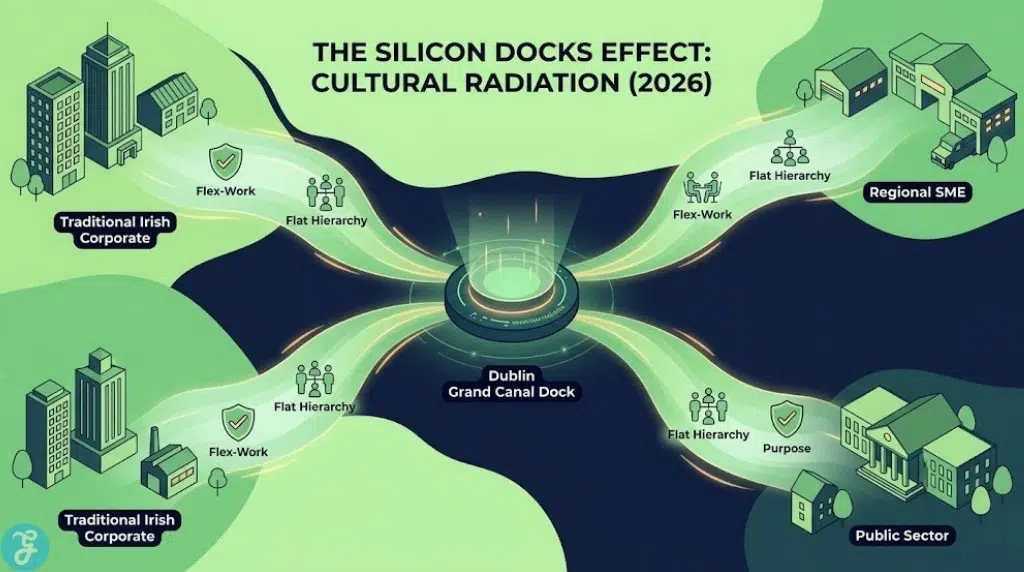
One of the most visible cultural exports from the Silicon Docks is the “flat” organizational structure. The traditional Irish corporate model was often characterized by rigid seniority and formal titles. Today, the tech-influenced workplace favors first-name basis communication, open-door policies for leadership, and a “Grand” communication style that prioritizes clarity and approachability over stilted professionalism.
Best for: Young professionals and graduates who value direct access to decision-makers.
Why We Chose It: Flat hierarchies foster faster innovation and make employees feel more personally invested in company goals.
Things to consider: Flatter structures can sometimes lead to “messy” internal mobility paths that require proactive career ownership.
4. Skills-First Recruitment and Portfolio Valuation
The tech giants have spearheaded a shift in the Irish labor market where what you can do matters more than where you went to school. In 2026, many Dublin-based multinationals have removed degree requirements for senior roles, opting instead to review GitHub portfolios, project case studies, and demonstrated technical skills. This trend is now leaking into finance and professional services across the country.
Best for: Mid-career switchers and self-taught specialists who lack traditional academic credentials.
Why We Chose It: It democratizes access to high-paying roles and addresses the chronic talent shortages in specialized fields.
Things to consider: You will need to maintain a live “proof of work” portfolio to remain competitive in this 2026 environment.
5. Purpose-Led Work and Social Impact Integration
Today’s Irish workforce, particularly those influenced by global tech trends, demands that their employer has a stance on social and environmental issues. Tech multinationals have integrated “Purpose” into their core operating models, supporting everything from local urban regeneration in the Docklands to global carbon-reduction initiatives. This has forced local Irish companies to move beyond basic CSR toward genuine social impact partnerships.
Best for: Employees who want their professional labor to align with their personal values regarding sustainability and ethics.
Why We Chose It: Purpose-led companies see significantly higher retention rates among the Gen Z and Millennial workforce.
Things to consider: Be wary of “greenwashing”; look for companies that tie their social goals to executive compensation or external audits.
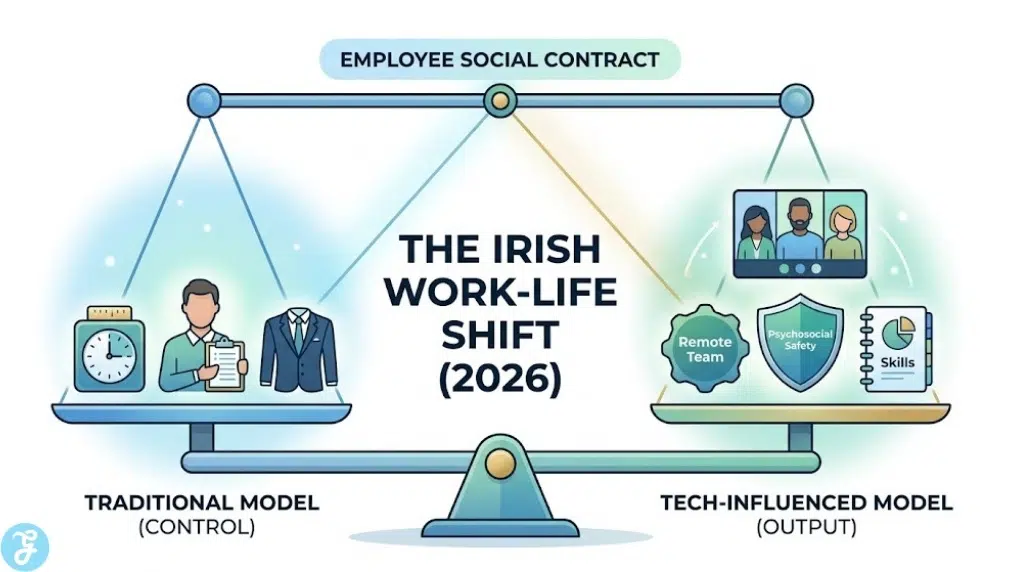
An Overview Of Tech Giant Impact on the Irish Workplace
Comparing the “Old Guard” of Irish corporate life with the “New Tech” influenced culture highlights how deep these changes have gone. The following comparison illustrates the functional differences you can expect in the current market.
| Cultural Feature | Traditional Irish Model (Pre-Tech) | Modern Tech-Influenced Model (2026) |
| Communication | Formal, title-based, hierarchical | Informal, first-name, collaborative |
| Work Location | 100% Office-based | Hybrid / Synchronous flexibility |
| Hiring Focus | Academic prestige and tenure | Skills, portfolios, and adaptability |
| Wellness | Reactive (Sick leave) | Proactive (Psychosocial safety) |
| Leadership | Control and oversight | Guidance and empathy |
Our Top 3 Picks and Why?
-
The Hybrid Working Model: This is our top pick for its immediate impact on lifestyle. By breaking the requirement for daily Dublin commutes, tech giants have inadvertently supported regional growth as workers move to towns in Cork, Galway, and Limerick while keeping their high-value roles.
-
Psychosocial Safety Initiatives: We selected this because it represents the most profound human shift. Moving mental health from an “HR issue” to a “Boardroom priority” saves careers and lives in high-stress environments.
-
Skills-Based Hiring: This is essential for the future of the Irish economy. By valuing portfolios over degrees, the system becomes more inclusive and better suited to the rapid pace of technological change.
How to Choose the Right Tech-Influenced Workplace for You?
Not every “tech-style” workplace is a perfect fit for every professional. Use the following framework to determine which cultural elements are most important for your current life stage and career goals.
The Selection Framework
-
Evaluate Your Autonomy Needs: If you thrive with clear, direct supervision, a “flat” tech hierarchy might feel too disorganized.
-
Check the Tech Stack: Ensure the company uses modern collaboration tools (Slack, Jira, AI-integrations) that support a hybrid lifestyle.
-
Review the “Pulse” Data: Ask during interviews how the company measures employee sentiment and psychological safety.
-
Assess the Social Impact: Look at their 2025/2026 sustainability reports to see if their “Purpose” is backed by actual data.
The following matrix helps you decide which workplace culture suits your personality type.
| Choose a Tech-Influenced Culture if… | Choose a Traditional Culture if… |
| You prefer being judged on output, not hours. | You prefer clearly defined working hours. |
| You want a direct line to senior management. | You value the structure of a clear chain of command. |
| You have a high-demand, specialized skill set. | You are looking for a steady, predictable career path. |
| You value a work environment that supports social causes. | You prefer to keep your personal values and work separate. |
The Final Checklist
-
Confirm the company’s specific hybrid attendance policy for 2026.
-
Ask about the internal mobility policy—how easy is it to switch teams?
-
Verify if the “flat hierarchy” means you have access to mentorship.
-
Check if they have a dedicated budget for “Proof of Work” or continuous learning.
-
Ensure their social impact goals align with your own ethical standards.
The Future of Ireland’s Digital Workforce
The “Silicon Docks” effect has permanently altered the DNA of Irish work. In 2026, the tech giants are no longer outsiders; they are the architects of a more flexible, empathetic, and skills-focused labor market. For the Irish professional, this means more choice and better protection, provided you are willing to take ownership of your career path and continuously adapt to the evolving digital landscape.
Frequently Asked Questions About the Impact of Tech Giants on the Irish Workplace
Do these culture shifts apply to local Irish companies too?
Answer: Yes, many local SMEs have adopted tech-style policies (like hybrid work and flat hierarchies) to compete for the same talent pool as the multinationals.
Has the 2026 Remote Work Bill changed how tech companies operate?
Answer: Most Dublin tech giants already had policies that exceeded the legal minimums. However, the bill has forced more transparency in how they communicate their refusals or requirements for office attendance.
What is “Psychological Safety” in a practical sense?
Answer: It means you won’t be punished or humiliated for speaking up with ideas, questions, concerns, or mistakes. In 2026, it is measured as a key performance indicator (KPI) for managers.
Are tech salaries still the highest in Dublin?
Answer: While they remain competitive, the “premium” has narrowed as other sectors like Pharma and Finance have raised their wages and improved their culture to attract similar talent.
Can I work for a Dublin tech firm while living in another county?
Answer: Generally yes, but most “Hybrid” roles require you to be in the Dublin office 2–3 days a week. Fully remote roles are still available but are increasingly reserved for senior or highly specialized positions.