

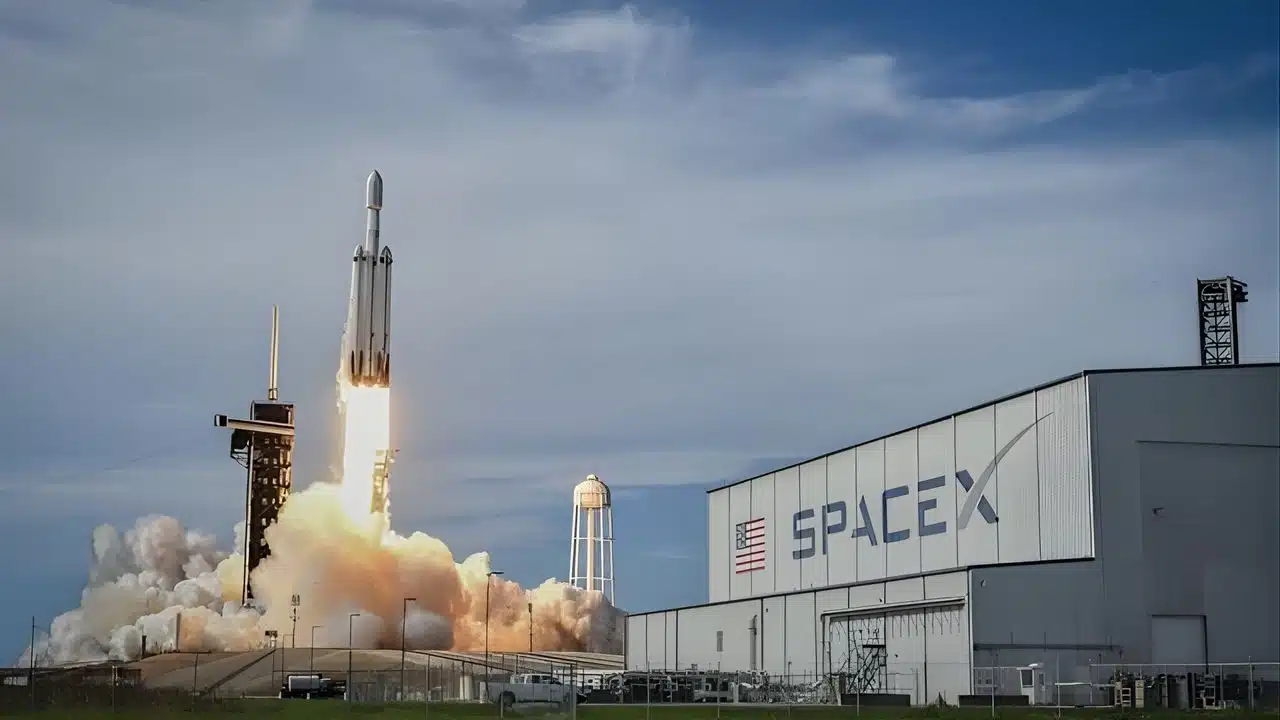
Elon Musk has confirmed that SpaceX, his pioneering private aerospace company, is planning an initial public offering (IPO) in 2026, marking one of the most anticipated stock market debuts in modern history. The move could open the door for public investors to participate in the company’s ambitious vision of interplanetary exploration, global satellite connectivity, and the commercialization of space travel.
Although Musk and SpaceX officials have discussed IPO prospects over the years, this is the first time a tentative timeline has been publicly confirmed, hinting at the company’s readiness to bring at least part of its rapidly expanding empire into the public market.
Musk’s Announcement: Clarity After Years of Speculation
Speaking at an event in early December 2025, Musk revealed that SpaceX is targeting a 2026 IPO, with the company “likely to go public once its Starlink division achieves stable cash flow.” While specific financial details and market valuations are still undisclosed, insiders suggest that SpaceX could reach a valuation exceeding $250 billion before going public, making it potentially one of the largest IPOs in corporate history.
For years, Musk resisted taking SpaceX public, citing concerns that quarterly earnings pressures could interfere with the company’s long-term vision — namely, building a self-sustaining city on Mars. In a 2021 tweet, he stated that SpaceX would not go public “until we’re flying regularly to Mars.” However, as the company’s Starlink business matures and its space launch operations dominate the global market, the calculus appears to have shifted.
Starlink: The Centerpiece of SpaceX’s IPO Plan
At the heart of this IPO lies Starlink, the company’s ambitious satellite internet constellation program. Designed to provide high-speed broadband across even the most remote parts of the planet, Starlink has become a major commercial success since its global expansion in 2023.
According to reports, Starlink now serves over 5 million customers worldwide and generates billions in annual revenue. Its satellites, positioned in low Earth orbit, form a global network that supports telecommunications, defense, maritime operations, and even remote scientific research.
Musk’s confirmation suggests that Starlink could be spun off as a separate public entity or integrated into SpaceX’s broader IPO. Either way, investors will likely be drawn to Starlink’s strong cash-flow profile and massive growth potential, particularly in emerging markets where traditional broadband infrastructure remains limited.
SpaceX’s Financial Powerhouse: Valuation and Revenue Outlook
Since its founding in 2002, SpaceX has evolved from a startup competing for NASA contracts into a multi-billion-dollar aerospace juggernaut. The company’s valuation has skyrocketed, reaching approximately $210 billion in private markets by late 2025. Analysts believe the IPO could push this figure higher, possibly surpassing the record-breaking valuations of companies like Meta (Facebook) and Amazon during their public listings.
SpaceX’s revenue streams are now more diversified than ever, including:
-
Commercial Launch Services: Dominating more than 60% of global orbital launches in 2024, the Falcon 9 and Falcon Heavy launch vehicles have become foundational pillars of global satellite deployment.
-
Starlink Broadband Services: A consistent source of recurring revenue, targeting both individuals and corporations worldwide.
-
NASA and Defense Contracts: SpaceX has secured long-term partnerships for crewed missions to the International Space Station (ISS), lunar landings under NASA’s Artemis program, and classified military missions for the U.S. Department of Defense.
-
Starship Development: While still unprofitable in 2025, Starship — the next-generation fully reusable spacecraft — represents the company’s technological frontier and eventual pathway to Mars.
Collectively, these revenue sources position SpaceX as one of the most profitable privately held aerospace companies in history.
The Road to 2026: Preparations and Market Timing
Industry experts believe SpaceX’s decision to target 2026 reflects careful financial and regulatory planning. A 2026 timeline allows the company to achieve two critical objectives: ensuring Starlink’s global coverage and completing a series of successful Starship orbital missions.
Regulatory compliance will also be a significant part of the process. SpaceX will need to file documents with the U.S. Securities and Exchange Commission (SEC), undergo multiple rounds of financial audits, and establish governance structures that satisfy both public investors and regulatory authorities.
Timing the IPO may depend heavily on macroeconomic conditions as well. Interest rates, global market volatility, and investor appetite for tech and space-related equities will influence the exact date and scale of the public offering.
Potential Market Impact: A Landmark for Space Investment
SpaceX’s public listing would mark a milestone in the history of commercial space technology. Analysts forecast that the IPO could stimulate investment across the space economy, driving momentum for smaller companies specializing in satellite manufacturing, propulsion systems, robotics, and orbital logistics.
Moreover, a successful listing could inspire confidence in the broader “New Space” industry, which has recently begun attracting institutional investors seeking long-term growth potential in emerging infrastructure like lunar resource mining, asteroid exploration, and space-based energy systems.
Starship and Mars: The Long-Term Vision
While the IPO primarily focuses on Starlink and launch services, Musk insists that raising public capital serves a far grander goal — building the foundation for humanity’s expansion beyond Earth.
The ongoing development of Starship, a fully reusable spacecraft capable of carrying up to 100 people, remains central to Musk’s vision. The system’s potential for interplanetary transport could redefine the economics of space travel, dramatically lowering costs compared to traditional rockets.
By going public, SpaceX gains access to an expansive pool of capital that could accelerate these developments, enabling more frequent Starship launches and rapid construction of extraterrestrial infrastructure.
The Investor Perspective: Risks and Rewards
For retail and institutional investors, SpaceX’s forthcoming IPO offers exciting opportunities — and substantial risks.
On the positive side, SpaceX’s profitability, consistent technological innovation, and commanding dominance in orbital launches present a rare chance to gain exposure to a company at the forefront of multiple lucrative industries. Starlink’s subscription-based model, for example, creates predictable long-term cash flows that may stabilize overall performance.
However, investors must also consider potential downside risks:
-
High Capital Requirements: Space exploration is inherently expensive, with significant engineering and logistical costs.
-
Regulatory Uncertainty: Operating in multiple jurisdictions, particularly with satellite networks and defense contracts, could expose SpaceX to geopolitical risk.
-
Technological Challenges: Failures or delays in Starship development could harm investor confidence.
-
Musk Factor: While Musk’s leadership drives innovation, his unpredictable communication style sometimes triggers market volatility.
Balancing these factors, analysts predict that the IPO will nonetheless attract enormous investor demand, comparable to or exceeding recent tech IPOs like Arm Holdings or Rivian.
Global Implications: Geopolitical and Industrial Dimensions
The SpaceX IPO carries far-reaching geopolitical implications. As space technology becomes a defining feature of national competitiveness, SpaceX’s dominance reinforces U.S. leadership in the emerging space economy — a field increasingly contested by China, the European Union, and India.
China’s state-backed CASC and private firms like iSpace are developing reusable rocket technologies to rival SpaceX’s Falcon systems. Meanwhile, India’s ISRO continues to make strides in cost-effective launches, recently celebrating its successful Chandrayaan and Aditya missions.
SpaceX’s public listing could thus reshape global market dynamics, potentially triggering competitive IPOs or partnerships among other space ventures.
The Starlink Advantage: Connecting the Unconnected
Beyond rockets and Mars, SpaceX’s expansion of Starlink promises tangible benefits for global connectivity. From rural villages in Africa to remote mountain regions in Asia, Starlink satellites are bridging digital divides that have persisted for decades.
By raising public capital, SpaceX could double down on infrastructure expansion, bringing affordable broadband to classrooms, hospitals, and defense networks in underserved regions. Industry analysts expect Starlink to surpass 10 million subscribers by 2027, positioning it as a key enabler of global digital inclusion.
Environmental and Ethical Considerations
The impending IPO also renews scrutiny of SpaceX’s environmental footprint. Starlink’s rapid deployment of tens of thousands of satellites has raised concerns among astronomers and environmentalists about night-sky visibility and orbital debris.
Musk has pledged continued collaboration with the International Astronomical Union (IAU) and other organizations to mitigate these effects through technology improvements, such as non-reflective coatings and deorbit planning systems. However, as the company’s scale increases post-IPO, maintaining sustainability commitments will become a vital priority for public investors and regulators alike.
Wall Street’s Anticipation: The Next Mega Listing
Financial institutions are already preparing for what could become the biggest IPO of the decade. Major investment banks such as Morgan Stanley, Goldman Sachs, and J.P. Morgan are expected to compete for advisory roles.
If SpaceX’s valuation exceeds $250 billion, it would surpass the market debut of Saudi Aramco in 2019 — at least in global attention — even if not in total raised capital. Analysts predict that SpaceX’s shares could become a cornerstone for technology-focused ETFs and space-themed mutual funds.
The IPO could also drive secondary effects across the financial markets, boosting interest in aerospace startups, satellite suppliers, and space defense contractors that form part of SpaceX’s extended ecosystem.
Musk’s Balancing Act: Between Vision and Accountability
One of the biggest questions surrounding SpaceX’s public debut concerns Elon Musk’s management style. As CEO of multiple high-stakes ventures — including Tesla, X (formerly Twitter), Neuralink, and The Boring Company — Musk’s bandwidth and decision-making will come under renewed investor scrutiny.
Some financial analysts have expressed doubt about Musk’s capacity to manage another public company simultaneously, especially given his frequent clashes with regulators and unconventional management methods.
Nonetheless, Musk’s proven ability to deliver technically ambitious projects — from reusable rockets to mass-produced EVs — suggests he can maintain SpaceX’s momentum while navigating the demands of the public market.
The Broader Vision: Humanity’s New Economic Frontier
SpaceX’s IPO isn’t just a market event; it symbolizes a new economic era in which Earth’s orbit, the Moon, and eventually Mars become integrated into the global economic system. The funds raised could catalyze the creation of a multi-planetary industrial base, supporting everything from asteroid mining and lunar energy to interplanetary trade routes.
As Musk famously stated, “The future must be exciting and inspiring.” The 2026 IPO could serve as the financial cornerstone that transforms that vision into a publicly shared enterprise — one where investors directly participate in humanity’s next leap beyond Earth.
Outlook: The Countdown Begins
While details remain preliminary, SpaceX’s 2026 IPO marks the latest turning point in the commercialization of space. Musk’s confirmation signals not just readiness but strategic timing — aligning mature revenue streams, global demand, and unprecedented public interest.
If successful, the offering could usher in a new paradigm where space isn’t just the final frontier but the next great investment frontier as well.
As the countdown to 2026 begins, Wall Street, industry leaders, and everyday investors alike are watching closely. One thing is clear — when SpaceX finally launches its IPO, it will be a landmark moment in both space history and financial markets, bridging the imagination of science fiction with the pragmatism of Wall Street.





















