

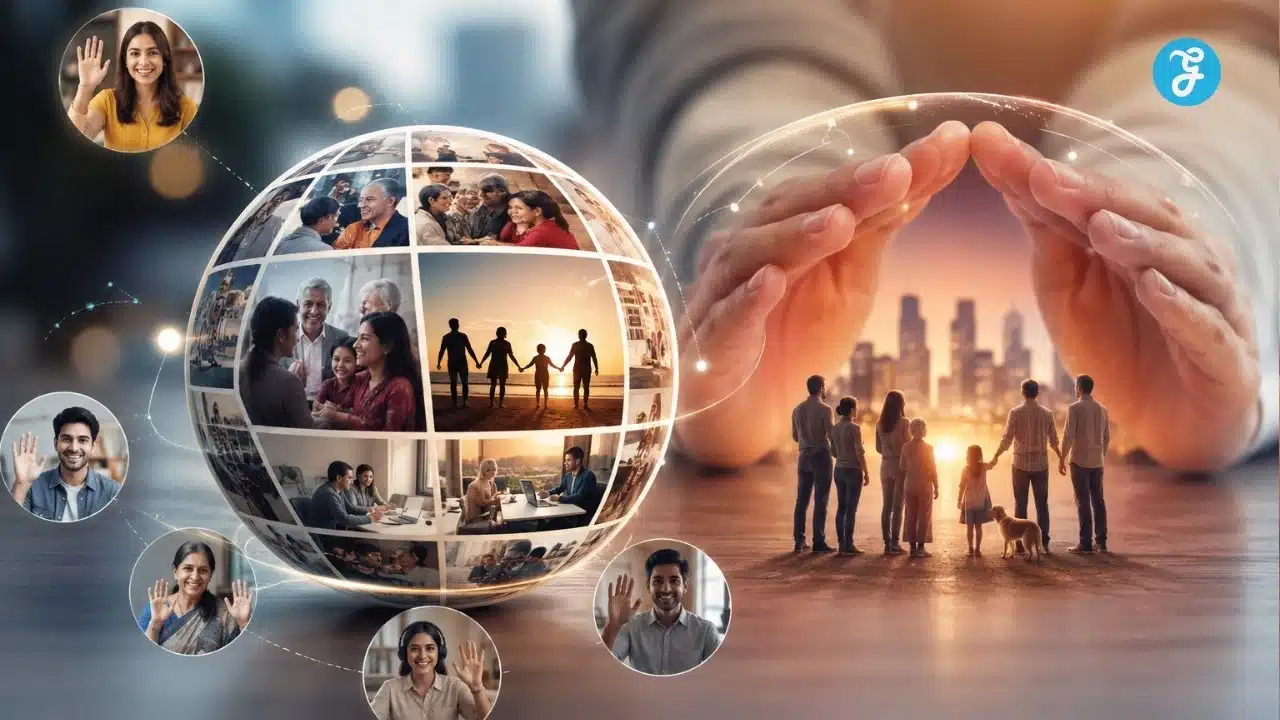
The dawn of May 15, 2026, does not just mark another entry on the global calendar; it serves as a profound mirror held up to a world in flux. As the United Nations observes the International Day of Families 2026 under the pivotal theme “Families, Inequalities and Child Wellbeing,” we find ourselves at a historical crossroads. The traditional picket fence imagery of the past has dissolved into a complex, vibrant mosaic of connection. In this landscape, the modern family definition has evolved into a dynamic verb, an act of being present, rather than a static noun dictated by a household registry or a shared surname.
The air in cities like New Delhi or London is thick with the invisible threads of digital signals, carrying the weight of a grandmother’s blessing via a high-definition video call or the frantic, supportive ping of a workplace group chat. We live in an era where urban migration and digital acceleration have rewritten the rules of proximity. Today, family is no longer just about who shares your blood, but who shares your burden; it is not merely about who lives under your roof, but who holds space for you in a deeply connected yet emotionally fragmented world.
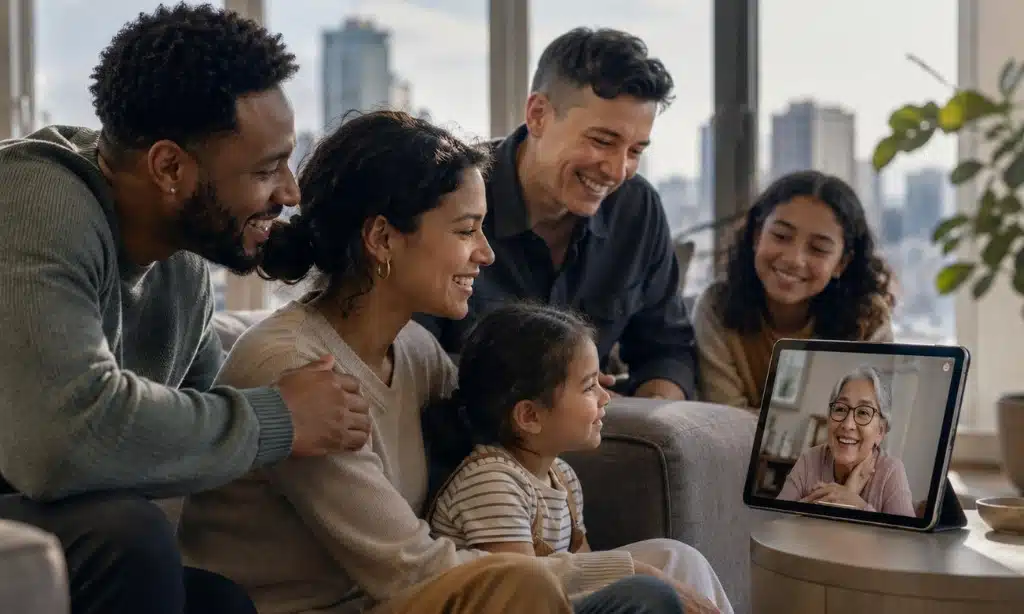
As we peel back the layers of the 2026 theme, we see that the inequality gap is being bridged not just by policy, but by these “chosen” structures. From the lifelong anchors of an alma mater to the colleagues who become an emotional safety net, the journey of life is being redefined by a new architecture of belonging. This shift marks a fundamental migration of the familial essence, moving away from the rigid constraints of the DNA strand and settling into the heart of consistent presence, shared memory, and radical care.
The Anthropological Shift: Family as a Practice of Presence
In a world where physical distance is the new norm, the very definition of kinship is undergoing a fundamental transformation. This is not just a social observation but a deep-seated change in the human story.
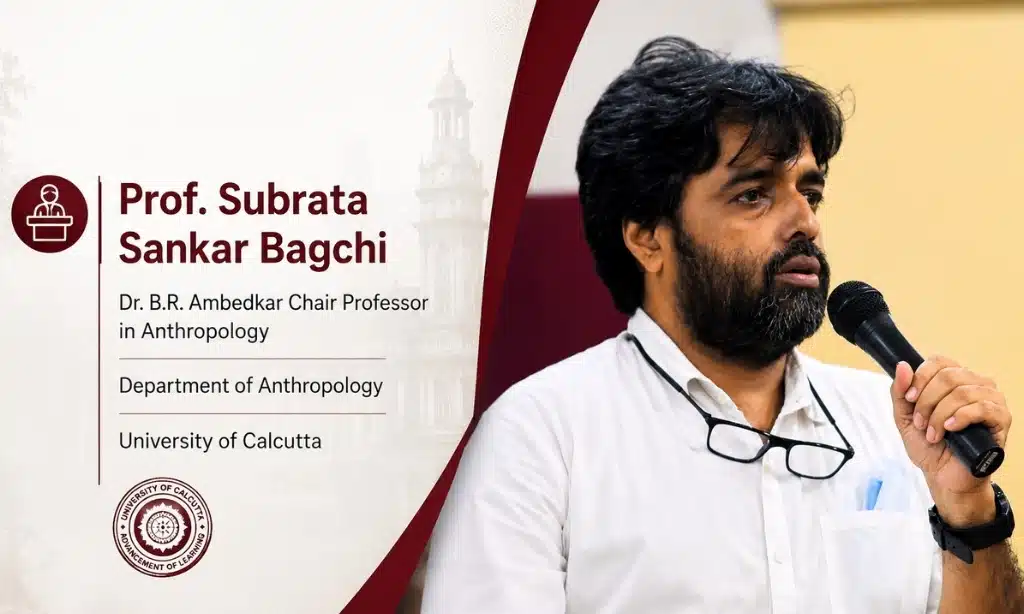
Says Prof. Subrata Sankar Bagchi, Dr. B.R. Ambedkar Chair Professor in Anthropology, Department of Anthropology, University of Calcutta, in an exclusive interview with Editorialge:
“In an era of shifting boundaries, family has evolved from a question of ancestry into a practice of ongoing care and shared presence. It is the abode that we make through connection, where these bonds prove just as durable as the ties of blood.”
The Resilience of Performative Kinship
Prof. Bagchi’s insight highlights that these new bonds are not “family-lite.” They are high-strength units built through the ritual of daily support. In the field of anthropology, this suggests a move toward performative kinship. We are no longer solely defined by who we are born to, but by the consistent actions of care we perform for those we choose.
Building the Modern Abode
This “abode” Prof. Bagchi speaks of is the emotional architecture created when we choose to show up. It is the virtual breakfast, the office safety net, and the lifelong alumni anchor. By 2026, we have learned that the physical walls of a house matter less than the digital and emotional threads that keep us “seen.” These connections provide the same structural integrity once reserved for biological lineage.
The New Kinship: Why Choice Defines Modern Bonds
The biological tie is no longer the sole designer of the human heart. Data archived by the National Institutes of Health reveal a documented shift in how we describe our inner circles. Research on “Chosen Family” dynamics shows that for many, the definition of family has moved from a bio-legal obligation to a system of mutual aid and trust. By 2026, the language of “blood” is increasingly being replaced by the language of “consistency” and “safety.”
The Decline of the Nuclear Default
For many, the traditional nuclear unit is no longer a given. Economic shifts and global mobility have scattered biological kin across time zones. We see this in stories like Takshika’s, who moved from Delhi-NCR to Russia to pursue medicine. Miles away from her childhood home, she found a new anchor in Cinderella, a Russian classmate. Their bond, forged in the rigors of medical school, has transcended friendship to become a primary kinship unit.
These intentional communities are not just casual social circles; they are the frontline of emotional survival. Whether it is navigating the pressures of a high-stakes career or surviving the isolation of a distant land, these bonds are built on active choice rather than genetic chance. In 2026, home is often where you find your peers, not just where you find your parents.
Emotional Equity Over Ancestral Duty
The data suggests this is not a rejection of family values but an expansion of them. Sociologists now observe that individuals are prioritizing emotional equity over ancestral duty. We are seeing a move toward relationships that offer a high return on psychological investment. When the traditional safety net of the local village vanished, we built new ones out of shared values and mutual aid.
Reliability as the New Bloodline
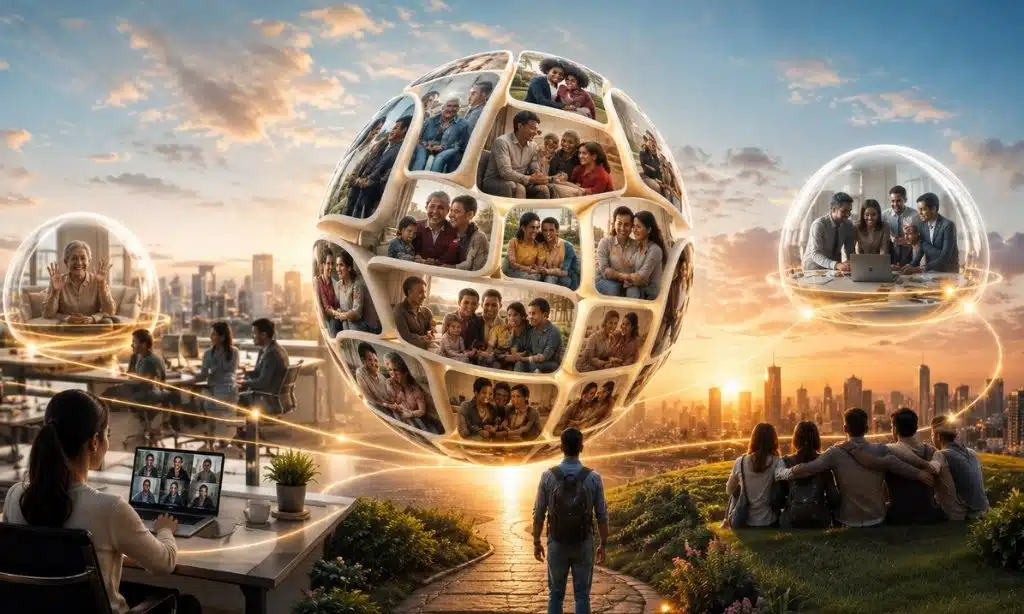
This modern kinship is defined by a deep kind of reliability. It is the person who shows up at the hospital when the biological sibling is a flight away. It is the mentor who provides the guidance a distant parent cannot. In 2026, the people who show up are the people who stay. We are redefining home as a state of mutual commitment. The modern family is a group of people who decide, every single day, to be there for one another. That choice is what makes it real.
The Silicon Cord: Why Digital Presence is the New Proximity
Technology has moved beyond the glow of a screen to become a living bridge. Data from the 2026 World Innovation Summit for Health (WISH) highlights a shift toward conscious connection. For the global workforce, the internet is no longer just a tool for tasks but a digital umbilical cord. It sustains the emotional health of families separated by thousands of miles.
From Screen Time to Digital Presence
We are witnessing the end of passive scrolling. In its place is a focused effort to maintain presence through high-definition reality. Families are no longer just calling each other; they are living together through open video links. This shift allows a parent in Manila to watch their child blow out birthday candles in Dubai. It creates a shared space that feels as tangible as a physical room.
The Lifeline for Migrant Workers
For migrant communities, group chats act as a 24-hour support system. These digital corridors carry the weight of daily life, from financial advice to emotional comfort. The WISH 2026 report confirms that these intentional digital bonds mitigate the trauma of displacement. They provide a sense of belonging that traditional borders used to block. In 2026, being home is a matter of being online.
The Trap of Technoference
Connectivity comes with a cost if used without purpose. The phenomenon of technoference occurs when devices intrude on real world intimacy. Checking a work notification during a bedtime story creates a specific kind of emotional fragmentation. Research indicates that this digital noise can weaken parent-child bonds even when they are in the same room. The goal in 2026 is not more technology, but more intentionality.
Bridging the Fragmented World
The modern family uses technology to heal the cracks of a busy life. It requires a move away from the distraction of the feed and toward the depth of the direct link. When we use these tools to show up for milestones, we prove that distance is a physical state, not an emotional one. Presence is a choice we make with our data and our time. We are learning that the silicon cord is only as strong as the heart at either end.
The Professional Hearth: Why Your Team is Your Support System
The phrase “we are family” was once a hollow corporate slogan. By 2026, it has become a psychological reality for the global workforce. As traditional community structures fade, the workplace has stepped in to fill the void. Modern professionals now look to their colleagues for the emotional security they once found at home.
The Office as a Safety Net
Data from the SAR Journal 2026 confirms that workplace wellness has shifted from perks to deep support. Modern companies are now acting as psychological safety nets. Employees who feel a sense of belonging at work report lower rates of chronic stress and higher resilience. This is not about forced socializing; it is about genuine peer support during life’s hardest moments.
The Alma Mater as a Lifelong Anchor
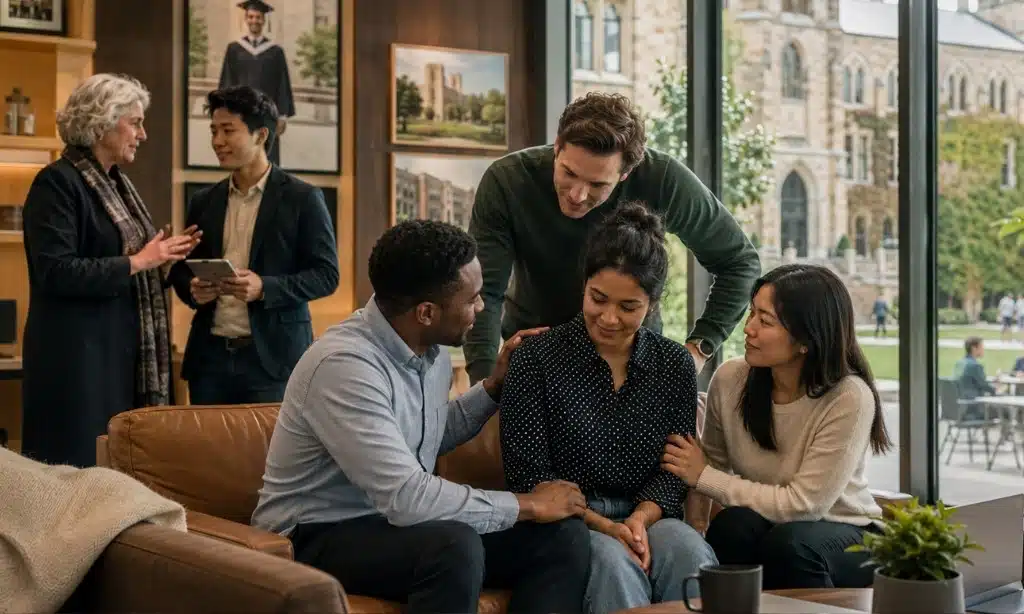
Universities are no longer just places to earn a degree. They have transformed into lifelong anchors for identity and connection. These institutions provide a sense of continuity that transcends physical geography. In a world where people change jobs and cities frequently, the alumni network remains constant. It offers a permanent sense of belonging that feels as steady as a family tree.
Mentorship and the New Lineage
Mentorship has evolved into a modern form of lineage. The bond between a mentor and a mentee often mirrors the depth of a parental relationship. These professional guides provide more than just career advice; they offer wisdom and emotional grounding. In 2026, we see that the people who help us grow professionally often become our most trusted confidants.
The bond of shared ambition creates a unique kind of intimacy. Working toward a common goal builds a foundation of mutual trust and care. When a team navigates a crisis together, the experience leaves a lasting mark. These professional circles are becoming the primary source of community for millions. We are learning that the people we work with are often the people who know us best.
Bridging the Gap: How New Support Systems Protect the Young
The International Day of Families 2026 forces a hard look at the widening divide in child wellbeing. While the 2026 UN theme highlights deep inequalities, it also reveals a new path to resilience. In a world where biological units are often fractured by economic migration or crisis, the Modern family definition is becoming a literal lifeline. We are seeing that the “village” is no longer just a physical location but a network of intentional care.
Community as the Primary Anchor
When traditional structures fail, community-based support systems step in to provide the necessary stability. NGOs, local youth centers, and even dedicated digital support groups are now recognized as legitimate familial extensions. These organizations offer the consistent presence that children need to develop a sense of security. They bridge the inequality gap by providing resources that struggling biological parents may lack.
The Pediatric Case for Connection
Recent data from the Italian Society of Pediatrics underscores the power of social connectivity on the developing brain. Researchers have found that children who engage in meaningful digital or physical interactions with a “chosen” support network show improved neural resilience. This connectivity acts as a buffer against the toxic stress of poverty or isolation. It proves that the human brain prioritizes the quality of the bond over the genetic link.
Digital Equity as a Social Determinant
Child wellbeing in 2026 is increasingly tied to digital access. For a child separated from a parent by borders, a stable video connection is not a luxury; it is a developmental necessity. Inequity today is measured by the strength of one’s signal and the reliability of their remote support. Ensuring that every child has a “silicon cord” to their loved ones is now a major focus of global family policy.
Redefining Resilience through Collective Care
The focus of 2026 is shifting away from the individual household toward a model of collective care. By recognizing teachers, mentors, and community leaders as part of the family ecosystem, we create a sturdier safety net. This broader definition allows for a more equitable distribution of emotional and physical labor. It ensures that no child is left to navigate the journey of life without an anchor.
A New Map of Home: The Story of the Modern Family
The traditional concept of a shared roof has given way to a shared digital frequency. In 2026, the home is a portable, persistent connection. We see this in the lives of the Sharma family, who span three continents yet remain anchored in each other’s daily rhythms. Their reality is a testament to how the modern family definition functions when distance is no longer a barrier to intimacy.
The Digital Breakfast in New Delhi
Arjun sits in his New Delhi apartment, preparing for a high-stakes meeting. Before he opens his work laptop, he authenticates his identity through a Zero Trust security protocol. This is not just a corporate requirement; it is how he enters his family’s private digital vault. On a wall-mounted screen, his sister, Priya, joins him from a rainy morning in London. They share a silent cup of coffee across five time zones. This is their ritual, a moment of presence that requires no words but provides a solid emotional start to the day.
The Rural Anchor and the Silicon Cord
In a small village in Himachal Pradesh, their father, Rajesh, logs on to the same secure thread. He does not just send a text; he shares a live feed of the family orchard. Through high-fidelity video, Arjun and Priya can see the progress of the harvest as if they were standing in the soil. This digital umbilical cord allows Rajesh to remain a central figure in his children’s urban lives. He is not a distant voice on a phone; he is a visual, active presence in their living rooms.
When Arjun faces a sudden professional setback, the response is immediate. It is not just his biological family that rallies. His mentor from his alma mater in Mumbai pings him on the same secure network. His “office family”, a team of colleagues he has worked with for years, sets up a virtual war room. They offer the psychological safety net that allows him to pivot. The crisis is managed through a blend of ancestral wisdom from his father and the technical grit of his professional peers.
Celebrating the Milestone Together
The day ends with a celebration. Priya has secured a major research grant in London. The entire network, biological, chosen, and professional, assembles on the digital hearth. They toast her success through the encrypted network, ensuring their private moments remain shielded from the noise of the open internet. In this moment, the inequality of their physical locations vanishes. They are united by a shared history and a collective future. They prove that in 2026, family is where you are known, protected, and celebrated.
The Future of Belonging: Presence as a Choice
The International Day of Families 2026 serves as a reminder that the human heart is nomadic yet seeks a permanent anchor. We have moved past the era where a shared zip code defined our closeness. Today, the modern family definition is a testament to our adaptability. We have built homes in the cloud, safety nets in the office, and lineages in the classroom. While blood remains a foundation, care and memory are the bricks and mortar of the 2026 family.
The Victory of Intentionality
In a world of deep connectivity and emotional fragmentation, intentionality is the only cure for isolation. We have learned that being family is a choice made every time we log on, every time we mentor, and every time we show up during a crisis. The 2026 theme of equality and wellbeing is being met not just by governments but by these organic, chosen networks that refuse to let anyone walk alone.
A Call for Institutional Recognition
Workplaces and policymakers must now catch up to this social reality. Recognizing these non traditional bonds is essential to support child wellbeing and reduce social inequality. When we validate the “chosen” structures that provide stability, we strengthen the fabric of society. It is time for our legal and corporate systems to protect the diverse ways we connect.
The Secure Frequency of Home
As we look forward, the lines between blood and bond will continue to blur. This is not a loss of tradition but a necessary expansion of it. We are finding ways to stay close through a high-definition screen or a shared professional goal. Home is no longer a destination on a map or a building with a fence. Family is not where you live. It is where you are finally seen.
Frequently Asked Questions (FAQs) on Modern Family Definition
How does the law recognize a chosen family during medical emergencies?
Legal frameworks are catching up to social reality. Many people now rely on advance healthcare directives. These legal documents grant medical power of attorney to chosen kin. This proactive step ensures your designated support system makes decisions when you cannot speak for yourself.
Yes. The financial sector is adapting to these shifts. Banks now offer shared mortgages and joint investment accounts for nontraditional units. Institutions base these approvals on shared financial history and mutual trust agreements rather than marriage certificates.
Do different generations view this modern kinship differently?
Research highlights a clear generational divide. Younger demographics treat intentional communities as their primary anchor. Older generations still lean toward biological ties. However, senior citizens increasingly rely on digital neighborhood networks for daily care and companionship.
How do employers handle bereavement leave for nontraditional kin?
Progressive companies are rewriting their human resource policies. They now offer flexible caregiving leave. Employees simply designate their primary care network during onboarding. This shift honors the true emotional bonds of the worker.





















