

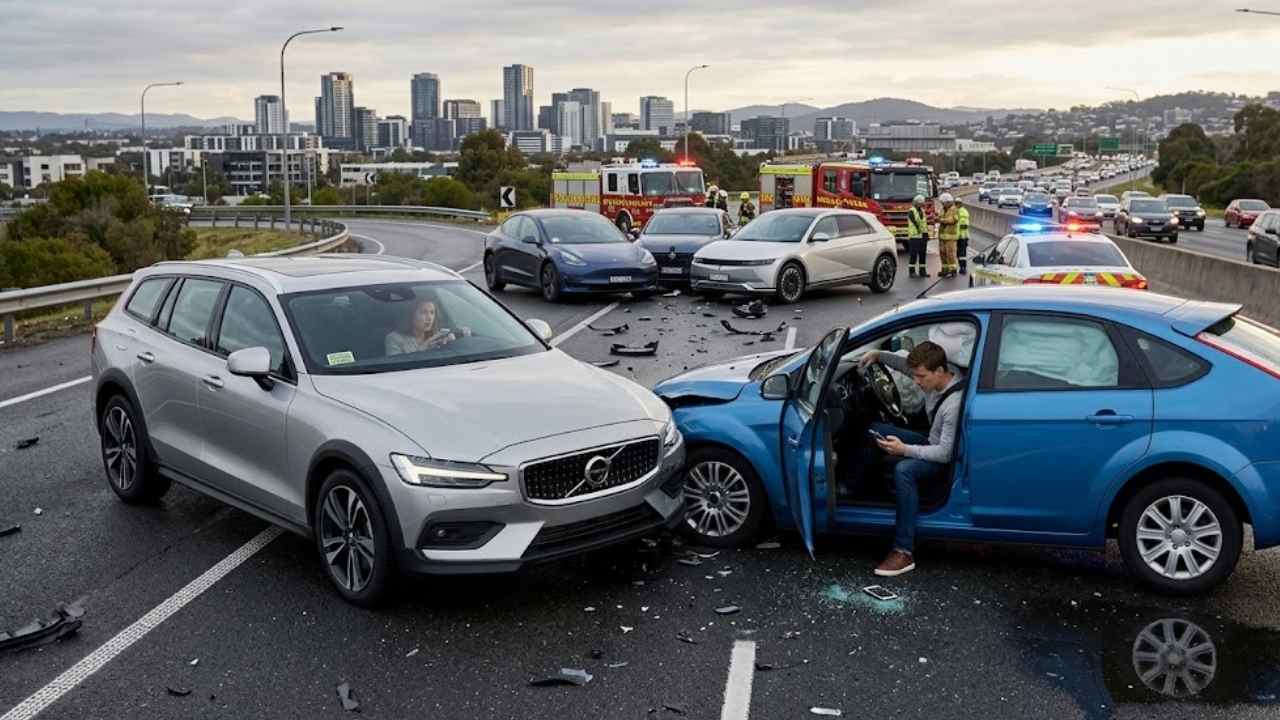
Safety features have become the norm with the latest vehicles. Cars have features such as lane-keeping assist, automatic emergency braking, and blind-spot monitoring. The list just keeps going. Yet the number of accidents reported continues to increase. At the same time, the process of resolving accident claims has become more complex.
The answer goes beyond vehicle technology and points to drivers and the increasingly complex environment they face on the road.
The Rise of Distracted Driving
Smartphones are often cited as a major contributor. According to the U.S. Centers for Disease Control and Prevention, nine people in the United States die every day in crashes involving distracted drivers.
However, the issue has expanded far beyond that in recent years. Today, vehicles are equipped with all sorts of infotainment systems that come standard. These infotainment systems can include touchscreens, voice commands, streaming music, and even temperature control, which can require several taps. While touted as convenient, they can distract a driver’s attention away from the road as easily as a phone can.
Navigation apps like Google Maps and Waze also contribute. Even with a phone mounted on the dashboard, following turn-by-turn directions takes cognitive effort away from the crucial task of driving safely.
A 2024 study that observed 1,105 drivers found that 609 (about 55%) were distracted while driving. Most distractions happened inside the car (about 42%). Around 14% of drivers were using their mobile phones.
- 8% used hands-free phones
- 6% held their phones while driving
- About 3% were manipulating their phone (like typing or scrolling)
- About 2% were actively talking on the phone.
Moreover, 24 drivers made driving mistakes, and 23 of them (almost 96%) were distracted at the time.
Likewise, younger drivers were more likely to be distracted than older drivers, especially those under 30. Factors like gender, whether someone was driving in the city or on the highway, or whether it was a weekday or weekend, did not seem to affect distraction levels.
The result is a driving culture that treats multitasking as normal. It isn’t. At 60 mph, a vehicle travels roughly 88 feet per second. A glance at a screen that lasts just two seconds means traveling nearly the length of a basketball court without your eyes on the road.
Gig Economy and Road Congestion
More vehicles on the road mean more opportunities for accidents, and the gig economy has significantly increased that number. Delivery drivers, such as those working for companies like DoorDash, Amazon Flex, and Instacart, are under pressure. They have to drive through unfamiliar neighborhoods, check apps, receive drop-off instructions, and handle multiple orders simultaneously.
Similarly, rideshare drivers are under pressure. They pick up rides, receive route instructions via GPS, communicate with riders, and chase surge prices. All these activities are done at the same time, especially in traffic, where conditions are changing every second.
Moreover, fatigue compounds everything. Gig workers frequently drive long shifts without the protections afforded to traditional commercial drivers, such as mandatory rest periods. Fatigue can impair reaction time and judgment, increasing the risk of crashes.
How Technology Changes Liability
When an accident does happen, sorting out who’s responsible has become a far more technical process than it once was.
Dashcams are now common. Their footage can be crucial evidence or a complicating factor. It depends on what they captured and how clearly they captured it. Event data recorders, or “black boxes,” are in most modern vehicles. They store information about speed, braking, steering input, and seatbelt use just before a collision. This data may help clarify or compare with statements about how the accident occurred.
Surveillance footage from traffic cameras, businesses, and doorbell cameras is now common for accident reconstruction. However, accessing, authenticating, and interpreting digital evidence requires legal and technical expertise. Not only can disputes over what the data shows or how it was collected delay resolution, but they also fuel disagreements between insurance companies and other parties.
The Growing Complexity of Insurance Claims
Even straightforward-looking accidents can quickly become complicated. Comparative fault is a key reason why.
California, like many states, follows a comparative fault system, meaning that if you are found partially responsible for an accident, your compensation is reduced by your share of the blame. In a multi-vehicle pileup, determining each driver’s percentage of fault becomes a contested process that insurers approach with their own financial interests in mind.
In accidents involving multiple cars, there are additional complexities because multiple insurance policies are involved. Each policy is subject to different policy limits and conditions. For example, in situations where one of the cars is occupied by a delivery driver or a ridesharing driver, there is complexity in the commercial and personal policies. Was the driver working at the time of the accident? What is covered under the ridesharing policy? At what point does the personal policy take over? These are not always simple questions.
When Legal Guidance Becomes Necessary
Not every accident requires an attorney. A minor fender-bender with clear responsibility and minimal damage can often be resolved directly with an insurance company.
Some accidents involve circumstances that make the claims process more complex, particularly when serious injuries or disputed responsibility are involved. In these situations, individuals may choose to seek legal guidance to better understand their options and the claims process.
Firms such as Jacoby & Meyers work with individuals navigating accident-related insurance and liability questions when those issues become more complicated.
Safer Roads Start with Awareness and Accountability
The technology to prevent accidents has never been more advanced. However, technology cannot compensate for distractions, fatigue, and the gig economy, which rewards speed above all other considerations.
Even with improved safety technology, accidents still occur. The complexity of the road can make the aftermath as difficult to deal with as the accident itself. Distraction, digital evidence, and insurance can all play a role in what happens to you, so understanding how all of this affects you can give you a sense of control, no matter what happens next.
If you’ve been involved in an accident and have questions about the claims process, gathering reliable information early can help you understand your options. Knowing your options early empowers you to protect your interests.





















