

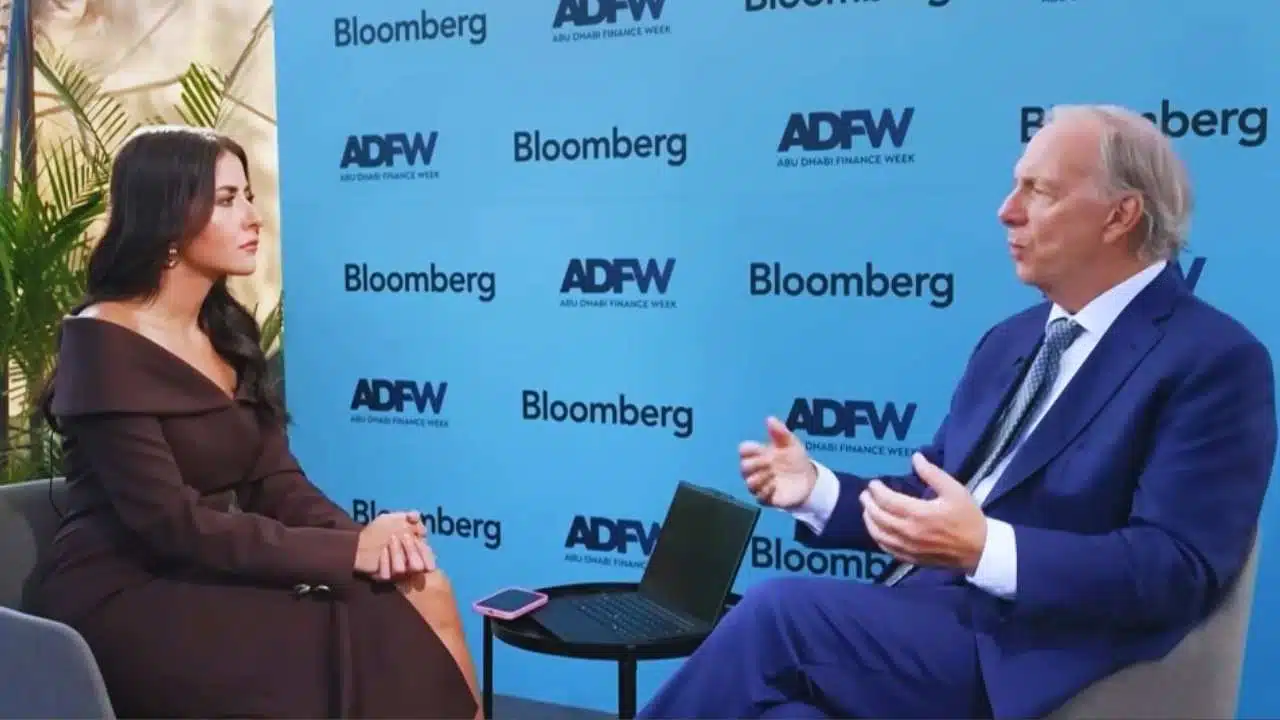
Bridgewater Associates founder Ray Dalio made headlines on December 8, 2025, by declaring that the Middle East is rapidly evolving into a global artificial intelligence powerhouse, drawing direct comparisons to the rise of Silicon Valley as America’s tech epicenter decades ago. Speaking during a CNBC interview conducted in Abu Dhabi, Dalio emphasized how nations in the Gulf region, particularly the United Arab Emirates (UAE) and Saudi Arabia, have strategically merged their enormous sovereign wealth funds with an influx of world-class international talent to foster an environment ripe for AI innovation and investment.
He described the atmosphere in the region as buzzing with excitement around AI and technology, much like the vibrant energy that once defined San Francisco during the early days of the tech boom, where entrepreneurs, engineers, and investors converged to push boundaries. Dalio’s long-standing familiarity with the area—he has visited Abu Dhabi for over 30 years—lends significant weight to his observations, as he has witnessed firsthand the deliberate policy shifts and infrastructure builds that are now propelling the Middle East onto the world stage in artificial intelligence.
This transformation is not happening in isolation; it reflects broader regional ambitions to diversify economies away from oil dependency toward high-tech sectors like AI, data centers, and advanced computing. Countries in the Gulf have leveraged their financial resources, political stability, and forward-thinking leadership to attract partnerships with Silicon Valley giants, creating ecosystems that rival those in the United States and Asia. Dalio specifically highlighted the UAE’s appeal as a “Silicon Valley of capitalists,” where capital flows freely, regulations support innovation, and quality-of-life factors draw top minds from around the globe.
Massive AI Infrastructure Investments Fuel the Rise
The concrete foundation for Dalio’s optimism lies in blockbuster investments transforming the region into a hub for AI infrastructure. In May 2025, Google Cloud announced a landmark $10 billion partnership with Saudi Arabia’s Public Investment Fund (PIF), the kingdom’s massive sovereign wealth entity, to establish a “global AI hub” in collaboration with Saudi technology company Humain. This initiative significantly expands Google Cloud’s existing Dammam region in Saudi Arabia, introducing cutting-edge AI capabilities such as the Gemini family of AI models for versatile applications, Imagen for high-quality image generation, and Veo for advanced video creation tools. The partnership promises substantial economic ripple effects: it is projected to deliver $35 billion in overall economic benefits to the United States, generate $20 billion in revenues for American companies, and create or support 11,000 American jobs by 2040, underscoring the mutual gains from cross-border tech collaboration.
Meanwhile, the UAE is aggressively pursuing its own mega-projects. A consortium including OpenAI, Oracle, Nvidia, Cisco, and the UAE-based G42 is developing the ambitious Stargate AI campus in Abu Dhabi, a sprawling 10-square-mile facility equipped with a staggering 5 gigawatts of power capacity to support massive-scale AI training and inference. Nvidia contributes its state-of-the-art Blackwell GPU systems, renowned for their unparalleled performance in handling the complex computations required for frontier AI models, while Cisco provides robust networking infrastructure and cybersecurity measures to ensure seamless, secure data flows across the campus. The project kicks off with an initial 200-megawatt cluster slated to become operational in 2026, followed by a larger 1-gigawatt deployment managed jointly by OpenAI and Oracle, positioning Abu Dhabi as a nerve center for next-generation AI development. These initiatives are part of a larger UAE-US AI corridor, blending local expertise with American innovation to accelerate AI adoption across industries like healthcare, energy, finance, and logistics.
Such investments signal a seismic shift the Middle East’s AI data center capacity is expanding exponentially, supported by abundant energy resources, strategic locations bridging East and West, and government incentives that make it an attractive alternative to overcrowded facilities in Europe and the US. Analysts project that by the end of the decade, the region could host some of the world’s largest AI superclusters, driving advancements in everything from autonomous systems to personalized medicine.
Dalio Credits Smart Leadership and Long-Term Vision
Ray Dalio attributes much of the Middle East’s AI ascent to exceptional governance, strategic foresight, and an unwavering commitment to long-term planning that sets the Gulf apart from more volatile regions. Having observed the UAE’s evolution over three decades, he portrays it as a “paradise in a troubled world,” citing its unparalleled stability, visionary leadership under figures like UAE President Sheikh Mohamed bin Zahi Al Nahyan, and superior quality of life—including world-class infrastructure, safety, and multicultural vibrancy—that magnetizes global talent. This environment has cultivated a “Silicon Valley of capitalists,” where risk-tolerant investors and innovators thrive without the bureaucratic hurdles or social disruptions plaguing other tech hubs.
Dalio’s praise extends to how these nations have weaponized their sovereign wealth—PIF alone manages over $900 billion in assets—to fund moonshot projects while forging alliances with tech leaders. Programs like Saudi Arabia’s Vision 2030 and the UAE’s UAE Centennial 2071 blueprint prioritize AI as a cornerstone of economic diversification, investing in education, R&D hubs, and regulatory sandboxes that encourage experimentation. The result is a fertile ground where startups, research institutions, and corporations co-exist, much like the symbiotic ecosystem that birthed companies such as Google and Apple in Silicon Valley.
Bubble Warnings Temper the AI Optimism
Even as Dalio celebrates the Middle East’s AI momentum, he sounded alarms about broader economic vulnerabilities that could impact global markets, including this burgeoning sector. He forecasted that the next one to two years will be particularly precarious, driven by interlocking cycles of mounting debt, intensifying U.S. political polarization under President Donald Trump’s administration, and escalating geopolitical flashpoints from Ukraine to the South China Sea. By his metrics—drawing from decades of studying market cycles—current conditions qualify as a full-blown bubble, with valuations hovering around 80% toward historical peak levels, reminiscent more of the speculative frenzy during the 2000 dot-com era than the catastrophic 1929 stock market crash.
Dalio stressed, however, that bubbles frequently coincide with eras of profound technological disruption, such as the internet revolution or today’s AI wave, and urged investors not to flee promising innovations prematurely. “All bubbles took place in times of great technological change. You don’t want to get out of it just because of the bubble—you want to look for the ‘pricking’ of the bubble,” he advised, advocating vigilance for telltale signs like sharp liquidity crunches or policy missteps rather than blanket sell-offs. His views align with cautions from OpenAI CEO Sam Altman, who has flagged unsustainable hype around AI valuations, and investor Michael Burry, famed for predicting the 2008 housing crash, who anticipates an AI bubble burst within two years amid overinvestment in unproven infrastructure.
Despite these risks, Dalio remains bullish on AI’s transformative potential, especially in regions like the Middle East where execution risks are mitigated by strong state backing. Investors, he suggests, should balance portfolio diversification with exposure to genuine AI leaders, positioning themselves to weather volatility while capitalizing on the technology’s inevitable productivity gains across sectors.





















