In a major move that could reshape the AI services landscape, Microsoft announced on Monday that it is integrating Grok, the AI model developed by Elon Musk’s company xAI, into its Azure AI Foundry platform. This update was revealed during the tech giant’s annual Microsoft Build developer conference, signaling a strong intent to provide a broader, more competitive AI model selection for businesses and developers worldwide.
What Is Grok and Why It Matters
Grok is an AI model series developed by xAI, Elon Musk’s artificial intelligence startup founded in 2023. Known for its unfiltered personality and bold ambition to compete with mainstream models like OpenAI’s GPT and Anthropic’s Claude, Grok has gained attention both for its capabilities and controversies.
Now, two versions of the model—Grok 3 and Grok 3 Mini—will be available through Microsoft Azure, directly hosted and billed by Microsoft. This is a significant development, as it allows enterprises to access and utilize Grok’s reasoning, logic, and multi-modal abilities without needing to interface with xAI’s systems directly.
Key Features of Grok 3 on Azure:
-
Extended Context Window: Grok 3 supports up to 131,000 tokens, enabling deeper document understanding and extended conversations.
-
Structured Output Support: Developers can now specify schemas (like JSON) for more reliable and predictable outputs in enterprise workflows.
-
Enterprise-Grade Privacy & Security: Microsoft assures businesses that Grok on Azure follows rigorous security protocols, making it compliant for regulated industries.
This move also represents a rare collaboration between Microsoft and Elon Musk, especially considering Musk’s contentious past with OpenAI, a company Microsoft has invested over $10 billion in. It reflects Microsoft’s broader strategy of embracing multiple third-party AI providers to reduce dependence on a single vendor and appeal to a diverse client base.
Microsoft Now Hosts Over 1,900 AI Models
With this integration, Microsoft claims its Azure platform now offers access to over 1,900 AI models—either built in-house or provided by partners. These models cater to a wide variety of use cases across sectors like healthcare, finance, logistics, and software development.
According to Microsoft’s official Azure AI Foundry blog, Grok joins other state-of-the-art models like Mistral, Meta’s Llama, OpenAI’s GPT-4, and Cohere, solidifying Azure’s position as one of the most open and flexible AI cloud ecosystems globally.
This diverse portfolio is a direct answer to critics who worry about vendor lock-in and limited AI model choices from major cloud providers like AWS (Amazon Web Services) or Google Cloud.
GitHub Copilot Gets an Autonomous Coding Agent
Another major highlight from the Build 2025 conference was the launch of an autonomous AI coding agent within GitHub Copilot, Microsoft’s AI coding assistant that already has over 1.8 million users.
Unlike the current Copilot, which provides suggestions as developers type, the new agent can:
-
Independently fix bugs
-
Add features to existing codebases
-
Write documentation
-
Test and validate changes before submitting pull requests
Here’s how it works:
-
A developer assigns a task in GitHub.
-
The agent spins up a secure cloud development environment.
-
It clones the project, analyzes the code, and performs the assigned tasks.
-
Finally, it notifies the developer for manual review before merging.
This feature, available to Copilot Pro Plus and Enterprise users, is being seen as a major step toward fully autonomous software development, rivaling OpenAI’s newly announced Codex Agent.
NLWeb: AI-Powered Conversational Interfaces for Any Website
Also revealed at the conference was NLWeb, a new open-source initiative from Microsoft aimed at making AI conversational interfaces universal and easy to implement.
What is NLWeb?
-
A protocol and code base that lets developers transform any standard website into an AI-powered interactive application.
-
Developers can choose any AI model, including Grok, GPT-4, or others, and connect their own datasets.
-
This is part of Microsoft’s broader push for what it calls an “agentic web”—a future internet where AI agents act on behalf of users.
Microsoft says the goal is to democratize AI, allowing small websites, NGOs, and independent developers to harness the power of large language models without needing massive infrastructure or technical expertise.
Microsoft’s Bigger Strategy: The Open Agentic Web
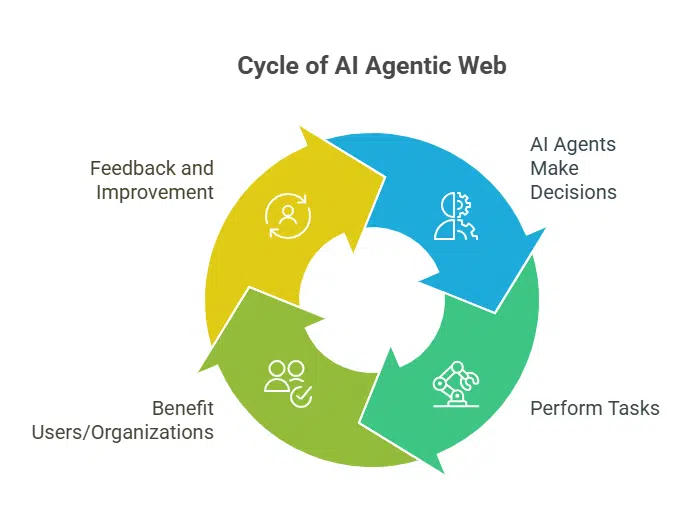
With these announcements, Microsoft made it clear that it sees the future of the internet as being driven by open, customizable, and interoperable AI agents.
Quoting Microsoft’s blog post:
“This emerging vision of the internet is an open agentic web, where AI agents make decisions and perform tasks on behalf of users or organizations.”
By enabling AI models like Grok, advancing tools like GitHub Copilot, and opening up protocols like NLWeb, Microsoft is pushing toward a web ecosystem where users can build, customize, and delegate tasks to AI agents across platforms.
A Busy Week for AI Announcements
Microsoft Build is just one of several major developer conferences happening this week:
-
Google I/O (May 21–22): Expected to unveil updates to Gemini AI, Android 15, and more.
-
Anthropic Dev Day (May 23): First-ever developer event from the creators of Claude, expected to reveal new model capabilities.
-
Apple WWDC (June 10): Rumors suggest Apple may finally announce its own LLM integrations across iOS and macOS.
The competition in the AI space is heating up, and Microsoft’s message is clear: it wants to be the most open, inclusive, and enterprise-ready AI platform on the market.
Microsoft’s decision to add xAI’s Grok models to Azure marks a pivotal moment in the AI race. By emphasizing openness, flexibility, and enterprise-grade features, Microsoft is not only responding to evolving developer needs but also setting the stage for AI-powered platforms that can work across models, industries, and use cases.
This strategy could prove vital in a world increasingly shaped by agentic AI, where software no longer just serves users—but acts for them.