

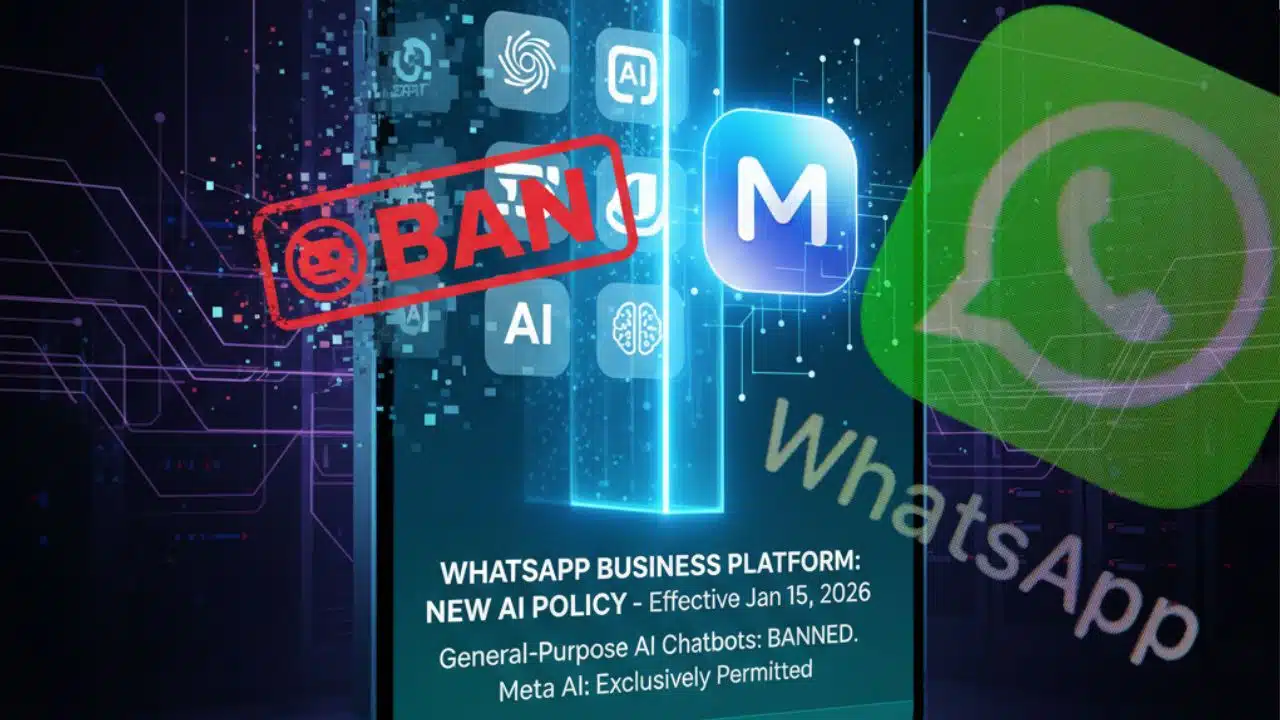
In a decisive move that redraws the boundaries of artificial intelligence integration on the world’s largest messaging platform, Meta has officially barred general-purpose AI chatbots from its WhatsApp Business Platform. The policy shift, set to take effect on January 15, 2026, will significantly impact the burgeoning ecosystem of AI assistants while cementing the position of Meta’s own AI as the exclusive, broad-use conversational tool for WhatsApp’s billions of users.
The move effectively evicts third-party AI powerhouses, including services built on models from OpenAI (the creator of ChatGPT) and Perplexity, from using WhatsApp as a primary channel for user interaction. The ban, however, carves out a critical exception for specialized business bots, allowing companies to continue using AI for specific customer service functions like booking appointments, tracking orders, or answering product-specific queries.
- What is Changing: Meta is banning “general-purpose” AI assistants from the WhatsApp Business API. This targets chatbots whose primary function is open-ended conversation, search, or content creation.
- Who is Affected: Companies distributing broad AI assistants, such as those leveraging technology from OpenAI, Perplexity, Luzia, and others, will be blocked.
- Who is Not Affected: Businesses using AI for specific, task-oriented customer service (e.g., an airline’s flight status bot) can continue to operate.
- Effective Date: The new policy will be enforced starting January 15, 2026.
- Meta’s Stated Reason: The WhatsApp Business API was designed for business-to-customer service, not as a distribution platform for AI models. The unexpected surge in AI chatbot usage has strained infrastructure and falls outside the platform’s intended strategic and monetization framework.
- Primary Impact: The decision solidifies Meta AI as the sole general-purpose AI assistant on WhatsApp, limiting competition and controlling the user experience on one of its most valuable platforms.
The New Rules of Engagement
The policy change was introduced through a new clause in the WhatsApp Business API terms of service, specifically targeting “AI Providers.” One third-party report quotes the new policy as stating: “Providers and developers of artificial intelligence or machine learning technologies, including but not limited to large language models, generative AI platforms, general AI assistants, or similar technologies as determined by Meta (‘AI providers’), are strictly prohibited from directly [using the service].
This strategic pivot is aimed at curbing a use case that Meta says it never intended to support on the Business Platform. In a statement widely circulated after being first reported by TechCrunch, a Meta spokesperson clarified the company’s position.
“The WhatsApp Business API is built for businesses serving customers, not for chatbot distribution,” a Meta spokesperson told source. Our focus is on supporting tens of thousands of businesses building these experiences on WhatsApp.
The company elaborated that the rise of these general-purpose chatbots had placed a significant and unanticipated burden on its systems, increasing message volume and requiring a level of support that deviated from the API’s core design and strategic focus.
A Market in Flux: Data and Statistics
The decision comes at a time of explosive growth in both the WhatsApp Business ecosystem and the broader conversational AI market, highlighting the immense commercial stakes involved.
- WhatsApp Business Scale (as of late 2025): The platform boasts over 200 million monthly active users for its Business app globally. This massive user base has made it an indispensable tool for companies aiming to connect directly with consumers.
- Conversational AI Market Growth: The global conversational AI market was valued at USD 19.21 billion in 2025 and is projected to skyrocket to USD 132.86 billion by 2034, growing at a compound annual growth rate (CAGR) of 23.97%. This rapid expansion underscores the technology’s increasing integration into daily life and business operations.
- WhatsApp Business Revenue Projections: Meta’s focus on monetizing its messaging platforms is clear. Projections indicate that revenue from WhatsApp’s business messaging services could reach $10 billion annually by 2026, making control over the platform’s commercial features a top strategic priority.
Official Responses and Expert Analysis
As of October 20, 2025, major AI companies directly impacted by the ban, including OpenAI and Perplexity, have not issued public statements on the policy change. Their silence leaves the industry to speculate on their next moves, whether it involves challenging the policy, pivoting their integration strategies, or focusing on other platforms.
Industry analysts, however, view the move as a classic platform-owner strategy to control both the user experience and the flow of revenue. While a direct quote from a leading analyst on this specific news was not available at publication time, broader analysis from firms like Forrester points to a strategic consolidation of power. Mike Proulx, a VP and Research Director at Forrester, has previously noted Meta’s increasing focus on its own AI capabilities and smart glasses as the future of the company, a vision in which controlling the primary AI interface is paramount.
The decision can be interpreted through two primary lenses:
- Infrastructure and Integrity: Meta’s public reasoning—that general-purpose bots strain the system and were an unintended use—is plausible. Unchecked, high-volume, and low-revenue traffic could compromise the quality of service for the intended business users.
- Competitive Moat: By removing third-party competitors, Meta ensures that its own Meta AI becomes the default, and only, intelligent assistant for WhatsApp users. This move prevents rivals from leveraging WhatsApp’s enormous distribution network to grow their own user bases and refine their models on user interactions. It also allows Meta to tightly control how AI is monetized on its platform.
Impact on Businesses and Users
For end-users, the change means that the convenience of accessing powerful, all-purpose AI like ChatGPT or Perplexity for search, summarization, or image generation directly within WhatsApp will disappear by early 2026. They will be funneled towards Meta AI for these functions.
For the developers and businesses built around providing these general AI services on WhatsApp, the impact is severe. They must now find alternative channels to reach users, a significant challenge given WhatsApp’s global penetration.
Conversely, businesses that use AI in a more targeted manner for customer service are breathing a sigh of relief. A travel agency’s bot that helps book flights or a retailer’s bot that provides shipping updates will remain compliant. This distinction is crucial, as it shows Meta is not banning AI wholesale, but rather a specific category of AI that competes with its own ambitions.
The key developments to monitor will be the official reactions from OpenAI, Perplexity, and other affected AI developers. Their response will shape the narrative around platform power and competition in the AI era. Furthermore, the market will be watching to see if this policy is replicated across Meta’s other messaging platforms, such as Messenger and Instagram Direct.
Regulators, already scrutinizing big tech’s control over digital ecosystems, may also take an interest in whether the move stifles innovation and competition in the nascent AI assistant market. The transition period until January 15, 2026, will be critical for businesses to adapt and for the true market impact of Meta’s walled-garden approach to AI on WhatsApp to become clear.
The Information is Collected from Economic Times and India Today.





















