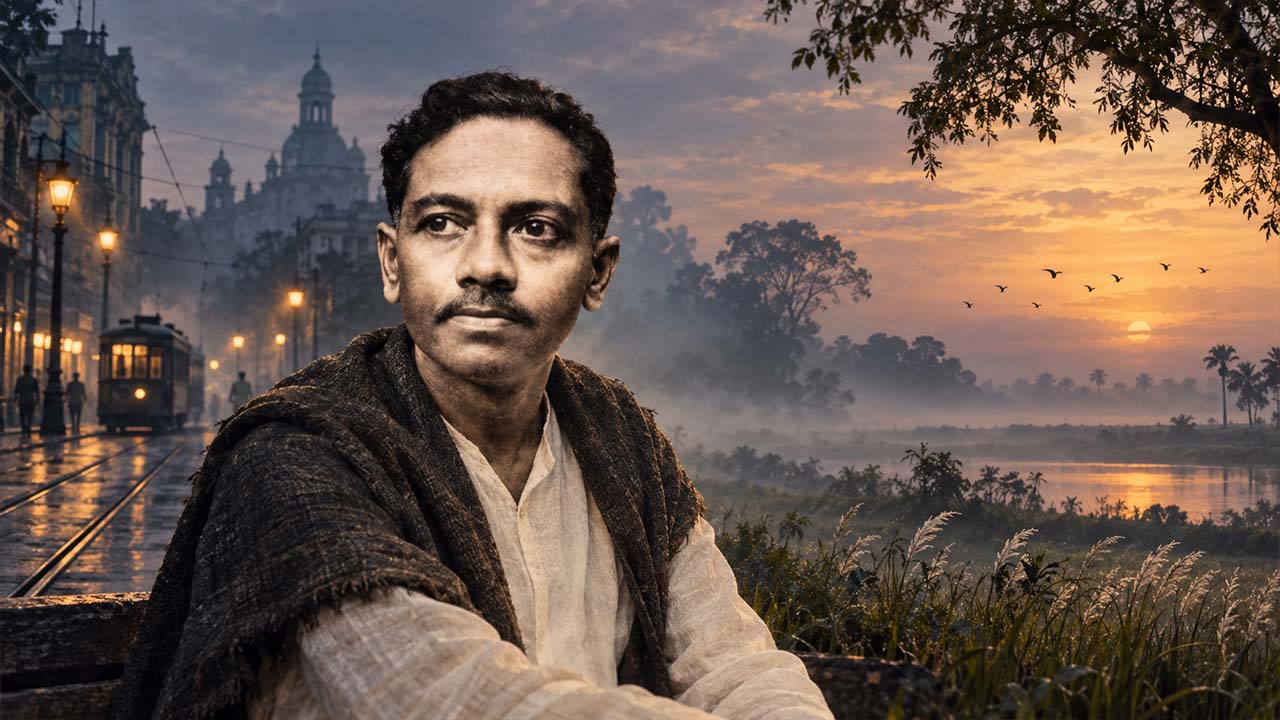
Have you ever felt tired of all the labels we put on each other? Religion, class, caste, you name it.
It can feel like these boxes are designed to split people apart, not bring them together. You might wonder if there’s a simpler way to see the world, and each other.
Well, there’s a voice from the past that speaks directly to this feeling. His name is Lalon Shah, a mystic poet from Bengal who decided to live outside all the labels. He sang about one simple idea: everyone is just human.
I’m going to walk you through his incredible story and show you how his ideas are more relevant today than ever. Let’s explore how one man with a song tried to rewrite humanity.
Key Takeaways
- Lalon Shah or lalon Shai was a mystic poet from Bengal (c. 1774-1890) whose life is shrouded in mystery. After surviving smallpox, he was raised by a Muslim family and later studied with Baul saint Siraj Sain.
- His philosophy rejected all religious divisions, caste systems, and social hierarchies. Lalon taught that the divine, or “Moner Manush” (Man of the Heart), resides within every person, making external rituals unnecessary.
- Lalon’s songs, known as Lalon Geeti, used simple folk instruments like the ektara and duggi. Famous songs like “Shob Loke Koy Lalon Ki Jat Shongshare” directly challenge the notion of identity based on religion or caste.
- His work deeply influenced major cultural figures, including Nobel laureate Rabindranath Tagore, who published 20 of his songs, and poets like Kazi Nazrul Islam and the American Beat poet Allen Ginsberg.
- Lalon’s legacy is a living tradition. UNESCO recognized Baul songs as a Masterpiece of the Oral and Intangible Heritage of Humanity in 2005, and annual festivals at his shrine in Kushtia, Bangladesh, draw hundreds of thousands of people.
The Life of Lalon Shah
Lalon Shah’s early life is like a folk tale, filled with mystery and a twist of fate that would change his entire world. It was a single event that led him to question every rule society had ever created.
Early life and background
Born around 1774 in what is now Bangladesh, Lalon grew up without any formal education. His origins remain a topic of debate, a detail he himself intentionally kept private.
During a pilgrimage as a young man, he contracted smallpox and was left for dead by his companions. A kind Muslim couple, Malam Shah and his wife Matijan, found him and nursed him back to health. It was under their care that his old life faded away.
He later found his spiritual guide in Siraj Sain, a renowned Baul saint. Lalon established his own commune, or Akhra, in Chheuriya, Kushtia, on the banks of the Kaliganga river. It became a haven for people of all backgrounds.
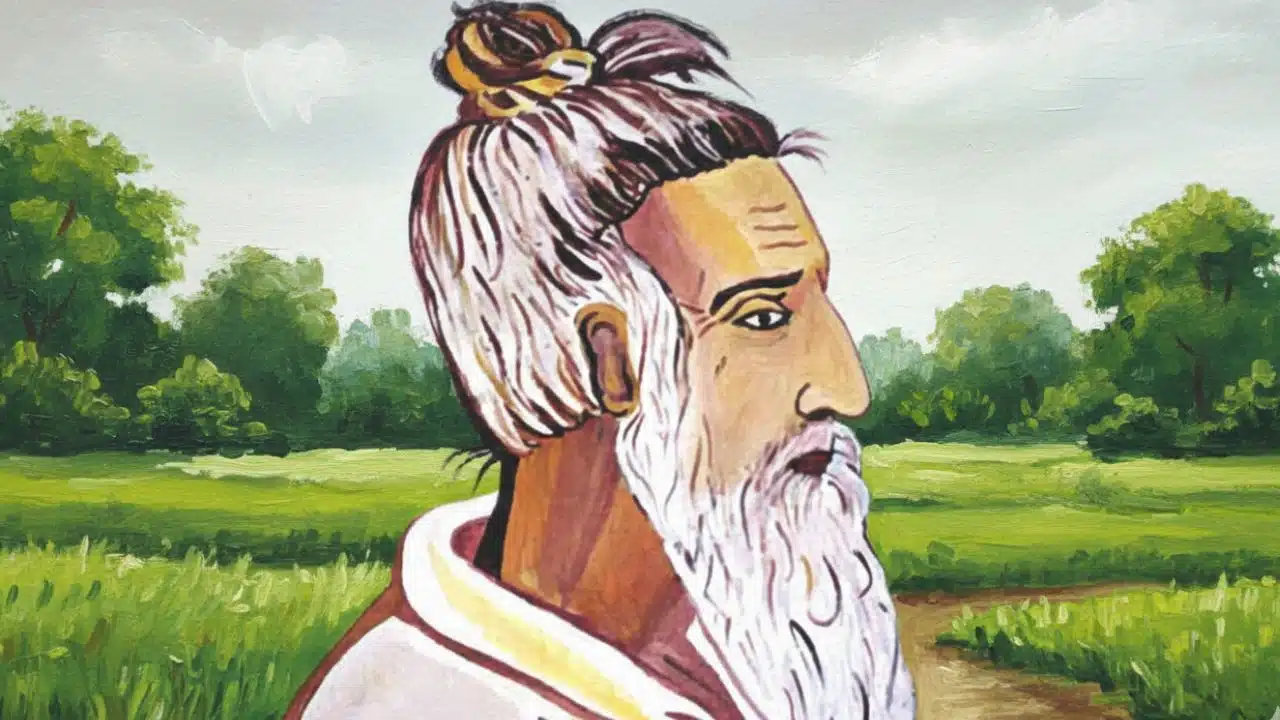
The only known portrait of Lalon was sketched from life by Jyotirindranath Tagore, Rabindranath’s older brother, in 1889. This drawing was made just a year before Lalon passed away at the incredible age of 116.
Mysterious journey to mysticism
That brush with death completely reshaped Lalon’s path. When he recovered and tried to return to his community, he was rejected for having lived in a Muslim household.
This rejection became his liberation. He abandoned all ties to a specific religious identity and began his journey as a wandering mystic. At his Akhra, he spent his days in musical gatherings and yogic meditation.
Lalon drew wisdom from many sources, finding common ground in Hindu Tantric traditions, Buddhist philosophy, and Islamic Sufism. He never wrote down any of his songs himself, as he was likely illiterate. His disciples, like Bholai Shah, painstakingly transcribed them, preserving the Lalon Geeti for future generations.
Philosophy of Lalon Shai
Lalon saw every person as a universe unto themselves. He believed that searching for God in temples or mosques was a distraction, because the divine was already living inside each of us.
Humanism beyond religion
Fakir Lalon Shah simply didn’t see the lines that divided people. To him, whether someone was Hindu, Muslim, or followed another path was irrelevant. His core teaching was that humanity was the only true identity.
This idea shines through in one of his most famous songs, “Shob Loke Koy Lalon Ki Jat Shongshare” (Everyone asks what Lalon’s caste is). In it, he sings:
- “Everyone asks, ‘Lalon, what is your caste?'”
- “Lalon says, ‘My eyes can’t see the difference.'”
- “A Muslim is marked by circumcision, but how do you mark a woman?”
- “A Brahmin is known by his sacred thread, but how do you recognize a Brahmin woman?”
This wasn’t just a casual thought, it was a radical act of rebellion in 19th-century Bengal. He taught a philosophy where love and a shared humanity were the only things that mattered.
Critique of societal norms
Lalon used his music to directly challenge the power structures of his time. He saw the caste system, religious dogmas, and class divides as man-made prisons for the human spirit.
His audience was made up of the very people society overlooked: farmers, fishermen, weavers, and rural villagers. While other social reformers of the era, like Raja Ram Mohan Roy, focused on intellectual debates to reform Hinduism from within, Lalon used simple folk music to speak directly to the hearts of the common people.
His songs, like “Jat Gelo Jat Gelo Bole” (Caste is gone, caste is gone, they cry), openly mocked the anxieties of the upper castes about purity. For Lalon, a person’s worth came from their actions and their capacity for love, not from their birth or their religious affiliation.
Lalon’s Contribution to Music and Literature
Lalon didn’t just have a philosophy, he gave it a voice. His songs became the soul of the Baul tradition, simple melodies carrying some of the deepest questions about life, love, and what it means to be free.
Baul songs as a medium of philosophy
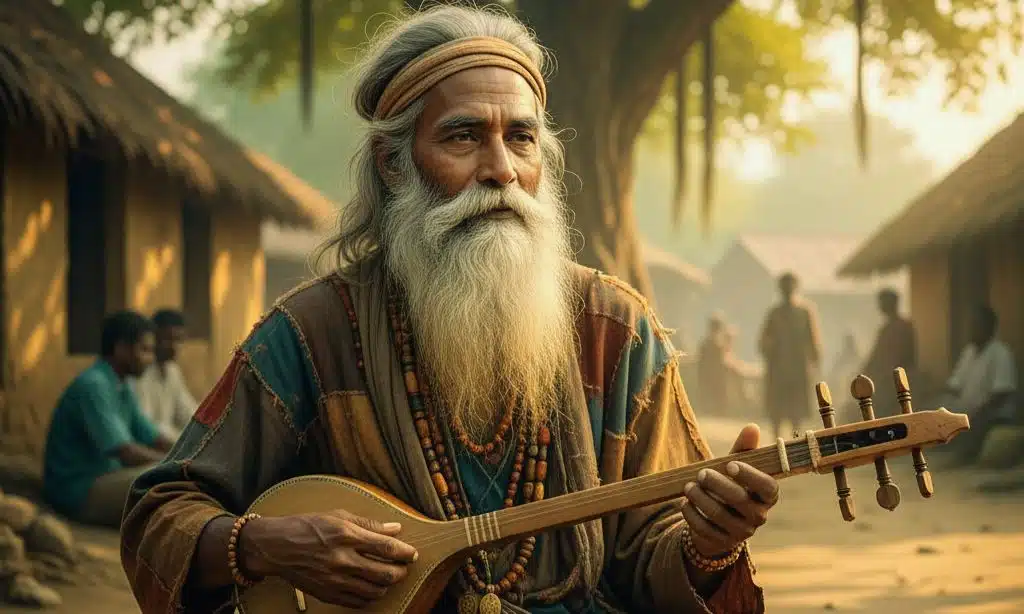
Baul songs are more than just music, they are a form of spiritual practice. Played on simple instruments like the one-stringed ektara and a small drum called the duggi, these songs were Lalon’s way of teaching.
He created an estimated 1,000 songs, though only about 800 are considered authentic by scholars today. A powerful example is “Khachar Bhitor Ochin Pakhi,” which translates to “The Unknown Bird in the Cage.”
| Lyric’s Symbolism | Meaning |
|---|---|
| The Cage (Khacha) | Represents the human body, a temporary vessel. |
| The Unknown Bird (Ochin Pakhi) | Represents the soul, or the “Moner Manush,” the divine essence that lives within. |
This simple metaphor captured his entire philosophy. Recognizing this value, UNESCO declared Baul songs a “Masterpiece of the Oral and Intangible Heritage of Humanity” in 2005, cementing their global cultural importance.
Themes of love, liberation, and unity
The central quest in Lalon’s music is the search for the “Moner Manush,” or the “Man of the Heart.” This is the divine spark that he believed exists inside every single person.
Finding this inner self was the true path to liberation, a freedom from the chains of societal rules and religious dogma. This message of unity deeply inspired some of Bengal’s greatest minds.
Nobel Prize-winning poet Rabindranath Tagore was one of Lalon’s earliest champions. In 1915, he published 20 of Lalon’s songs in the influential `Prabasi` magazine, introducing the unlettered mystic’s wisdom to the educated elite of Kolkata.
Poets like Kazi Nazrul Islam, known as the “rebel poet,” also drew on Lalon’s fierce call for breaking down all forms of oppression, both social and mental.
Legacy of Lalon Shai
Lalon’s voice didn’t fade when he passed away. Instead, it rippled outwards, touching poets on the other side of the world and fueling social movements that continue to this day.
Influence on modern thinkers and poets
The impact of Fakir Lalon Shah extends far beyond Bengal. His ideas found a surprising connection with the American Beat Generation.
In the 1960s, poet Allen Ginsberg traveled through Bangladesh and encountered Baul music. He saw a powerful parallel between the Bauls’ rejection of conformity and the counter-culture movement in the West. This led him to write the poem “After Lalon” in 1992.
Today, his influence continues in music. While traditional singers like Farida Parveen are known for their classic renditions, contemporary artists have brought his message to new generations. The Bangladeshi band Shironamhin, for example, blends Baul themes with rock music, showing the timeless appeal of Lalon’s call for freedom.
Lalon is much more than a historical figure, he is a living symbol of secular humanism in South Asia. His philosophy is often raised as a powerful local answer to rising religious intolerance.
This living legacy is most vibrant at his shrine. Every year, a massive three-day festival called the Lalon Mela is held in Kushtia. It draws hundreds of thousands of people who gather to sing his songs and celebrate his message of unity.
Organizations also carry his torch forward. The Lalon Academy, founded in 1963, works to preserve and promote his teachings. Even large NGOs like BRAC have used his songs in campaigns to promote social harmony and human rights in rural Bangladesh.
Depictions in Popular Culture
Lalon Fakir’s life story is so compelling that it has been told and retold in films, books, and art, keeping his spirit alive for new audiences across the globe.
Representation in films and literature
Lalon’s journey has been a natural fit for the big screen. Several films have explored his life, with two standing out.
- Lalon (2004): Directed by Tanvir Mokammel, this film is widely praised by critics for its historically detailed and authentic portrayal of the mystic’s life and philosophy.
- Moner Manush (2010): A more romanticized film directed by Goutam Ghose, it starred Prosenjit Chatterjee and became a huge commercial success. It won the prestigious Golden Peacock award at the 41st International Film Festival of India.
His story continues to be explored in literature as well. Beyond the novel by Sunil Gangopadhyay that inspired `Moner Manush`, academic works like “The Vagrant Singer” by Abul Ahsan Chowdhury provide deep insights into his life and the meanings behind his songs.
Lalon’s impact on contemporary art forms
You can find Lalon’s presence in the everyday art of Bangladesh. His iconic image, based on that single 1889 sketch, is a popular subject in the vibrant, colorful rickshaw art that fills the streets of Dhaka.
His music is constantly being reinterpreted. Farida Parveen, often called the “Queen of Lalon songs,” delivers powerful, traditional performances. In contrast, Anusheh Anadil and her former band Bangla created a folk-rock fusion that introduced Lalon’s rebellious spirit to a young, urban audience in the early 2000s.
From university halls to village fairs, the songs of Lalon Shah are a constant presence, a reminder of a man who dared to imagine a world without walls.
Takeaways
The voice of Lalon Shah still matters, perhaps now more than ever.
His simple songs cut through the noise, asking us to look past the labels we inherit and see the humanity in one another. His life is a powerful testament to the idea that you don’t need formal education or high status to possess profound wisdom.
Lalon’s journey proves that a single person with a song can challenge an entire society. He leaves us with a beautiful and bold question: what if we all realized we were singing the same song of life, just in different tunes?
FAQs on Lalon Shai
1. Who was Fakir Lalon Shah, and why do people call him a mystic poet?
Fakir Lalon Shah was a Bengali philosopher and social reformer whose spiritual songs rejected religious divisions to search for the divine, or “Moner Manush,” within every person.
2. How did Lalon Shah influence Bengali culture and other famous thinkers?
Lalon’s ideas on humanity became a cornerstone of Bengali culture, inspiring Rabindranath Tagore, who published his songs in the Prabasi journal, and Kazi Nazrul Islam. His influence reached American poet Allen Ginsberg, who later wrote a poem titled “After Lalon.”
3. What makes Lalon songs different from other spiritual songs?
Lalon songs use simple, everyday language to explore complex philosophical ideas from tantric traditions and the Gita. They often focus on the body as the center of the universe, making deep spiritual concepts accessible to everyone.
4. Did Advaita Acharya play any role in shaping Lalon Shah’s beliefs?
While not a direct student, Lalon was influenced by the spiritual climate shaped by figures like Advaita Acharya. His beliefs were a unique blend of ideas from Vaishnavism, Sufism, and Sahajiya Buddhism that were common in Bengal.
5. Why do people still listen to Baul music and talk about vote chori when discussing Lalon Shah today?
People still listen to Baul music because its messages about truth and unity are timeless. Modern issues like vote chori remind people of the social injustices Lalon sang against, making his call for fairness and honesty feel relevant.