
Sustainable community development is the foundation of a thriving, resilient, and eco-conscious society. As cities expand and environmental challenges grow, it is essential to create communities that balance economic growth, social equity, and environmental responsibility. A sustainable community is one that ensures a high quality of life for its residents, minimizes its ecological footprint, and promotes social inclusivity.
This article delves deep into the 10 key elements of a sustainable community development and how they contribute to a greener, healthier, and more self-sufficient future. Each of these elements plays a critical role in shaping a community that balances environmental responsibility, economic growth, and social equity.
From renewable energy adoption to waste management and green infrastructure, these key aspects define the foundation of a thriving, sustainable society.
By understanding these principles, policymakers, urban planners, and individuals can implement meaningful changes that lead to long-term sustainability, ensuring that future generations inherit a world that is not only livable but also prosperous and resilient.
What is Sustainable Community Development?
Sustainable community development refers to the strategic planning and management of a community to meet present needs without compromising the ability of future generations to meet theirs.
It integrates economic, environmental, and social factors to create balanced and resilient spaces.
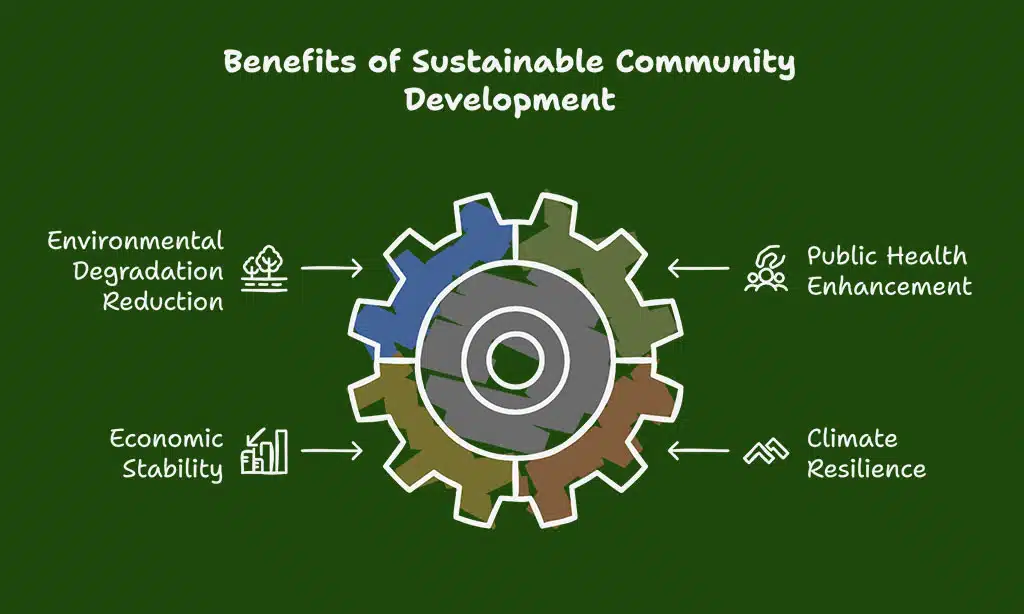
Benefits of Sustainable Community Development
- Reduces environmental degradation: By minimizing pollution and conserving natural resources.
- Enhances public health and well-being: Ensuring access to clean air, water, and green spaces.
- Promotes economic stability and job creation: Encouraging investment in green industries and local businesses.
- Strengthens community resilience to climate change: Through adaptation strategies and disaster preparedness.
- Improves overall quality of life: Providing equitable access to essential services and infrastructure.
10 Key Elements of a Sustainable Community Development
Sustainability is a cornerstone of modern urban and rural development, ensuring that future generations inherit communities that are not only livable but thriving. Sustainable community development incorporates environmental conservation, economic growth, social inclusivity, and responsible governance.
These elements work together to create a holistic approach that fosters resilience, innovation, and well-being for all residents. By integrating eco-friendly solutions and community-driven initiatives, sustainable development lays the groundwork for a healthier planet and a more equitable society.
1. Environmental Conservation and Green Spaces
Preserving natural landscapes and creating green spaces are fundamental to sustainable community development. These areas offer recreational opportunities, improve air quality, and enhance biodiversity.
Urban forests, parks, and community gardens help mitigate climate change, support mental well-being, and increase property values. Green infrastructure, such as permeable pavements and bioswales, plays a significant role in managing stormwater and reducing urban heat islands.
A sustainable community prioritizes environmental conservation by preserving natural landscapes, creating parks, and implementing reforestation projects. Green spaces improve air quality, reduce urban heat, and provide recreational areas for residents. They also play a critical role in biodiversity conservation and stormwater management.
Key Strategies for Environmental Conservation:
- Developing urban green belts and rooftop gardens.
- Implementing reforestation and afforestation programs.
- Protecting wetlands and coastal ecosystems.
| Conservation Initiative | Benefits |
| Urban Tree Planting | Reduces air pollution and cools urban areas |
| Green Roofs & Walls | Enhances insulation and biodiversity |
| Wetland Restoration | Prevents flooding and supports wildlife |
Example: Singapore’s Green Plan 2030 includes extensive green corridors and biodiversity parks to enhance sustainability.
2. Renewable Energy Integration
Switching to renewable energy sources is one of the most effective ways to reduce a community’s carbon footprint. Sustainable energy solutions, such as solar, wind, and hydroelectric power, help communities become energy-independent and lower electricity costs.
Governments and local authorities can introduce incentives for clean energy adoption and invest in smart grids for efficient distribution. The transition to green energy not only benefits the environment but also drives job creation in the renewable energy sector.
Transitioning to renewable energy sources, such as solar, wind, and hydro power, is crucial for reducing dependence on fossil fuels. This shift not only lowers carbon emissions but also decreases long-term energy costs.
Key Strategies for Renewable Energy Adoption:
- Installing solar panels on residential and commercial buildings.
- Developing community solar farms for shared benefits.
- Encouraging government incentives for clean energy adoption.
| Renewable Energy Type | Advantages |
| Solar Power | Reduces electricity bills and carbon footprint |
| Wind Energy | Provides a sustainable source with minimal land use |
| Hydroelectric Power | Generates consistent energy with water resources |
Case Study: Denmark generates over 50% of its electricity from wind energy, setting a global benchmark for renewable adoption.
3. Sustainable Infrastructure and Smart Cities
Developing smart, sustainable infrastructure ensures efficient use of resources while enhancing the quality of life. Cities that integrate green building designs, renewable energy, and digital technologies can minimize environmental impact and maximize efficiency.
Sustainable transportation systems, including electric buses and bicycle-sharing programs, help reduce congestion and pollution. By integrating data-driven solutions, smart cities optimize public services, leading to better energy management and waste reduction.
Sustainable infrastructure incorporates energy-efficient buildings, smart city technologies, and well-planned urban layouts to maximize resource efficiency.
Key Features of Sustainable Infrastructure:
- Smart grids to optimize electricity distribution.
- Integrated public transportation networks to reduce congestion.
- Energy-efficient building designs with smart sensors.
| Infrastructure Type | Benefits |
| Smart Buildings | Reduces energy consumption through automation |
| Green Transportation | Decreases reliance on fossil fuels |
| Water Recycling Systems | Conserves freshwater resources |
Example: Barcelona has implemented smart streetlights and waste collection systems to enhance urban efficiency.
4. Waste Management and Recycling Programs
A comprehensive waste management system is essential for sustainable communities. Implementing policies that promote waste reduction, reuse, and recycling can significantly lower landfill waste and pollution.
Advanced waste-to-energy technologies convert waste materials into renewable energy sources, contributing to a circular economy.
Encouraging residents to participate in composting programs and banning single-use plastics are effective strategies for sustainable waste management.
A sustainable community prioritizes efficient waste management to minimize pollution and maximize resource recovery.
Effective Waste Reduction Strategies:
- Implementing mandatory recycling programs.
- Promoting zero-waste lifestyles through education.
- Investing in waste-to-energy technologies.
| Waste Management Strategy | Advantages |
| Recycling Programs | Reduces landfill waste and conserves resources |
| Composting | Turns organic waste into nutrient-rich soil |
| E-Waste Recycling | Safely disposes of electronic materials |
Example: Sweden recycles over 99% of its waste, utilizing advanced waste-to-energy systems.
5. Water Conservation and Sustainable Use

Water is a critical resource, and sustainable water management is necessary for community resilience. Implementing water-saving initiatives, such as low-flow fixtures and rainwater harvesting, reduces overall consumption.
Smart irrigation systems help optimize water usage in agriculture and landscaping. Governments can introduce policies that encourage sustainable water use, ensuring a consistent and clean supply for future generations. Public awareness campaigns play a vital role in promoting responsible water consumption.
Communities must adopt innovative solutions to manage water consumption effectively.
Key Water Conservation Techniques:
- Installing rainwater harvesting systems.
- Using low-flow fixtures and smart irrigation.
- Implementing greywater recycling.
| Water Conservation Method | Benefits |
| Rainwater Harvesting | Reduces reliance on municipal supply |
| Greywater Recycling | Reuses water for landscaping |
| Smart Meters | Helps monitor and control usage |
Case Study: Cape Town reduced water consumption by 55% during its water crisis.
6. Affordable and Sustainable Housing
Ensuring access to sustainable, energy-efficient housing is crucial for social equity. Green housing incorporates eco-friendly materials, renewable energy sources, and innovative designs that lower energy costs and environmental impact.
Passive house designs optimize insulation and natural ventilation, reducing reliance on artificial heating and cooling. Governments can support sustainable housing projects through grants and tax incentives to make them more accessible to low-income families.
Green building designs and energy-efficient materials contribute to sustainability.
Features of Sustainable Housing:
- Use of eco-friendly construction materials.
- Incorporation of solar panels and energy-efficient appliances.
- Focus on passive house designs.
| Feature | Benefit |
| Green Roofs | Improves insulation |
| Bamboo Flooring | Sustainable and durable |
| Smart Windows | Reduces heat loss |
Example: Germany’s Passive House standard ensures ultra-low energy consumption homes.
7. Community Engagement and Participation
A truly sustainable community involves its residents in decision-making and local initiatives. Engaging the public through participatory urban planning, sustainability education programs, and volunteer opportunities fosters a sense of ownership and responsibility.
When people actively contribute to sustainability efforts, the community benefits from innovative solutions and stronger social cohesion.
Municipalities can create sustainability committees to work closely with residents and businesses in shaping eco-friendly policies.
Community involvement is essential for the success of sustainability initiatives.
Ways to Encourage Engagement:
- Hosting public sustainability workshops.
- Encouraging grassroots initiatives.
- Supporting local sustainability projects.
| Engagement Strategy | Outcome |
| Community Forums | Enhances participation |
| Volunteer Programs | Encourages civic responsibility |
| Local Green Events | Raises awareness |
Example: Curitiba, Brazil, actively involves citizens in urban planning.
8. Local Economic Development and Job Creation
A robust local economy is a key component of sustainable community development. Supporting small businesses, ethical trade, and green jobs fosters long-term economic stability.
Investments in renewable energy, sustainable agriculture, and eco-tourism generate employment opportunities while reducing environmental harm. Encouraging entrepreneurship and financial incentives for sustainable business practices help create a resilient economic foundation that benefits all community members.
A thriving local economy is crucial for sustainable community development. Economic resilience is achieved by promoting small businesses, green jobs, and ethical trade practices, ensuring long-term financial stability and sustainability.
Strategies for Economic Development:
- Supporting local businesses and cooperatives.
- Investing in green industries and sustainable agriculture.
- Encouraging ethical and fair-trade business models.
| Economic Initiative | Benefits |
| Green Job Programs | Creates employment in renewable energy and sustainability sectors |
| Local Business Grants | Encourages entrepreneurship and economic self-sufficiency |
| Ethical Supply Chains | Promotes responsible sourcing and fair wages |
Example: Portland, Oregon, has successfully created thousands of green jobs through sustainable economic policies and investment in renewable energy.
9. Education and Awareness Programs
Raising awareness about sustainability is critical for long-term change. Schools can incorporate environmental education into their curriculum, while businesses and local governments can host sustainability workshops.
Public outreach campaigns that promote responsible consumption, waste reduction, and energy efficiency empower individuals to make environmentally conscious choices. Higher education institutions can develop research programs focused on advancing green technologies and sustainable urban planning.
Education plays a vital role in fostering sustainable practices within communities. By increasing awareness and providing learning opportunities, residents can make informed decisions that support sustainability.
Key Educational Initiatives:
- Implementing environmental education in schools.
- Hosting community workshops on recycling and conservation.
- Encouraging sustainability certification programs for businesses and individuals.
| Education Strategy | Impact |
| School Sustainability Curriculum | Equips young learners with eco-conscious knowledge |
| Public Awareness Campaigns | Encourages behavioral change towards greener lifestyles |
| Sustainability Training for Businesses | Promotes corporate social responsibility |
Example: The United Nations Sustainable Development Goals [SDGs] emphasize sustainability education as a key driver for global change.
10. Public Health and Well-being Initiatives
A sustainable community prioritizes the physical and mental well-being of its residents. Access to clean air, nutritious food, safe drinking water, and recreational spaces is essential for maintaining public health.
Encouraging active transportation, such as walking and cycling, reduces pollution while promoting fitness. Mental health programs, wellness initiatives, and healthcare accessibility further contribute to the overall well-being of the community. A healthy population is the foundation of a thriving and sustainable society.
A sustainable community must prioritize the health and well-being of its residents by ensuring access to clean air, safe water, nutritious food, and mental health support.
Essential Public Health Strategies:
- Improving air and water quality through pollution control.
- Encouraging active transportation options like biking and walking.
- Providing access to mental health and wellness programs.
| Public Health Initiative | Benefits |
| Air Quality Monitoring | Reduces respiratory diseases |
| Urban Cycling Programs | Promotes fitness and reduces carbon footprint |
| Community Health Centers | Enhances access to essential healthcare services |
Example: Copenhagen, Denmark, has successfully implemented a bike-friendly infrastructure, reducing air pollution and enhancing public health.
Takeaways
Sustainable community development is a long-term commitment that requires a collective effort. By focusing on the 10 key elements of a sustainable community development, communities can transition toward greener, more resilient, and inclusive living environments.
Whether it’s investing in renewable energy, improving waste management, or promoting local businesses, each step contributes to a healthier planet and a better future for all.
It’s time to take action—support green initiatives, advocate for sustainability policies, and be a part of the change. A sustainable future starts with the choices we make today.