
In today’s world, where air pollution is a growing concern, finding ways to ensure cleaner indoor air is essential. Poor indoor air quality can cause health problems, including allergies, asthma, and fatigue. Fortunately, nature provides a simple solution: houseplants. Not only do they beautify your living spaces, but certain plants are known for their ability to purify the air by removing toxins and producing oxygen.
In this article, we’ll explore the eight best houseplants to improve air quality in your home, their benefits, and how to care for them effectively. Additionally, we’ll share practical tips for integrating these plants into your living spaces for maximum impact.
1. Areca Palm (Dypsis lutescens)
The Areca Palm, also known as the butterfly palm, is a popular choice for indoor spaces. This plant is a natural humidifier, making it ideal for homes in dry climates. It effectively filters toxins such as benzene, formaldehyde, and carbon dioxide from the air. Its lush, feathery fronds create a tropical ambiance that instantly uplifts any room.
Benefits:
- Improves air humidity levels, which is especially helpful for people with respiratory issues.
- Filters toxins like benzene and formaldehyde, common in household cleaning products.
- Enhances indoor aesthetics with its elegant foliage.
Care Tips:
- Light: Prefers bright, indirect sunlight but can tolerate partial shade.
- Water: Keep the soil moist but avoid overwatering as it can cause root rot.
- Temperature: Thrives in temperatures between 65°F and 75°F (18°C – 24°C).
Placement Ideas:
- Place in the living room or office for an aesthetic and functional air-purifying solution.
- Combine with other tropical plants for a cohesive décor theme.
Quick Facts Table:
| Feature | Details |
| Common Name | Areca Palm |
| Scientific Name | Dypsis lutescens |
| Air Quality Benefit | Removes toxins, humidifies air |
| Maintenance Level | Moderate |
2. Snake Plant (Sansevieria trifasciata)
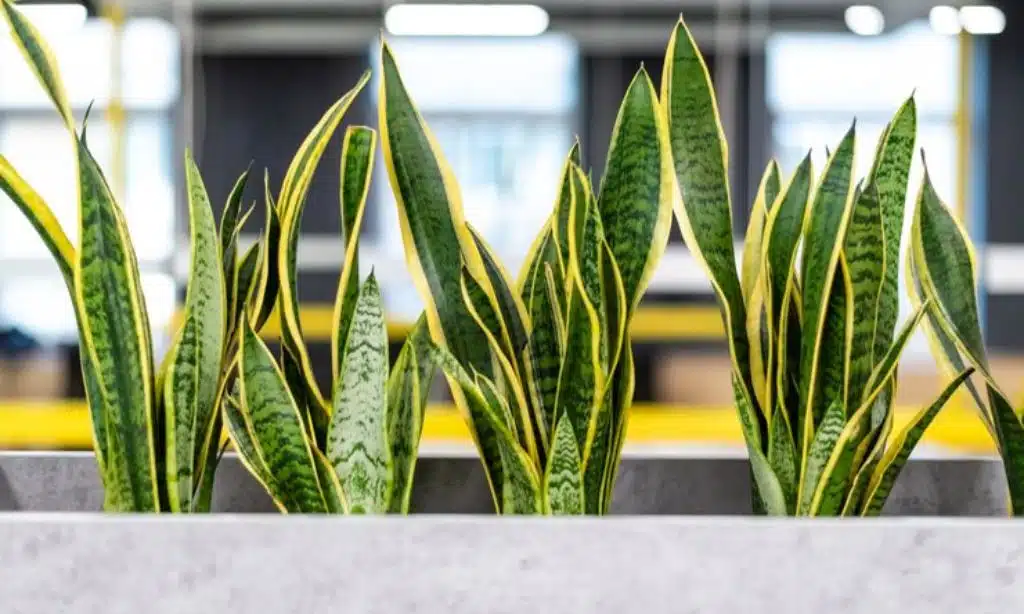
The Snake Plant, often called mother-in-law’s tongue, is a hardy and low-maintenance plant known for its air-purifying properties. It is particularly effective in absorbing carbon dioxide and releasing oxygen at night, making it perfect for bedrooms. Its upright, sword-like leaves add a modern touch to any room.
Benefits:
- Filters toxins like benzene, formaldehyde, and xylene, which are emitted by paints and furniture.
- Produces oxygen even at night, improving sleep quality.
- Tolerates neglect and low light conditions, ideal for busy individuals.
Care Tips:
- Light: Thrives in low to bright indirect light but grows slower in dim settings.
- Water: Water sparingly; allow soil to dry out completely between waterings.
- Temperature: Grows well in temperatures between 60°F and 80°F (16°C – 27°C).
Placement Ideas:
- Keep in the bedroom to benefit from its oxygen production during sleep.
- Use as a statement piece in minimalist interiors.
Quick Facts Table:
| Feature | Details |
| Common Name | Snake Plant |
| Scientific Name | Sansevieria trifasciata |
| Air Quality Benefit | Removes toxins, releases oxygen at night |
| Maintenance Level | Low |
3. Peace Lily (Spathiphyllum)
Peace Lilies are elegant plants with glossy green leaves and striking white blooms. They are excellent at removing toxins like ammonia, benzene, and formaldehyde, making them a favorite for improving indoor air quality. Their serene appearance makes them perfect for creating a calm and tranquil environment.
Benefits:
- Absorbs harmful toxins from the air, including ammonia found in cleaning products.
- Enhances humidity levels, reducing respiratory irritation.
- Adds a touch of elegance and simplicity to any room.
Care Tips:
- Light: Prefers low to medium indirect light but can bloom in brighter conditions.
- Water: Keep soil moist but not soggy; avoid letting it dry out completely.
- Temperature: Thrives in temperatures between 68°F and 85°F (20°C – 29°C).
Placement Ideas:
- Place in bathrooms to take advantage of its humidity-boosting properties.
- Use as a centerpiece on dining tables or coffee tables.
Quick Facts Table:
| Feature | Details |
| Common Name | Peace Lily |
| Scientific Name | Spathiphyllum |
| Air Quality Benefit | Removes toxins, humidifies air |
| Maintenance Level | Moderate |
4. Spider Plant (Chlorophytum comosum)
The Spider Plant is a resilient and fast-growing plant known for its ability to remove carbon monoxide, benzene, and formaldehyde from indoor air. It’s also non-toxic, making it safe for homes with pets and children. Its cascading leaves and small plantlets make it visually appealing.
Benefits:
- Removes harmful toxins effectively, including carbon monoxide from gas stoves and heating systems.
- Non-toxic to pets, making it a worry-free choice for animal lovers.
- Easy to propagate and maintain, great for beginners.
Care Tips:
- Light: Thrives in bright, indirect sunlight but tolerates low light conditions.
- Water: Water moderately; allow the soil to dry slightly between waterings.
- Temperature: Grows well in temperatures between 65°F and 75°F (18°C – 24°C).
Placement Ideas:
- Hang in baskets near windows for a cascading effect.
- Place in kitchens or hallways to combat toxins in high-traffic areas.
Quick Facts Table:
| Feature | Details |
| Common Name | Spider Plant |
| Scientific Name | Chlorophytum comosum |
| Air Quality Benefit | Removes carbon monoxide and benzene |
| Maintenance Level | Low |
5. Boston Fern (Nephrolepis exaltata)

Boston Ferns are lush, vibrant plants that act as natural air humidifiers. They are particularly effective at removing formaldehyde and xylene from the air. With their delicate, arching fronds, they bring a classic charm to indoor spaces.
Benefits:
- Filters out toxins and pollutants, including those from household cleaners.
- Increases humidity in dry spaces, reducing skin and respiratory dryness.
- Provides a soothing, tropical look that complements rustic or bohemian interiors.
Care Tips:
- Light: Prefers indirect sunlight or partial shade; avoid direct sun exposure.
- Water: Keep soil consistently moist; mist leaves regularly to maintain humidity.
- Temperature: Thrives in temperatures between 60°F and 75°F (16°C – 24°C).
Placement Ideas:
- Place in bathrooms or near humidifiers to maintain the right moisture levels.
- Use as a decorative plant in large pots for living rooms or patios.
Quick Facts Table:
| Feature | Details |
| Common Name | Boston Fern |
| Scientific Name | Nephrolepis exaltata |
| Air Quality Benefit | Removes formaldehyde and xylene |
| Maintenance Level | High |
6. Aloe Vera
Aloe Vera is not just a medicinal plant but also a powerful air purifier. It absorbs benzene and formaldehyde, making it an excellent addition to your home. Its gel-filled leaves are also well-known for their soothing and healing properties.
Benefits:
- Removes harmful chemicals like benzene and formaldehyde emitted by paints and cleaning agents.
- Provides soothing gel for skin care, burns, and minor cuts.
- Easy to maintain, making it a versatile option for all skill levels.
Care Tips:
- Light: Requires bright, indirect sunlight but tolerates direct sun for short periods.
- Water: Water sparingly; allow the soil to dry completely between waterings.
- Temperature: Grows best in temperatures between 55°F and 80°F (13°C – 27°C).
Placement Ideas:
- Place near windowsills for optimal sunlight exposure.
- Use in kitchens or bathrooms for its dual air-purifying and medicinal benefits.
Quick Facts Table:
| Feature | Details |
| Common Name | Aloe Vera |
| Scientific Name | Aloe barbadensis miller |
| Air Quality Benefit | Removes benzene and formaldehyde |
| Maintenance Level | Low |
7. Rubber Plant (Ficus elastica)
The Rubber Plant is an attractive option for improving air quality. It’s effective at removing carbon monoxide and formaldehyde while adding a bold statement to your decor. Its glossy, dark green leaves make it a striking centerpiece for any room.
Benefits:
- Absorbs harmful toxins, including formaldehyde from carpets and furniture.
- Improves oxygen levels indoors, creating a fresher atmosphere.
- Easy to grow in various lighting conditions, from medium light to partial shade.
Care Tips:
- Light: Prefers bright, indirect light but tolerates dimmer conditions.
- Water: Keep the soil slightly moist but avoid waterlogging.
- Temperature: Thrives in temperatures between 60°F and 80°F (16°C – 27°C).
Placement Ideas:
- Use as a statement plant in offices or living rooms.
- Combine with other houseplants to create a lush indoor garden.
Quick Facts Table:
| Feature | Details |
| Common Name | Rubber Plant |
| Scientific Name | Ficus elastica |
| Air Quality Benefit | Removes formaldehyde and carbon monoxide |
| Maintenance Level | Moderate |
8. Weeping Fig (Ficus benjamina)
Weeping Figs are elegant trees that thrive indoors and excel at removing airborne toxins such as benzene, formaldehyde, and trichloroethylene. Their cascading branches and delicate leaves make them a beautiful addition to any home.
Benefits:
- Eliminates a wide range of indoor pollutants, improving overall air quality.
- Adds an elegant touch to interiors with its tree-like structure.
- Helps reduce indoor allergens and dust levels.
Care Tips:
- Light: Prefers bright, indirect sunlight; avoid sudden changes in lighting.
- Water: Water when the topsoil feels dry; avoid overwatering to prevent leaf drop.
- Temperature: Thrives in temperatures between 65°F and 75°F (18°C – 24°C).
Placement Ideas:
- Place in entryways or living rooms for a warm, inviting atmosphere.
- Use in offices to boost air quality and enhance workspace aesthetics.
Quick Facts Table:
| Feature | Details |
| Common Name | Weeping Fig |
| Scientific Name | Ficus benjamina |
| Air Quality Benefit | Removes benzene and trichloroethylene |
| Maintenance Level | Moderate |
Takeaway
Houseplants not only enhance the aesthetics of your home but also provide numerous health benefits by improving indoor air quality. From the hardy Snake Plant to the elegant Weeping Fig, these plants can reduce toxins, increase oxygen levels, and create a healthier environment. Choose the plants that suit your lifestyle and home conditions, and enjoy the natural air purification they offer. Start your journey to a greener and cleaner home today with these incredible houseplants.