


In a groundbreaking scientific and technological achievement, Japan has shattered global internet speed records by achieving a data transfer rate of 1.02 petabits per second (Pbps) in a controlled laboratory setting.
The test was carried out by researchers from the National Institute of Information and Communications Technology (NICT) — a leading government research agency that focuses on future communication infrastructure and data technologies.
To grasp the magnitude of this breakthrough, consider this: at 1.02 Pbps, one could download the entire Netflix catalog in less than one second, or stream over 10 million ultra-HD 8K videos simultaneously without a hint of buffering.
But what really makes this feat impressive is not just the speed—it’s the potential for future scalability, the compatibility with current technologies, and the implications for the evolution of global digital infrastructure.
Understanding the Numbers: What Does 1.02 Petabits Per Second Mean?

Before diving into the technology behind it, let’s decode the terminology:
- 1 petabit = 1,000,000,000,000,000 bits (10^15 bits)
- 1.02 petabits per second (Pbps) = 1,020 terabits per second
- 1 byte = 8 bits, so we’re talking about roughly 127.5 terabytes per second
That’s not just fast — it’s exponentially faster than anything commercially available today.
To put it into perspective:
- According to the Ookla Speedtest Global Index (June 2025), the average internet speed worldwide is about 87 Mbps (megabits per second).
- The U.S. average fixed broadband speed is around 250 Mbps.
- Japan’s new record is over 10 million times faster than the global average.
The Technology Behind the Breakthrough
This milestone was achieved using an advanced optical fiber cable that contains 19 separate cores, as opposed to the single-core structure found in most commercial fiber cables today. Each core acts as an individual transmission path, meaning multiple data streams can run in parallel, significantly multiplying bandwidth.
Key elements of the experiment include:
- Fiber Length: 1,800 kilometers (~1,118 miles), simulating real-world long-distance networks.
- Core Design: 19-core fiber with low inter-core interference, enabling dense signal transmission.
- Transmission Technique: Researchers used wavelength-division multiplexing (WDM), combining multiple wavelengths (colors) of light to carry signals over each core simultaneously.
- Amplification: Optical amplifiers were used to regenerate the signal, minimizing data loss over long distances.
This method is not just faster — it’s also more efficient and adaptable than existing infrastructure. The 19-core fiber is physically compatible with current cable conduits, which may lower the barriers for commercial scaling in the future.
Why Is This Important?
This record isn’t just about bragging rights. The world is experiencing an explosion of data consumption—from video conferencing and cloud gaming to autonomous vehicles and AI training models.
Here’s why this matters:
- Cloud Infrastructure: Tech giants like Google, Amazon, and Microsoft are investing heavily in cloud ecosystems. This speed could significantly reduce latency and boost performance.
- Streaming & Entertainment: With higher-quality formats like 8K and VR becoming mainstream, ultra-fast networks are needed for seamless delivery.
- Scientific Computing: Fields like astronomy, genomics, and weather modeling require rapid data transfer between global research centers.
- Global Communication: Future undersea cables could use such fiber to deliver vastly faster international bandwidth.
- Smart Cities & IoT: 5G and future 6G networks will need robust backbones to handle billions of connected devices.
- Artificial Intelligence (AI): Training large AI models like GPT-4 or future successors requires rapid access to distributed data, which ultra-fast connections can enable.
What Does It Mean for the Average Internet User?
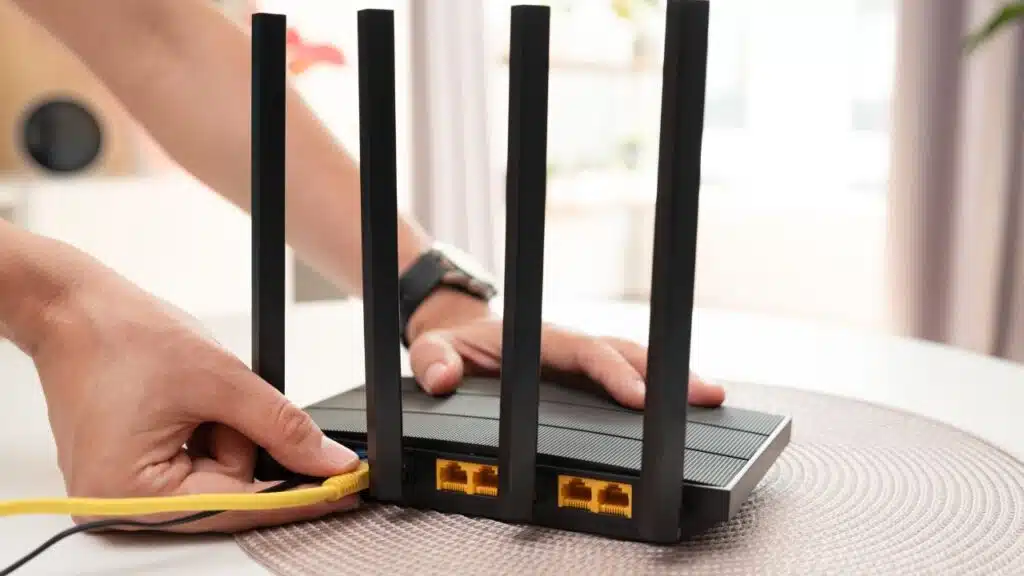
While this test was conducted in a lab under ideal conditions, the optical fiber used is not far removed from today’s commercial fiber-optic lines. This makes the breakthrough not just theoretical but practically promising for future deployment.
That said, don’t expect to get petabit speeds at home just yet. A few hurdles remain:
- High cost of deployment
- Need for new compatible network equipment
- Energy consumption and heat dissipation in large-scale systems
However, the fact that the tech is backward-compatible means telecom providers may integrate such systems into backbone networks—the high-capacity cables that serve as the foundation of the internet. Over time, this could trickle down to consumer networks, bringing faster speeds and more reliable service.
How Does This Compare Globally?
Japan has long been a leader in internet technology. This isn’t the country’s first record-setting achievement:
- In 2021, NICT achieved 319 terabits per second using a 4-core fiber.
- In 2023, researchers there developed prototypes for 6G communications, targeting speeds 10–100 times faster than 5G.
Other countries like the U.S., South Korea, and Germany are also investing in next-generation internet technologies, but Japan continues to outpace with academic and industry collaboration, government funding, and advanced infrastructure.
What’s Next? The Road to Commercial Use
Despite the excitement, commercial deployment is likely years away. Researchers emphasize that this achievement is an early-stage breakthrough, similar to how gigabit internet was once a lab experiment a decade ago.
Experts predict that:
- International backbone cables may be the first to adopt this fiber.
- Data centers and hyperscale cloud providers will push for early integration.
- 6G network design may include such multi-core fiber in its specifications.
As we step into an era of AI-generated content, real-time holograms, metaverse apps, and interplanetary data sharing, such speeds won’t just be desirable—they’ll be essential.
A Glimpse into the Future of the Internet
Japan’s successful test of 1.02 petabits per second internet speed is more than just a headline—it’s a technological preview of what’s coming next. While everyday users may not see these speeds at home anytime soon, the foundations laid by this innovation will shape the future of global internet infrastructure.
From smarter cities to faster cloud computing, real-time communication across the globe is about to get a major upgrade. Japan’s record reaffirms its leadership in high-speed internet innovation and opens new doors for reliable, lightning-fast connectivity across industries and continents.
The Information is collected from NDTV and MSN.
























