

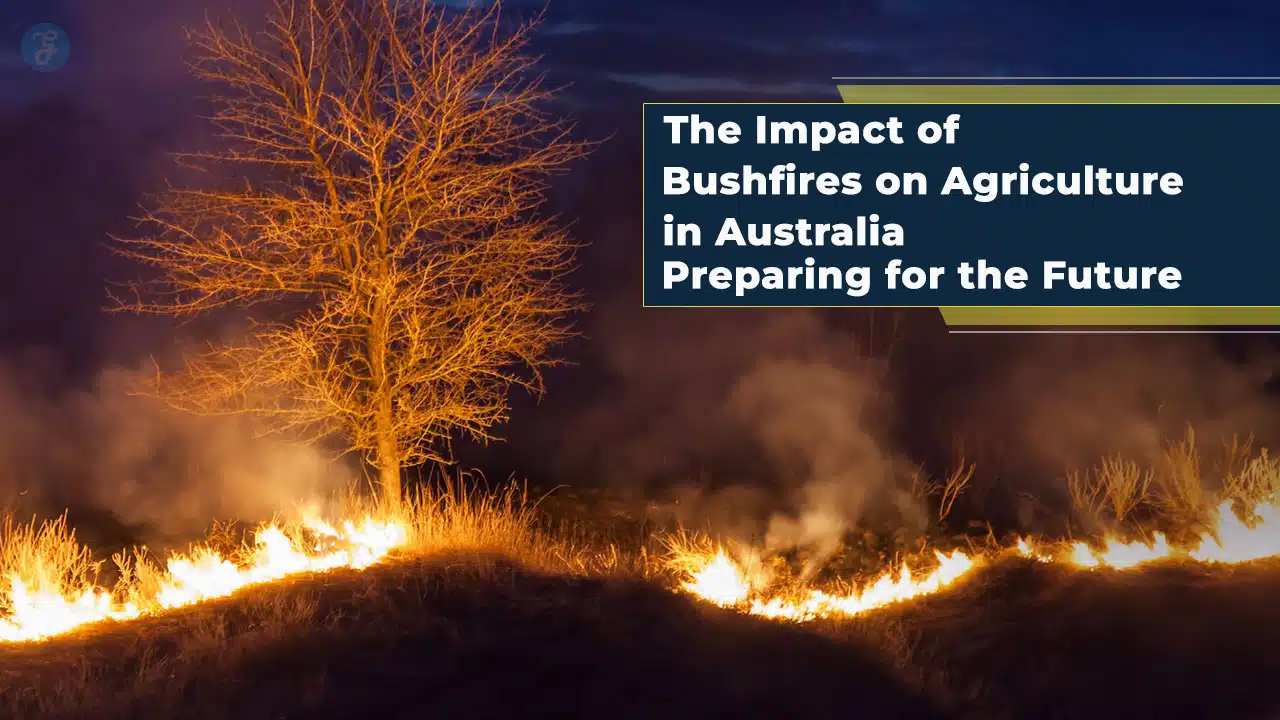
Many farmers watch the sky turn orange during bushfire season, and they dread the crackling heat that hits the fence line. They fear for their cattle, their crops, and their soil fertility.
Smoke from wildfires can foul the air quality and harm livestock. Dry spells make soils crack like old paint. Those threats can stall a whole food supply.
The 2019-2020 Black Summer fires burned ten million hectares in Australia. Those fires cost farmers billions and left fields bare. This post will guide you through satellite imagery, weather stations, and hazard reduction burning.
You will learn how to guard your soils, care for fine roots, and cut greenhouse gas emissions. Read on.
Key Takeaways
- The 2019–2020 Black Summer fires burned 10 million hectares. They cost farmers $4 billion to $5 billion in sheds, fences, and equipment damage. They also cost $2 billion in crop and livestock losses.
- Fires killed 25,000 sheep and cattle in New South Wales and Victoria. They killed more than 1 billion wild animals in total. They cut farm values by $2 billion to $3 billion and slashed 6%–8% of agricultural GDP.
- Blazes stripped topsoil and drove heavy erosion. They released billions of tons of greenhouse gases. They raised insurance costs and stalled seed germination.
- Farmers use CSIRO satellite heat maps, drones, weather stations, and fire-spread models. They spot hotspots early and lay firebreaks to guard sheds and fields.
- They do cultural burns, plant cover crops, and grow fire-resistant eucalypts. They build tree belts, till soil to hold water, and rebuild carbon stocks.
Economic Impacts of Bushfires on Agriculture
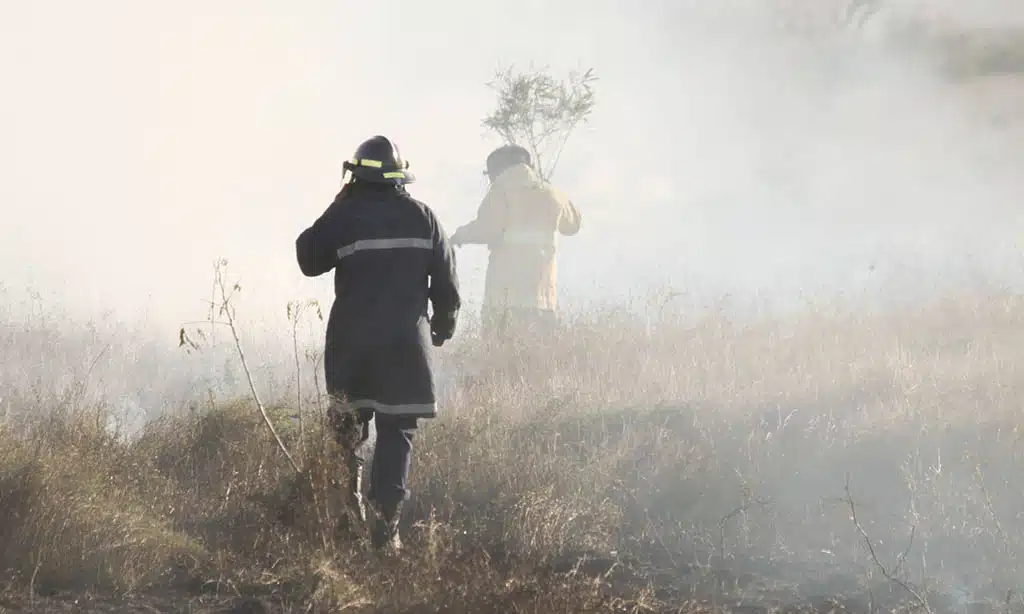
Blazing fires burn a farmer’s bottom line to ashes, denting Australia’s economic output. They puff up emissions and leave moisture gauges blinking red at barren fields.
Damage to farm infrastructure and equipment
Fires hit sheds, fences, pumps, and tractors like a sledgehammer. Flames warped steel gates, melted irrigation pipes, and singed storage tanks. Smoke and ash coated harvesters, and firebrands clobbered barns.
The toll reached $4 billion to $5 billion, or 6% to 8% of Australia’s agricultural GDP. Farm values fell by $2 billion to $3 billion as charred land scared off buyers.
Fires pump greenhouse gas emissions into the air, and they burn hotter under global warming. Shifting fire regimes now drive more ferocious blazes, and drier seasons make them last longer.
Farmers rely on unmanned aerial vehicles and orbital photos to spot hot spots, and lay down firebreaks to guard shed lines.
Loss of crops and livestock
Raging bushfires in Australia killed over 100,000 livestock. Farmers lost 25,000 sheep and cattle in New South Wales and Victoria alone. That wiped out 2% of the national herd. Combined damage to crops and livestock reached $2 billion.
Burned fields turned to ash, leaving no feed for cattle or sheep. Flames consumed seasonal crops, from wheat to vegetables, hurting Australian agriculture. Smoke released greenhouse gas emissions and fine particulate matter, worsening air pollution.
Farmers face bigger risks as climate change dries out soil water and heightens fire danger. Climate change keeps fueling hotter, drier seasons, adding stress to sustainable agriculture.
Decrease in farmland value
Flames slashed farmland values by $2 billion to $3 billion across Australia. Charred soil lost vital topsoil and carbon stocks. Buyers now avoid burnt paddocks, and insurers hike premiums.
Some farmers test cultural burning and prescribed burning to curb future risks.
Fires killed 100,000 sheep on Kangaroo Island, South Australia. That hit income hard and pushed land prices lower. Buyers fret over greenhouse gas emissions and climate variability and change.
Environmental Consequences
Flames bake dirt like toast, break its structure and speed erosion, starving plants of nutrients and shrinking carbon stocks. Farmers now fly drones for aerial mapping and feed that data into risk-management tools to spot weak spots and protect wildlife variety.
Soil degradation and erosion
Kilometers of fields lay exposed after dry spells in Northern New South Wales and Southern Queensland from April 2018 to December 2019. Farmers lost topsoil when wind and rain ran off bare paddocks.
Erosion funneled sediment into rivers and cut water quality. That damage hit plant growth at the root zone. Soil moisture plummeted and seeds failed.
Strong rains in January and February 2020 boosted soil moisture and helped the upcoming winter cropping season. Australian bushfires can strip vegetation and worsen erosion in a changing climate.
Farmers use tools and focus on soil moisture and precipitation data. They plan crop rotation and add organic matter to slow erosion and rebuild carbon stocks.
Loss of biodiversity and native vegetation
Bushfires razed sclerophyllous vegetation across native forests. They stripped plants that store carbon stocks and cut off photosynthates. Australia lost more than one billion animals in the 2019-2020 fires as wildlife collapsed with habitat.
Greenhouse gas emissions from those blazes tied to climate change now carry a $3 to $7 billion hit in carbon budgets and greenhouse gas accounting.
Bare ground invites soil erosion and plunges biodiversity. Prescribed burns help restore fire tolerance in young saplings. Conservation teams track losses in a greenhouse gas inventory, and firefighters map recovery zones.
Challenges to Livestock Health and Welfare
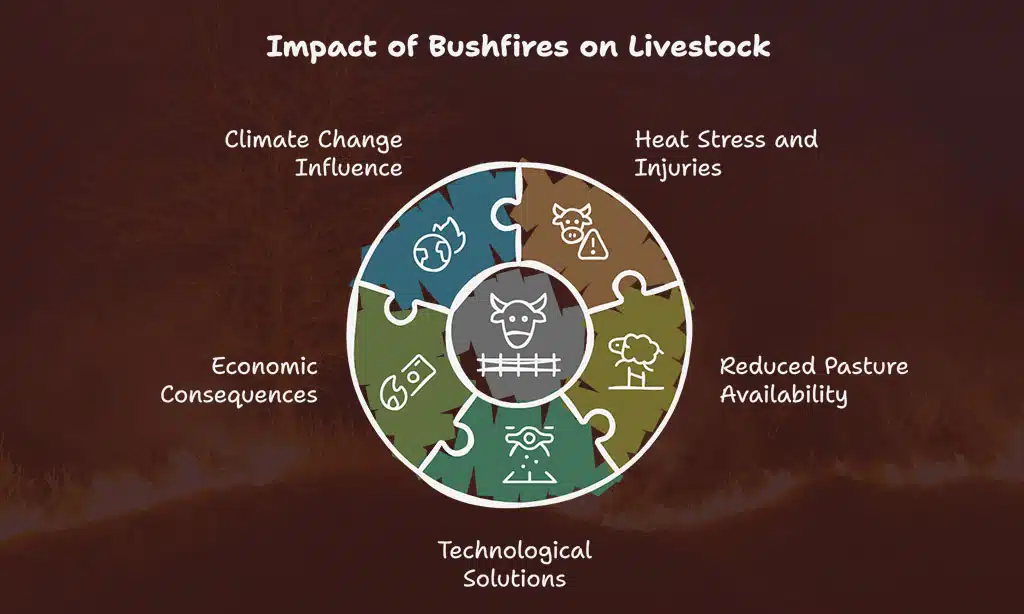
Blistering flames can singe cattle hooves, and they can choke on ash or smoke. Farmers fly drones and use thermal cameras to spot injured animals, speeding up vets and saving lives.
Heat stress and injuries to animals
The 2019-2020 bushfires killed over one billion animals. Farmers lost 25,000 sheep and cattle in New South Wales and Victoria. Blazing heat forced livestock to bolt across burnt paddocks, and many crossed grid fences and hurt themselves.
Satellite imagery and unmanned aerial vehicles helped spot heat stress and guide vets. Animal tracking collars sent real time alerts when heart rates spiked.
Burns on hooves and skin took a heavy toll. Dehydration hit under smoky skies full of fine particles from greenhouse gas emissions. Blazes drained carbon stocks and left paddocks bare.
Scientists link intense blazes to climate change. Ranchers raced in with water tanks and medic kits to save as many animals as they could. The damage dents australian agriculture and slices into gross domestic product.
Reduced pasture availability
Flames turned green fields to ash. Grazing ground shrank under heat stress. Farmers lost 100,000 sheep on Kangaroo Island. They saw 16% of their flock vanish. Drought conditions slowed grass from sprouting.
Better vegetation management could guard young shoots.
Pasture loss drives up feed costs. It forces ranchers to truck in hay. Long hauls spike greenhouse gas emissions. Farmers eye fuel reduction burning to protect regrowth. They count carbon stocks in soil too.
Climate change ramps drought risk in australia’s climate.
Strategies for Preparing for Future Bushfire Events
Farmers use orbital pictures and flying robots to spot hot spots before they flare up. They set small, planned fires, tap weather stations and heat sensors, and build fire barriers to keep crops safe.
Implementing fire-resistant farming practices
Indigenous cultural burns strip undergrowth fast, like a quick haircut. They clear fuel lines near fences and barns, and they cut fire speed. Field crews plant hardy shrubs that slow flames and hold water.
This practice adds to carbon stocks and cools soil.
Tilled soil holds more moisture after heavy rains, and it lets roots dive deep. Cover crops pull greenhouse gas emissions down, they cradle the earth. Tree belts built with native species also slice heat.
These steps help Australian agriculture stand up to forest fires and climate change.
Investing in early warning systems and technology
Farmers in southern Australia tap a satellite heat mapping system from CSIRO. This tool scans for hotspots, yet flags fires early. A fire spread model predicts flames and wind paths.
Fire teams win more than ten minutes to act. They move sheep and lock barn doors. These feeds link to climate change data.
Warning feeds also track carbon stocks loss and smoke plumes. The gear spots rising greenhouse gas emissions, and even flags plankton bloom near coasts. Growers chat with the network like a smart alarm.
The system feels like a sixth sense in farming. It guards fields, trees and farm gear.
Takeaways
Australia’s farmers face a fire-prone future, but they are not alone in this battle. With smart tech, cultural knowledge, and strong community ties, they are building back better — not just fences and fields, but their very resilience.
From drones and satellite imaging to fire-resistant crops and cultural burns, the agriculture sector is evolving. These actions not only protect farms and livestock but also help reduce greenhouse gas emissions and preserve biodiversity.
Bushfires may be a part of the Australian landscape, but so is the grit of its growers. As climate pressures rise, adaptation isn’t optional — it’s essential. With early warning systems, sustainable land practices, and shared knowledge, farmers can face each season with a plan, not just fear.
The road ahead will test every root, roof, and ridge. But with science, stewardship, and solidarity, Australian agriculture can continue to feed the nation — even when the sky turns orange
FAQs on Impact of Bushfires on Agriculture in Australia
1. How do regular bushfires harm australian agriculture?
They burn leaves, tree bark, and crops. They damage plant cells, plant root, and soil. They cut carbon stocks and raise greenhouse gas emissions.
2. Why do catastrophic bushfires grow in the australian climate?
A hotter world and climate warming dry our forests in the australian climate. These fires pop up like an uninvited guest. This is due to climate change and weak risk management. Scientists use environmental research and predictions to track fire risk.
3. How do bushfires change the food system and food sector?
Fires wipe out crops and trees. They strip fructose from fruits and harm biotic life in soil. They can tweak the flower gene and cut seed yield. They drive up food prices across the food system.
4. Can bushfire smoke harm your lungs?
Yes. Smoke has tiny soot that reaches the respiratory tract. It may trigger asthma or bronchitis. Kids and the elderly feel it most.
5. What role do forestry corporations play in bushfire management?
They prune forests, thin tree stands, and girdle sick trees. They add silvicultural steps to cut fire risk. They work with land owners on risk management plans.





















