
You put on your favorite earrings or a new bracelet, only to find your skin turning red and itchy hours later. It’s easy to overlook the materials in accessories, but for some, they can cause unexpected irritation. What starts as mild discomfort can quickly turn into persistent redness, itching, or even blisters.
Not all accessories are made with skin-friendly materials, and sensitivity varies from person to person. Recognizing early signs of irritation helps you make better choices without sacrificing style. Whether it’s nickel in jewelry or certain plastics in bags, knowing what to watch for can keep your skin comfortable while still letting your personality shine through.
Recognizing Skin Reaction Symptoms
Skin irritation from accessories can start subtly before becoming more noticeable. Redness is often the first sign, showing that your skin is reacting to a material. Itching or tingling may follow, signaling a problem. Swelling can also develop, making the affected area feel sore or tender. In some cases, prolonged exposure to an irritating material can lead to small blisters or dry, cracked skin, particularly in areas where accessories frequently rub against the skin, such as the wrists, earlobes, or neck.
If accessories often cause irritation, choosing brands that prioritize hypoallergenic materials can help. Some brands, like Cords Club, offer stylish, skin-friendly designs made from titanium, sterling silver, and other gentle materials. Sensitivities vary—while one person wears an accessory without issue, another may experience irritation. A common reaction is contact dermatitis, causing red, itchy patches that feel warm. Knowing your skin’s sensitivities helps you choose materials that work best.
Common Irritants in Jewelry and Accessories
Nickel is one of the most common causes of skin irritation and is often found in mixed-metal jewelry. Many people don’t realize they have a nickel sensitivity until they develop a rash or redness. Some plastics, especially those containing chemical additives, can also cause reactions. Metals like cobalt and chrome may trigger discomfort as well, so checking material labels before making a purchase is helpful.
Opting for accessories made from gentler materials, such as sterling silver, titanium, or pure gold, can reduce the risk of irritation. Some brands now offer coated jewelry with a protective barrier to prevent direct skin contact with potentially irritating metals. Paying attention to how your skin reacts to different items makes it easier to avoid problematic materials.
Preventive Measures for Sensitive Skin
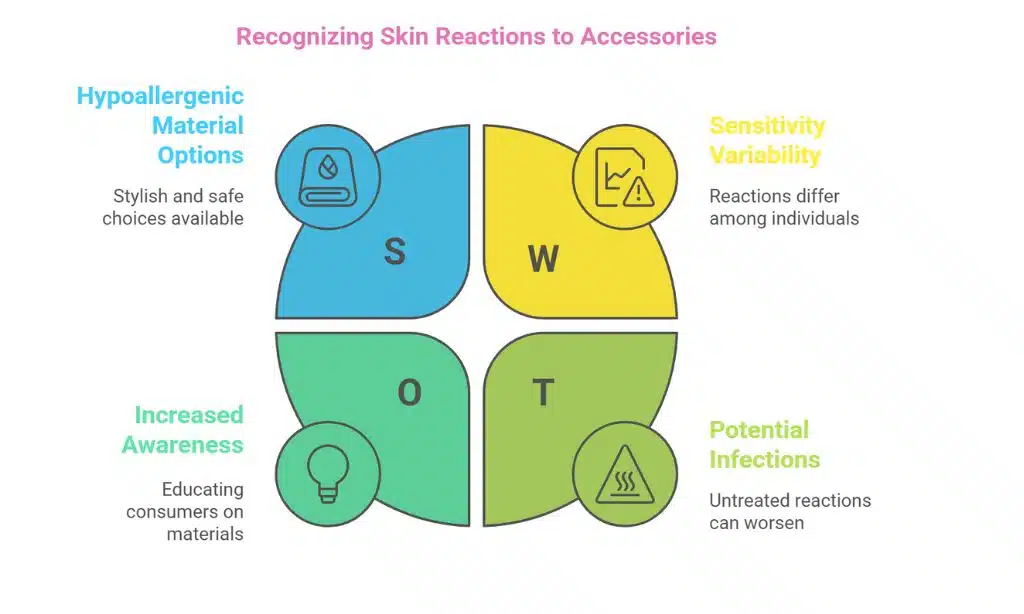
Choosing the right materials can make a big difference in preventing skin irritation. Hypoallergenic options, like titanium, gold, or surgical stainless steel, are less likely to cause reactions. These materials are carefully processed to remove common irritants, making them a safer option for everyday wear.
Proper care is just as important as material choice. Regularly cleaning accessories with mild soap and a soft cloth removes buildup that can cause irritation. Storing jewelry in a dry place helps prevent tarnishing and reduces the chance of skin reactions. When shopping, looking for brands that focus on skin-friendly materials can help you find better options.
What to Do If You Have a Skin Reaction
If you notice a skin reaction, taking quick action can help reduce discomfort. Start by removing the accessory and cooling the affected area with a damp cloth. This can help reduce redness and swelling. Applying over-the-counter creams with aloe vera or hydrocortisone may also provide relief. If itching continues, antihistamines might help.
Pay attention to how your skin responds to treatment. If symptoms don’t improve or get worse, stop wearing the accessory and consider consulting a dermatologist. Seeking professional advice is especially important if you experience frequent or severe reactions.
When to See a Dermatologist
If a skin reaction lasts several days or worsens, medical attention may be necessary. A rash that spreads, blisters, or shows signs of infection—such as warmth, pus, or increased pain—should not be ignored. In some cases, untreated infections can lead to more severe complications, like cellulitis, which causes deep tissue inflammation and may require antibiotics.
A dermatologist may ask about your symptoms and how long they’ve been present. Allergy testing could help pinpoint specific irritants, such as metals, dyes, or adhesives commonly used in jewelry. Some tests involve placing small patches containing potential allergens on the skin to observe reactions over a period of days. Professional assessment can provide clarity and guidance on how to prevent further reactions.
Wearing accessories should feel effortless, not irritating. If redness, itching, or swelling appears, the material could be the culprit. Nickel and certain plastics often trigger reactions, but switching to hypoallergenic metals like titanium, gold, or surgical stainless steel can help. Regularly cleaning and properly storing jewelry prevents buildup that may worsen irritation. If discomfort arises, remove the accessory, cool the area, and apply a soothing cream. For persistent or worsening reactions, consulting a dermatologist is a good idea. Paying attention to how your skin responds allows you to enjoy accessorizing with confidence, comfort, and a style that suits you.