You pick a niche. You publish fifteen articles. Three months later almost nothing ranks, and the two pages that do rank are the ones you spent the least time on.
I have been in that spot on my own site and on client sites. The problem is usually not writing quality. It is order, coverage, and the links between the pages. This is the process I now use to build topical authority on a new niche site, including the parts that did not work.
Google Has Said Very Little About This
Worth knowing before you spend three months on a plan.
Google has published exactly one thing with “topic authority” in the title. It came out in May 2023, and it is about news. It describes a system that decides which publishers are expert enough to surface for newsy queries in areas like health, politics, and finance. Danny Sullivan said afterwards that the system was not new and had been running for years.
That is the whole public record. Everything else people call topical authority is inference.
The 2024 Content Warehouse leak added some detail. Two attribute names in it, siteFocusScore and siteRadius, look like measures of how tightly a site sticks to one subject and how far a single page drifts from it. Names in leaked documentation are not confirmed ranking factors, so I treat them as a direction, not a rule.
The practical read is the same either way. Cover one subject properly and do not wander.
Pick a Niche You Can Actually Finish
Most new sites lose here before a single word is written. This step decides whether you can build topical authority on new niche sites at all.
I use one test. I open a document and write down every question a reader would ask about the subject. If I run out at fifteen, the niche is too small to hold a site. If I am still writing at four hundred, it is too broad for a new domain, and I will be publishing thin pages for a year.
Thirty to sixty real questions is the range I want. That is roughly nine months of steady publishing for one writer, and it is small enough that I can be the most complete source on it.
“Email marketing” is not a niche. “Email deliverability for Shopify stores” is. The second one has enough questions to fill a site and few enough that a new domain can finish covering them before a big site bothers to.
Map the Questions Before You Write Anything
Once the subject is set, I do a second pass on it. For every topic worth writing about, I write down the smaller questions someone has to answer first. Those sub-questions are what AI search breaks a query into when it goes looking for sources, and they are also what a reader half-knows before they arrive.
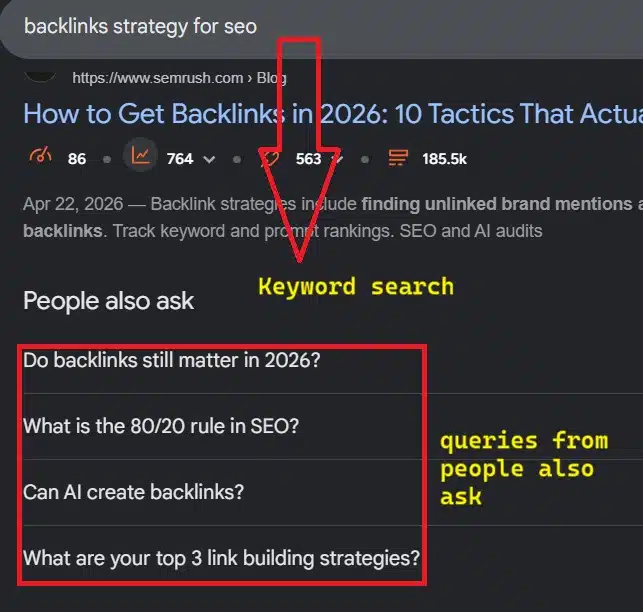
Where I get them:
- People Also Ask boxes, and the follow-up questions Google suggests inside AI Mode.
- Search Console queries with plenty of impressions and almost no clicks on any site I already run.
- Grounding queries in Bing Webmaster Tools. These are the search phrases Copilot writes for itself when it goes hunting for sources, so they show you how a machine rewords your topic.
- The pages already ranking are read for what they skip rather than what they cover.
That last one gives me the most. Big sites cover topics widely and shallowly. The gaps are specific, boring questions with real answers, and those gaps are where a new site can get picked up. I sort the finished list with a mix of spreadsheets and a couple of the AI tools people are using for serious research, mostly to group and deduplicate rather than to invent questions.
The Publishing Order I Use to Build Topical Authority on New Niche Sites
Most guides say to write the pillar page first. I did that on two projects. Both times the pillar sat there doing nothing for months.
A pillar page with no supporting articles under it is just a summary. There is nothing on your site for it to link down to, and nothing linking back into it. It reads like every other overview page on the subject, because that is what it is.
So I publish in the opposite order:
- Six to ten narrow, specific answers first. The boring questions nobody has answered well.
- The mid-level guides that sit above them.
- The pillar, written last, linking down into everything already published.
The pillar is a better page for waiting. By then I can see which of the narrow pages picked up impressions, so I know what readers actually ask instead of guessing.
Internal Links Do More Than People Expect
This is the cheapest work on the list and the one I see skipped most.
Automatic linking plugins drop links where the words match. That is not the same as sending value where you want it. The manual version takes about a weekend:
- List the ten to twenty pages you need to rank. Not every page.
- For each one, find pages on your site that already get clicks and cover something related.
- Add five to ten links from those pages into the target page, inside the body text, with anchor text that says what the page is about.
- Keep a sheet so you can see which targets are still thin on links.
On a client site with a few hundred pages, this was the fastest thing the in-house team could do without asking anyone for budget. It is also what makes a cluster read like a cluster instead of a folder of unrelated posts. Once the links are in, content optimization work on the individual pages starts paying back faster, because the pages are no longer sitting alone.
What I Saw on Our Own Site
In the middle of a keyword hunt for Editorialge, I opened Search Console and found impressions up on a batch of pages and clicks down on the same pages. My first thought was that we had been penalized. We had not. AI search was reading those pages and answering with them.
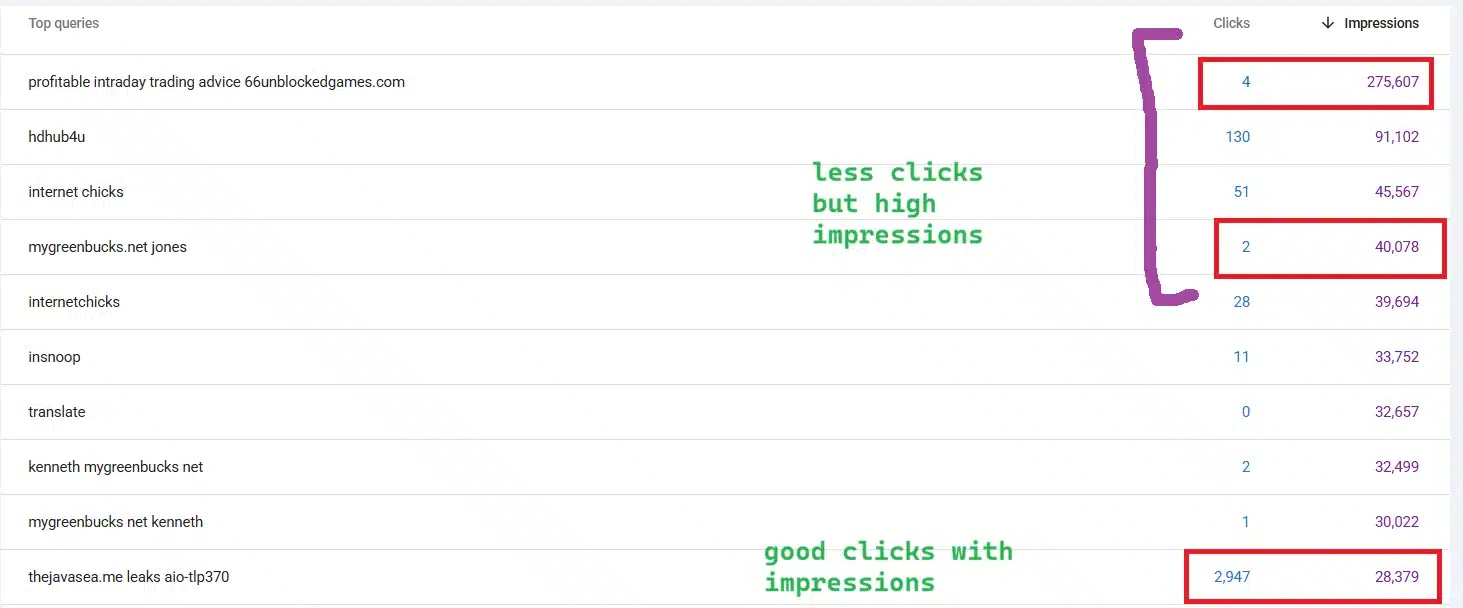
Two findings from that week changed how I plan a new niche.
Ranking is not the only door in. Ahrefs looked at 863,000 keywords and around 4 million AI overview URLs and found 38% of cited pages also ranked in the top 10 for that query. In their earlier run of the same study, that figure was 76%. The rest were spread from position 11 down past 100. A page nowhere near the first page of Google can end up quoted in the answer at the top of it.
Length is not the lever either. The same research found almost no relationship between content length and citation, and 53% of AI Overview citations went to pages under 1,000 words.
Both of those shape how I build topical authority on new niche sites now. You do not have to beat an established site at everything. You have to be the clearest source on one narrow question inside their topic. The full process, including the free tools I used to check it, is in how to get your content cited by AI search.
Keep it in proportion, though. seoClarity found 94% of AI Overviews still cite at least one URL from the top 20. Ranking has stopped being the only door. It has not stopped mattering.
Mistakes That Cost Me Time
Writing the pillar first. Covered above. It cost about two months on the first project I ran this way. Treating word count as effort. Some of our shortest, plainest pages are the ones getting used.
Publishing volume as a strategy. On one client site with close to 10,000 URLs, roughly 6,000 had zero clicks in twelve months. Not low. Zero. We merged what was worth saving and served a 410 on the rest. Clicks to the surviving pages rose about 35% inside two months, and nobody rewrote a word of them. Two months is a short window and some of that could be seasonal, so treat the number as a direction. It still stopped me ever telling a new site to publish more.
Checking Google and nothing else. Bing Webmaster Tools told me more about AI citation than Google did, and it was free the whole time.
Signs It Is Working Before Traffic Moves
When you build topical authority on new niche pages, results show up across a group of pages rather than on one keyword. What I watch in the first ninety days:
- Keyword spread. New pages start picking up impressions for queries I never targeted. This is the earliest signal and it arrives well before clicks.
- Indexing speed. New posts appear in search within days instead of weeks.
- Movement in groups. Three or four pages in the same cluster shift together after an update, instead of one page bouncing around on its own.
- Citations. If Bing Webmaster Tools starts showing your pages used inside AI answers, something is landing.
One warning about reading those numbers. Impressions rising while clicks stay flat is not automatically a problem now, and it is not automatically a win either. It is worth understanding how SERP layout affects organic clicks before you put those figures in front of a client or a manager.
Ninety days is the earliest I would judge any of it. Thirty is guessing.
Final Thoughts
The thing that makes this work is not volume. It is finishing. Most new sites stop at fifteen articles, which is roughly the point where nothing has connected yet and the whole thing looks like a failure.
If you want to build topical authority on a new niche site, pick a subject small enough to cover completely, publish the narrow answers before the big guide, and spend a weekend on internal links before you write anything else. Then leave it alone.
Screenshot your Search Console click report today. Do the work above. Screenshot it again in ninety days. That comparison will tell you more than any tool that claims to score your authority for you.