I found this by accident. In the middle of a keyword hunt for Editorialge, I opened Search Console expecting a normal report. Impressions were up on a batch of pages. Clicks were down on the same pages. My first thought was that something had broken. My second thought, which was worse, was that we had been hit with something. Neither was right. What I was looking at was AI search quietly reading our pages and answering them for us.
That week turned into a much longer piece of research, and this guide is what came out of it. It’s written for people running a small site on their own, because that’s the position most of us are in and most GEO advice is written for teams with a budget. Everything below uses tools you already have or can get free.
First, What GEO Actually is
GEO stands for Generative Engine Optimization. It means getting your pages used as a source when an AI answers a question. AI Overviews at the top of Google, AI Mode, ChatGPT, Copilot, Perplexity. All the same basic idea.
Here’s the part people skip. Google published official guidance on this in May 2026, and its position is that optimizing for generative AI search is optimizing for search, so it is still SEO. The AI features run on the same index and ranking systems as normal search, pulling live pages to build answers.
So nobody needs to throw out what they know. But the way you check your work has to change, and a few habits need adjusting. That’s what the rest of this is.
Step 1: Find out if AI already cites you
You can’t fix what you can’t see. Three checks, in the order I’d do them.
- Search Console: On June 3, 2026, Google added a separate report for generative AI, splitting out impressions from AI Overviews, AI Mode, and Discover for the first time. Two things to know before you get excited. It shows impressions only. No clicks, no CTR, no query data. And Google is rolling it out to some sites first while it tests things, so you may not have it yet. Mine took a while to show up.
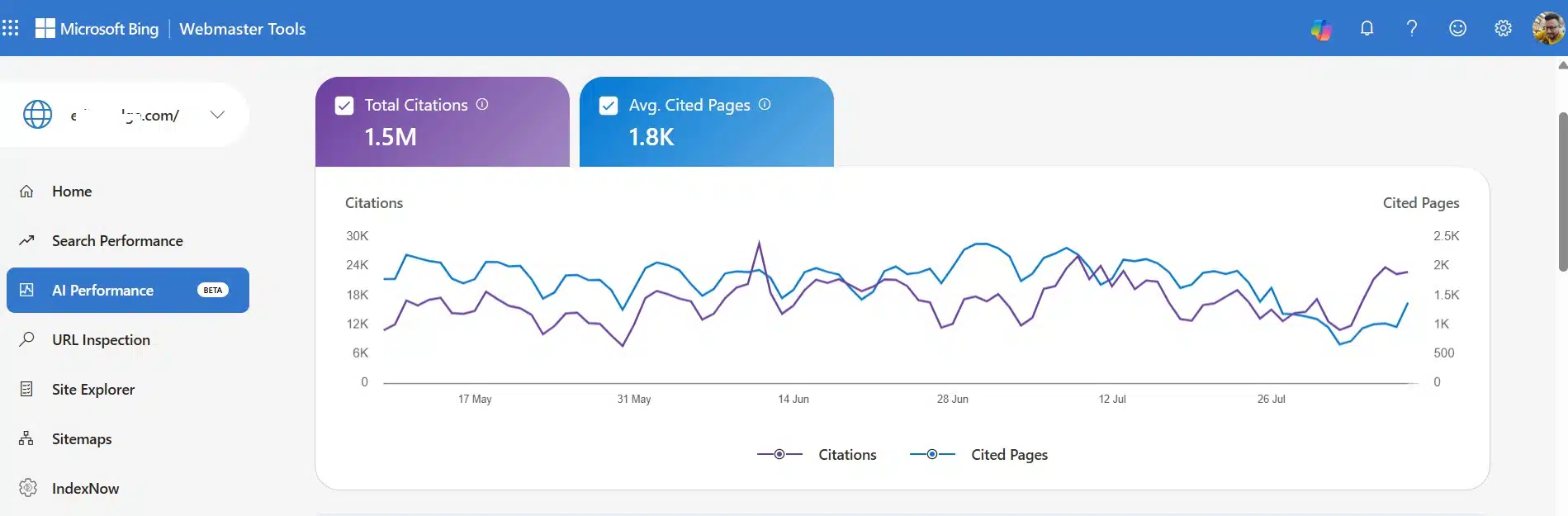
- Bing Webmaster Tools: This is the one most small publishers miss, and it’s free. Microsoft launched an AI performance report that shows how often your content was used inside AI answers. The useful bit is a thing called grounding queries. These are the search phrases Copilot writes for itself when it goes looking for sources. They are not what the user typed. Reading them is the closest thing to seeing how a machine rephrases your topic in its own words. Set your expectations properly, though. The grounding queries are a sample rather than the full list; the data covers several AI surfaces mixed together; it counts how often you were cited rather than how prominently; and it runs two to three days behind.
- Semrush or manual checks: Paid tools track your brand across AI platforms and save time. If you have no budget, open ChatGPT and Perplexity and ask them the ten questions your site is supposed to answer. Write down who gets cited. It’s slow and it’s not a proper sample, but it costs nothing and it will tell you something within an hour.
Step 2: Read impressions up and clicks down correctly
This is the pattern that started my whole search, so let me save you the panic I went through.
When AI answers a question using your page, you often get the impression without the click. The person got what they needed on the results page. Numbers back this up. One study of informational queries found organic click-through rate fell from 1.76% to 0.61% where AI overviews appeared, and Ahrefs measured a 58% drop in click-through rate for the top-ranking page by December 2025.
Two things follow from that.
Falling clicks with rising impressions is not automatically a penalty. It can be, so don’t get lazy about it, but check the AI reports before you assume the worst.
And being cited is still worth having. The same research found brands cited inside an AI overview get higher click-through rates than uncited brands on those same queries. The answer box takes clicks from everyone. Being named in it takes some back.
Step 3: Stop assuming your best pages are the cited ones
This was my biggest wrong assumption, and the data on it moved fast.
Ahrefs looked at 863,000 keywords and 4 million AI overview URLs and found 38% of cited pages also ranked in the top 10 for that query. In their earlier version of the same study, that figure was 76%. The rest split roughly evenly between positions 11 to 100 and pages ranking beyond 100.
Read that again. A page nowhere near the first page of Google can end up quoted in the answer at the top of it.
The reason is a process called query fan-out. Instead of taking your question as one thing, the AI breaks it into several smaller questions and goes looking for sources for each one. So a page that isn’t the best overall page on a topic can still be the best page on one small piece of it.
For a small publisher this is the most hopeful fact in this whole article. You don’t have to beat the big sites at everything. You have to be the clearest source on one narrow question inside their topic.
Worth keeping in perspective: seoClarity found 94% of AI Overviews still cite at least one URL from the top 20. Ranking hasn’t stopped mattering. It has stopped being the only door in.
Step 4: Chase questions, not just keywords
Here’s where the research changed how I do keyword work for Editorialge.
I used to pull a keyword list, sort by volume, and pick. Now I do an extra pass. For every keyword worth writing about, I write down the smaller questions someone would have to answer to answer the main one. Those sub-questions are what the fan-out is looking for.
Where I get them:
- The grounding queries in Bing Webmaster Tools, because those are literally machine-written sub-questions.
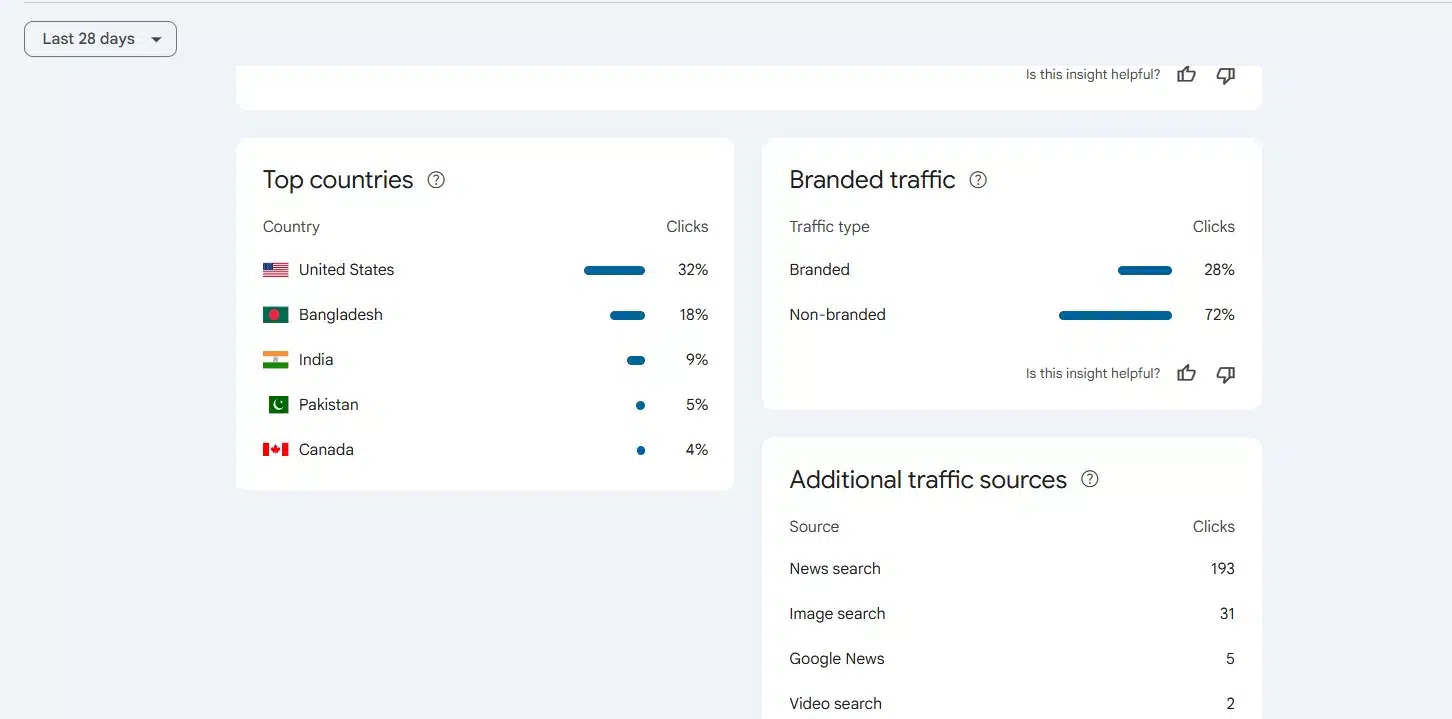
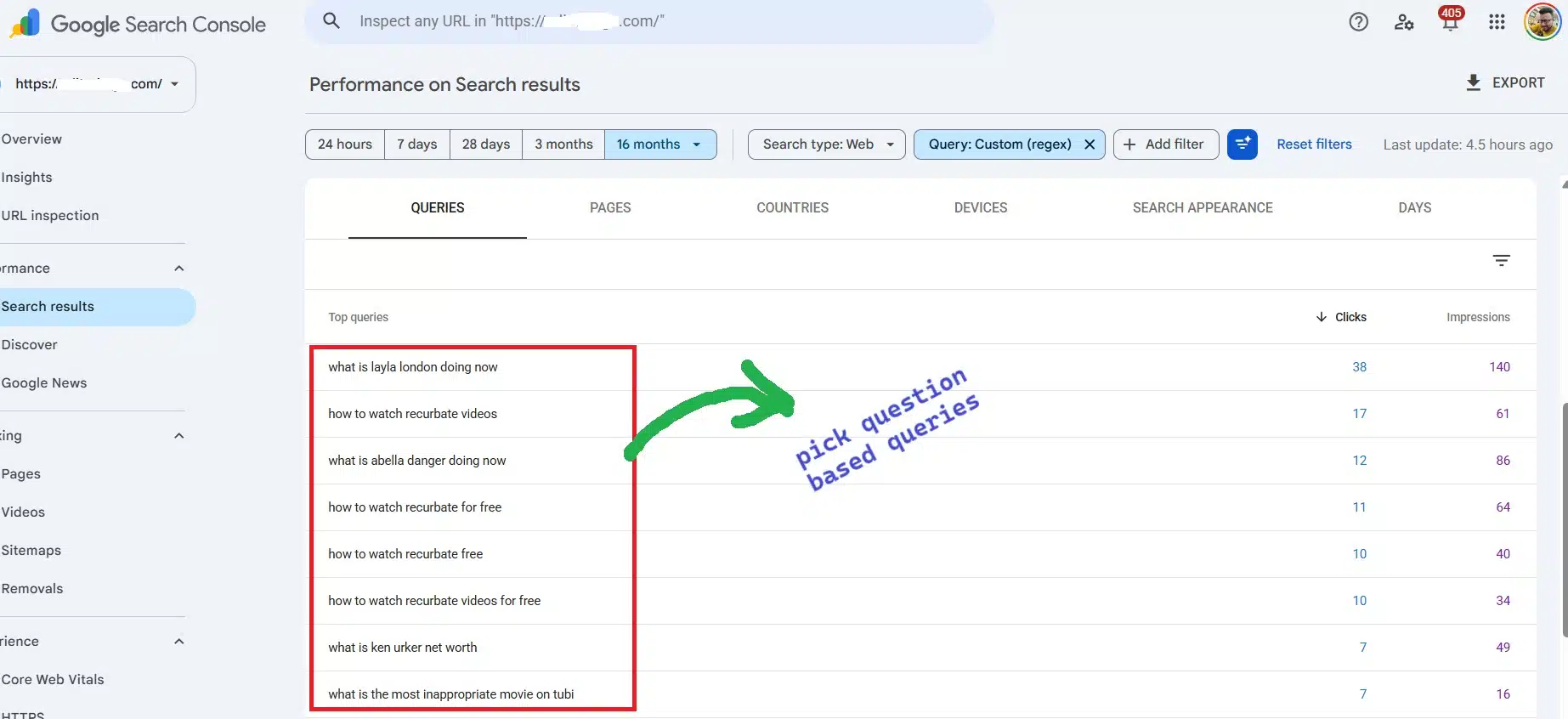
- Search Console queries with lots of impressions and almost no clicks. Those are usually questions being answered without me.
- People Also Ask boxes and the follow-up questions Google suggests inside AI Mode.
- The authority sites are already winning the topic. Not to copy them. I read their pages looking for the question they answer badly or skip.
That last one produced the most useful finding of my whole review. Big sites cover topics widely and shallowly. The gaps are specific, boring questions with real answers. Those gaps are where a small site can get cited.
Step 5: Write answers that can stand alone
An AI lifting your answer has no room for setup. If understanding your third paragraph requires reading your first two, it’s harder to use.
What worked for me:
- Put the answer in the first two or three sentences under the heading, then explain. Not the other way around.
- Make headings into real questions in the words people use.
- Keep each section about one thing. If a section answers two questions, split it.
- Don’t write “as mentioned above.” Repeat the small bit of context instead.
And here’s the fact that should make every solo blogger feel better. Ahrefs found content length has almost no relationship with citation, with a correlation of 0.04, and 53% of AI Overview citations went to pages under 1,000 words. The 3,000-word habit was never the point. Answering clearly is important.
Step 6: Give it something it can’t get anywhere else
If your page repeats what twenty other pages already say, an AI doesn’t need you. It can build that answer without naming anyone.
Google’s own guidance leans hard on this. It says content people find unique, compelling and useful will shape your presence in generative AI search more than any other suggestion in the guide.
For a small publisher, the things a model cannot assemble from other people’s pages are:
- Numbers you collected yourself, even small ones.
- Something you tested and the result, including when it failed.
- A screenshot of your own data.
- A dated observation. What you saw, on what date, and in what tool.
The whole reason this article exists is that I saw a strange pattern in my own search console. That’s not something you can research your way to. It’s the one type of content nobody can copy from you without crediting you.
Step 7: Check the machines can actually read the page
Boring and worth twenty minutes.
Load your page with JavaScript turned off. If the main text disappears, that’s your problem right there. AI retrieval works from crawlable HTML.
Check robots.txt. Make sure you haven’t blocked the crawlers that matter. GPTBot and OAI-SearchBot for ChatGPT; PerplexityBot; ClaudeBot; Google-Extended; and Bingbot, which feeds Copilot.
Verify your site in Bing Webmaster Tools even if you ignore Bing traffic. Bing’s index is what Copilot and ChatGPT retrieval lean on, so being missing there is a bigger hole than the traffic numbers suggest.
Keep normal structured data like articles and FAQs. Skip anything sold as AI-specific markup.
Step 8: Skip llms.txt
You’ll be told to add this file. Save your time.
Ahrefs studied 137,000 sites and found 97% of llms.txt files got no traffic at all in May 2026, and AI bots never went looking for the file on sites that didn’t have one. John Mueller compared it to the old keywords meta tag: a claim by the site owner about itself, which a crawler could just verify by reading the site directly. Gary Illyes confirmed Google doesn’t support it and isn’t planning to.
If you already have one, leave it. It does no harm and coding tools do use these files. Just don’t expect citations from it.
What I Got Wrong
I assumed a click drop meant a penalty. It cost me a week of anxiety and some pointless digging. I checked Google and nothing else for too long. Bing Webmaster Tools gave me better information about AI citation than Google did, and it was free the whole time.
I treated word count as effort. Some of our shortest, plainest pages turned out to be the ones getting used. I looked at referral traffic from AI tools, saw how small it was, and nearly wrote it off. The visits were few but the people who arrived actually read things. Small and interested beats big and bouncing.
Frequently Asked Questions (FAQs) on How to Get Your Content Cited by AI Search
1. How long does it take to get cited?
There’s no fixed answer, but nothing happens before the page is indexed and crawlable. Give a new page several weeks before you judge it, and check the AI reports rather than your traffic graph.
2. Do I need to rank on page one first?
It helps a lot but it isn’t required. Ahrefs found around 38% of cited pages ranked in the top 10, with the rest spread well below that. Being the clearest source on one narrow question is the realistic route for a small site.
3. Is GEO different from SEO?
Google’s position is that it isn’t, because the AI features run on the same ranking systems as ordinary Search. Treat GEO as a way of checking your work, not a separate job.
4. Which single tool should I start with if I only pick one?
Bing Webmaster Tools. It’s free, it shows citations, and the grounding queries tell you how AI reworded your topic, which nothing else gives you for nothing.