You know that feeling when the closet door opens and there’s nothing but a long stare back? The shelves are full, yet somehow there’s still nothing to wear. It’s frustrating. That daily standoff adds stress, drains money, and—perhaps surprisingly—takes a toll on the planet as well.
Many people find themselves stuck in this cycle, but there’s a better approach. Simplifying a wardrobe can actually create more time and save money. By curating a collection of fewer, well-loved pieces, getting dressed becomes one of the easiest parts of the day.
The steps below outline how to build a sustainable capsule wardrobe that looks great and feels even better. Grab a coffee, take a moment, and get ready to transform the closet into something lighter, simpler, and far more enjoyable to use.
What is a Capsule Wardrobe?
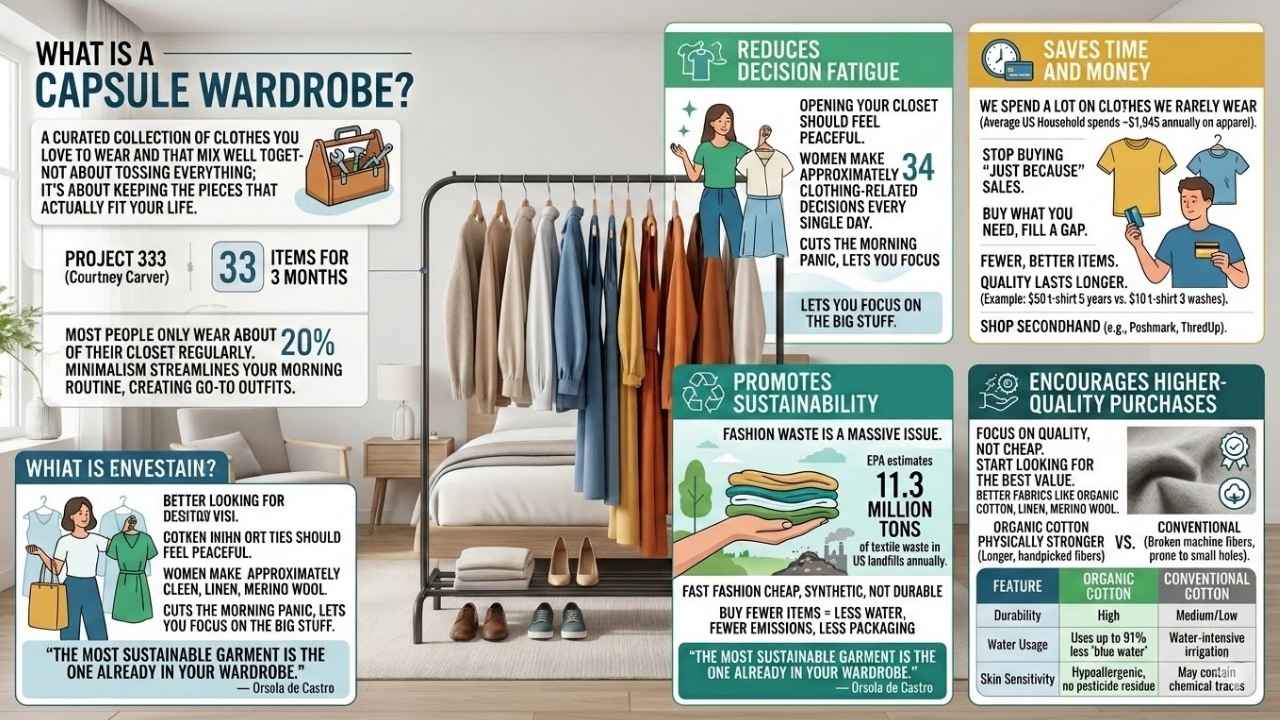
A capsule wardrobe is a curated collection of clothes that you love to wear and that mix well together. It isn’t about tossing everything you own; it’s about keeping the pieces that actually fit your life. Think of it like a toolkit: every shirt, pant, and shoe has a specific job and works with everything else.
The most famous framework for this is Project 333, created by Courtney Carver. The challenge? You dress with only 33 items for 3 months.
While that number might sound scary, most people only wear about 20% of their closet regularly anyway. This approach, often called “minimalism” by fans, streamlines your morning routine. Instead of digging through clutter, you have a set of go-to outfits ready to roll.
Plus, shopping secondhand or from ethical brands shrinks your carbon footprint immediately. It’s a simple shift that makes a massive difference.
Benefits of Building a Capsule Wardrobe
Building a capsule wardrobe is like giving your brain a break. You save cash, look sharper, and help the environment without needing to become a sustainability expert overnight.
Reduces Decision Fatigue
Opening your closet should feel peaceful, not like a pop quiz. When you have piles of mismatched fast fashion, your brain has to work overtime just to put a shirt and pants together. A capsule wardrobe removes that friction.
Studies show that women make approximately 34 clothing-related decisions every single day. That is a lot of mental energy spent before you’ve even had breakfast! By cutting down your options to a cohesive set, you reclaim that mental space.
Instead of wondering if that neon top goes with those patterned pants, you grab your favorite jeans and a high-quality tee, knowing they look great. It cuts the morning panic and lets you focus on the big stuff.
Saves Time and Money
We spend a lot of money on clothes we rarely wear. The average US household spends about $1,945 annually on apparel, often on impulse buys that sit in the back of the closet with the tags still on.
With a capsule approach, you stop buying things “just because” they are on sale. You only buy what you need to fill a specific gap. Since you are buying less, you can afford to buy better.
Higher-quality clothing lasts longer. A $50 t-shirt that lasts 5 years is cheaper per wear than a $10 t-shirt that warps after three washes. Plus, shopping secondhand on platforms like Poshmark or ThredUp can get you premium brands for a fraction of the retail price.
Promotes Sustainability
Fashion waste is a massive issue. In the US alone, the EPA estimates that 11.3 million tons of textile waste end up in landfills every year.
Fast fashion brands pump out cheap, synthetic clothes that aren’t designed to last. When you build a capsule wardrobe, you step off that hamster wheel. You buy fewer items, which means less water used, fewer carbon emissions from shipping, and less plastic packaging.
“The most sustainable garment is the one already in your wardrobe.” — Orsola de Castro
Encourages Higher-Quality Purchases
When you aren’t buying a new outfit every week, you can focus on quality. You stop looking for the cheapest option and start looking for the best value. This usually means better fabrics like organic cotton, linen, or merino wool.
For example, organic cotton isn’t just a buzzword; it’s physically stronger. Because it is often handpicked rather than machine-harvested, the fibers are longer and less broken, meaning your shirt won’t get those annoying little holes near the belt line after a few months.
| Feature | Organic Cotton | Conventional Cotton |
|---|---|---|
| Durability | High (Longer, handpicked fibers) | Medium/Low (Broken fibers from machines) |
| Water Usage | Uses up to 91% less “blue water” | Water-intensive irrigation |
| Skin Sensitivity | Hypoallergenic, no pesticide residue | May contain chemical traces |
Steps to Build a Sustainable Capsule Wardrobe
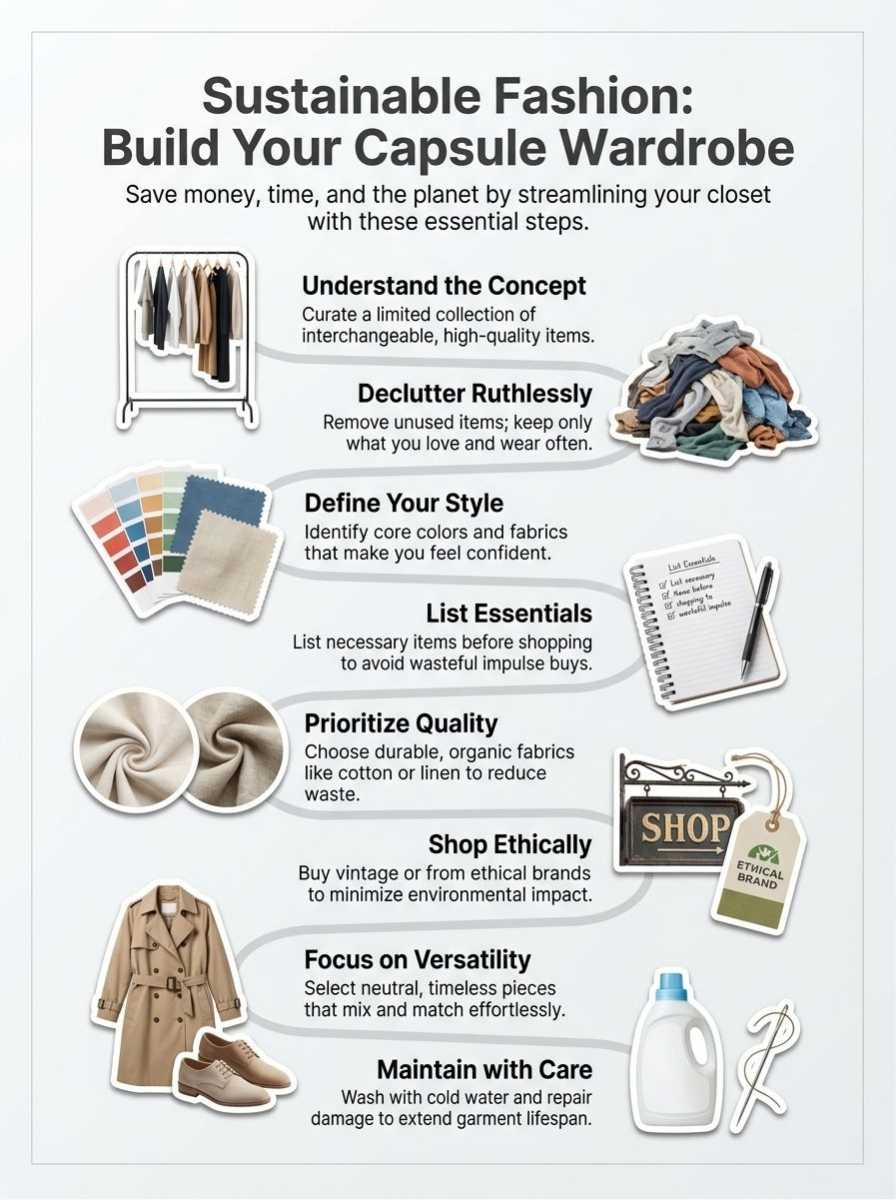
Building a sustainable capsule wardrobe starts with a bit of honest closet talk. You have to be willing to let go of the “maybe one day” items. Take small steps, stick to your personal style, and watch your daily routine get simpler.
Assess and Declutter Your Current Wardrobe
You can’t build something new on a shaky foundation. You need to see exactly what you have. This step is the most important part of the process.
- The Full Empty: Pull every single piece of clothing out of your closet and drawers. Put them in one big pile on your bed.
- The “Spark Joy” Check: Pick up each item. Do you wear it? Does it fit right now? If it pinches or itches, let it go.
- The Hanger Trick: If you aren’t sure what you wear, turn all your hangers backward. When you wear an item, put it back with the hanger facing the right way. After six months, donate anything still facing backward.
- Sort Responsibly: Separate items into “Keep,” “Repair,” and “Donate.” Be careful with donations—only donate clean, wearable items. Damaged textiles should go to a textile recycling bin, not the Goodwill pile.
Define Your Personal Style and Color Palette
Knowing your personal style stops you from buying things that look good on a mannequin but feel wrong on you. Your closet should reflect your real life, not a fantasy life.
Start by identifying your “uniform.” Look at your favorite three outfits—the ones you grab when you want to feel confident. What do they have in common? Are they loose and flowy? Structured and sharp? Neutral or bright?
Next, pick a color palette. A good capsule usually relies on:
- Base Colors: Black, navy, charcoal, or beige (for pants, jackets, shoes).
- Neutral Coordinators: White, gray, chambray, or cream (for tees, shirts, layers).
- Accent Colors: Two or three shades you love, like forest green, terracotta, or mustard (for scarves, statement tops).
If you struggle to visualize this, digital tools can help. Apps like Whering or Acloset allow you to upload photos of your clothes and digitally shuffle them to see what matches before you even try them on.
Make a List of Essential Items
Now that you know your style, write down exactly what you need. This prevents “panic buying.” A solid basic structure often follows a 5-4-3-2-1 rule for a season:
- 5 Tops: A mix of t-shirts, button-downs, and sweaters.
- 4 Bottoms: Jeans, trousers, or skirts.
- 3 Layers: Blazers, cardigans, or jackets.
- 2 Pairs of Shoes: One casual (sneaker), one dressy (boot or flat).
- 1 Special Item: A dress or jumpsuit for events.
Adjust this for your location. If you live in Chicago, your “layers” will be heavy wool coats and thermals. If you are in Phoenix, your “layers” might just be a light linen overshirt. The key is utility.
Invest in High-Quality, Sustainable Pieces
When you do need to buy something new, buy the best you can afford. Think of it in terms of “Cost Per Wear” (CPW). The formula is simple: Price of Item / Number of Times You’ll Wear It.
A $100 pair of jeans you wear 200 times costs you $0.50 per wear. A $30 pair you wear twice costs you $15.00 per wear.
Look for brands that back up their quality. Patagonia has an “Ironclad Guarantee” and will repair gear for you. Kotn works directly with Egyptian cotton farmers to ensure quality and fair wages. Eileen Fisher has a “Renew” program where they take back old clothes to resell or remanufacture.
Shop Second-Hand or From Ethical Brands
The most eco-friendly item is one that already exists. Shopping secondhand is the easiest way to cut your environmental impact in half.
Thrift stores are great, but online platforms make it easier to find specific sizes.
Pro-Tip: On sites like The RealReal or Poshmark, save searches for your favorite brands (e.g., “Madewell Vintage Straight Jean Size 28”). You’ll get notified when someone lists exactly what you want.
If you buy new, look for certifications. GOTS (Global Organic Textile Standard) ensures the fabric is organic and processed without toxic chemicals. Fair Trade Certified ensures the people making your clothes were paid fairly.
Focus on Versatile, Timeless Items
Trends fade; style remains. Avoid “loud” items that everyone remembers after one wear. Stick to classic shapes that have looked good for decades.
A white button-down shirt, a straight-leg pair of blue jeans, and a trench coat have been stylish since the 1950s. They aren’t going anywhere. When you buy timeless items, you aren’t racing against the clock of fashion trends.
Essential Items for a Sustainable Capsule Wardrobe
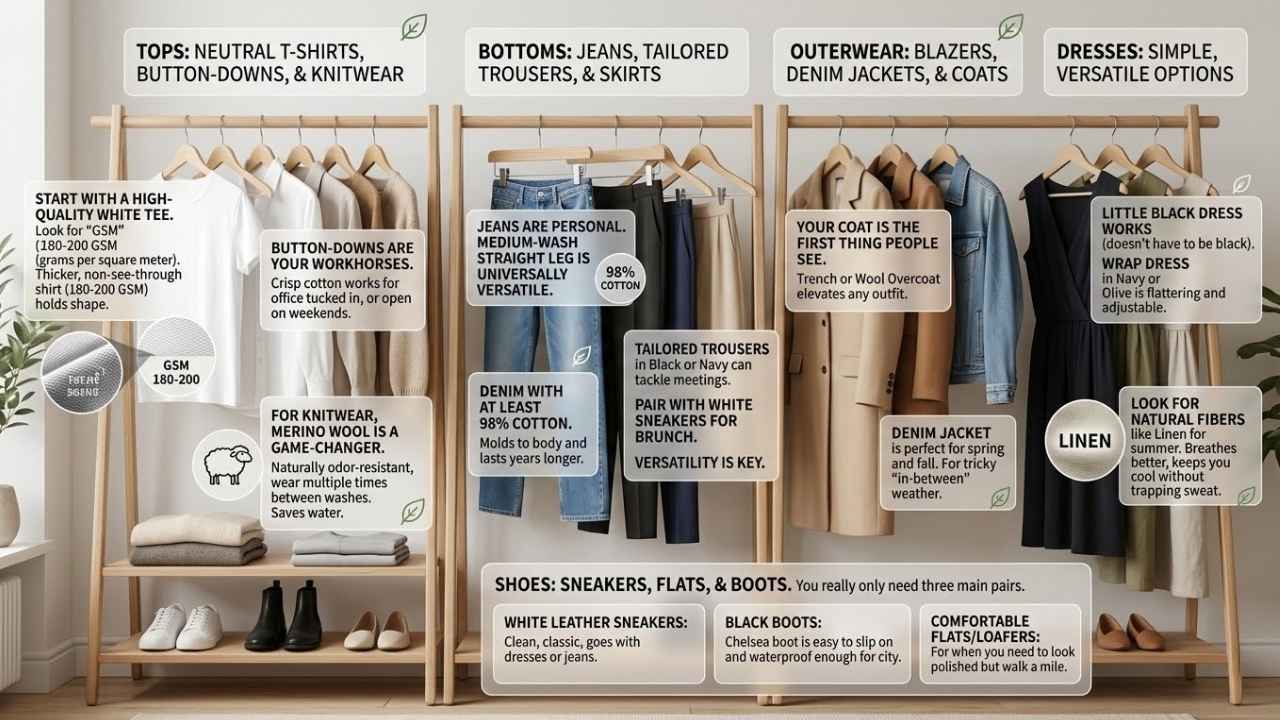
With the right pieces, getting dressed feels effortless. Here are the heavy hitters that belong in almost every closet.
Tops: Neutral T-shirts, Button-downs, and Knitwear
Start with a high-quality white tee. Look for “GSM” (grams per square meter) in the description if you are shopping online—a higher number (like 180-200 GSM) means a thicker, non-see-through shirt that holds its shape.
Button-downs are your workhorses. A crisp cotton shirt works for the office tucked in, or open over a tank top on the weekend. For knitwear, merino wool is a game-changer. It’s naturally odor-resistant, meaning you can wear it multiple times between washes, which saves water and keeps the fabric looking new.
Bottoms: Jeans, Tailored Trousers, and Skirts
Jeans are personal, but a medium-wash straight leg is universally versatile. Look for denim with at least 98% cotton; less stretch means they might feel stiff at first, but they will mold to your body and last years longer than super-stretchy jeggings.
Tailored trousers in black or navy can tackle any meeting, but pair them with white sneakers, and suddenly you are ready for brunch. Versatility is the name of the game.
Outerwear: Blazers, Denim Jackets, and Coats
Your coat is the first thing people see in winter, so make it count. A classic beige trench or a wool overcoat elevates even a sweatpants outfit. A denim jacket is perfect for that tricky “in-between” weather in spring and fall.
Dresses: Simple, Versatile Options
The “Little Black Dress” is a cliché for a reason—it works. But it doesn’t have to be black. A wrap dress in navy or olive is universally flattering and adjustable. Look for natural fibers like linen for summer; it breathes better than polyester and keeps you cool without trapping sweat.
Shoes: Sneakers, Flats, and Boots
You really only need three main pairs.
- White Leather Sneakers: Clean, classic, and goes with dresses or jeans.
- Black Boots: A Chelsea boot is easy to slip on and waterproof enough for most city weather.
- Comfortable Flats/Loafers: For when you need to look polished but still have to walk a mile.
Tips for Maintaining Your Capsule Wardrobe
Once you built it, you have to take care of it. A little maintenance keeps your favorites in rotation for years.
Wash and Care for Clothes Properly
Laundry is where clothes go to die if you aren’t careful. Washing in cold water cleans just as well as hot but saves energy and prevents shrinking.
Insider Tip: For synthetic items (like gym clothes), wash them in a Guppy friend bag. It catches the tiny microplastic fibers that shed during washing, stopping them from flushing into the ocean.
Also, skip the dryer whenever you can. High heat destroys elastic and fades colors. A simple drying rack is the best investment you can make for your wardrobe’s longevity.
Repair and Repurpose Items When Needed
A missing button isn’t the end of a shirt’s life. Learning a simple stitch can save you hundreds of dollars.
For a stylish fix, look into Sashiko. It’s a Japanese form of visible mending that uses white thread to create geometric patterns over holes. It turns a rip into a unique design feature, making your jeans one-of-a-kind. It’s practical, but many people find the repetitive stitching to be a form of active meditation.
Reassess and Adjust Seasonally
At the start of every season, do a mini-audit. Put your winter coats in storage bins to clear space for your summer linens. This keeps your closet from feeling stuffed and helps you rediscover clothes you haven’t seen in months—it’s like shopping in your own home!
Final Thoughts
Building a sustainable capsule wardrobe isn’t about deprivation; it’s about freedom. It’s about clearing out the clutter so you can actually see the clothes you love. By choosing quality over quantity and taking care of what you own, you save money, look better, and do a solid favor for the planet.
You don’t have to do it all this weekend. Start by turning those hangers around or picking just one category to sort through. You might be surprised at how much lighter you feel with a little less “stuff” weighing you down.
My own closet now saves me time every morning and cuts waste—small changes really do add up!