

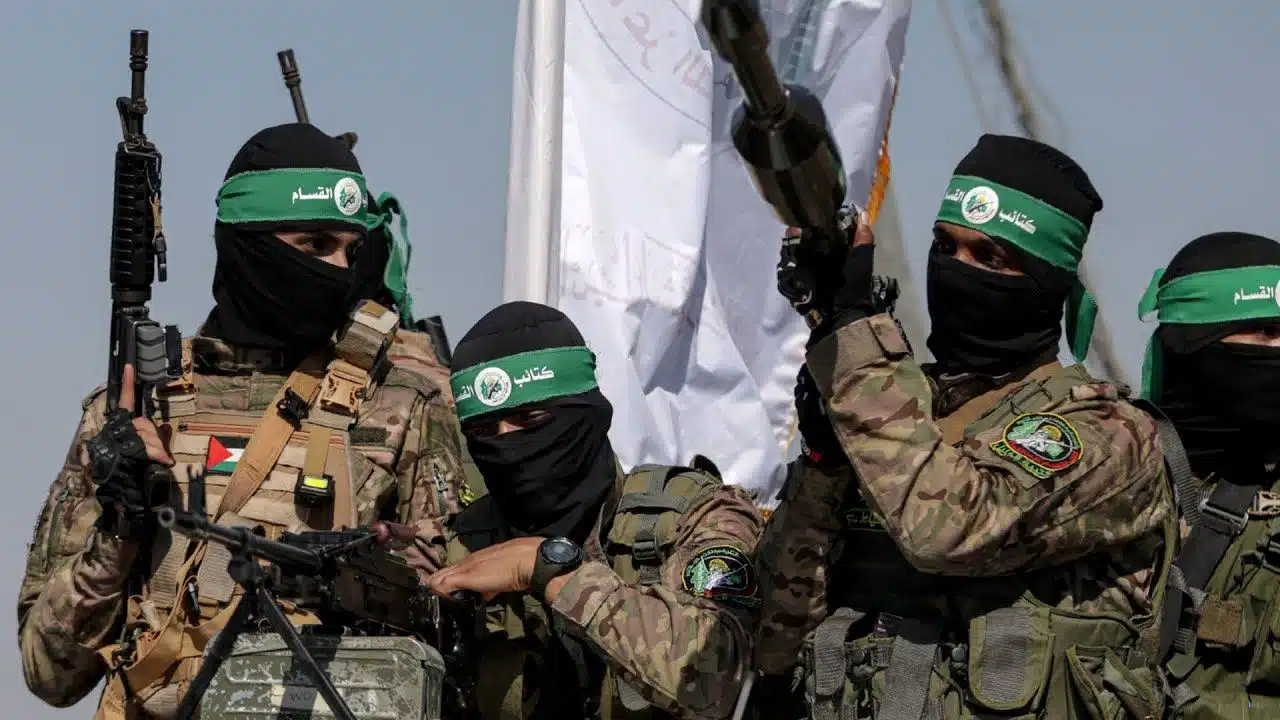
In a significant and rapidly developing move, Hamas announced Friday it has accepted core components of a comprehensive Gaza peace plan championed by U.S. President Donald Trump, including the release of all remaining Israeli hostages. The decision follows an intense diplomatic push and a stark ultimatum from the White House, potentially heralding an end to nearly two years of devastating conflict.
However, the Palestinian group’s acceptance is conditional, with senior officials stressing that crucial elements of the 20-point framework require further negotiation. The announcement, released just hours before a Sunday deadline set by President Trump, has been met with cautious optimism internationally, though the path to a lasting ceasefire remains fraught with complexities. There was no immediate official response from the Israeli government, which is largely observing the Sabbath.
The U.S.-brokered plan, unveiled by President Trump alongside Israeli Prime Minister Benjamin Netanyahu earlier this week, demands Hamas release all hostages, disarm, and relinquish power in Gaza. In return, it offers a phased Israeli withdrawal, the release of hundreds of Palestinian prisoners, and a massive international effort to reconstruct the war-torn enclave under a new transitional governance structure co-chaired by Trump himself.
The Proposal on the Table
The 20-point plan presented by the Trump administration marks the most detailed and forceful American intervention to end the conflict that began with Hamas’s attack on October 7, 2023. According to documents released by the White House and reported by multiple outlets, the core tenets of the deal are structured for immediate and sequential action.
- Immediate Ceasefire & Hostage Release: The plan calls for an immediate cessation of hostilities. Within 72 hours of Israel’s public acceptance, Hamas is to release all hostages. As of early October 2025, an estimated 48 hostages remain in Gaza, though Israel believes only around 20 may still be alive.
- Prisoner Exchange: Upon the return of all hostages, Israel would release a significant number of Palestinian prisoners. The reported figures include 250 prisoners serving life sentences plus 1,700 Gazans detained since the conflict began.
- Hamas to Cede Power & Disarm: The framework demands that Hamas relinquish all governing authority in the Gaza Strip. Members who “commit to peaceful co-existence” and decommission their weapons would be granted amnesty, with provisions for safe passage to other countries for those who wish to leave. Crucially, Hamas’s Friday statement made no direct mention of disarming, a point an official later flagged as needing negotiation.
Hamas’s Calculated ‘Yes, But…’
In its official statement, Hamas declared its acceptance of the plan’s “formula” for the hostage and prisoner exchange and expressed readiness to “hand over the administration of the Gaza Strip to a Palestinian body of independents (technocrats).”
However, the group emphasized the need for mediators to work through the “details” and “necessary field conditions.” This nuanced position was further clarified by Mousa Abu Marzouk, a senior Hamas official. Speaking to Al Jazeera, he noted that a 72-hour timeline for releasing all hostages, including locating the remains of the deceased, might be impractical.
“Trump’s proposal cannot be implemented without negotiations,” Abu Marzouk stated, as reported by the Associated Press. He also raised concerns about the plan’s language regarding the elimination of “terrorists,” asserting that Hamas views itself as a “national liberation movement.”
This conditional acceptance is seen by analysts as a strategic move. “Hamas has to choose between the bad and the worst,” said Mkhaimar Abusada, a Gaza-based political scientist. “If they say ‘no’, as Trump has made clear, that will not be good… They will say ‘yes, but we need this and that’.”
International Reaction & What to Watch Next
The U.S. proposal and Hamas’s subsequent response have drawn a flurry of international reactions. Key Arab mediators, including Egypt and Qatar, have been urging Hamas to accept the deal. The plan has been welcomed by the UK, France, and a joint statement from Saudi Arabia, Jordan, the UAE, and Egypt, all expressing readiness to “cooperate positively” with the U.S.
The Palestinian Authority, based in the West Bank, has also welcomed the plan, vowing to undertake the reforms demanded by the U.S. as a precondition for eventually reassuming control over Gaza.
The critical next steps will unfold over the coming days:
- Mediator-led Negotiations: Intensive talks, likely in Cairo or Doha, are expected to begin immediately to hash out the contentious details, particularly the timeline and mechanics of Hamas’s disarmament and the composition of the proposed international stabilization force.
- Israel’s Official Response: While Netanyahu has backed the plan’s framework, his far-right coalition partners have previously opposed any deal that does not guarantee the complete eradication of Hamas. The Israeli government’s formal response to Hamas’s conditional acceptance will be pivotal.
- On-the-Ground Implementation: Should a final agreement be reached, the logistics of a ceasefire, hostage transfer, Israeli withdrawal, and the immediate surge of humanitarian aid will present monumental challenges. The plan mandates at least 600 aid trucks per day.
The coming hours and days will be a critical test of a high-stakes diplomatic gambit. President Trump has staked significant political capital on ending the war, while for the people of Gaza and the families of the hostages, the outcome represents a potential, albeit fragile, dawn after nearly two years of darkness.





















