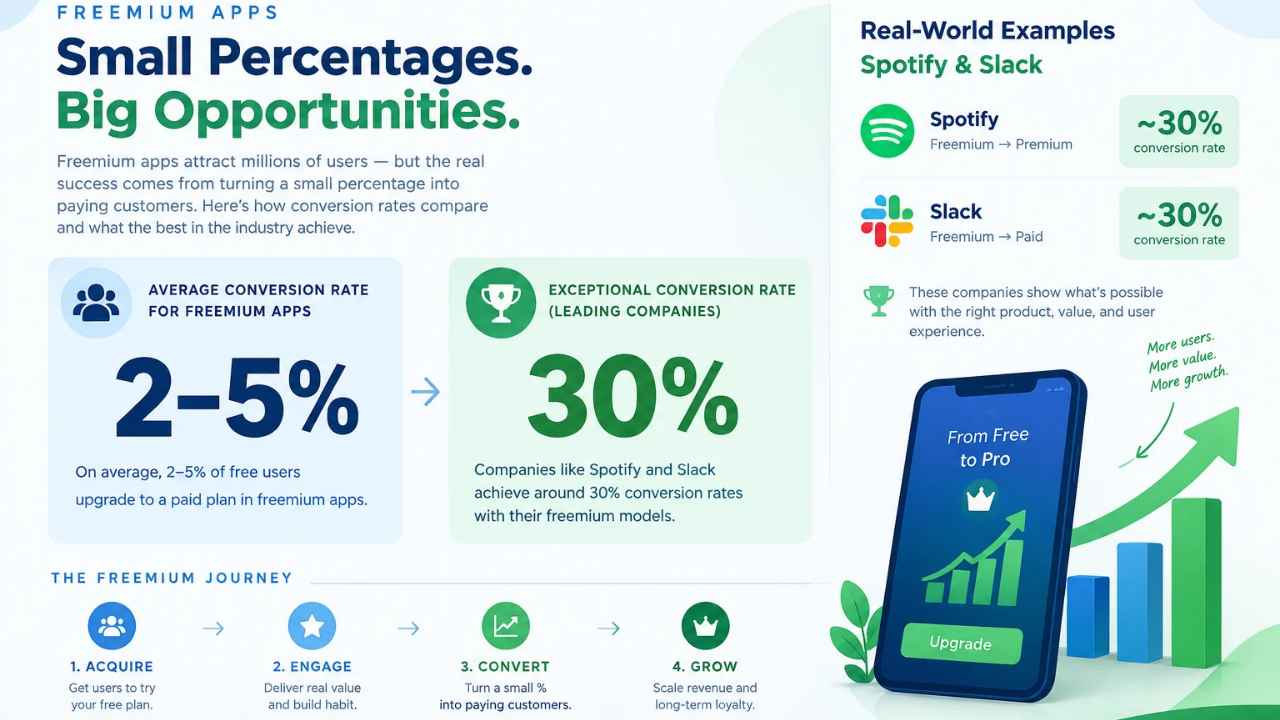
You have a free plan. People sign up. Only a few of them pay. The real question is whether “a few” is normal or a problem. A good conversion rate for freemium apps is about 3% to 5% of free users becoming paying customers for most SaaS products. For AI products, good is closer to 6% to 8%. Mobile subscription apps usually convert around 2% of downloads.
I’m the chief technical advisor at ImagineLab Art, an AI creative platform with a credit-based free plan. At Editorialge, we also run 15 free micro-SaaS tools that have no paid tier at all. Working with both has taught me one thing: a benchmark only helps if you compare the right numbers. Below are the latest 2026 figures and what our own data shows.
What is a Good Conversion Rate for Freemium Apps in 2026?
The most useful recent data comes from a January 2026 survey of 200 self-serve software products by ChartMogul, Growth Unhinged, and ProductLed. They call the median “good” and the 75th percentile “great.”
- Standard freemium SaaS: good is 3% to 5%, great is 8% to 12%.
- Freemium with no signup wall (you can use the product before creating an account): good is 7% to 9%.
- AI-native and AI-plus-SaaS products: good is 6% to 8%, great is 15% to 20%.
The spread is wide. About one in four freemium products converts less than 2.5% of free users. So a 2% rate is not unusual. It just means there is room to improve.
First Page Sage’s client data comes in a little lower, at about 3.7% for traditional freemium. Most industries sit close to that number.
Good Conversion Rate for Freemium Apps: SaaS vs. Mobile vs. AI
Mobile apps need a different yardstick. RevenueCat’s State of Subscription Apps The 2026 report covers more than 115,000 apps. It measures how many downloads turn into paying users by day 35. Freemium apps have a median of 2.1% on that measure. Hard-paywall apps reach 10.7%.
That gap looks bad for freemium, but the two numbers are not counting the same thing. Mobile counts every download. SaaS counts signups, and a download is a much weaker signal than a created account.
| App type | What is counted? | Good (median) | Great |
|---|---|---|---|
| Freemium SaaS | Free users to paid | 3–5% | 8–12% |
| AI-native products | Free users to paid | 6–8% | 15–20% |
| Mobile freemium apps | Downloads are paid by day 35. | 2.1% | Not reported |
| Mobile AI apps (all models) | Downloads are paid by day 35. | 2.4% | 4.8%+ (top quartile) |
Read the “What is counted” column first. Comparing a download rate with a signup benchmark is the fastest way to worry about nothing.
How ImagineLab Art Compares to a Good Conversion Rate for Freemium Apps
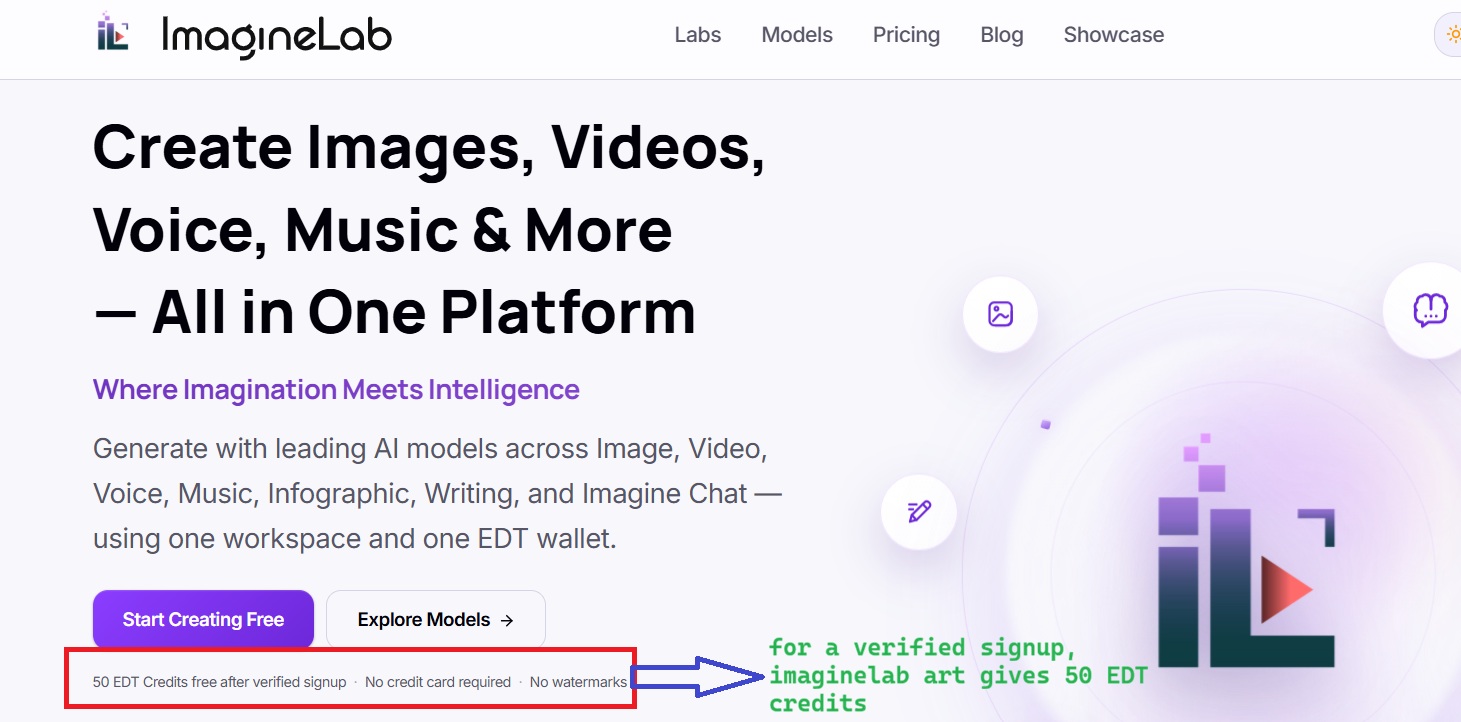
ImagineLab Art gives every verified new signup 50 free EDT credits. People spend them trying our creative tools before they decide to pay. About 7% of those verified signups become paying customers.
Against traditional SaaS, 7% looks strong. It is above the 3% to 5% band. But ImagineLab is an AI product, so the fair comparison is the AI band of 6% to 8%. That makes us good, not great. I think that is the honest way to read it.
Two things usually push our users to pay:
- They run out of credits. Someone creates a few pieces, likes the results, and hits zero in the middle of a project.
- They want a specific lab. People often arrive for one tool. Once they see it does what they need, they pay to keep using it.
Both triggers come from using the product. Neither comes from a countdown clock. That fits what 2026 benchmark data shows: usage limits, which people feel while working, tend to convert better than feature limits buried in a pricing table.
Plan design mattered as much as the free tier. As we added more AI models, we reorganized our plans, retired some old ones, and added small top-up options. A top-up gives someone who needs only a few more credits a cheap first purchase.
Where users come from matters too. When we split cohorts by acquisition channel, paid-search users churned by month two. Referral users from the same months stayed. Both groups counted the same in our conversion rate, but they were very different customers. If you plan to sell through app stores or directories, the same rule applies. Our guide to SaaS marketplace strategy covers how each channel brings a different kind of user.
What Our 15 Free Tools Taught Me About a Good Conversion Rate for Freemium Apps
Editorialge runs 15 free micro-SaaS tools. They include a Freelance Rate Calculator, a Crypto Profit/Loss Calculator, an Etsy & Shopify Seller Profit Calculator, and SEO tools like Semantic Gap Finder and Cannibalization Compass. All 15 are free, and none has a paid tier.
That makes them a useful contrast. A free-to-paid rate means nothing here, because there is nothing to pay for. Each tool does one job completely. You work out your freelance rate, and you are done.
This is the main lesson for freemium design. A free product converts only when the free version runs out before the user’s need does. Our calculators never run out. ImagineLab’s 50 credits do.
If your free plan covers the whole job for most users, a low conversion rate is not a marketing problem. It is a packaging problem.
Free tools still earn their place. They bring search traffic, build trust, and give people a reason to return. That is content marketing, not freemium, so judge it by traffic and return visits instead. Our breakdown of SaaS content marketing strategies goes deeper on this.
How to Measure a Good Conversion Rate for Freemium Apps Correctly
Most bad comparisons come from loose definitions. Before you judge your rate, lock down these three things.
Your denominator. At ImagineLab, we count only verified signups. Fake or unverified accounts would drag the rate down without telling you anything useful.
Your time window. RevenueCat measures at day 35. The 2026 SaaS survey looked at conversion within six months. The same product can show very different rates at 30 days and 12 months.
Your channels. One blended number hides the story. Split it by where users came from.
We run our cohort analysis as SQL against our own database tables, not inside a product analytics tool. You don’t need that setup to start. You do need the same definitions every month.
How to Move Toward a Good Conversion Rate for Freemium Apps
- Show the limit early. Users should see their remaining credits or usage before they hit zero.
- Ask at the right moment. The best time to offer an upgrade is when the user hits the limit, not in a random email a week later.
- Offer a small first step. A top-up or low-cost plan is easier to say yes to than an annual plan.
- Don’t expect a reverse trial to save you. The 2026 survey found reverse trials convert at about the same rate as regular freemium.
- Fix signups separately. If few visitors create an account, that is a different stage of the funnel. These tips to boost your website conversion rate can help there.
Final Thoughts
For most SaaS products, a good conversion rate for freemium apps is 3% to 5%, and 8% or more is great. AI products should aim for 6% to 8%. Mobile apps should expect about 2% of downloads by day 35. Our 7% at ImagineLab Art is solid for an AI tool, and it shows there is still a gap between good and great.
Start by writing down your denominator and your time window. Then compare yourself with the right row in the table, not the most flattering one.