
Gaming has become a mainstream form of entertainment, but along with its popularity comes a fair share of myths and misconceptions. Whether you’re a casual gamer or a hardcore enthusiast, it’s easy to fall for some of these myths. Many of them are outdated, overly generalized, or simply false. In this article, we’ll bust 12 common gaming myths you should stop believing.
Video games have come a long way since the days of Pong and Mario, but with that growth, a series of myths and stereotypes about gaming have persisted. From misconceptions about gamers’ behavior to false beliefs about the impact of games on health, these myths can affect how people view gaming and gamers themselves.
Some of these myths are old, while others have been perpetuated by the media, parents, or simply by the gaming community itself. It’s time to separate fact from fiction and tackle some of the most common gaming myths that are still believed today.
How are Gaming Myths Created
Gaming myths often arise from a combination of stereotypes, misunderstandings, and a lack of exposure to the gaming culture. Historically, video games have been portrayed negatively in the media, especially in the early days of the industry. Many myths stemmed from the misrepresentation of gamers as isolated, unhealthy individuals.
Others are the result of anecdotal experiences or selective portrayals in the media. As video games evolved, new myths were introduced, particularly with the rise of online gaming and mobile games.
The spread of misinformation is often fueled by rumors or out-of-context depictions of games in the media, where sensational headlines about violent or addictive games grab attention, but balanced and nuanced coverage is less common. Social stigmas also contribute to the perpetuation of these myths, as video games were once seen as a niche hobby for kids or outcasts.
As new generations of gamers come online, the myths continue to evolve. Even though the gaming industry has grown immensely, the myths that were formed in its early days often persist, especially when they are taken out of context or misrepresented.
Why Do Gamers Believe in These Myths?
While many gaming myths are false, it’s not unusual for gamers—especially those new to the community—to believe them. There are a few reasons why this happens:
- Lack of Information: Many gamers don’t actively seek out facts or debunk myths. If they’re only exposed to gaming through popular media or hearsay, it’s easy for them to adopt false beliefs without questioning them.
- Confirmation Bias: Gamers, especially those who are new or inexperienced, might have preconceived notions about what gaming should be. When they encounter a myth that aligns with their expectations, they might embrace it without further investigation.
- Cultural Influence: For decades, the portrayal of gaming in mainstream media has been negative. Films, news reports, and TV shows often depict gamers in an exaggerated light, associating them with violence, antisocial behavior, and isolation. This portrayal can seep into the minds of gamers, perpetuating the myths.
- Community Echo Chambers: Online gaming communities can sometimes perpetuate myths because players tend to share the same opinions and beliefs. Misconceptions get repeated so often that they become accepted as truths within certain groups.
Who Misunderstands Games and Gaming the Most?
While gaming myths affect both gamers and non-gamers alike, there are certain groups that tend to misunderstand gaming more frequently:
- Non-Gamers: People who don’t game or aren’t involved in gaming culture often have the least accurate view of games. They rely on media representations, which may only show the most extreme or sensational aspects of gaming, leading them to believe that gaming is solely about violence, addiction, or escapism. Without firsthand experience, it’s easy for non-gamers to latch onto popular misconceptions.
- Parents and Older Generations: Parents who didn’t grow up with video games often find it hard to understand the medium. They may view games as a distraction or a waste of time, influenced by generational stereotypes that associate gaming with laziness. While many parents have become more accepting of gaming as it has gained in popularity, older generations may still cling to outdated stereotypes, such as the idea that all gamers are antisocial or introverted.
- The Media: News outlets and entertainment media often exaggerate the negative aspects of gaming, such as the potential link between games and violence or the impact of gaming addiction. This creates a distorted view of the gaming community, fueling myths that may discourage new players from trying games or perpetuate the stigma that surrounds gaming.
- Gamers Themselves: Surprisingly, some myths are even embraced by gamers within the community. Due to the long-standing stereotypes, some gamers believe that only certain games or types of gaming are “legitimate.” For example, some might believe that playing on a console is less “real” than playing on a PC or that mobile games don’t count as true gaming. These myths limit the enjoyment of the hobby and create unnecessary divisions within the community.
Gaming Myths You Should Stop Believing
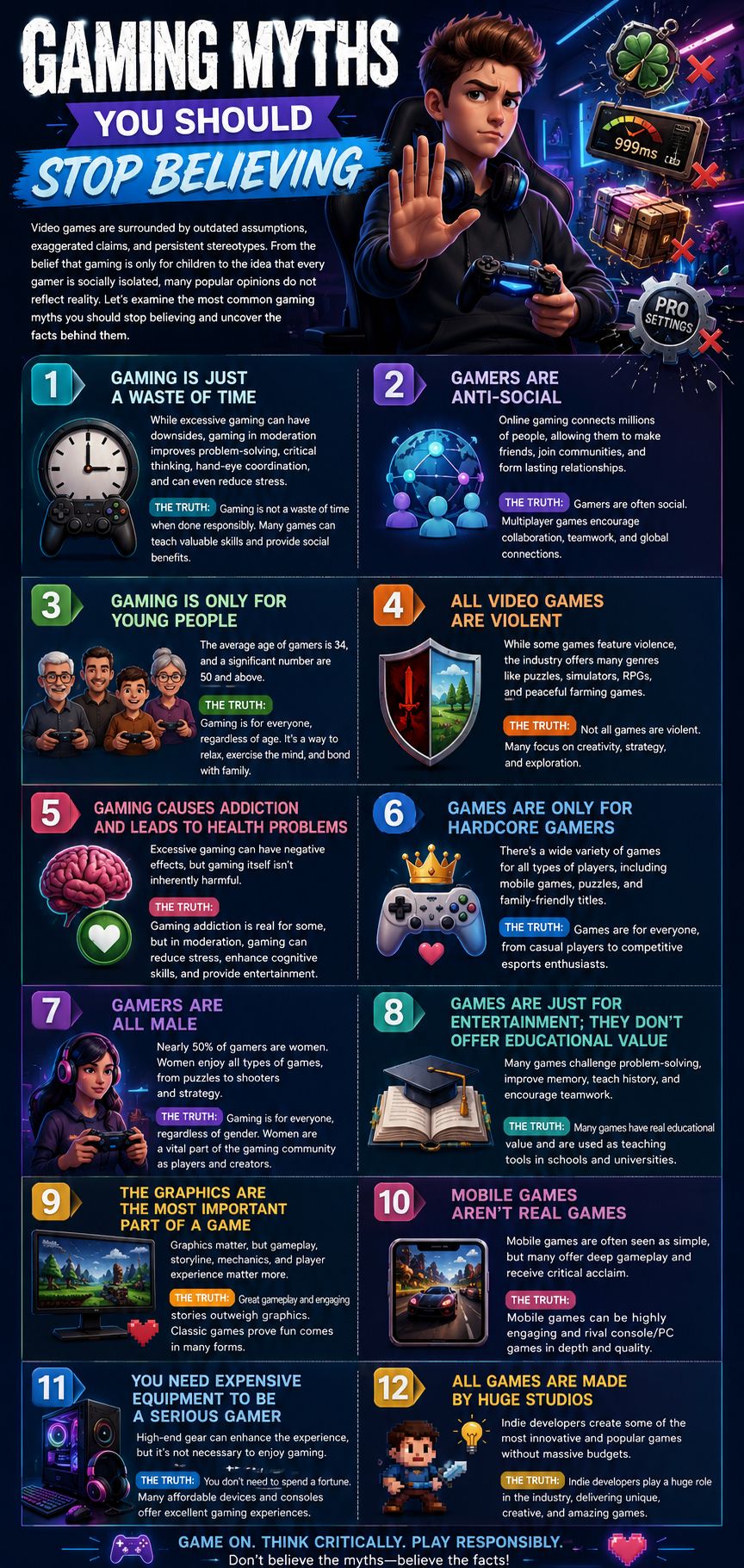
Video games are surrounded by outdated assumptions, exaggerated claims, and persistent stereotypes. From the belief that gaming is only for children to the idea that every gamer is socially isolated, many popular opinions do not reflect reality. Let’s examine the most common gaming myths you should stop believing and uncover the facts behind them.
Myth 1: Gaming Is Just a Waste of Time
One of the most persistent gaming myths is that gaming is nothing more than a waste of time. While it’s true that excessive gaming can lead to negative consequences, playing games in moderation can actually improve cognitive functions like problem-solving, critical thinking, and strategic planning. Many games also help improve hand-eye coordination and can even serve as stress relievers.
The Truth:
Gaming is not a waste of time when done responsibly. Many games can teach valuable skills and even provide social benefits through multiplayer experiences.
Myth 2: Gamers Are Anti-Social
Another stereotype is that gamers prefer to stay inside and avoid social interaction. While this may have been true for some in the early days of gaming, it’s far from the reality today. Online gaming has connected millions of people, allowing them to make friends, join communities, and even form lasting relationships.
The Truth:
Gamers are often social, with online multiplayer games providing a platform for collaboration, teamwork, and meeting new people from around the world.
Myth 3: Gaming is Only for Young People
This myth suggests that gaming is a hobby meant only for children or young adults. While younger generations have certainly embraced gaming, it’s no longer a “young person’s activity.” According to various studies, the average age of gamers is now 34, with a significant number of gamers aged 50 and above.
The Truth:
Gaming is for everyone, regardless of age. More and more older adults are enjoying gaming as a way to relax, exercise their minds, or bond with family.
Myth 4: All Video Games Are Violent
Many people assume that video games are inherently violent, especially due to media portrayals of games like Grand Theft Auto and Call of Duty. While some games feature violence, the industry offers a diverse range of genres, from puzzle games and simulators to role-playing games and peaceful farming simulations.
The Truth:
Not all games are violent. There are many games that focus on creativity, strategy, and exploration, with no violence involved.
Myth 5: Gaming Causes Addiction and Leads to Health Problems
There’s a common belief that gaming addiction leads to mental health issues, poor physical health, and social isolation. While excessive gaming can certainly have negative effects, such as sleep deprivation or neglect of other responsibilities, gaming itself isn’t inherently harmful.
The Truth:
Gaming addiction is a real issue for some, but when played in moderation, gaming can have a positive impact, such as reducing stress, enhancing cognitive skills, and providing entertainment.
Myth 6: Games Are Only for Hardcore Gamers
Some people think gaming is exclusively for people who dedicate their lives to it, often labeling those who play regularly as “hardcore.” This myth is misleading because there’s a wide variety of games suited to casual players, including mobile games, puzzles, and family-friendly titles.
The Truth:
Games are for everyone, from casual gamers who play a few rounds of Candy Crush to those who dive deep into competitive esports. Gaming spans all levels of interest and commitment.
Myth 7: Gamers Are All Male
Historically, gaming has been associated with a predominantly male demographic, but that narrative is changing. Research shows that nearly 50% of gamers are women. Additionally, the types of games women play are just as varied, ranging from puzzle games and role-playing games to competitive shooters and strategy games.
The Truth:
Gaming is for everyone, regardless of gender. Women are a significant part of the gaming community, both as players and creators.
Myth 8: Games Are Just for Entertainment; They Don’t Offer Educational Value
This myth suggests that gaming is purely for entertainment and doesn’t contribute to learning. However, many video games are designed to challenge players’ problem-solving skills, enhance memory, teach historical facts, and even encourage teamwork and cooperation.
The Truth:
Many games have educational value, especially puzzle games, strategy games, and historical simulations. Games are increasingly being used as teaching tools in schools and universities.
Myth 9: The Graphics Are the Most Important Part of a Game
While graphics are an important aspect of any game, they aren’t the only thing that makes a game good. Gameplay mechanics, storylines, character development, and player experience are just as crucial, if not more so, than the visual appeal.
The Truth:
Great gameplay, innovative mechanics, and engaging storylines often outweigh the importance of graphics. Classic games like Minecraft and Stardew Valley prove that fun can come in many forms, not just high-definition visuals.
Myth 10: Mobile Games Aren’t Real Games
There’s a common misconception that mobile games aren’t “real” games, often dismissing them as casual or simple. However, the mobile gaming industry has grown significantly, with titles like PUBG Mobile, Clash Royale, and Monument Valley receiving critical acclaim and offering deep gameplay experiences.
The Truth:
Mobile games can offer highly engaging experiences that rival console and PC games in terms of depth and quality. The convenience of mobile gaming means it’s a legitimate part of the gaming world.
Myth 11: You Need Expensive Equipment to Be a Serious Gamer
While having a high-end gaming PC or console can enhance your experience, it’s not necessary to have the best equipment to enjoy gaming. There are plenty of affordable gaming options that provide excellent experiences, from budget PCs to consoles like the Nintendo Switch or even mobile games.
The Truth:
You don’t need to break the bank to be a serious gamer. Many gaming experiences are available on lower-budget devices that still deliver excellent performance.
Myth 12: All Games Are Made by Huge Studios
There’s a stereotype that all video games are developed by large, well-funded studios. In reality, indie games are thriving. Independent developers have created some of the most innovative and popular games in recent years, such as Undertale, Stardew Valley, and Hollow Knight.
The Truth:
Indie developers play a significant role in the gaming industry, producing creative, unique, and well-received games without the massive budgets of big studios.
Final Words
Gaming is a vast, diverse, and constantly evolving industry. While many myths and misconceptions surround it, the reality is much more nuanced. Whether you’re an occasional gamer, a serious player, or someone considering entering the industry professionally, it’s essential to break away from outdated beliefs.
Gaming is for everyone, with opportunities for learning, creativity, and connection across all ages and demographics. As we continue to embrace new technology, genres, and experiences, the world of gaming will only grow more exciting and inclusive.