

When most people think of gambling addiction, they focus on the individual placing bets as a compulsive gambler. However, behind nearly every person suffering from a gambling disorder is a family struggling to stay afloat, often with the spouse carrying the greatest emotional and financial burden.
Experienced divorce attorneys say that the impact of gambling addiction on a spouse may encompass psychological trauma, financial devastation, betrayal of trust, and long-term damage to health and well-being.
What Is Gambling Addiction?
Gambling addiction, also known as gambling disorder or compulsive gambling, is a behavioral addiction characterized by an uncontrollable urge to gamble despite harmful consequences. According to the Diagnostic and Statistical Manual of Mental Disorders (DSM-5), a gambling disorder involves persistent and recurrent problematic gambling behavior that leads to significant impairment or distress.
Emotional Impact on the Spouse
One of the most immediate effects of gambling addiction on a spouse is emotional trauma. Spouses generally describe their experience as a cycle of confusion, betrayal, and instability.
Shock and Betrayal
Many spouses are unaware of the extent of the gambling problem until a crisis unfolds, such as discovering hidden debts, bounced checks, or legal threats. The realization that a partner has been lying or hiding behavior for a long time can trigger a deep sense of betrayal. It may feel akin to infidelity, with some referring to it as a “financial affair.”
Chronic Anxiety and Fear
As gambling addiction escalates, so do its consequences. Spouses may live in constant fear of:
- Losing the house or car
- Creditors showing up at the door
- Having utilities cut off
- Being unable to pay for the children’s needs
This continuous stress can lead to chronic anxiety, panic attacks, and sleep disturbances.
Depression and Emotional Exhaustion
The emotional toll of managing the chaos left by a gambling spouse can lead to depression, hopelessness, and low self-esteem. Many partners begin to question their judgment or feel responsible for the gambler’s behavior, especially when the gambler shifts blame or gaslights them.
Isolation
Because of shame and stigma, many spouses suffer in silence. They may avoid discussing the problem with friends or family, fearing judgment or embarrassment. This isolation deepens the emotional burden and deprives them of needed support systems.
Financial Devastation and Economic Abuse
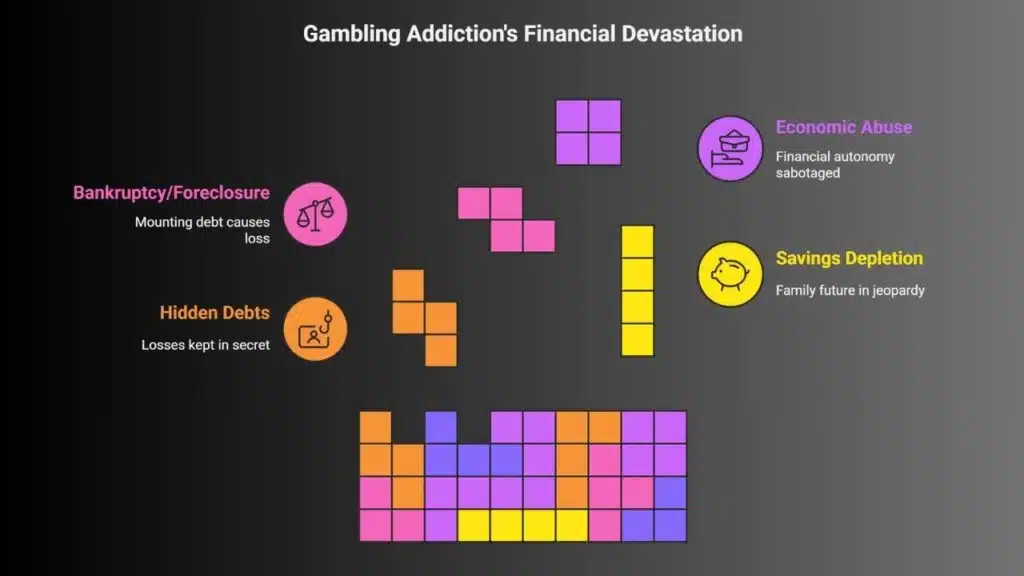
Gambling addiction results in significant financial consequences that can devastate a family’s stability.
Hidden Debts and Deception
It is common for compulsive gamblers to hide their losses or take out secret loans and credit cards in their spouse’s name. Many only discover the full extent of the damage when legal notices arrive or when applying for credit and being denied.
Loss of Savings and Retirement Funds
Gambling addicts deplete joint savings accounts, cash out retirement accounts, or even gamble away children’s college funds. This puts the entire family’s future in jeopardy.
Bankruptcy and Foreclosure
In extreme cases, the family home or business may be lost due to mounting debt. The spouse may have to navigate complex legal and financial decisions, including filing for bankruptcy, dealing with tax penalties, or negotiating with creditors.
Economic Abuse
Gambling addiction can also manifest as financial abuse, where the addicted partner controls all financial decisions, withholds money, or sabotages the spouse’s financial autonomy.
Relationship Strain and Marital Breakdown
Gambling addiction may be described as a “family disease” because it damages the foundational trust and connection between partners.
Lying and Secrecy
Trust is frequently the first casualty. Compulsive gamblers lie about where they have been, how much money they have spent, and whether they are gambling at all. These patterns of deceit make it impossible to maintain an emotionally healthy relationship.
Conflict and Escalation
As financial problems surface, so do arguments. Disagreements about bills, broken promises, and constant tension can escalate into frequent verbal or even physical conflict. The spouse may feel like they are living in a war zone, walking on eggshells to avoid triggering another fight.
Neglect of Family Responsibilities
Gambling can consume not just money but also time and emotional availability. The addicted spouse may neglect parenting duties, household responsibilities, and relationship needs, leaving their partner to manage everything alone.
Legal Separation and Divorce
When gambling addiction becomes unmanageable, many spouses are forced to consider legal separation or divorce. This brings complications, including the division of debt, custody battles, and loss of assets. In some cases, the non-gambling spouse may seek court protection to shield themselves and their children from further harm.
Impact on Physical and Mental Health
The prolonged stress associated with a partner’s gambling addiction can lead to serious health consequences for the spouse.
Psychosomatic Symptoms
Many spouses develop physical symptoms as a result of emotional stress, including:
- Headaches
- Gastrointestinal problems
- High blood pressure
- Muscle tension
- Fatigue
These are usually exacerbated by poor sleep and chronic anxiety.
Substance Abuse or Coping Behaviors
Some spouses turn to alcohol, prescription medication, or food as a way to cope with their emotional pain. Others may become workaholics, over-exercisers, or socially withdrawn in an attempt to numb or distract from the trauma.
Mental Health Disorders
Depression, generalized anxiety disorder, and post-traumatic stress symptoms are common among spouses of problem gamblers. Many benefit from therapy, particularly approaches like Cognitive Behavioral Therapy (CBT) and trauma-informed counseling.
Parenting Challenges
When children are involved, gambling addiction has an even broader impact.
Emotional Instability at Home
Children can sense emotional tension between parents, even when efforts are made to shield them. They may feel neglected or confused, especially if one parent is frequently absent, irritable, or unreliable due to gambling behavior.
Disrupted Routines
The consequences of gambling may force sudden changes, such as moving homes, changing schools, or giving up extracurricular activities due to financial strain. These disruptions can affect children’s sense of security and development.
Parentification of Children
In some cases, children take on adult roles, comforting a distressed parent or helping with younger siblings because the gambling spouse is unavailable or emotionally absent. This dynamic, known as parentification, can have long-term psychological effects on children.
Legal and Ethical Considerations
Spouses may find themselves caught in the legal fallout of gambling addiction, even if they weren’t directly involved in the behavior.
Joint Debts and Legal Responsibility
Depending on the state’s marital property laws, the spouse may be legally responsible for debts incurred by the gambler even if they were unaware of them. Divorce may offer some legal separation from those liabilities, but it doesn’t always absolve the spouse of responsibility.
Criminal Behavior
Some gambling addicts engage in illegal activity, such as theft, fraud, or embezzlement, to fund their addiction. If the spouse unknowingly benefits from or is associated with those activities, they may face reputational harm or legal scrutiny.
Explore Your Legal Options
If you plan to end your marriage with a gambling addict, you should get strong legal representation from an experienced Palm Beach divorce attorney. A seasoned lawyer can help you take the necessary steps to protect your rights, safeguard your assets, and uphold your children’s best interests in a divorce.





















