

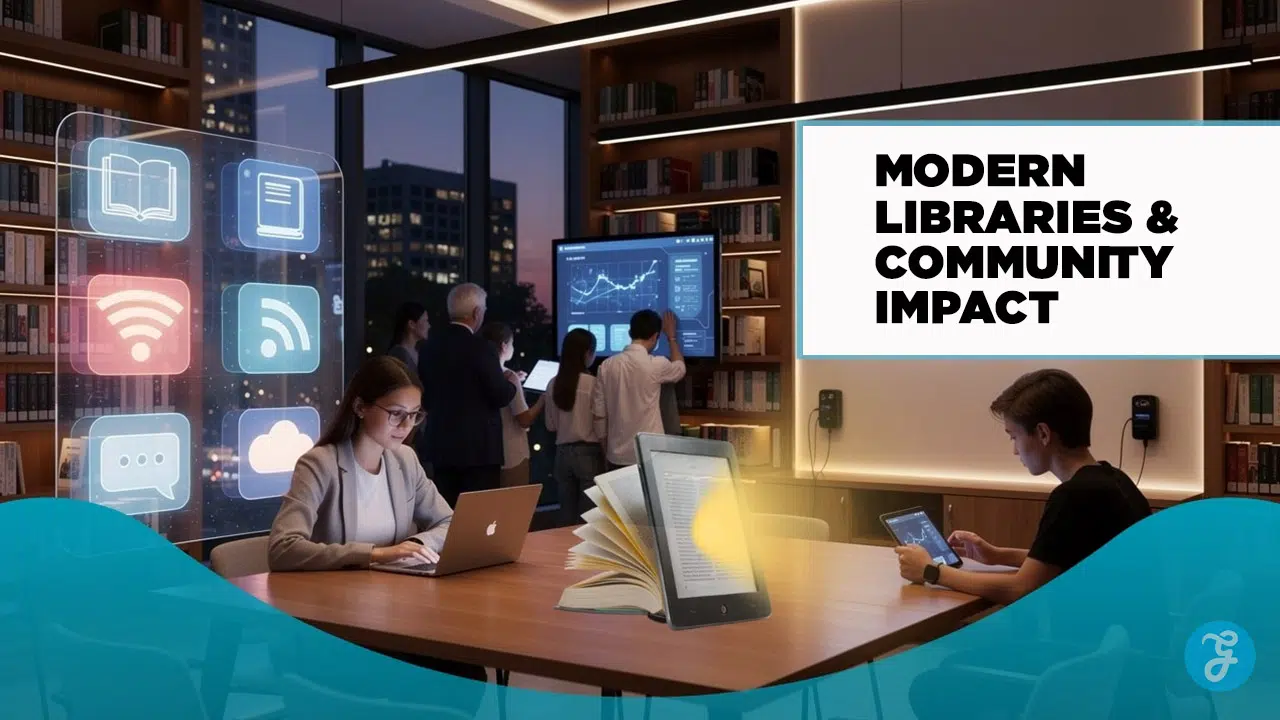
You might have noticed that your local library feels a little different lately. The quiet rows of books may seem fewer, and in some places a 3D printer now hums where the card catalog once stood. For visitors simply looking for a peaceful place to read, the changes can feel a bit confusing.
But here’s the interesting part: a 2025 survey found that 63% of patrons now consider 24/7 access one of the most valuable library features. This trend highlights the Future Of Libraries In The Digital Age, as libraries evolve from quiet book repositories into active, round-the-clock community centers.
Explores how these changes benefit library users. It highlights new tools, lesser-known perks many patrons overlook, and the ways modern libraries are becoming vibrant spaces for learning, creativity, and connection. Keep reading to discover what a library can offer today.
The Evolution of Libraries in the Digital Age
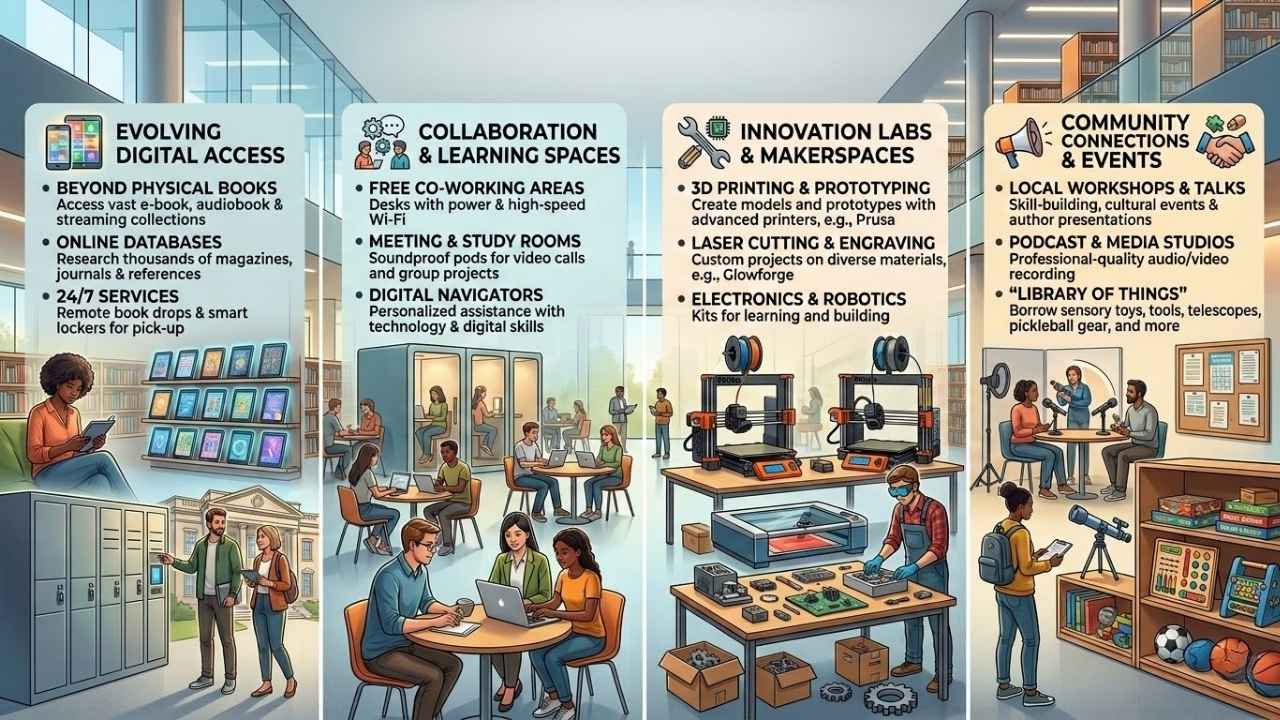
Libraries have moved far beyond dusty stacks. Today, they are bright, energetic spaces that connect you to the world. The shift is measurable and dramatic.
From Book Repositories to Digital Spaces
Historically, success was measured by how many books were on the shelves. Now, it is about digital reach. For example, the Seattle Public Library reported in their 2024 impact statement that digital checkouts hit 6.5 million, surpassing physical checkouts for the first time. This isn’t just a trend; it is the new standard.
Smart lockers are a big part of this change. Cities like Hoboken, New Jersey, have installed remote lockers at locations like the local Historical Museum. This lets you pick up your holds while you are out for a walk, rather than rushing to the library before it closes. It turns the entire city into a library branch.
The Rise of Digital Collections and Online Access
Your library card is now a passport to a massive digital entertainment center. Platforms like Over Drive and Hoopla allow you to borrow e-books, audiobooks, and even stream movies from your phone. In 2024, the Los Angeles Public Library set a world record with over 14 million digital checkouts in a single year.
This shift saves you money. Instead of paying for multiple streaming subscriptions or buying audiobooks, you can access them for free. Most libraries also offer EBSCO Explora or similar databases, which give you access to thousands of magazines and journals that would cost hundreds of dollars to subscribe to individually.
Libraries as Community Hubs
People come to libraries today to create, not just to consume. The “shush” rule is gone in many areas, replaced by the hum of collaboration and the click of keyboards.
Spaces for Collaboration and Learning
Modern libraries are designing spaces that work like free co-working offices. You will find soundproof pods for video calls, large tables for group projects, and high-speed Wi-Fi that reaches into the parking lot. In places like Cook County, Illinois, libraries are even hiring “Digital Navigators” to help you navigate these new tools.
These spaces solve a specific problem: the lack of “third places” where you can exist without spending money. Whether you are a student working on a group presentation or a freelancer needing a desk, the library offers a professional environment at zero cost.
Makerspaces and Innovation Labs
Makerspaces are perhaps the most exciting addition. These are workshops filled with equipment that would be too expensive for most people to buy for their homes. For example, the Deschutes Public Library in Oregon recently opened a new space featuring Prusa MK4 3D printers and laser cutters.
If you plan to use these spaces, here is an insider tip from the Reddit library community: Do not assume one staff member knows how to run every machine. Call ahead to book time with the specific specialist for the tool you want to use, especially for complex gear like the Glow forge laser cutter. This small step prevents frustration and ensures you get the help you need.
“Makerspaces allow you to prototype a business product or make a custom gift for the cost of materials alone. It democratizes manufacturing.”
Support for Local Events and Initiatives
Libraries are also becoming broadcast centers. The Bridgeport Public Library in Connecticut, for instance, offers fully equipped Podcast Studios. You can record professional-quality audio without buying microphones or soundproofing your closet.
Union Public Library in New Jersey takes this further with a “Library of Things” that includes a “Junior” collection. You can borrow sensory busy boards or rocket launchers for your kids. This “try before you buy” model is a fantastic way to test if your child likes a toy—or if you enjoy a hobby like pickleball—before you spend any money.
Key Technologies Shaping the Future of Libraries
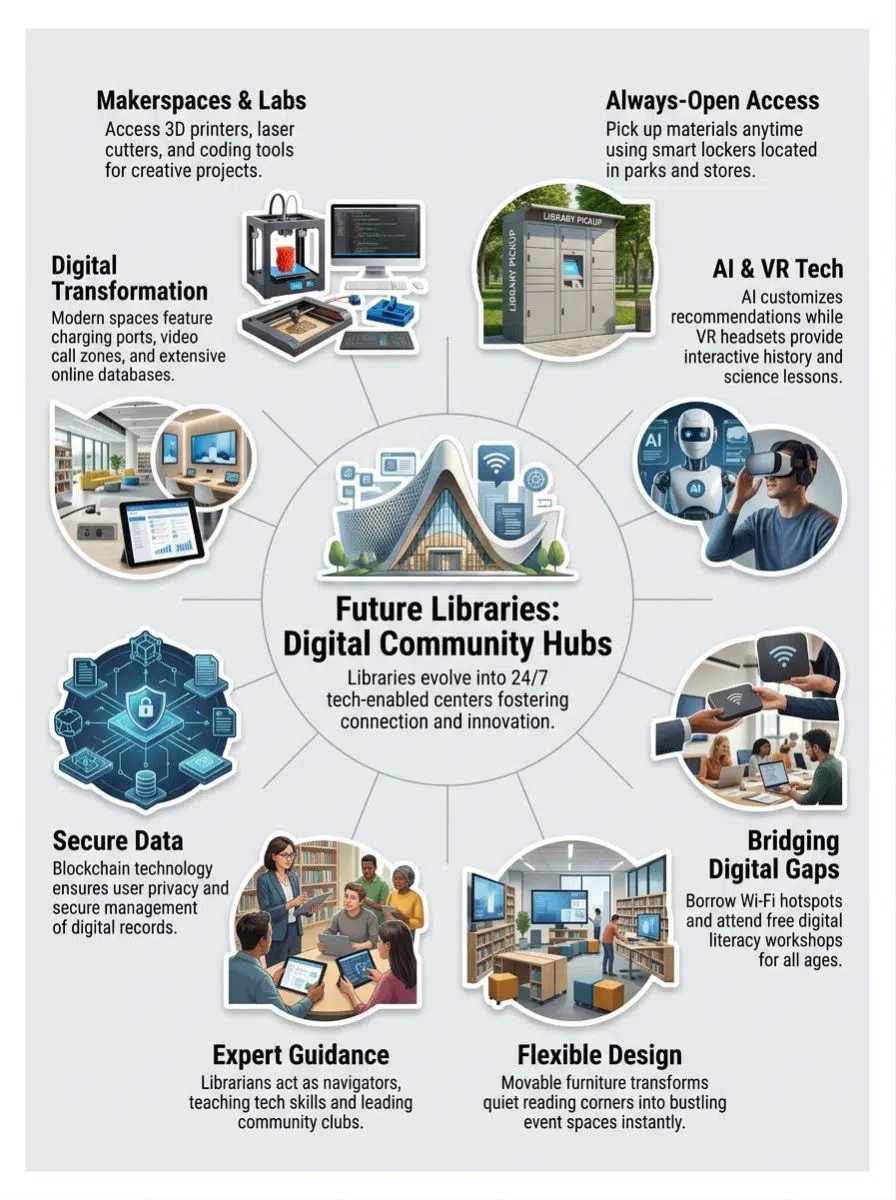
Technology is not just an add-on; it is the infrastructure that makes modern libraries work. New tools are making it easier to find what you need and keep your data safe.
Artificial Intelligence for Personalized Services
You might use AI without realizing it. Library apps now use smart algorithms to suggest your next read, similar to how Netflix recommends movies. Academic libraries are leading the way; NC State University Libraries deployed a chatbot named “Ask D. H. Hill” to help students find resources instantly.
For you, this means less time searching and more time reading. These tools analyze millions of catalog entries to find the exact book or article you need, even if you only remember a vague plot point or a few keywords.
Extended Reality (XR) for Interactive Experiences
Extended Reality (XR) is transforming learning from passive to active. The Los Angeles Public Library’s Octavia Lab offers VR headsets that let you “walk” through historical sites or explore the solar system. This is not just for gamers; it is a powerful educational tool for visual learners.
By 2035, we expect this to be standard. Imagine a biology student dissecting a virtual frog or a history buff standing in the middle of a virtual Gettysburg Address. It makes learning immersive and memorable.
Cybersecurity and Data Privacy
As libraries go digital, protecting your privacy is a massive priority. Following the 2024 ransomware attack on the Seattle Public Library, libraries across the US are investing heavily in cybersecurity. While some experts discuss blockchain as a future method for immutable record-keeping, the current focus is on secure, encrypted networks.
Libraries are one of the few places that fight to protect your data rather than sell it. When you use their digital services, you are using platforms designed to minimize tracking. This commitment to privacy makes the library one of the safest places to browse the internet today.
The Role of Libraries in Bridging the Digital Divide
Access to the internet is no longer a luxury; it is a necessity. Libraries are the primary safety net for the millions of Americans who still lack reliable connectivity.
Ensuring Access to Technology for All
A recent report by Heartland Forward noted that over 6.8 million U.S. households still lack reliable high-speed internet. Libraries are filling this gap by lending out Wi-Fi hotspots and Chromebooks. You can check these out just like a book, giving you internet access at home for weeks at a time.
This service is critical for job hunters. If you or someone you know needs to apply for jobs but lacks a computer, the library provides the hardware and the connection for free. It removes the technological barrier to employment.
Digital Literacy Programs and Workshops
Having the tool is only half the battle; knowing how to use it is the other. Libraries run workshops that teach everything from basic email skills to advanced coding.
- Digital Navigators: Programs like the one in Cook County pair you with an expert who can help you sign up for affordable internet or learn a new device.
- Employment Impact: Research from the Boston Consulting Group found that 1 in 3 people who receive digital skills training secure new employment or higher income.
- Safety First: Librarians teach classes on how to spot phishing scams and fake news, which is essential for protecting your identity online.
- Coding Bootcamps: Free classes introduce kids and teens to Python and Scratch, skills that can lead to high-paying careers.
- Tech Help Days: specific times when you can bring in your own device and get troubleshooting help from a pro.
The Human Element in Modern Libraries
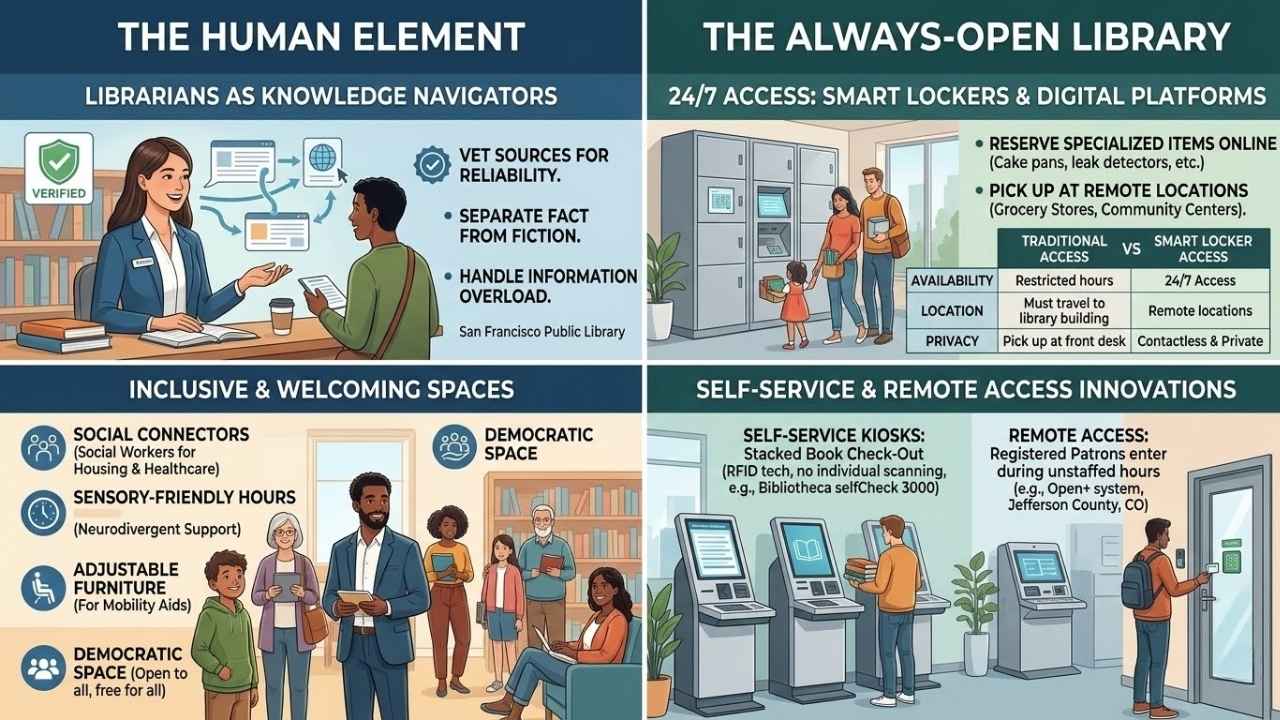
Despite all the robots and AI, the heart of the library remains its people. Librarians are evolving from “keepers of books” to “community connectors.”
Think of a modern librarian as a search engine that cares about the outcome. They don’t just find you a book; they vet sources for reliability. In an age of information overload, having a pro who can separate fact from fiction is invaluable.
They also act as social connectors. In many cities, libraries now employ social workers to assist patrons with housing and healthcare needs. The San Francisco Public Library was a pioneer in this, proving that libraries support the whole person, not just their reading habits.
Creating Inclusive and Welcoming Spaces
Libraries are adapting their physical layouts to be more inclusive. You will see “sensory-friendly” hours for neuro divergent patrons and adjustable furniture for those with mobility aids. The goal is simple: everyone belongs here.
Union Public Library is a great example of this inclusivity in action. Their specialized collections allow families with different needs to find tools that work for them. This approach ensures that the library remains the most democratic space in town—open to all, free for all.
The Always-Open Library Concept
The 9-to-5 library model is fading. New tools allow you to access library resources whenever it fits your schedule, even if the doors are locked.
24/7 Access Through Smart Lockers and Digital Platforms
Smart lockers are changing the game. Systems like Bibliotheca’s remote Locker allow you to pick up materials at convenient spots like grocery stores or community centers.
| Feature | Traditional Access | Smart Locker Access |
|---|---|---|
| Availability | Restricted to opening hours (e.g., 10 AM – 6 PM) | 24/7 Access |
| Location | Must travel to the library building | Remote locations (parks, malls, transit hubs) |
| Privacy | Pick up at the front desk | Contactless & Private |
This flexibility is perfect for shift workers or busy parents. You can reserve a specialized cake pan or a thermal leak detector online and pick it up at a locker on your way home from a late shift.
Self-Service and Remote Access Innovations
Inside the library, self-service kiosks like the Bibliotheca self Check 3000 let you check out stacks of books instantly using RFID technology. You just place your books on the pad, and it reads them all at once. No scanning barcodes one by one.
For remote access, the Open+ system is gaining traction. In places like Jefferson County, Colorado, this technology allows registered patrons to unlock the library doors during unstaffed hours. You get the peace and quiet of the library early in the morning or late at night, completely on your own terms.
Final Thoughts
Libraries have successfully transformed from quiet book vaults into lively community centers. They have mixed tradition with powerful tools like AI, makerspaces, and smart lockers to make knowledge easier for you to grab.
The next time you walk past your local branch, stop in. You might find a 3D printer ready for your project, a podcast studio waiting for your voice, or just a friendly face ready to help you navigate a new device.
These spaces are fixing tech gaps and boosting curiosity for everyone. If you want to see what is new, check your library’s website today. You will likely find a tool or service you didn’t know you needed, right at your fingertips.





















