Staying updated with the latest trends in FSI blogs can feel overwhelming. With so much information out there, it’s hard to know where to start or what truly matters. Many readers struggle to find reliable sources that simplify complex topics like machine vision, deep learning, and cloud infrastructure.
Here’s a fact: FSI blogs are now using advanced tools like TensorFlow and PyTorch to create smarter content. These technologies help bloggers share insights on emerging trends faster and more effectively than ever before.
This guide will break down the latest trends in FSI blogs for you. You’ll learn about key topics, SEO strategies, and how these blogs improve user experience. Ready to explore? Let’s get started!
What Are FSI Blogs?
FSI blogs focus on banking, investments, fintech, regulations, and market analysis. They aim to improve financial literacy and help readers make informed decisions. Contributors include financial institutions, advisors, fintech specialists, and bloggers.
These blogs often explore topics like cybersecurity, data analytics, and the cloud to provide valuable insights.
Readers can find industry trends and expert advice in FSI blogs. Topics range from robotic automation to user experience (UX) in financial services. By following these blogs, you gain access to case studies and emerging technologies shaping the future of finance.
Next, let’s look at the key purposes of FSI blogs.
Key Purposes of FSI Blogs

FSI blogs serve as a valuable resource for readers. They aim to educate, inform, and guide decision-making in the financial sector.
- Improve financial literacy. FSI blogs break down complex financial topics into easy-to-understand content. This helps readers make better financial choices.
- Provide informed decision-making insights. These blogs share expert analysis and market trends. Readers gain clarity on investments, regulations, and risks.
- Share market analysis and regulatory updates. FSI blogs keep readers updated on changes in laws and market conditions. This ensures they stay ahead in the industry.
- Offer expert opinions and industry insights. Blogs often feature advice from professionals. This adds credibility and depth to the content.
- Highlight emerging technologies like neural networks and AI. FSI blogs explore how tech impacts finance. Readers learn about tools that improve efficiency and security.
- Focus on ease of use and accessibility. Blogs simplify technical jargon for a wider audience. This makes financial knowledge more inclusive.
- Discuss monetization methods like affiliate marketing and sponsored posts. FSI blogs show how to turn content into income streams.
- Explore niche areas such as the European Union’s financial policies or the Eastern Partnership. This helps readers understand specific regions and their impact on global finance.
- Use SEO strategies to boost search engine rankings. Blogs optimize keywords like “keyword research” and “social media” to reach more readers.
- Share case studies and real-world applications. These examples show how theories work in practice, making concepts relatable.
Understanding these purposes sets the stage for exploring popular topics in FSI blogs next.
Popular Topics in FSI Blogs

FSI blogs often focus on emerging technologies like AI and machine learning, share industry insights, and highlight real-world case studies—stay tuned to learn more about these exciting trends!
Emerging Technologies
Emerging technologies are reshaping industries, and FSI blogs often highlight these advancements. For example, the WEAVER Inference Engine—launched with Adaptive Vision Studio 4.12—offers powerful tools for machine vision tasks.
This engine helps experts streamline complex processes, making it a game-changer in automation.
Another breakthrough is EyeVision Software, which supports DALSA cameras. It allows users to control multiple cameras with just one instance, improving efficiency in imaging systems.
Similarly, the Gocator 3D Sensor, announced on May 3, 2017, continues to influence precision measurement applications. These tools showcase how runtime improvements and cutting-edge software like Zivid are driving innovation across sectors.
Industry Insights
FSI blogs often highlight key changes in the industry. For example, the Building Safety Act became effective on November 22, 2023. This act impacts how safety standards are enforced.
Fire stopping specification packs were launched on February 29, 2024. These packs help professionals meet new safety requirements.
Online training schemes started on February 5, 2024. They provide updated knowledge for industry workers. Sealant packaging now uses 50% more recycled content as of September 25, 2023.
This shift reflects a growing focus on sustainability in the field. Industry insights from FSI blogs keep readers informed about these updates and trends.
Case Studies and Applications
Case studies in FSI blogs show real-world examples of how ideas work. For instance, the SouthTec 2019 event from October 22-24 highlighted new tools and technologies. These events often feature practical applications—like EyeMeasureEasy, launched on May 8, 2017—that solve specific problems.
Readers can see how these tools improve efficiency or create new opportunities.
Applications in FSI blogs focus on industries like automotive and manufacturing. The South Carolina Automotive Summit from February 19-21, 2019, showcased innovations that changed how cars are made.
Case studies from such events help readers understand trends and apply them to their own work. They also highlight the role of emerging technologies in shaping future solutions.
Benefits of Following FSI Blogs

FSI blogs offer valuable insights and updates for readers. They help you stay informed and make better decisions. Here are the key benefits:
- Stay updated on emerging technologies. FSI blogs often highlight new tools and trends, like AI-driven solutions, that can improve your work or business.
- Gain industry insights. These blogs provide updates on regulatory changes, compliance rules, and market shifts, helping you stay ahead.
- Learn from real-world examples. Case studies in FSI blogs show practical applications of technologies and strategies, making complex ideas easier to understand.
- Improve financial decision-making. By following FSI blogs, you can access expert advice and data-driven insights to make smarter choices.
- Save time on research. FSI blogs compile the latest information in one place, so you don’t have to search multiple sources.
- Discover niche topics. Many FSI blogs focus on specific areas, offering detailed knowledge that’s hard to find elsewhere.
- Build a competitive edge. Staying informed through FSI blogs helps you adapt quickly to changes in your industry.
- Network with experts. Many FSI blogs feature guest posts or interviews with leaders, giving you access to valuable perspectives.
- Explore monetization opportunities. Some FSI blogs share tips on how to turn knowledge into profit, like using AI tools for content creation.
- Enhance your skills. Regular reading of FSI blogs can help you learn new concepts and stay sharp in your field.
Future Trends in FSI Blogs
AI-driven tools will shape the future of FSI blogs, making content creation faster and more personalized. Expect a stronger focus on niche audiences, with blogs using advanced analytics to target specific reader interests.
AI-Driven Content Creation
AI-driven content creation is changing how blogs are made. Tools like the WEAVER Inference Engine make it faster and easier to produce high-quality posts. This engine works well on both GPUs and CPUs, making it versatile for different setups.
It doesn’t rely on open-source frameworks, so there’s no need for Python dependencies—this simplifies the process.
These tools help writers focus on creativity while handling repetitive tasks. They can generate ideas, draft sections, or even optimize SEO-friendly keywords like “mouse.” By using AI, bloggers save time and reach niche audiences more effectively.
The future of blogging will likely see more advanced tools that blend human creativity with machine efficiency.
Greater Focus on Niche Audiences
As AI-driven content creation grows, FSI blogs are shifting toward niche audiences. This trend helps creators connect with specific groups who share unique interests or needs. For example, tools like EyeVision 3D software—with over 40 commands for precise measurements—cater to professionals in industries like manufacturing and robotics.
Similarly, EyeMultiView’s ability to display up to 16 camera views at once appeals to security experts and surveillance teams.
By focusing on niche topics, FSI blogs can deliver tailored insights that resonate deeply with their readers. This approach builds trust and loyalty while addressing the exact challenges these audiences face.
It also opens doors for more targeted discussions around emerging technologies and industry-specific applications, making the content both relevant and actionable.
SEO Strategies for FSI Blogs
SEO strategies for FSI blogs focus on making content easy to find and engaging for readers. Start with keyword research. Use tools like Google Keyword Planner or SEMrush to find terms your audience searches for.
Place these keywords naturally in titles, headings, and throughout the text. Avoid stuffing too many keywords—it hurts readability and ranking.
Optimize blog design for user experience. Fast-loading pages and mobile-friendly layouts keep readers engaged. Use clear headings, bullet points, and short paragraphs to break up text.
Add alt text to images so search engines understand them better. Internal linking helps guide readers to related posts while boosting SEO rankings.
Focus on creating personalized content that matches reader intent. Write about topics your audience cares about—like emerging technologies or industry insights—and use data-driven examples where possible.
Regularly update old posts with fresh information to stay relevant in search results.
Finally, promote your blog through social media and email campaigns to drive traffic back to your site. Building backlinks from trusted sources also improves domain authority over time, helping your FSI blog rank higher in search engines without relying solely on paid ads or shortcuts that could harm long-term growth potential!
Best Practices for Creating Successful FSI Blogs
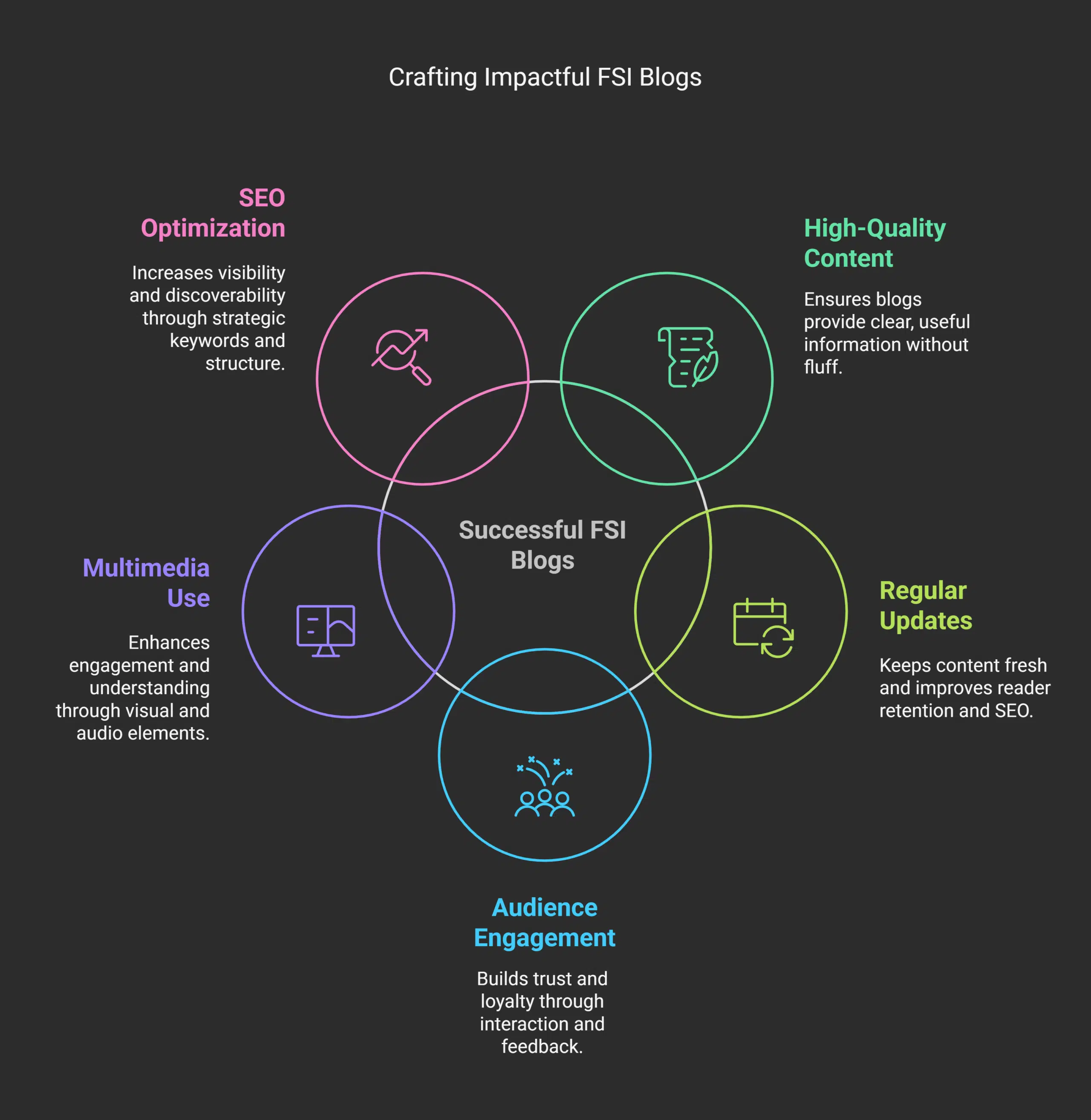
Creating successful FSI blogs requires focus and strategy. Follow these best practices to engage readers and grow your audience.
- Focus on high-quality, informative content. Readers value blogs that provide clear, useful information. Avoid fluff and stick to facts.
- Update your blog regularly. Consistent posts keep readers coming back and improve search engine rankings.
- Engage with your audience. Respond to comments and questions to build trust and loyalty.
- Use multimedia like images, videos, and infographics. These make your content more engaging and easier to understand.
- Optimize for SEO. Use keywords naturally, write meta descriptions, and structure your posts for better visibility.
- Write for niche audiences. Tailor your content to specific groups to make it more relevant and impactful.
- Keep sentences short and active. This improves readability and keeps readers hooked.
- Use tools like Grammarly or Hemingway Editor to check grammar and readability. These help polish your writing.
- Promote your blog on social media. Share posts on platforms like LinkedIn or Twitter to reach a wider audience.
- Analyze performance with tools like Google Analytics. Track metrics to see what works and adjust your strategy.
Monetization Opportunities for FSI Blogs
FSI blogs offer several ways to make money. Affiliate marketing is a popular choice. Bloggers can earn by promoting products or services and getting a commission for each sale. Sponsored posts are another option, where brands pay bloggers to write about their offerings.
Premium content also works well. Readers pay for exclusive articles, guides, or reports. Workshops and online courses add value too. Bloggers can create paid sessions or classes based on their expertise.
These methods help turn FSI blogs into steady income sources while providing useful content to readers.
Next, let’s explore the conclusion of this guide on FSI blog trends.
Takeaways
FSI blogs offer valuable insights into finance, technology, and industry trends. By following these blogs, readers gain practical knowledge on topics like AI-driven content and niche audience targeting.
Implementing SEO strategies can boost blog visibility and reach. Monetization opportunities make FSI blogging both rewarding and impactful. Start exploring FSI blogs today to stay ahead in the ever-changing world of finance and tech!