

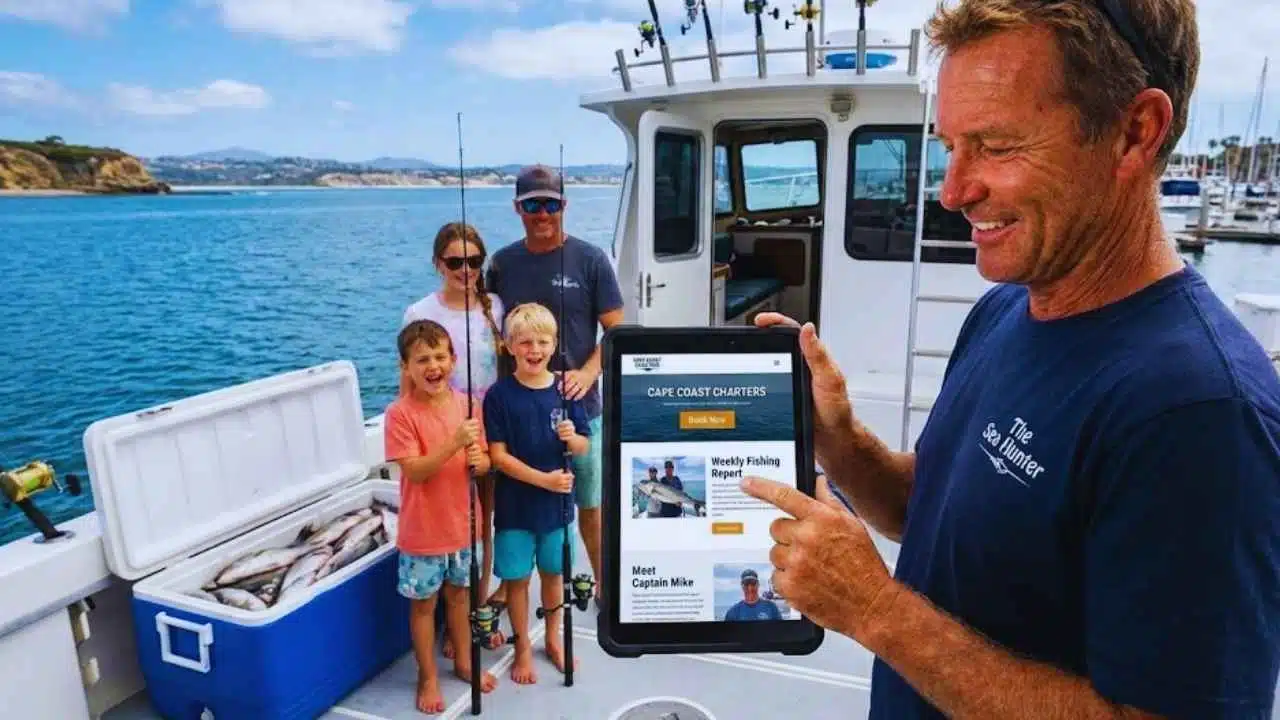
Ever wondered why some fishing charter websites show up at the very top of Google while others stay buried no matter how great their trips are? In today’s digital-first world, your fishing charter website design, SEO structure, and user experience matter just as much as the quality of the catch you deliver. When customers search for terms like “fishing charter near me,” “deep-sea fishing trips,” or “best charter boats in [location], they’re usually ready to book and the sites that appear first are the ones built to be fast, mobile-friendly, well-structured, and optimized for intent.
A high-ranking site isn’t about fancy graphics alone. It’s about blending smart SEO, clean design, intuitive navigation, compelling visuals, and trust-building elements that turn curious visitors into paying clients. In this guide, we’ll break down the essential SEO, design, and UX strategies your charter website needs to stand out, rank higher, and convert more travelers no matter the season.
Why SEO, Design & UX Matter for Fishing Charter Websites
For most people planning a fishing trip, the search starts online often with simple phrases like fishing charters in [location] or best local fishing trips. The websites that appear first on Google usually get the most clicks, not because they’re the biggest businesses, but because their SEO, design, and user experience work together to create a smooth and trustworthy journey for visitors.
A well-structured website helps search engines understand what you offer, while a clean layout, fast loading speed, and clear booking options help users feel confident enough to take the next step. Good visuals, easy navigation, transparent pricing, and authentic reviews also make a strong first impression, especially for travelers comparing multiple charter options.
When your site is easy to find, easy to use, and easy to trust, it naturally attracts more visitors and converts more of them into confirmed bookings. That’s why getting the balance right between SEO, design, and UX is essential for any fishing charter business looking to stand out online.
Key SEO Strategies for Charter Websites
Search engines play a huge role in how customers discover charter businesses today, and ranking higher for terms like fishing charters in [location] or deep-sea trips near me can make a noticeable difference in bookings. The good news? You don’t need complex tactics just smart, consistent SEO practices that help search engines understand your services and match them to the right customers.
Use Location-Focused Keywords Naturally
Most people search for charters based on their destination, so incorporating phrases related to your city, region, or type of trip helps your website appear for relevant local searches. Add these keywords naturally to page titles, headings, image descriptions, and trip details so your site feels clear and helpful not forced.
Build a Clean URL Structure and Organized Pages
Simple, descriptive URLs make it easier for search engines and users to understand your pages. Group similar trip types together like full-day, half-day, deep-sea, or family-friendly charters to make your site easier to navigate and easier for Google to crawl.
Strengthen Internal Linking and Content
Helpful content is one of the easiest ways to improve SEO. Linking between related pages such as trip descriptions, FAQs, and blog posts keeps visitors engaged and helps search engines connect the topics across your site. Adding fresh content like fishing tips or seasonal updates is a great way to stay relevant.
Optimize On-Page and Technical Elements
Small details make a big impact. Ensure your title tags, meta descriptions, and headers clearly describe what each page offers. Use fast-loading images, secure hosting, and a mobile-friendly layout to create a smooth experience for users. These improvements signal to search engines that your site is trustworthy and user-ready.
Prioritize Local SEO and Reviews
Local search visibility is essential for charter businesses. Make sure your business name, address, and phone number are consistent everywhere your website, Google Business Profile, and other listings. Encourage satisfied customers to leave reviews, as they help build credibility and support your local search ranking.
When these SEO elements work together, your website becomes more discoverable, more relevant, and more likely to attract travelers actively searching for their next fishing adventure.
Design & User Experience (UX) Best Practices
A visitor’s first impression of your website often decides whether they explore your trips or leave within seconds. Clean fishing charter website design, smooth navigation, and a user-friendly layout play a huge role in helping customers feel confident enough to book. When your site is visually appealing, easy to use, and quick to load, it not only improves user satisfaction but also supports stronger search rankings.
Use High-Quality Visuals That Build Trust
Clear photos of your boat, the crew, successful catches, and real customers help create an immediate connection. Good visuals make your website feel more authentic, especially for travelers who want to see what kind of experience they’re booking.
Keep Navigation Simple and Intuitive
Visitors should be able to find trip types, pricing, FAQs, and booking options without effort. Using clear labels and keeping important pages within one or two clicks improves both user experience and SEO. A simple menu structure also helps reduce bounce rates.
Add Clear and Consistent Call-to-Action Buttons
Buttons like Book Now, Check Availability, or Contact Us should stand out and appear naturally throughout your pages. This helps guide visitors toward taking action instead of leaving your site to compare other charters.
Focus on Fast Performance and Mobile-Friendly Layouts
Most charter customers search and book from their phones, so a responsive design is essential. Fast-loading images, compressed files, and a clean layout help ensure your site feels smooth across all devices. A mobile-ready site creates a better user experience and signals quality to search engines.
Showcase Trust Elements Clearly
Displaying customer reviews, testimonials, safety details, and transparent pricing reassures visitors that your charter is reliable. Clear contact information and easy access to a booking calendar also help build credibility and reduce hesitation.
When your website looks great, feels intuitive, and delivers the information people need quickly, it becomes much easier for visitors to choose your charter with confidence making design and UX just as important as your SEO strategy.
How Using an All-in-One Charter Platform Can Simplify This
Managing SEO, design, and user experience on your own can feel overwhelming especially when you’re busy running trips, handling bookings, and responding to customers. That’s where an all-in-one charter management platform becomes a game-changer. Instead of juggling multiple tools for your website, marketing, payments, and listings, everything works together in one place to help your charter show up online and convert more visitors into bookings.
Here’s how an integrated platform can simplify the entire process:
- AI-Optimized Website Design: Automatically generates a clean, mobile-ready website structured for better visibility and user engagement.
- Built-In SEO Tools: Helps you target location-based search terms naturally and ensures your site follows Google-friendly best practices.
- Unified Calendar & Booking System: Makes it easy for customers to check availability and book trips instantly no extra plugins or manual updates needed.
- Integrated Payment Processing: Allows you to accept and manage payments securely without relying on separate external tools.
- Centralized Customer Reviews: Collects and displays verified reviews in one place, helping you build trust and support your local SEO ranking.
- Automated Trip Pages & Updates: Keeps your trip details, pricing, and schedules consistent across your website and other listings you maintain.
- Marketplace Visibility: Lets you appear on a growing charter marketplace while still keeping control of listings on other platforms.
With everything connected website, SEO, bookings, payments, and marketing you can focus more on delivering memorable trips while your digital presence works smoothly in the background.
Takeaways
A high-ranking fishing charter website isn’t built on luck it’s built on smart SEO, clean design, and a user experience that makes every visitor feel confident enough to book. When your site is easy to find, easy to navigate, and easy to trust, it naturally attracts more travelers searching for fishing trips in your area. And while managing all these elements can seem complicated, using the right tools can simplify everything.
If you want a website that not only looks great but also helps your charter appear higher on Google and convert more bookings, Guidesly Pro offers an all-in-one platform designed specifically for guides. Build smarter, work easier, and grow faster starting today.






















