

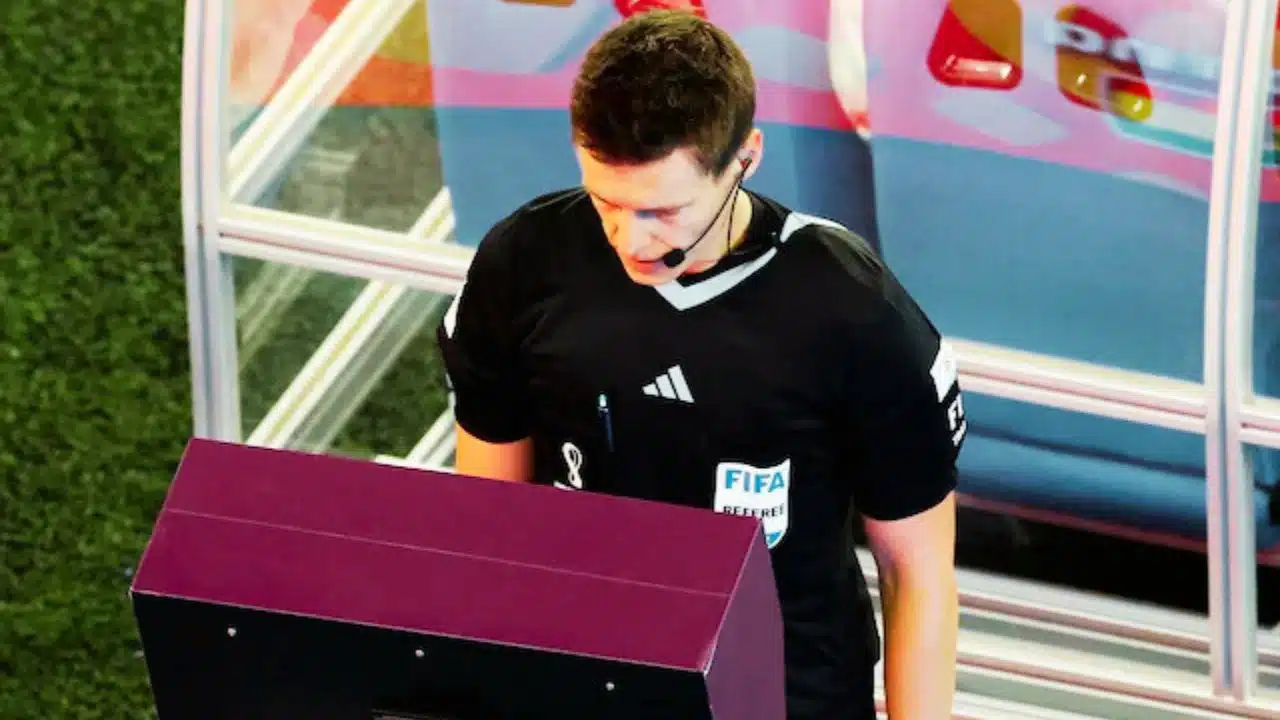
FIFA is pushing to give video assistant referees (VAR) significantly more authority at the 2026 World Cup, with new powers over corner kicks and second yellow cards under proposals now in front of football’s law‑makers. If approved, the tournament in the United States, Canada and Mexico would become the most heavily officiated by technology in the competition’s history.
What FIFA wants to change
Under current protocols, VAR can only intervene on goals, penalties, straight red cards and cases of mistaken identity. The new plan would add two major categories: disputed corner‑kick decisions and situations where a player receives a second yellow card and is consequently sent off.
For corners, video officials would be allowed to check whether the ball actually crossed the goal line before going out of play and which player got the final touch, helping correct errors that can lead directly to goals or big chances. In disciplinary terms, VAR would be able to flag clearly incorrect second yellow cards, something currently outside its scope despite the enormous impact of playing with ten men at World Cup level.
IFAB’s role and fast‑track trial idea
The International Football Association Board (IFAB), which controls the Laws of the Game, is studying a FIFA request to let major tournaments run short‑term VAR trials under their own tailored protocols. That change would effectively hand FIFA a dedicated VAR rulebook for World Cups, instead of waiting years for experiments in lower‑profile competitions to filter up.
Reports indicate the proposals will be debated at IFAB’s annual meetings in early 2026, with a key vote expected at the annual general meeting in March. If approved, competitions could begin implementing the expanded VAR scope from 1 June, aligning almost perfectly with the start of the 2026 World Cup.
Why FIFA is pushing for more VAR
Supporters of the move inside FIFA and IFAB argue that some apparently minor restarts have proven decisive at previous tournaments. High‑profile examples, such as goals disallowed after tight calls on whether the ball went out before a cross, are frequently cited as justification for extending video coverage to corner incidents and their immediate build‑up.
They also contend that a mistaken second yellow card is functionally as important as a straight red, and that it is inconsistent for VAR to stay silent in those situations while intervening on other game‑changing decisions. From FIFA’s perspective, giving video officials a slightly wider remit is presented as a logical next step after introducing semi‑automated offside technology in Qatar 2022.
Concerns over more stoppages and subjectivity
The proposals have sparked predictable pushback from those already frustrated by long delays and opaque communication around VAR checks. Critics warn that adding extra review categories risks further breaking up the rhythm of matches and could deepen fan resentment if stadiums and TV audiences are left waiting for explanations.
There are also worries that expanding the remit beyond the original clear and obvious error philosophy will drag referees and VARs into more marginal calls, especially around physical contact at set pieces. Some law‑makers remain split on how to balance accuracy with the flow of the game, a debate that has also touched on other ideas such as tweaks to the offside law and stricter time‑wasting measures.
What it would mean for the 2026 World Cup
If IFAB signs off, fans in North America could see VAR interventions not only for penalties and red cards, but also to overturn wrongly awarded corners and to rescue players from unjust second bookings. Coaches and analysts are already warning that this would require new tactical planning around set pieces and player discipline, knowing that more situations are open to forensic replay.
The broader trend is clear: each World Cup since goal‑line technology was introduced has layered on more officiating tech, and 2026 is poised to continue that trajectory with the most powerful version of VAR yet. Whether that produces fewer controversies or simply different ones will likely define much of the conversation around the next World Cup as football grapples with how far it wants to go with technology in decision‑making.





















