
Esports has transformed from a niche hobby into a booming industry, creating countless opportunities for gamers worldwide. Today, it’s not just about playing games but turning a passion into a thriving esports career for gamers.
In 2025, the esports industry stands at the forefront of professional gaming, offering lucrative options for those ready to dedicate themselves.
This article dives into how esports careers for gamers are evolving, the opportunities available, and the steps to build a sustainable future in this dynamic field.
The Rise of Esports as a Viable Career
The esports journey began humbly, with small grassroots tournaments organized by gaming enthusiasts. In the late 1990s and early 2000s, games like StarCraft and Counter-Strike laid the foundation for competitive gaming.
Over the years, the introduction of professional leagues and global tournaments transformed esports into a structured and lucrative field. This period also saw the rise of dedicated esports arenas and platforms, setting the stage for the industry’s exponential growth, making it a prime esports career for gamers.
Esports Revenue Growth
By 2025, esports has become a multibillion-dollar industry. According to industry reports, global esports revenues have surpassed $2 billion, driven by sponsorships, advertising, media rights, and merchandise. Streaming platforms like Twitch and YouTube Gaming play a pivotal role in engaging massive audiences, with millions tuning in to watch live events and tournaments.
The global audience for esports is projected to exceed 600 million by the end of 2025, underlining its immense popularity and market potential. These factors contribute significantly to making esports careers for gamers a sustainable option.
Key Revenue Streams in Esports (2025)
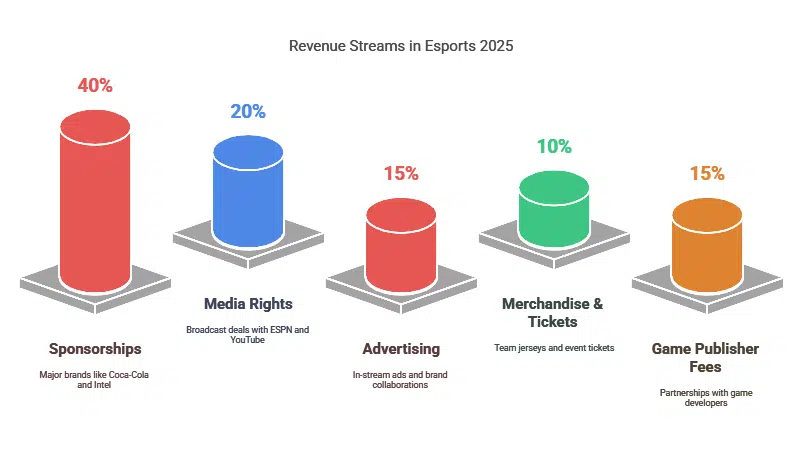
| Revenue Stream | Contribution to Total Revenue | Examples |
| Sponsorships | 40% | Coca-Cola, Intel, Red Bull |
| Media Rights | 20% | Broadcast deals with ESPN, YouTube |
| Advertising | 15% | In-stream ads, brand collaborations |
| Merchandise & Tickets | 10% | Team jerseys, event tickets |
| Game Publisher Fees | 15% | Partnerships with developers |
High-Demand Roles in Esports
While pro gamers remain at the heart of esports, many roles support the ecosystem. Shoutcasters and analysts provide engaging commentary and insights, ensuring fans stay connected to the action. Coaches and team managers work behind the scenes to enhance player performance, manage schedules, and strategize.
Content creators and influencers, meanwhile, promote games and tournaments, helping to grow the industry’s visibility. These roles are increasingly recognized for their importance in sustaining and expanding esports careers for gamers.
Examples:
- Popular shoutcaster Eefje “Sjokz” Depoortere became a household name in League of Legends esports for her charismatic hosting and deep game knowledge.
- Influencer “DrLupo” leverages streaming platforms to engage millions of fans while supporting charitable causes.
Support Roles Driving Success
Behind every successful esports event or team are individuals working tirelessly in support roles. Event organizers orchestrate tournaments, ensuring seamless logistics and high-quality production.
Marketing professionals develop campaigns to attract sponsors and fans. Data analysts track player performance and game statistics to refine strategies. As esports grows, so does the demand for specialized skills to fill these critical positions, further enriching the scope of esports careers for gamers.
Key Non-Gaming Roles in Esports
| Role | Description | Skills Needed |
| Shoutcaster/Analyst | Provides live commentary and insights | Public speaking, game knowledge |
| Event Organizer | Manages logistics of tournaments | Project management, event planning |
| Marketing Specialist | Promotes teams and events to sponsors and fans | Branding, digital marketing |
| Data Analyst | Tracks and interprets game and player statistics | Analytical thinking, data tools |
The Path to Becoming a Professional Gamer
Building Skills and Expertise
The first step toward a career in esports is selecting the right game. Popular games like League of Legends, Dota 2, Fortnite, and Valorant have established professional circuits. Each game offers unique challenges and rewards.
For instance, League of Legends emphasizes teamwork and strategy, while Fortnite rewards quick thinking and adaptability. Aspiring gamers should assess their skills and interests to choose a game that aligns with their strengths, paving the way for a successful esports career for gamers.
Tips for Selection:
- Research the professional ecosystem and earning potential for each game.
- Participate in community forums and watch streams to understand gameplay dynamics.
- Choose a game with a passionate and supportive community.
Essential Skillsets for Success
Success in esports demands a mix of technical and soft skills:
- Mechanical skills: Precision, reflexes, and mastery of game mechanics are essential.
- Strategic thinking: Understanding game tactics and adapting to opponents is critical.
- Teamwork: Collaborating effectively with teammates can determine success in team-based games.
- Mental and physical wellness: Maintaining focus, dealing with pressure, and avoiding burnout are vital for long-term success in an esports career for gamers.
Top players dedicate hours daily to honing their craft. Tools like aim trainers, replay analysis, and AI-driven analytics are invaluable for skill improvement. For instance, platforms like Aim Lab and Overwolf help players sharpen their reflexes and track performance metrics. Structured training schedules ensure consistent progress while preventing overtraining, a critical aspect of any esports career for gamers.
Essential Training Tools for Esports Gamers
| Tool | Purpose | Features |
| Aim Lab | Reflex and aim training | Personalized performance tracking |
| Overwolf | Game stats and analytics | Real-time data overlays |
| Replays.gg | Match analysis | Detailed breakdowns of matches |
| Discord | Team communication | Voice chat, file sharing |
Networking is vital in esports. Aspiring players should showcase their skills on platforms like Twitch and YouTube, participate in amateur tournaments, and connect with recruiters and established players.
Organizations like ESL and FACEIT offer structured pathways for players to transition from amateur to professional leagues. These opportunities are invaluable in building a thriving esports career for gamers.
Examples:
- ESL Pro Tour: A global circuit offering opportunities to progress from local tournaments to international stages.
- FACEIT Collegiate Leagues: For student gamers aiming to break into the scene while pursuing education.
Top Platforms for Aspiring Gamers
| Platform | Purpose | Key Features |
| Twitch | Streaming gameplay | Large audience base, monetization |
| YouTube | Video content and tutorials | Ad revenue, wide reach |
| Discord | Community building and networking | Direct team communication, resources |
| FACEIT | Competitive matchmaking | Tournaments, skill tracking |
Monetization Opportunities in Esports Careers
Tournament Winnings
Tournaments remain a significant income source for professional gamers. Events like The International (Dota 2) and Fortnite World Cup feature prize pools in the tens of millions. For example, The International 2021 had a prize pool exceeding $40 million, highlighting the potential rewards for top players.
Gamers can maximize earnings by consistently performing well in regional and global events, securing financial stability in their esports career for gamers.
Streaming and Content Creation
Streaming platforms like Twitch, YouTube Gaming, and Facebook Gaming offer gamers an avenue to earn revenue through ad revenue, subscriptions, and sponsorships. Building a personal brand and engaging with audiences are essential for success.
For instance, popular streamer Ninja reportedly earned over $10 million in 2022 through a mix of sponsorships, subscriptions, and merchandise sales.
Sponsorships and Partnerships
Collaborating with brands can be highly lucrative. Companies often sponsor players, teams, and influencers to promote their products.
Successful examples include Coca-Cola’s partnership with the League of Legends World Championship and Red Bull’s sponsorship of top-tier players across multiple games. These partnerships are a cornerstone of a sustainable esports career for gamers.
Examples of Successful Sponsorships
| Sponsor | Associated Event/Game | Notable Collaboration |
| Coca-Cola | League of Legends Worlds | Branding and fan engagement campaigns |
| Red Bull | Various esports (e.g., Dota 2) | Event sponsorships, training bootcamps |
| HyperX | Multiple gaming tournaments | Equipment sponsorships for pro teams |
The Business of Esports
Starting Your Own Team
For entrepreneurial gamers, starting an esports team can be a rewarding venture. It involves assembling talent, securing funding, and managing operations. Successful teams often attract sponsorships and build loyal fan bases.
For example, Team Liquid started as a small organization but has grown into a global powerhouse, competing in multiple games and securing multimillion-dollar sponsorships. This exemplifies the entrepreneurial side of an esports career for gamers.
Investing in Esports
Gamers can also explore opportunities as investors. Crowdfunding, co-ownership models, and esports-related startups present exciting investment possibilities. As the industry grows, returns on such investments are becoming increasingly attractive.
Overcoming Challenges in Esports Careers
High Competition Levels
Esports careers are fiercely competitive. To stand out, players must consistently improve their skills and adapt to game updates and meta shifts. For example, Fortnite’s evolving mechanics require players to quickly master new features. Building a unique playstyle can also enhance visibility, a vital aspect of thriving in an esports career for gamers.
Mental Health and Burnout
The intense demands of esports can lead to stress and burnout. Gamers should prioritize balance, seek professional guidance, and leverage resources like wellness programs offered by teams and organizations. Programs such as Headspace for Gamers and team-specific initiatives like Cloud9’s mental health support are excellent resources.
Future Opportunities
Esports in Education
The inclusion of esports in educational institutions has grown significantly. Schools and universities now offer scholarships and training programs for esports enthusiasts. For instance, the University of California, Irvine, has a dedicated esports program that provides scholarships and professional training. Such initiatives are transforming the accessibility of an esports career for gamers.
Expanding Global Accessibility
Advancements in 5G and VR technologies are making esports more accessible, especially in emerging markets. For example, mobile gaming tournaments in regions like Southeast Asia are drawing massive audiences, driven by affordable smartphones and high-speed internet. These innovations are expanding player and audience bases, creating fresh opportunities for growth in esports careers for gamers.
Wrap Up
Esports careers for gamers in 2025 represent a thriving industry filled with potential. With dedication, skill, and strategic planning, gamers can turn their passion into a fulfilling profession. Whether as a pro gamer, content creator, or entrepreneur, the possibilities are endless.
Now is the time to explore these opportunities and make your mark in the dynamic world of esports. The future of esports careers for gamers has never been brighter.